
Ph.D. in Neuroscience
Ph.D. in Neuroscience
The Neuroscience Doctoral Program is an interdisciplinary graduate program composed of doctoral students and faculty members from departments across five divisions and three campuses of Tulane University. As an educational branch of the Tulane Brain Institute, the program is administered through the School of Science and Engineering and governed by the Neuroscience Doctoral Training Committee. Appointed by the Director of the Tulane Brain Institute, the Committee is composed of a director and five faculty members representing the Main and Medical School campuses. Contributing divisions include the Schools of Science and Engineering, Liberal Arts, Medicine, Public Health and Tropical Medicine, and Primate Center. Faculty research programs are funded through grants competitively awarded by federal, state, and private agencies under four major themes: Memory and Cognition; Neurodegenerative Disease, Neural Injury and Repair; Hormone-Brain Interactions; and Brain-Body Health.
ApplyRequest InformationNeuroscience ProgramTulane Brain Institute

What You'll Learn
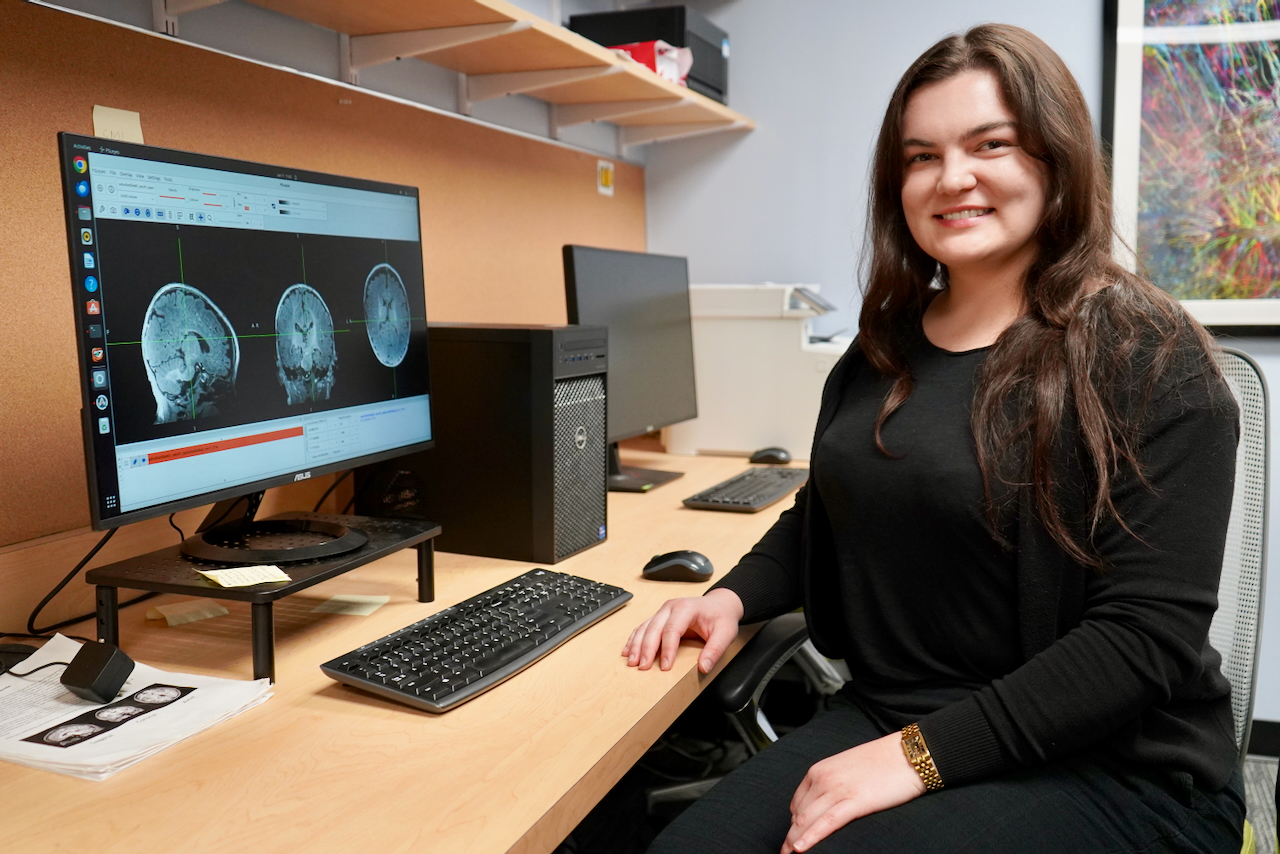
The major goal of the Neuroscience Program is to provide graduate students with a broad education in both the theoretical and practical aspects of research in neuroscience. Our students receive a diversified training in neuroanatomy, neurophysiology, neuropharmacology, molecular and cellular neurobiology, and research methods in neuroscience. In addition, the students have the opportunity to obtain experience in teaching and in presenting research results. Our goal is to produce Ph.D.s who will engage in neuroscience research as postdoctoral fellows, and eventually as researchers in academia or industry.
Research
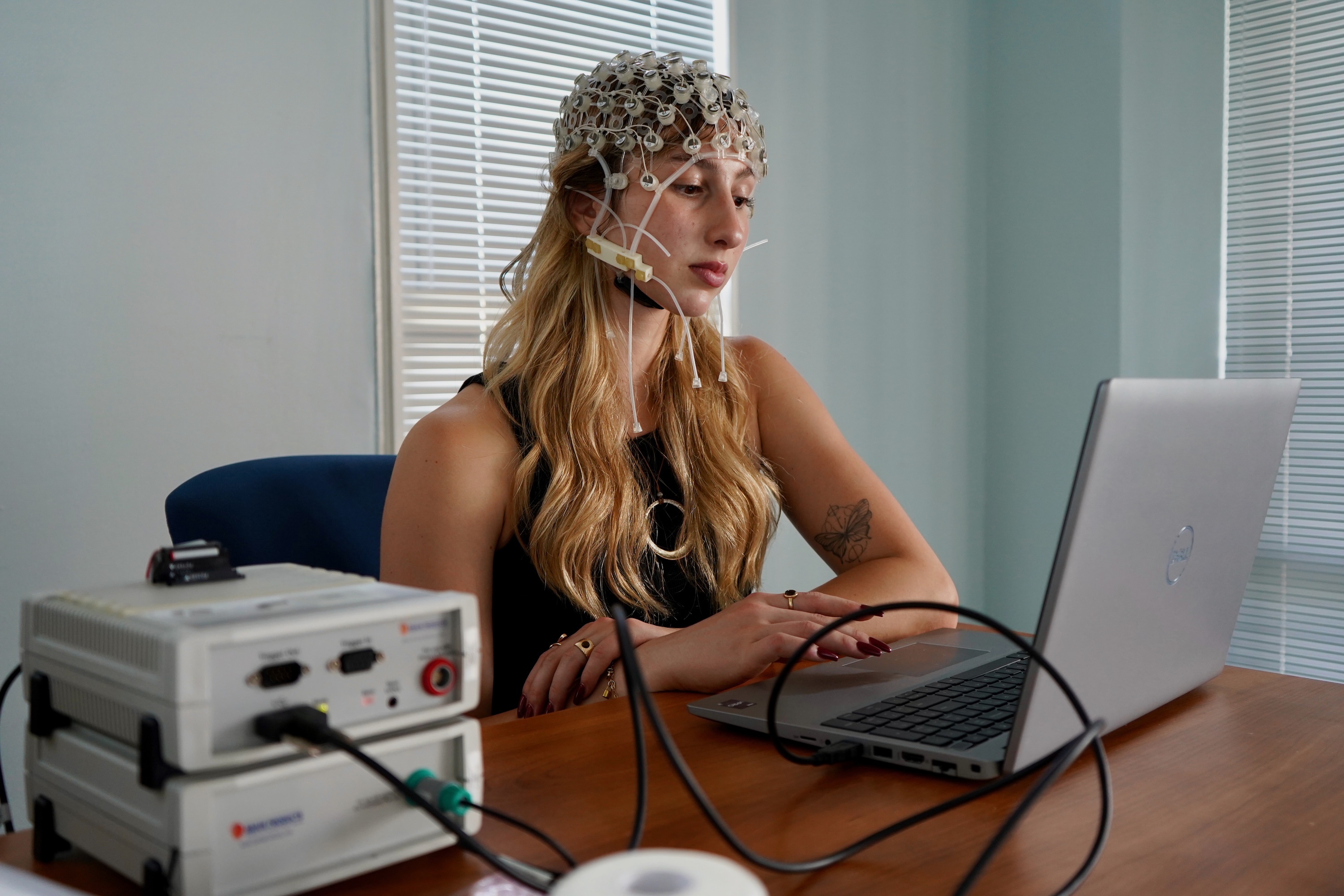
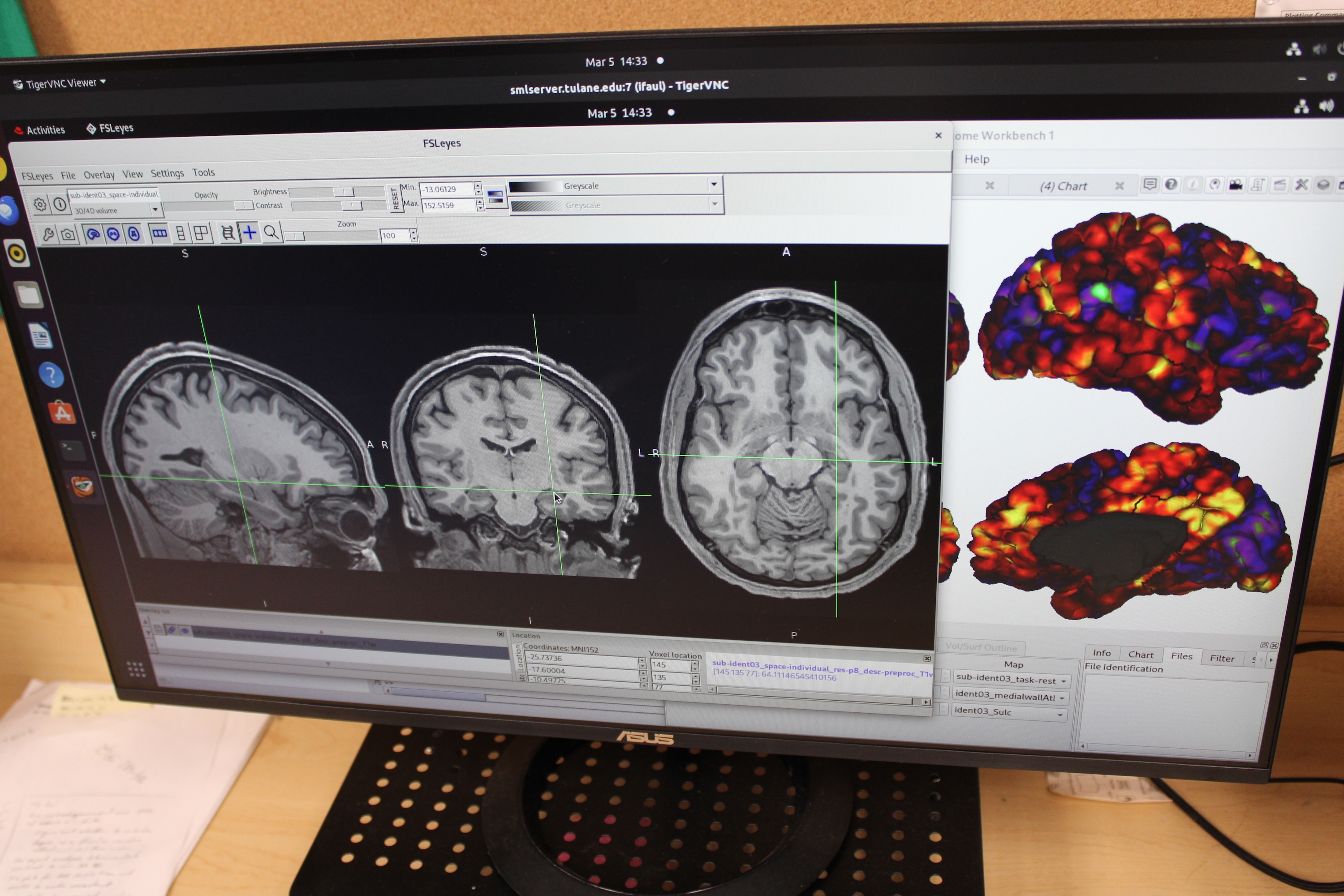
Doctoral students conduct cutting-edge research in modern laboratory environments that foster supportive instruction and intensive training in the neurosciences. The Neuroscience Doctoral Program provides graduate students with a broad education in both the theoretical and applied aspects of basic research in the neurosciences. Through their coursework and research, students receive diversified training in neuroanatomy, neurophysiology, neuropharmacology, neuroendocrinology, molecular and cellular neurobiology, behavioral neuroscience, cognitive neuroscience, and research methods. In addition, students have opportunities to present and publish their research findings and to gain experience in grant writing and teaching pedagogy. The objective of the Neuroscience Doctoral Program is to prepare graduate students for their future postdoctoral training and careers in academia, industry, and related professions.
Meet Our Faculty
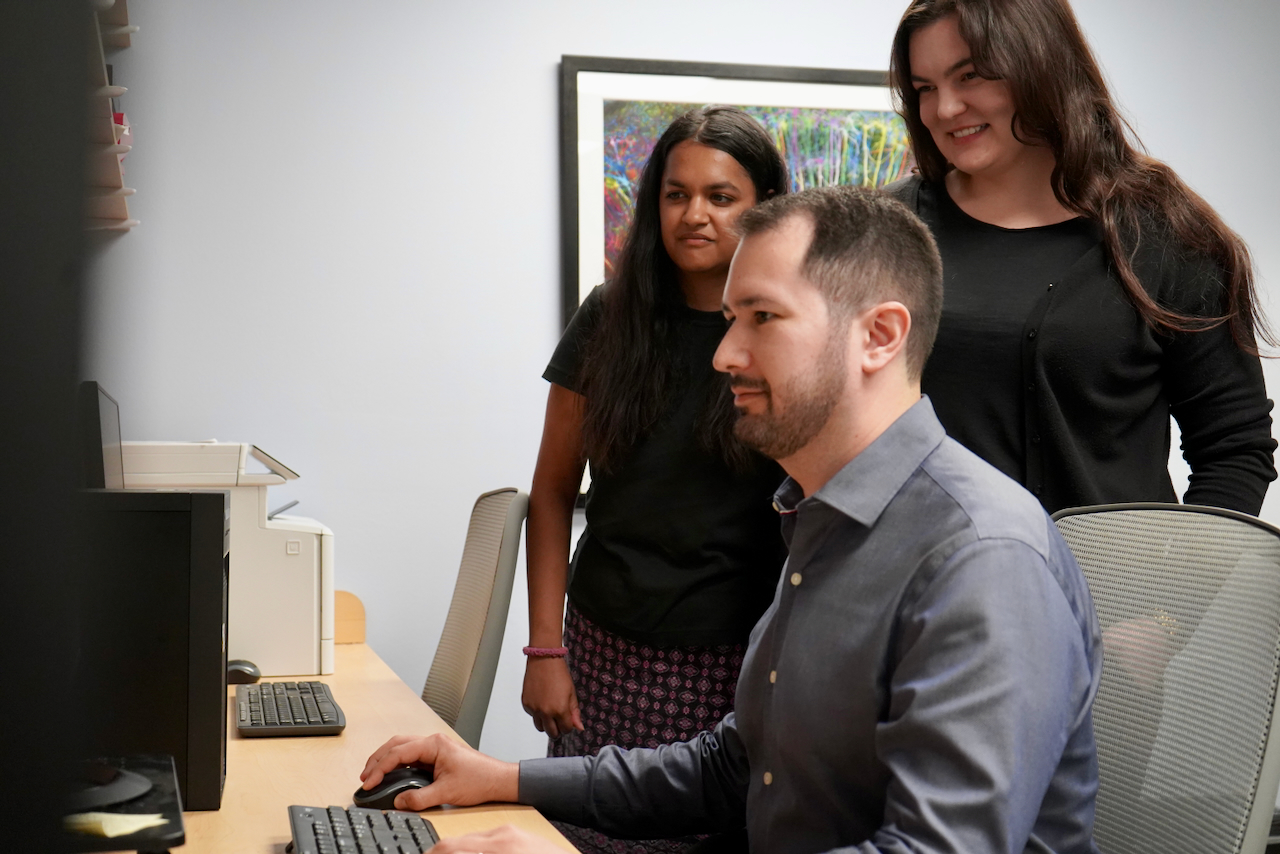
Tulane's Neuroscience PhD program brings together faculty from 22 departments across four schools—Science and Engineering, Medicine, Public Health and Tropical Medicine, and Liberal Arts—creating a uniquely interdisciplinary research environment. Our faculty are accomplished researchers with well-funded programs investigating stress disorders, sensory-motor disorders, pain mechanisms, learning and memory, developmental neurobiology, and brain-body health. You'll work closely with your advisor and dissertation committee, who will guide you through coursework and support your transition to independent research.
Curriculum Requirements
The curriculum is designed to prepare the students for active research careers. Core courses include Graduate Neuroscience, Science Communications, Trends in Neuroscience, Brain Institute Seminars, Univariate Statistics, and Responsible Conduct of Research. Students also take a variety of specialized electives while performing research, beginning in the first year of the Program. All coursework is completed in two years, allowing the students to concentrate full time on research from their third year on.
Each student's program is guided closely by an advisor and a dissertation committee. To obtain the Ph.D., each student takes a qualifying exam following completion of his/her coursework, prepares a prospectus of his/her dissertation research proposal, and prepares a Ph.D. dissertation and oral dissertation defense.
Career Benefits and Pathways
Tulane Neuroscience PhD graduates pursue diverse careers as postdoctoral researchers, faculty members at universities, and scientists in industry and government laboratories. Your training in cutting-edge research methods, combined with experience in grant writing, teaching, and publishing in top-tier journals, positions you for leadership roles in academic research, pharmaceutical development, biotech innovation, and neuroscience-related fields in both the public and private sectors.
Learn more about the admissions process or apply now!
Find full tuition information and the financial aid process.
Get to know what makes this place a launchpad for the next generation of scientists and engineers.
FAQs
Neuroscience is the study of the nervous system—exploring how the brain, spinal cord, and neurons function at molecular, cellular, and systems levels to produce behavior, cognition, and consciousness. It integrates biology, chemistry, physics, and psychology to understand neural mechanisms underlying learning, memory, emotion, disease, and the fundamental nature of mind.
PhD Training Committee
Ricardo Mostany, PhD, Director (SOM)
Jill Daniel, PhD (SSE)
Andrew MacLean, PhD (Primate Center)
Julie Markant, PhD (SSE)
Jeff Tasker, PhD (SSE)
Andrea Zsombok, PhD (SOM)
Student Representatives
Kirstin Cousin, BS (PhD Student Representative)
India Pursell, BS (PhD Student Representative)
Zach Plumley, BS (PhD Student Representative)
All students accepted into the Neuroscience Ph.D. Program are supported by a teaching assistantship and/or research assistantship, which include a competitive stipend, a full tuition waiver, and 100% health insurance.
All students are guaranteed to receive financial support for five years as long as satisfactory and timely progress is made toward the degree. Financial support includes a full tuition waiver and a stipend paid every other week over twelve months of the year. Students are funded during their first two years by teaching assistantships. After the first two years, students are supported by research assistantships arranged through their major advisors in their permanent laboratories.
Each year, up to two Tulane Brain Institute Scholar Awards are presented to incoming PhD students in the Neuroscience Program. Each award consists of a $5000 Professional Development Fund that awardees can use throughout their tenure in the Program. Students can use the funds to support attendance at professional meetings and other endeavors related to their professional development. Awardees are selected by the Neuroscience PhD Admissions Committee based on prior scholarly achievements.
The Tulane Brain Institute will provide a $5000 supplemental increase in annual stipends to those PhD students who apply for and receive individual fellowships for which they serve as the Principal Investigator. The supplement will apply for the duration of the fellowship. We understand that applying for and receiving fellowship grants takes a lot of effort. We feel that effort should be recognized by the Program in a tangible way. Additionally, by offering this incentive, we hope to increase the number of students in our Program who apply for and ultimately receive NIH NRSA Individual Predoctoral (F30 and F31) and other fellowships. To receive the full supplement, the size of the fellowship has to be at a similar level to that of the NIH F30 and F31.
-Office of Graduate and Post-Doctoral Studies
-Qualifying Examination Documents
--Qualifying Examination Rubrics Form
--Qualifying Examination Results Form
--Qualifying Examination Contribution Statement
-Approval of Dissertation Prospectus Form
-Final Examination/Defense of Dissertation/Thesis Form
-Guidelines for Preparing Theses and Dissertations
-SSE Forms, Policies, and Procedures
-Unified Code of Graduate Student Academic Conduct
-Tulane University Student Code of Conduct
Jinpeng Bai
Started Fall 2024
BS, MS, Minzu University of China
Laboratory: Dr. Matthew Dalva
jbai2@tulane.edu
Claire Alexander
Started Fall 2023
BS, Louisiana State University / MS, Lamar University Beaumont
Laboratory: Dr. Ricardo Mostany
ealexander2@tulane.edu
Kasey Anderson
Started Fall 2020
BS, Bates College
Laboratory: Dr. Jonathan Fadok
kanderson3@tulane.edu
Gabrielle Blahusiak
Started Fall 2023
BS, Rhodes College
Laboratory: Rotations
gblahusiak@tulane.edu
Julie Cohen
Started Fall 2024
BS, Tulane University
Laboratory: Dr. Lawrence Reiter
jcohen34@tulane.edu
Kierstin Cousin
Started Fall 2022
BS, University of Notre Dame / MS, Tulane University
Laboratory: Dr. Laura Schrader
kcousin1@tulane.edu
Carlie Epstein
Started Fall 2025
BS, Georgia State University
Laboratory: 1st Year Rotations
cepstein2@tulane.edu
Jill Flannery
Started Fall 2023
BA, Grinnell College
Laboratory: Dr. Jill Daniel
jflannery@tulane.edu
Benjamin Geier
Started Fall 2024
BS, Wabash College
Laboratory: Dr. Lawrence Reiter
bgeier@tulane.edu
Leeor Goldshmid
Started Fall 2025
BS, Queens Collegey / MS, Tulane University
Laboratory: 1st Year Rotations
lgoldshmid@tulane.edu
Tayler Hedgecock
Started Fall 2024
BS, Southeastern Oklahoma State University
Laboratory: Dr. Lawrence Reiter
thedgecock@tulane.edu
Daniel Hereford
Started Fall 2018
BS, Baylor University / BS, University of New Orleans
Laboratory: Dr. Jonathan Fadok
dhereford@tulane.edu
Kennen Kelly
Started Fall 2025
BS, University of New Orleans / BS, Tulane University
Laboratory: 1st Year Rotations
kkelly20@tulane.edu
Sydney Monix
Started Fall 2022
BS, MS, Tulane University
Laboratory: Dr. Michael Moore
smonix@tulane.edu
Shirine Moukaled
Started Fall 2021
BS, MS, Tulane University
Laboratory: Dr. Lydia Bazzano
smoukale@tulane.edu
Maria Najjar
Started Fall 2024
BS, The George Washington University
Laboratory: Drs. Jonathan Fadok & Jeff Tasker
mnajjar@tulane.edu
Isabel Nichoson
Started Fall 2023
BA, Wellesley College
Laboratory: Dr. Ben Deen
inichoson@tulane.edu
Blake Ouvrier
Started Fall 2020
BS, MS, Tulane University
Laboratory: Dr. Gregory Bix
bouvrier@tulane.edu
Zachary Plumley
Started Fall 2021
BS, Arizona State University
Laboratory: Dr. Ricardo Mostany
zplumley@tulane.edu
India Pursell
Started Fall 2021
BS, Louisiana Tech University
Laboratory: Dr. Elizabeth Engler-Chiurazzi
ipursell@tulane.edu
Syed Rahman
Started Fall 2024
BS, University of Houston
Laboratory: Dr. Maria Galazo
srahman@tulane.edu
Chase Richard
Started Fall 2021
BS, MS, Tennessee State University
Laboratory: Dr. Sarah Lindsey
crichard2@tulane.edu
Parker Tirrell
Started Fall 2020
BS, Tulane University
Laboratory: Dr. Jill Daniel
ptirrell@tulane.edu
Ramya Vasudevan
Started Fall 2025
B.Tech, SRM Institute of Science and Technology
Laboratory: 1st Year Rotation
rvasudevan@tulane.edu
Matthew Watson
Started Fall 2018
BS, University of New Orleans / MS, Loyola University New Orleans
Laboratory: Dr. Jeff Tasker
mwatson2@tulane.edu
Stella Wroblewski
Started Fall 2022
BS, Reed College
Laboratory: Dr. Kevin Zwezdaryk
swroblewski@tulane.edu
Luisa Zavala-Rodriguez
Started Fall 2023
BS, MS, Villanova University
Laboratory: Dr. Jonathan Fadok
lzavalarodriguez@tulane.edu
Tasniya Zulfiquar
Started Fall 2022
BS, MS, Jahangirnagar University
Laboratory: Dr. Partha Chandra
tzulfiquar@tulane.edu
Students who wish to be admitted to the Neuroscience Doctoral Program should apply online. The program will not consider any student for admission until all the following documents have been uploaded into the online application system:
-Application form (must be submitted online)
-A statement of purpose (must be submitted online)
-Three letters of recommendation (must be submitted online)
-An unofficial copy of all post-secondary academic transcripts (must be submitted online)
Note: All transcripts and other documents and materials required for application for admission become the property of the Neuroscience Graduate Program and are not returnable, either in original or photocopied form.
Applications are reviewed as they are received; therefore, applicants are encouraged to submit all required materials as early as possible. Applications arriving after this date will be considered by the admissions committee only if positions remain available.
Because TOEFL and IELTS are not required, all international students who are accepted into a School of Science and Engineering PhD program must complete an online summer ESL Evaluation Course during the month of July. The 10 hours (2 week) assessment course will determine which students must take additional ESL courses during their first year of graduate studies (no exceptions).
Contact Us
Rosie Chavez
Director of Graduate Programs
rchavez@tulane.edu
Dan Shantz
Associate Dean for Research and Ph.D. Programs
dshantz@tulane.edu
Ricardo Mostany, PhD
Director of PhD Program (Neuroscience Program)
Phone: (504) 988-6623
Email: rmostany@tulane.edu
Sherrie Calogero
Departmental Administrator II
sherrie@tulane.edu
504-862-3299