
About Us
About Us
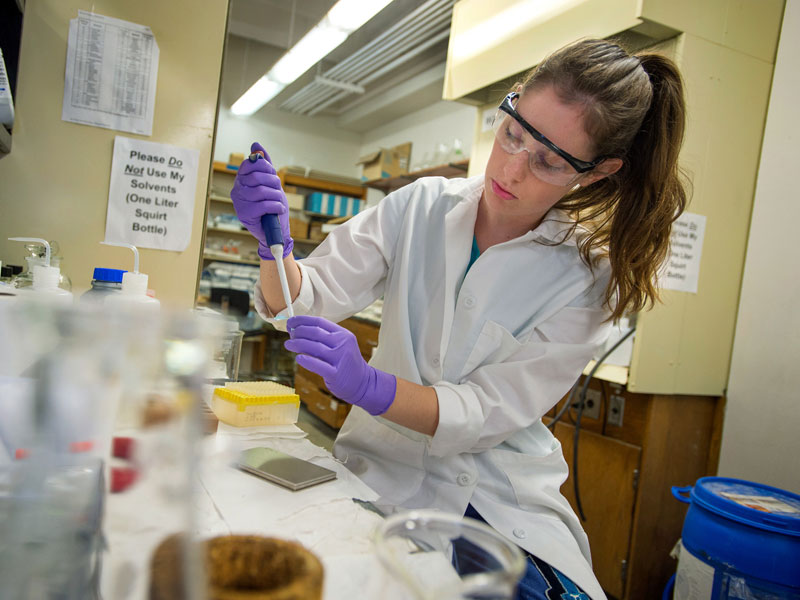
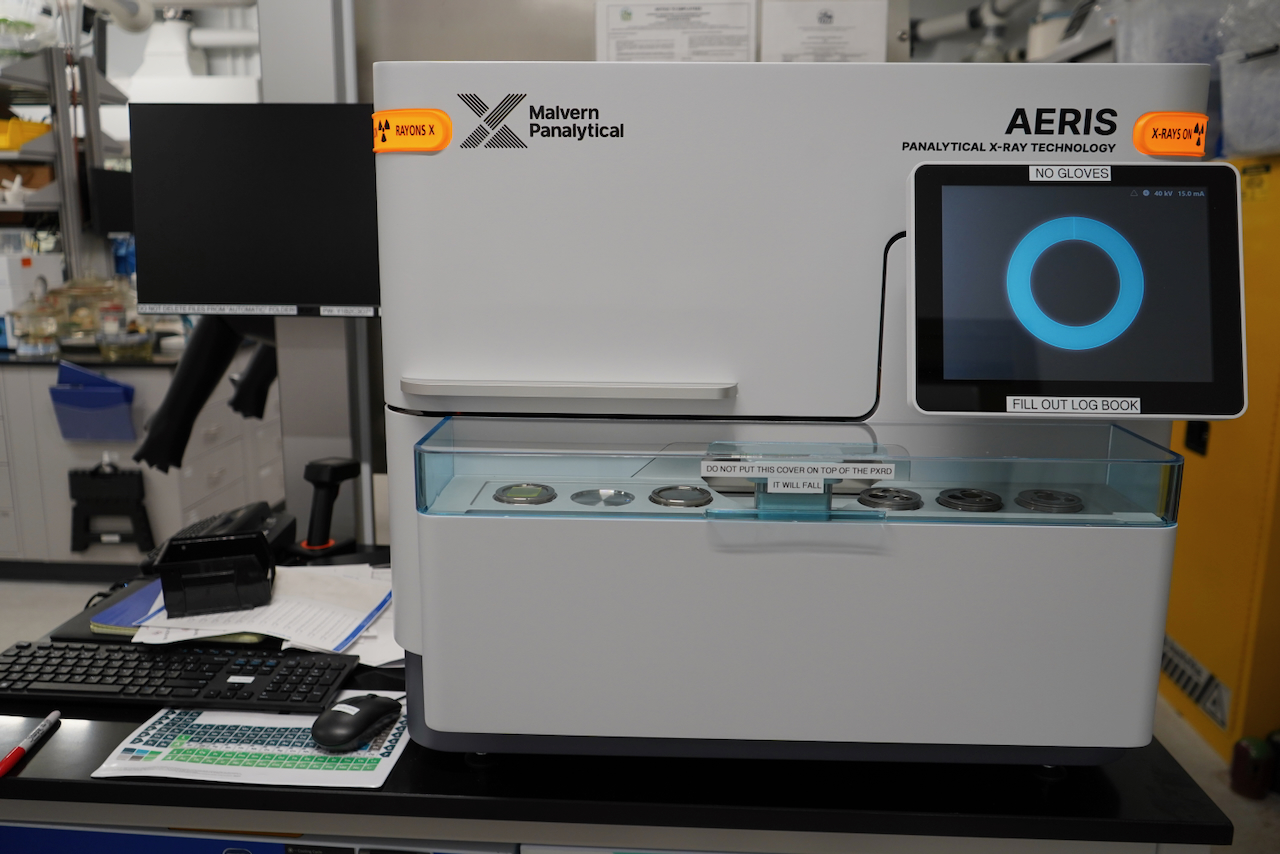
Since 1834, Tulane’s Department of Chemistry has brought students and scientists together to explore how the molecular world works. Our faculty lead research that spans spectroscopy, solar energy, and biomedical therapeutics, and they welcome undergraduate and graduate students into their labs as true collaborators. In a department where classes and research groups stay close-knit, students get hands-on experience with advanced instrumentation and mentorship from faculty who know them by name. Whether you’re pursuing a bachelor’s degree, an M.S., or a Ph.D., you’ll find a community that pairs rigorous training with curiosity-driven discovery, in the heart of New Orleans.

Our Mission
The primary mission of the Department of Chemistry at Tulane University is two-fold. On the teaching front, its goal is to teach chemistry to a diverse group of students that includes non-majors, majors, and graduate students. The department provides opportunities for undergraduate students to participate in scientific research and to obtain a B.S. degree in chemistry certified by the American Chemical Society. As a Ph.D. granting department in a research university, a major aspect of the departmental research mission is discovering and understanding new chemical processes and principles. Such research efforts relate intimately to the mission of graduate training.
Our department seeks to develop within our students the state-of-the-art intellectual and technical tools that they will need to have meaningful and successful careers as scientists within the field of chemistry or in allied disciplines within the physical or health sciences. We strive to achieve this goal by providing challenging but insightful instruction in the classroom for both undergraduate and graduate students as well as maintain competitive, nationally recognized research programs within the major disciplines of chemistry.
Message from the Chair
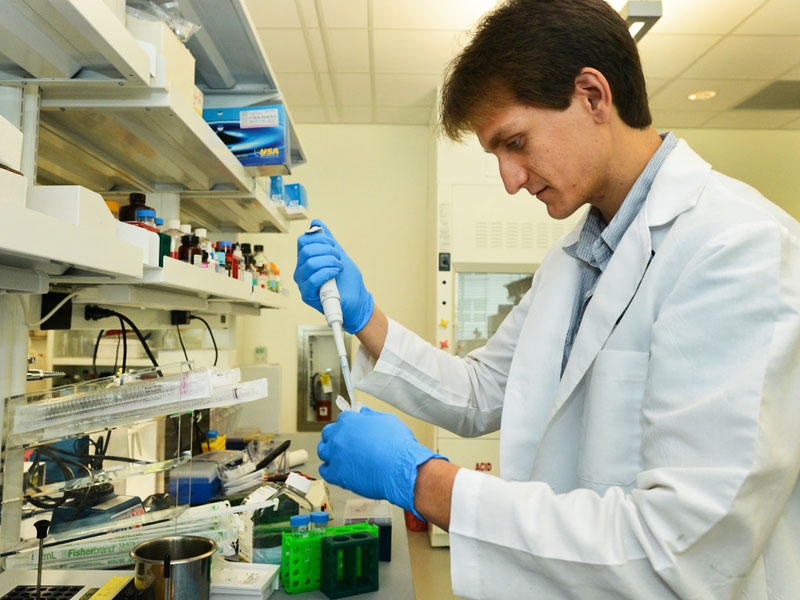
The Department of Chemistry has been devoted to high quality teaching and research since its founding in 1834. We provides many of the resources associated with much larger schools, yet offer the close, personal attention characteristics of a smaller institution. For teaching, this means small classes with excellent instructor-to-student ratios and the opportunity to engage closely with both teachers and peers. Regarding research, this means hands-on training with a wide range of state-of-the-art instrumentation, access to the very best information from the literature and curated data-bases, and the opportunity to utilize the very latest in science AI tools.
Ongoing research themes in the department are wide, varied and seminal. Whether you’re looking for a post-doctoral position, are considering graduate school, or are one of our highly talented undergraduate students, research opportunities are boundless. I encourage you to take some time to inspect the individual research pages of our faculty to see the possibilities. You will find research opportunities for every interest and skill-set addressing many of the important questions faced by society. I encourage everyone to explore these web-pages, and reach out to the department and/or individual researchers to discuss how Tulane Chemistry can help you take the next step to a productive career in the chemical sciences.
Thanks for visiting,
Bruce Gibb
Department History
1834
Tulane University was founded as the Medical College of Louisiana, one of the oldest universities west of the Appalachians. Its original faculty included Thomas R. Ingalls as chair of Chemistry.
1836
John L. Ridell, chair 1836-1862
John L. Riddell, a native of Massachusetts, was hired as Chair of the Department of Chemistry. Riddell advanced the theory in 1836 that yellow fever was transmitted by a blood-borne pathogen, a revolutionary concept at the time. He served on the city of New Orleans’ sanitation commission frequently during his tenure and was one of the critical figures in the field of medicine to champion and affect the eradication of contagious diseases that plagued Louisiana and the tropics in the 19th century.
1837-1838
The first known university-level Chemistry course in the Mississippi Valley was held at the Medical College of Louisiana, with John Riddell as lecturer. The class consisted of 17 students, including Dr. Jack Shackleford (1791-1857), hero of the Texas Revolution, and Dr. George Colmer (1807-1878) a famed early Louisianan Physician.
1839-1848
John L. Riddell served the newly commissioned New Orleans Mint as melter and refiner, overseeing the mint’s first production of gold and silver coinage. During this period he invented the rotary ingot machine, which would make the New Orleans mint the most efficient in the US.
1841
John Riddell served as chair of the Geological Committee of the State of Louisiana.
1847
The Medical College of Louisiana was renamed University of Louisiana, and expands its faculty to include Arts and Law.
1850
John Riddell carried out the earliest known study of cholera using a microscope, but does not find enough evidence to draw definitive conclusions. Reinvestigation in 1859 led to the first publication claiming a direct relationship between cholera and a microorganism.
1852
John Riddell invented the binocular microscope to provide stereoscopic visualization to help elucidate his theory that yellow fever was transmitted via a blood-borne pathogen.
1860
John Riddell was appointed postmaster of New Orleans by President Buchannan, a position he managed to hold through Louisiana’s secession (despite his outspoken sympathy for the Union cause), the Confederate takeover of the office, and the eventual Union occupation.
1862
Classes were suspended at University of Louisiana on the account of reduced enrollment because of the ongoing American Civil War.
1862-1865
New Orleans was occupied by Federal troops.
1863
Prof. Riddell was elected Governor of Louisiana by a populist group that opposed the federally imposed military government under Reconstruction, but the election was deemed invalid by the Federal authorities.
1865
Prof. John L. Riddell died immediately after his emotional, controversial, and unpopular speech at the Louisiana convention where he blamed the state’s problems on its secession from the Union.
1866
The University of Louisiana reopened after the close of the Civil War.
1869
Joseph Jones, chair 1869-1885
Joseph Jones was named chair of Department of Chemistry. He had served for the Confederacy as Surgeon Major during the Civil War and made some of the most extensive notes on the occurrence of disease amongst soldiers and prisoners of war, including the first known microscopic identification of typhoid bacillus. Professor Jones would continue the passionate tradition of Riddell in studying and fighting the numerous epidemics common in the tropics.
1871
Jones publishes his seminal treatise on gangrene, from his notes and observations as a surgeon during the Civil War. It is widely recognized as the first modern scientific study on the subject, and the first to advance the theory that gangrene’s root cause was not a contagious pathogen but rather necrotic tissues.
1876
Jones was one of the very first scientists in the world to advance the theory that malaria was spread by a pathogen. In addition, he used the microscopic observations of pathogens in blood as forensic evidence in the murder of Narcisse Arrieux, and even training his medical students to diagnose malarial infections by analysis of the blood at this early stage.
1880-1884
As president of the Louisiana State Health Board, Prof. Jones carried out a thorough overhaul of the quarantine stations throughout Southern Louisiana. Despite the prevalence of Yellow Fever through the Gulf of Mexico, the lower Mississippi Valley was free from the scourge under his tenure.
1884
Thanks to a substantial donation in the will of Paul H. Tulane, the University of Louisiana was privatized as “The Tulane University of Louisiana.”
1884
John M. Ordway, Dean of the School of Technology 1884 -1894
Prof John M. Ordway resigned his position as dean of the faculty at MIT to join Tulane as head of Manual Training Department (Forerunner of the School of Science and Engineering) and chair of the Department of Industrial Chemistry, which will later become the department of Chemical Engineering (the third oldest in the country).
1885
John W. Caldwell, chair 1885-1905
John Williamson Caldwell, a native of Charleston, is appointed chair of the Chemistry department. After completing his undergraduate degree at College of Charleston, his medical schooling at the Medical College of South Carolina was interrupted by the bombardment of Fort Sumter. He eventually obtained a furlough and completed his degree from the Medical College of Virginia in 1864. After nine years and private practice, nine years serving on the faculty of Southwestern Presbeterian University in Clarksville, TN, and a year at Johns Hopkins University, he moved to Tulane University to accept joint appointments in Chemistry and Geology.
1886-1891
John W. Caldwell serves as curator for Tulane’s National History Museum, one of the largest collections in the US at the time.
1887
Prof. Jones was elected President of the Louisiana State Medical Association.
1892
John W. Caldwell publishes article in Science magazine drawing analogies between molecular structure and crystallography, two fields which had developed largely independently of each other (Vol. 20, 12 August 1892, pp 88-89).
1893
After a stroke that caused partial paralysis, Jones retired as a professor at Tulane. He published more that 100 papers in the medical and scientific literature, in addition to 4 substantial volumes of his “Medical and Surgical Memoirs.”
1894
Tulane University moves from the downtown New Orleans campus on Common Street to the 6800 block of St. Charles in uptown New Orleans. The Department of Chemistry moves into the Richardson Laboratory.
1896
Joseph Jones passed away shortly after his retirement.
1900s
By 1900, Tulane University had a number of departments devoted to the study of the chemical sciences. In addition to the Department of Chemistry, Tulane had one of the first Departments of Industrial Chemistry in the nation (forerunner of Chemical Engineering Departments) and had a separate Department of Sugar Chemistry, devoted to this critical industry for the State of Louisiana.
Evelyn Walton Ordway 1887-1905
Ann Hero Northrup 1903-1926
Tulane Chemistry Ann Hero Northrup Award Recipients
2020 Margaret Richard
2019 Rhe Kataria
2018 Judy Chen
2017 Sarah Maier
2016 Sara Hays
2015 Livia Liden
2014 Zhenzhen Shi
2013 An N Nguyen
2012 Soojung Samantha Lee
2011 Melanie Sebastian
2010 Elizabeth Alverton-Banks
2008 Gesine Veits
2005 Amy F. Collins
Clara De Milt 1919-1953
De Milt's Dissertation: "A Phenylstearic Acid from Oleic Acid."
5th of her students: Van Zandt
Dissertation: "Diazotization of Weekly Basic and Insoluble Amines. The Use of Pyridine, Quinoline, and Isoquinoline as Solvents for the Amines"
9th of her students: Sartor
Dissertation: "The Preparation of 4,4’-Dicyano-diphenyl and Certain Diketones of Diphenyl"
John L. Riddell (chair 1836-1862)
Joseph Jones (chair 1869-1885)
John W. Caldwell (chair 1885-1905)
Abraham Louis Metz (chair 1905-1919)
Benjamin Palmer Caldwell (1895-1916)
Hal Walter Moseley (1911-1941 chair 1928-1941)
Publications
“The Composition of Ferrous Alloys” (1915)
“The Improved Hulett Apparatus” (1927)
“The Surface Tension of Liquid Crystals” (Schwartz and Moseley, 1946)
Samuel Mahood (1920-1930)
Mahood’s PhD Dissertation: "Tetraiodophenolphthalein..." (Orndoff and Mahood 1918)
Dissertation: "Working with Hazardous Chemicals"
Raymond Freas (1930-1942)
E. F. Pollard (1931-1942)
Contact Us
Mail:
2015 Percival Stern Hall
6400 Freret St.
Tulane University
New Orleans, LA 70118
Phone: (504) 865-5573
Fax: (504) 865-5596
Financial, personnel, payroll, undergraduate registration, website updates
Jessica Stephenson, jsteph3@tulane.edu
Seminars and event planning
Jennifer French, jfrench2@tulane.edu
Graduate affairs, recruiting, registration
Jennifer French, jfrench2@tulane.edu
Professor Alex McSkimming, amcskimming@tulane.edu
Stockroom ordering and receiving of supplies
Troy Bryant, tbryant3@tulane.edu
Department grants
Walter Pons, wpons@tulane.edu