
Ph.D. in Chemistry
Ph.D. in Chemistry
Tulane's Department of Chemistry offers an ideal graduate experience—large enough to provide exciting research opportunities across diverse specializations, yet small enough to treat you as an individual. Our program balances rigorous coursework with hands-on research, allowing you to explore your interests while working closely with faculty mentors who are leaders in their fields.

What You'll Learn
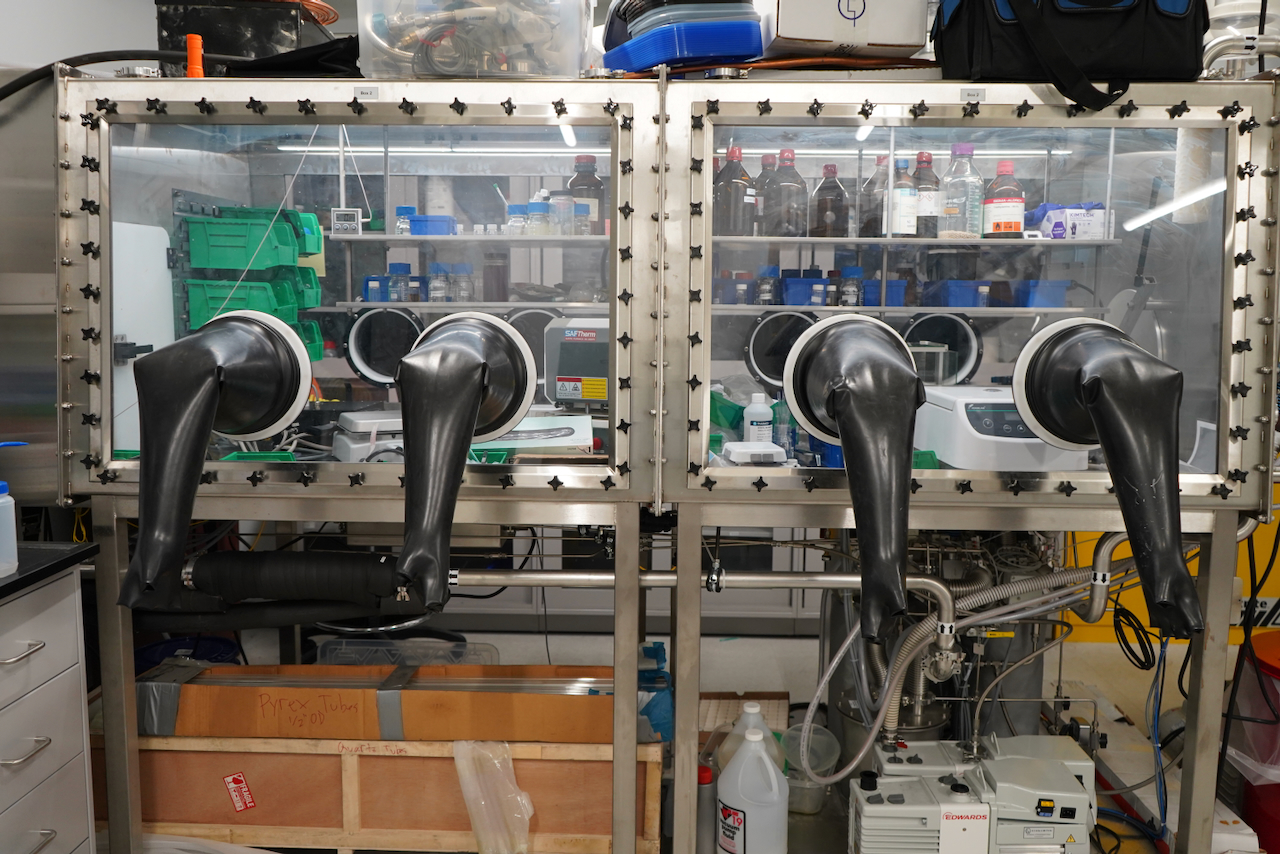
You'll develop advanced expertise across chemistry's major disciplines, from quantum mechanics and statistical mechanics to organic synthesis and biochemistry. Through core courses, specialized electives, and intensive research, you'll master both theoretical foundations and practical laboratory techniques, preparing you to tackle complex chemical problems and contribute original knowledge to your field.
Research
Our faculty conduct cutting-edge research across bio-organic, biophysical, physical inorganic, organometallic, synthetic organic, polymer materials, surface chemistry, crystallography, spectroscopy, quantum theory, and statistical mechanics. As a PhD student, you'll design and execute your own dissertation research project, working alongside faculty advisors to make original contributions that advance the chemical sciences.
Meet Our Faculty
Tulane's chemistry faculty are accomplished researchers and dedicated mentors who actively involve graduate students in their work. With expertise spanning all major areas of chemistry, our professors are committed to your professional development and will guide you through every stage of your doctoral journey, from coursework through dissertation defense.
Curriculum Requirements
The PhD requires 48 course hours, including six courses (four core courses plus two electives) at the 7000 level, six cumulative exams, seminar presentations, a dissertation prospectus, and an oral defense. Most students complete the program in five to seven years, with the first year emphasizing coursework and the remaining time focused on original research.
Career Benefits and Pathways
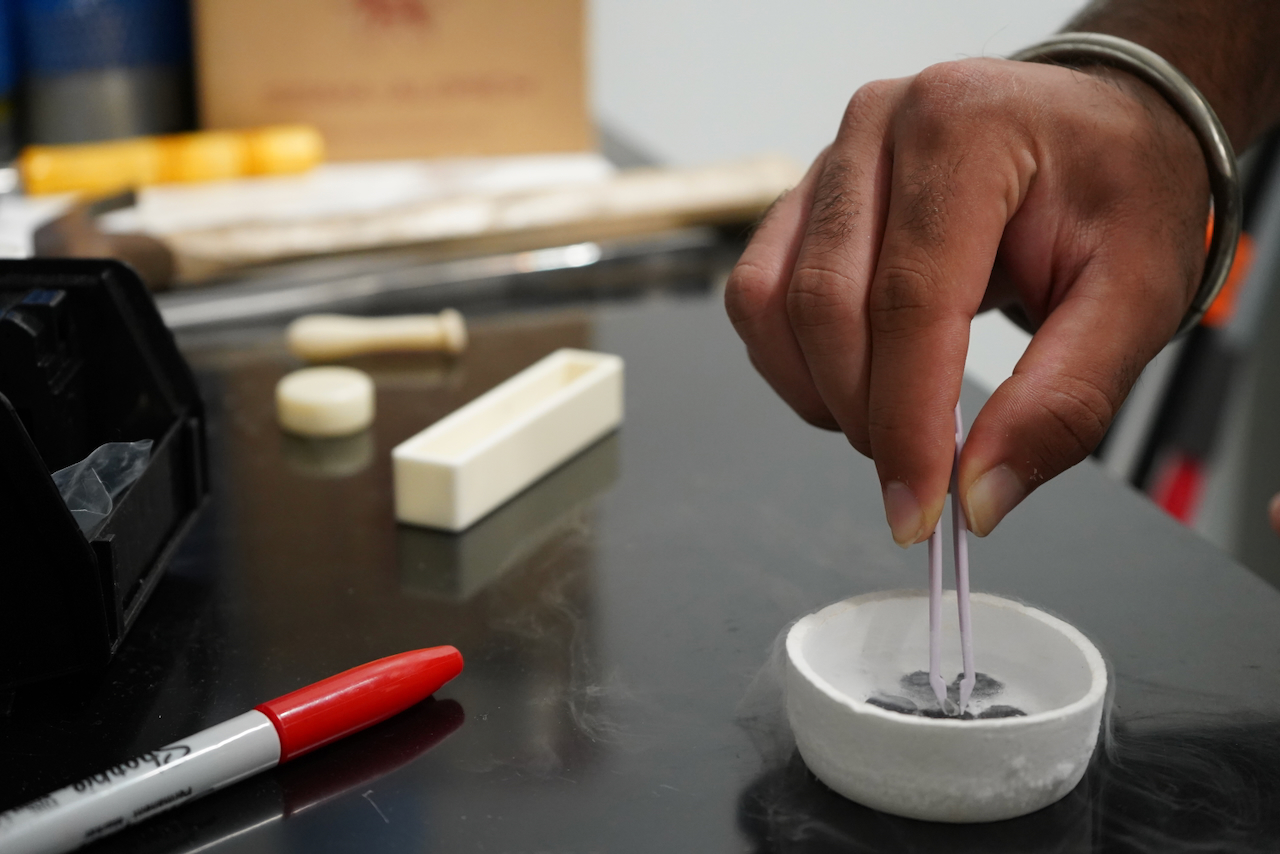
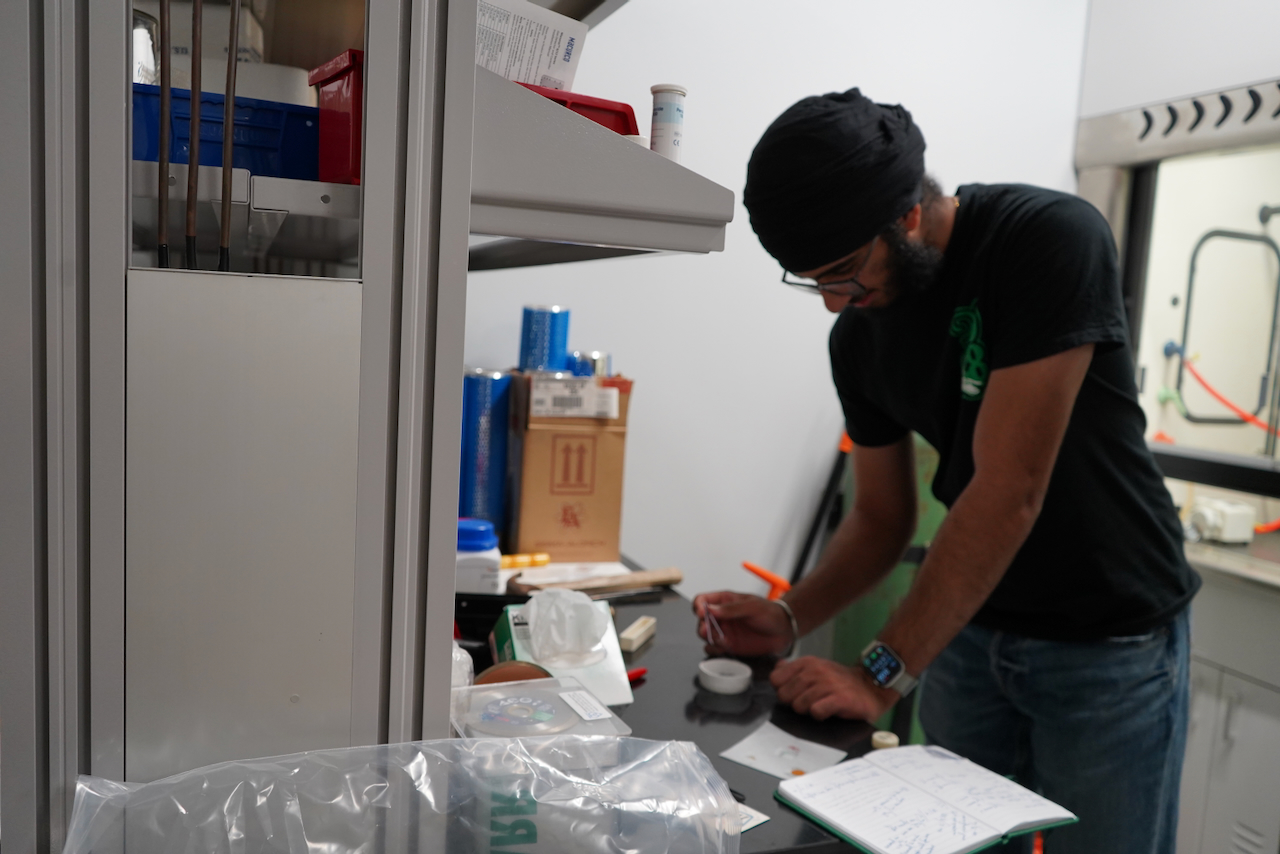
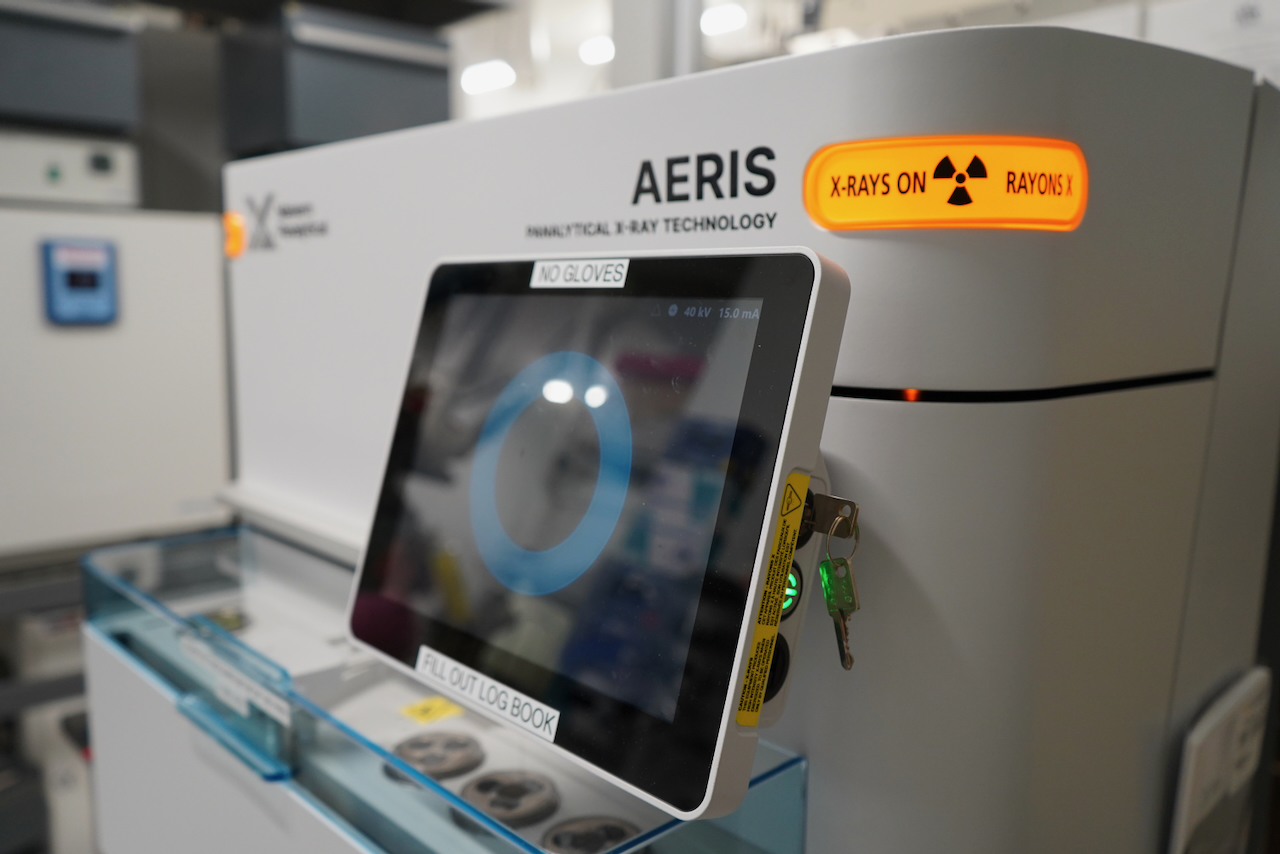
Tulane chemistry PhD graduates pursue diverse career paths, with many continuing research through postdoctoral appointments at leading universities or establishing careers at premier chemical and pharmaceutical companies. Your degree opens doors to research, industry, academia, and specialized technical roles across the chemical sciences.
Learn more about the admissions process or apply now!
Find full tuition information and the financial aid process.
Get to know what makes this place a launchpad for the next generation of scientists and engineers.
FAQs
Chemistry is the science of matter and its transformations—exploring how atoms and molecules interact, bond, and react to create everything from medicines to materials. It bridges physics and biology, providing the molecular understanding essential for solving real-world problems in energy, health, sustainability, and technology.
Graduate students desiring transfer of graduate credits earned at another school should submit their requests in writing to the Graduate Advisory Committee. A maximum of 18 hours of transfer credit will be accepted in the case of a student entering with a Master's degree. Students will not be excused from core courses unless they can demonstrate having taken for credit an equivalent course. University regulations state that courses cannot be transferred to Tulane until the student has been in residence at Tulane at least one semester.
To petition transfer courses, the student must present the following information to the Graduate Studies Committee:
-A copy of his/her transcript from the University where the course to be transferred was taken
-A syllabus from the course including information on the textbook(s) used
-Any additional information, such as copies of tests given, will be helpful
Students may, on occasion, need to leave the university during the course of their degree program for extended periods. The student should, if able, submit a written petition for a leave to the Graduate Affairs Committee of the department. The statement should include an explanation of the need for taking the leave and state the duration of the requested leave. In general, teaching assistantship and Fellowship support will be discontinued during leaves of absence. Degree requirements and tenure requirements will be postponed by the length of the leave or by a period of time deemed appropriate by the Graduate Affairs Committee.
Graduate students are expected to maintain the highest ethical standards while performing all course and laboratory work. Graduate students serve as a part of the academic core of the University; a high degree of integrity is required within the University in order for the information generated by its members to be of any use to the society it serves. The obligation of Graduate students includes, but is not limited to, the following:
Completing examinations and other written coursework following the instructions of the professor. Unless explicitly instructed to do otherwise, students will work independently using only materials approved by the instructor. Cheating on coursework is a violation of the Honor Code, and individuals accused of cheating will be subject to investigation and potential sanctions as outlined in the University Honor Code.
Accurately citing the work of others in all written coursework, and all professional activities, such as papers submitted to scientific journals. Knowingly plagiarizing the work of another individual is a violation of the Honor Code and will be penalized according to procedures outlined in the Tulane Graduate School Bulletin.
Presenting only laboratory results that the student believes to be correct. Falsification of data is a serious violation of the Honor Code and is subject to sanctions by the Graduate School.
Students entering with a bachelor's degree in chemistry with normal preparation in chemistry should anticipate completion of doctoral degree requirements in about five years of full-time work (including summer). Placement examinations will be administered to all entering graduate students in order that students can begin coursework at the most appropriate level. Students performing significantly below national norms on the placement exams will require some remedial coursework at the undergraduate level. The placement exams cover inorganic, organic, and physical chemistry.
In their first year of study, students should work to complete their coursework, begin taking cumulative exams, and choose a research advisor. Requirements for coursework and guidelines for selection of a research advisor are stated under Requirements.
Courses
Students are encouraged to complete their course requirements as quickly as possible after entering the program, preferably within their first four semesters. An ordinary load in the program is 9 to 12 hours (at least three 3-lecture courses). Students must meet the Continuous Registration Requirement of the Chemistry Department. In addition, the Department requires that students complete 6 hours of coursework (not including independent study or thesis research) each semester during the first two semesters of graduate study. Students unable to satisfy this requirement may be subject to academic probation. Failure to comply with this requirement in two consecutive semesters is adequate justification for expulsion from the program.
Cumulative Exams
The written requirements for both the M.S. and Ph.D. degrees are fulfilled by passing Cumulative exams; PhD requires the passing of 6 cumulative exams, and the M.S. requires the passing of 2 cumulative exams. Exams are given 10 times a year, with separate examinations being given in the areas of inorganic, organic, and physical chemistry. Students may attempt one or more individual exams each exam period
Full-time Residence Status
A student must be registered for at least three hours of graduate credit per semester. A student must be registered in full-time residence status in order to hold a fellowship, a scholarship, or any of the various kinds of assistantship.
Tenure for Degree Students
Tenure is the maximum period of time normally permitted for the completion of all requirements for a degree, and it is determined on the basis of consecutive academic years from the date of registration for Graduate Study at Tulane or another institution. Tenure is not affected by residence status. Under certain circumstances, the Dean may extend tenure, but a student whose period of graduate study is unduly prolonged or interrupted may be required to perform additional work.
The maximum time allowed by the SSE Graduate Program for completion of the Ph.D. degree is seven years. The Department, however, strongly encourages students to attempt to complete requirements in no more than five years.
Graduate Prospectus
By the end of their fourth semester, students must submit a written proposal of their dissertation research project and make an oral presentation of it to their dissertation committee. The prospectus should be approximately two thousand words in length (excluding legends and references). The cover sheet should state the student’s name, department/program, the title of the proposed dissertation, and the name of the chair and the other members of the committee. The introduction of the prospectus should contain a summary of earlier work on the problem in question. The body should include an orderly description of the work accomplished to date and a plan for future investigations. The conclusion should clearly state the anticipated nature of the investigation results. Major sources of information should be indicated, and a selective bibliography included. The prospectus should be submitted to the SSE Dean’s Office along with a signed copy of the prospectus approval form.
Grade Point Evaluation
Graduate students are expected to maintain a cumulative B average (3.0 on the system outlined below) in formal course work.
The B average is determined by this scale:
A = 4.0 points per credit hours
A- = 3.67 points per credit hours
B+ = 3.33 points per credit hours
B = 3.0 points per credit hours
B- = 2.67 points per credit hours
No grades below B- count towards graduate credits. Written approval of the Graduate Affairs Committee is required prior to dropping a course.
A student who does not possess a cumulative average of 3.0 will be placed on probation for one or more semesters or dismissed. During the semester(s) on probation, the student must regain a 3.0 average while taking a full load of courses. Failure to regain a 3.0 average during the probationary semester will result in either dismissal, provisional status for one semester, or limitation to a Master of Science degree, depending on faculty decision. A student on provisional status must remove him/herself from provisional status within one semester or face automatic dismissal.
In addition to the departmental requirement of a 3.0 cumulative average, the SSE Graduate Program requires that any student receiving a grade of B- (irrespective of his/her GPA) be considered for probation. Receipt of two grades of B- or one grade below B- results in automatic probation and consideration for dismissal by the Graduate Dean in consultation with the department.
Graduate School Deadlines
Degrees earned in the School of Engineering (SSE) are awarded three times a year: December, May, and August. There is only one commencement program, and that is held in May. A candidate must be present to receive the degree unless the candidate has been excused by the associate dean. A request to receive a degree in absentia must be filed in the dean’s office at the time the diploma form is submitted. Candidates for degrees are required to complete an application for degree form on or before the deadline dates.
Diplomas
The Registrar's Office distributes diplomas. Diplomas are not available until after the degree is conferred. Because there is no commencement in August or December, graduates complete a diploma/in absentia form to obtain their diploma. Students may opt to pick up their diploma, have the diploma mailed, or request that the diploma be held by the Registrar's Office until commencement.
A student admitted to the Department of Chemistry Graduate Program must maintain continuous registration in a degree-granting division of the University (exclusive of Summer Session) until the awarding of the degree. A student who is not registered for coursework in a degree-granting division of the University must be registered in Master's Research or Dissertation Research in order to remain in continuous registration, including the summer semesters.
The continuous registration requirement applies both to resident and non-resident students.
Students who have not completed the minimum coursework requirement of the department must enroll for a minimum of 3 hours of coursework per semester, including Techniques of Research (CHEM 7900) and Division Seminar (CHEM 7880). All students who have completed their minimum coursework requirements, passed all required CUMEs, and successfully completed their dissertation prospectus are required to register for Master's Research (CHEM-9980) or Dissertation Research (CHEM-9990). This entitles students to full student privileges. The Department will assume that students failing to maintain continuous registration have withdrawn from the University. The Department reserves the right not to readmit. If a student is readmitted, he/she is obligated to pay the applicable fee required to maintain continuous registration. Students who have completed minimum coursework requirements may register for additional courses in lieu of Master's Research or Dissertation Research. Tuition and fees will be assessed according to the usual schedule.
Compensation and Employment Outside the University
Non-research-related employment outside the department is strictly prohibited. Any off-campus employment for remuneration may disqualify a student from receiving SSE Graduate Program financial aid. Research-related activities endorsed by the Department, such as paid internships or exchange fellowship programs, are allowed.
Ph.D. candidates are required to pass six total cumulative exams, at least two by the end of their fourth semester of residence and all six by the end of the sixth semester. In addition, at least three of the six exams must be passed in the candidate’s area of concentration. Students failing to pass two CUMEs by the end of their fourth semester may be expelled from the program. Students unable to complete six CUMEs in six semesters will be automatically placed in the Thesis track M.S. program and will be expected to complete the M.S. thesis by the end of the seventh semester.
Registration for and attendance at Department seminars are required. Students are required to register for Division Seminar every semester until they have been admitted to Candidacy. Six (6.0) hours of credit for seminar courses may be applied to the Ph.D. degree requirements.
After choosing a research advisor (no later than the end of the first semester), students must obtain agreements from three faculty members (other than the thesis advisor) to serve as members of their dissertation committee. Two members must be within the division of the research advisor and one member of the committee must be from a division other than that of the research advisor. Students must submit to the Chemistry Department a signed and completed THESIS/DISSERTATION COMMITTEE FORM.
To become a Ph.D. candidate, students must pass their Prospectus during their fourth semester. The Prospectus is a combined written report of their dissertation research project and an oral presentation of their work to be presented to their dissertation committee (see subsection 4, above). The written report should be approximately two thousand words in length (excluding legends and references). The cover sheet should state the student’s name, department/program, the title of the proposed dissertation, and the name of the chair and the other members of the committee. The introduction of the prospectus should contain a summary of earlier work pertinent to the problem under study. The body should include a structured description of the work accomplished to date and a plan for future investigations. The conclusion should clearly state the anticipated nature of the investigation results. Major sources of information should be indicated, and a selective bibliography included.
For the (closed-door) oral presentation, students should create a 30-minute presentation (approximately 30 slides). These should cover an introduction to the work, the results obtained to date, a section describing the proposed future work, and a conclusion. In scheduling their Prospectus, students should anticipate a presentation and defense of their work and ideas lasting between two and three hours.
The body of work/accomplishments created by the student in their first four semesters, evidence of understanding of the material and the field, and quality of the written and oral presentations will all be used for evaluation. All students should ensure that the Department’s PROSPECTUS REPORT FORM is provided to each committee member. These will then be completed by the committee and returned to the departmental office. Students who pass the Prospectus should also submit a copy of the written report and their completed SSE PROSPECTUS APPROVAL FORM to the Dean’s Office.
If the assessment of the committee is that the candidate's overall performance was insufficiently strong, the committee will either recommend a second Prospectus within six calendar months, or that the candidate be transferred to the master’s program.
Students who have passed all of their courses, Cumulative Exams, and Prospectus should apply for Ph.D. candidacy (see SSE CANDIDACY FORM).
After successful completion of the Dissertation Prospectus in their fourth semester, students are required to present written and oral Annual Reports until graduation. The written component of each report should be no more than 500 words (excluding legends and references), whilst a 15 minute (uninterrupted) oral presentation should be prepared for each. Proof of submission of a first author publication during the reported period may be provided in lieu of these requirements. Each Annual Report must include a completed copy of the ANNUAL REPORT FORM, documenting the performance of the student and any feedback provided by the committee.
By the end of the fourth year, all students must have given one formal oral presentation at a scientific conference, or at a Tulane event such as the Department’s annual Young Investigator Symposium, or Tulane’s Research, Innovation, and Creativity Summit.
The Ph.D. dissertation must reflect the ability of the student to conduct an independent investigation that results in an original contribution to knowledge or an original interpretation of existing knowledge. The research is expected to be reported to the scientific community in the form of publications in refereed journals and/or conference presentations. The student should consult the SSE Dean’s Office to determine the proper format for the Ph.D. dissertation. Upon completion of all other Ph.D. requirements, the student will give a final oral defense of their Ph.D. dissertation. A written draft of the thesis should be available to the dissertation committee at least two weeks prior to the oral defense. This final examination will consist principally of the defense of the dissertation, but may be extended at the discretion of the Ph.D. examining committee to include course material. The satisfactory completion of this final requirement completes the student's doctoral program.
Chemistry Forms
- Chemistry PhD Requirements Checklist
- Research Advisor Selection Form
- Thesis/Dissertation Committee Form
- Prospectus Review Form
- Annual Report Form
- Missing Receipt Affidavit
- Graduate Travel Reimbursement Form
Chemistry Graduate Handbooks
Tulane Resources
Tulane University's Department of Chemistry has awarded over 250 doctoral degrees. Many of these awardees have gone on to be renown professors and senior research scientist throughout the world. Below is a list of the majority of these awardees, and some of their present positions.
*Note brackets indicate where our alumni went
2026
Ashley Miles
"Alternating Linear–Dendritic Polymer Synthesis via Thiol–Yne Click Chemistry and GC–MS Analysis of Beeswax from the Santo Cristo de Burgos"
Research Advisor: Scott Grayson
April 17, 2026
2025
Igor Parshin
"Ab initio investigation of phonon transport dependence on alkyl chain structure in an alkane-resembling model"
Research Advisor: Alex Burin
December 18, 2025
Md Muhaiminul Islam (Postdoc, EPFL Lausanne)
"Structure and Dynamics of Lipid Bilayers Probed using Linear and Nonlinear Vibrational Spectroscopies"
Research Advisor: Igor Rubtsov
October 23, 2025
Li Gu
"Late 3-d Metal Complexes Supported by N,N,C-Heteroscopionate Ligandss"
Research Advisor: Alex McSkimming
September 4, 2025
Dalath Kasun Mendis
"Controlling Electron Transfer in Alkyne-Bridged Donor–Acceptor Dyads: Torsional Effects, Rate Modulation with Mid-IR, and Updated Global Analysis"
Research Advisor: Igor Rubtsov
May 27, 2025
Yahya Ismaiel (GMP Analytical Chemist, ARL Bio Pharma)
"Macrocyclizations Within Yocto-liter Spaces And The Factors Affecting Them"
Research Advisor: Bruce Gibb
May 22, 2025
Ruiqing Wang (Contract Scientist III, Abbvie)
"Role of Ions in Supramolecular Chemistry"
Research Advisor: Bruce Gibb
May 8, 2025
Mario Gonzalez
"Enhancing Sensor Selectivity Using Extracting Agents and Transmembrane Transport"
Research Advisor: Nathalie Busschaert
April 11, 2025
Valeriia Karpovych
"Molecular Beam Methods for Pyrolitic Chemistry: Pyrolysis Products of Composite Solid Propellants"
Research Advisor: Mark Sulkes
February 7, 2025
Thien Tran (HPC Research Scientist, The University of Texas at Dallas)
"Probing non-covalent interactions in β-hairpin peptides: a bottom-up approach"
Research Advisor: Bruce Gibb
January 23, 2025
2024
Mohammad Amin Zarandi
"Development of Flurophore-Labled DNA Nano Structures for Photonic Applications"
Research Advisor: Janarthanan Jayawickramarajah
December 20, 2024
Qingxin Chen (QC Chemist, Long Island Labs LLC)
"Photophysical Behavior of Ru(II) Complexes with Modified Ligands in Excited State Based on Ru(tpy)(bpy)Cl"
Research Advisor: Russell Schmehl
December 19, 2024
Rayhanus Salam (Postdoctoral Fellow, Tulane University School of Medicine)
"Development Of Anion Transporters and their Applications"
Research Advisor: Nathalie Busschaert
December 18, 2024
Brennan Curole (Postdoctoral Researcher, LSU Health Sciences Center NewOrleans)
"Employing Polyethylene Glycol for Various Synthetic and Conservation Applications"
Research Advisor: Scott Grayson
November 21, 2024
Artem Sribnyi (Photonics Packaging Automation Engineer, SiPhox Health)
"Development of a Fully Automated Dual-Frequency Spectrometer for Surface-Enhanced 2D ATR IR Studies"
Research Advisor: Igor Rubtsov
October 28, 2024
Hannah Aziz
"Unraveling the Mechanism of the Glucose Dehydrogenase Activity of Glucose-6-Phosphate Dehydrogenase"
Research Advisor: Larry Byers
October 7, 2024
Che Wu (Postdoctoral Associate, University of Pittsburgh)
"Group 10 Metal Dithiolene Complexes as Molecular Qubit Precursors"
Research Advisor: James Donahue
August 30, 2024
Justin Barnes (GMP Analytical Laboratory Supervisor, ARL Bio Pharma)
"Synthesis Characterization and Reactivity of Copper Containing Small Molecules to Model Enzymatic Active Sites"
Research Advisor: James Donahue
March 28, 2024
Moamen Ismail (Quality Control Scientist, Vyriad)
"Structure-Based Drug Design of Homomeric Bivalent Sulfonamide Protein Inhibitors"
Research Advisor: Janarthanan Jayawickramarajah
February 24, 2024
Gayathri Ragunathan
"Triangular [Mo3(µ3-E)(µ2-EE’)3(Q2LR2)3]+ (E = S; E’ = S, or Se; L = CN or P; Q = S, or Se) Clusters: Synthesis, Cryatalographic, Photocatalytic Hydrogen Evolution Activity And Surface- Tethered Molybdenum Sulfide Cluster For Solar Water Splitting "
Research Advisor: James Donahue
February 22, 2024
2023
Noah Beltrami (Scientist I, StealthCo)
"Development of Cucurbit [6] URIL Bioconjugates and Investigation of their Application "
Research Advisor: Janarthanan Jayawickramarajah
December 20, 2023
Fengqi Zhang (R&D Chemistry III, MacDermid Alpha Electronics Solutions)
"Effect of Excited State Localization on Excited State Proton Transfer and Energy Transfer Reactions"
Research Advisor: Russell Schmehl
September 1, 2023
Yuchen Du (Client Relationship Manager, Genesis Drug Discovery & Development)
"Synthesis and Structures of Crowded Biaryls "
Research Advisor: Robert Pascal
August 1, 2023
Sarah Marshall (Scientific Grant Writing Consultant, Eva Garland Consulting, LLC)
“Synthetic Anion Transporters and Their Applications”
Research Advisor: Nathalie Busschaert
July 31, 2023
Elliot Williams
“Lipid Synthesis and Small Molecule Lipid Recognition”
Research Advisor: Nathalie Busschaert
June 27, 2023
Tammy Leong (Process Integration Technology Development Engineer, Samsung Electronics, Austin TX )
“Ultrafast Laser Spectroscopy of Vibrational Energy Transport in Conjugated Chains and Metal Complexes”
Research Advisor: Igor Rubtsov
April 19, 2023
2022
McKenna Redding (Research Chemistry, Coreshell Technologies, Inc.)
"Synthesis and Characterization of bis-MPA-based Polymers: An Investigation of Polymer Architecture "
Research Advisor: Scott Grayson
December 2, 2022
Dilanka V. D. Walpita Kankanamalage (R&D Project Manager I, ARL Bio Pharma)
“Host-Guest Based Supramolceular Approaches to Input Responsive DNA Nanomachines”
Research Advisor: Janarthanan Jayawickramarajah
December 1, 2022
Sarah Herschede (ORISE Fellow, BARDA)
“Development of membrane-active small molecules with antibacterial activity”
Research Advisor: Nathalie Busschaert
August 17, 2022
Paolo Suating (Assistant Professor, DePaul University College of Science and Health)
“Wading Through the Spectrum of Wetness: Tailored Solvation of Weakly-Hydrated Pockets”
Research Advisor: Bruce Gibb
April 20, 2022
2021
Christopher Keller (Environmental Health Safety Specialist, Amazon)
“Design and Application of Amphiphilic Grafted Nanoparticles as Oil Dispersants”
Research Advisor: Scott Grayson
November 30, 2021
Emily Schmidt (Adjunct Professor, Point Loma Nazarene University)
“Destabilization of Biologically Relevant Quadruplex Structures in the HOTAIR Gene Sequence”
Research Advisor: Janarthanan Jayawickramarajah
July 27, 2021
Nicholas Ernst (Visiting Assistant Professor, Purdue University Northwest)
“Solubility Tuning Using the Hydrophobic Effect and its Derivatives”
Research Advisor: Bruce Gibb
June 8, 2021
Oluwapelumi Kareem (Industrial Hygiene Research Chemist, BASF)
"Synthesis, Characterization, and Potential Application of Linear Bis-MPA"
Research Advisor: Scott Grayson
April 27, 2021
Ross Zaenglein (Raw Materials Scientist, Eurofins)
"Investigation of the transition state of Beta-glucosidase of T. Maritima"
Research Advisor: Larry Byers
April 14, 2021
Kristina Martinez (Senior Process Engineer, ASM)
"Tuning Excited-State Reactivity Toward Proton Transfer, Electron Transfer, or Proton-Coupled Electron Transfer for Ru(II) Complexes"
Research Advisor: Russ Schmehl
April 2, 2021
2020
Ibrahim Alhroob (Visiting Professor, Grambling State University)
"Molecular Beam Study of Triglycerides Pyrolysis Chemistry"
Research Advisor: Mark Sulkes
August 25, 2020
Xiao Li (Procter and Gamble)
"Electron Transfer in Bis-Alkynyl and Butadiyne-Bridged Donor-Bridge-Acceptor Compounds and its Modulation with Short Mid-IR Laser Pulses"
Research Advisor: Igor Rubtsov
July 30, 2020
Karry LeBlanc (Chemistry III, Florida Department of Health-Bureau of Public Health Laboratories)
"A Mechanistic Model of Hemoglobin Glycosylation"
Research Advisor: Larry Byers
July 29, 2020
Xiaoyang Cai (Research Scientist II, Tribioscience Inc)
"Intrinsic and Extrinsic Factors Controlling Reactions Within Nano Space"
Research Advisor: Bruce Gibb
July 27, 2020
Shane McGlynn (Instructor, Loyola University New Orleans)
"Measuring Reactive Thresholds: Tunable Bimolecular Abstraction Reactions Initiated by Atomic Bromine"
Research Advisor: Brent Koplitz
July 24, 2020
Pravin Pathak (Senior Chemist, Jordi Labs)
"DNA Self-Assembly and Host-Guest Chemistry for Programmed Photonic Nanostructures and Switches"
Research Advisor: Janarthanan Jayawickramarajah
July 16, 2020
Megan Woods (Senior Payload Test Engineer, Ball Aerospace, Broomfield, CO)
"Cooper Whisker Formation in the Presence of Pulsed Laser Deposited Molybdenum Disulfide"
Research Advisor: Brent Koplitz
May 19, 2020
Robert Mackin (Research Chemist, USDA ARS New Orleans)
"Low-Temperature Energy Transport in Oligomers and Infrared Studies of Thin Films on Plasmonic Nanoantenna Arrays"
Research Advisor: Igor Rubtsov
April 15, 2020
Kelly Dougherty (Chemist, FDA Arkansas Laboratory)
"Synthesis of Compounds with very Large Specific Rotations"
Research Advisor: Robert Pascal
April 14, 2020
Matthew Sullivan
"Properties and Applications of the Hydrophobic Effect with Host-Guest Systems"
Research Advisor: Bruce Gibb
April 3, 2020
Wei Yao (Scientist, Seattle Genetics Inc.)
"The Ion Specific Effects on Macromolecular Systems"
Research Advisor: Bruce Gibb
March 26, 2020
Contact Us
Rosie Chavez
Director of Graduate Programs
rchavez@tulane.edu
Dan Shantz
Associate Dean for Research and Ph.D. Programs
dshantz@tulane.edu
Department of Chemistry
For graduate affairs, recruiting, and registration, contact:
Jennifer French, jfrench2@tulane.edu, or Professor Russell Schmehl, russ@tulane.edu