
Space Science and Engineering Minor
Space Science and Engineering Minor
Coming Fall 2027
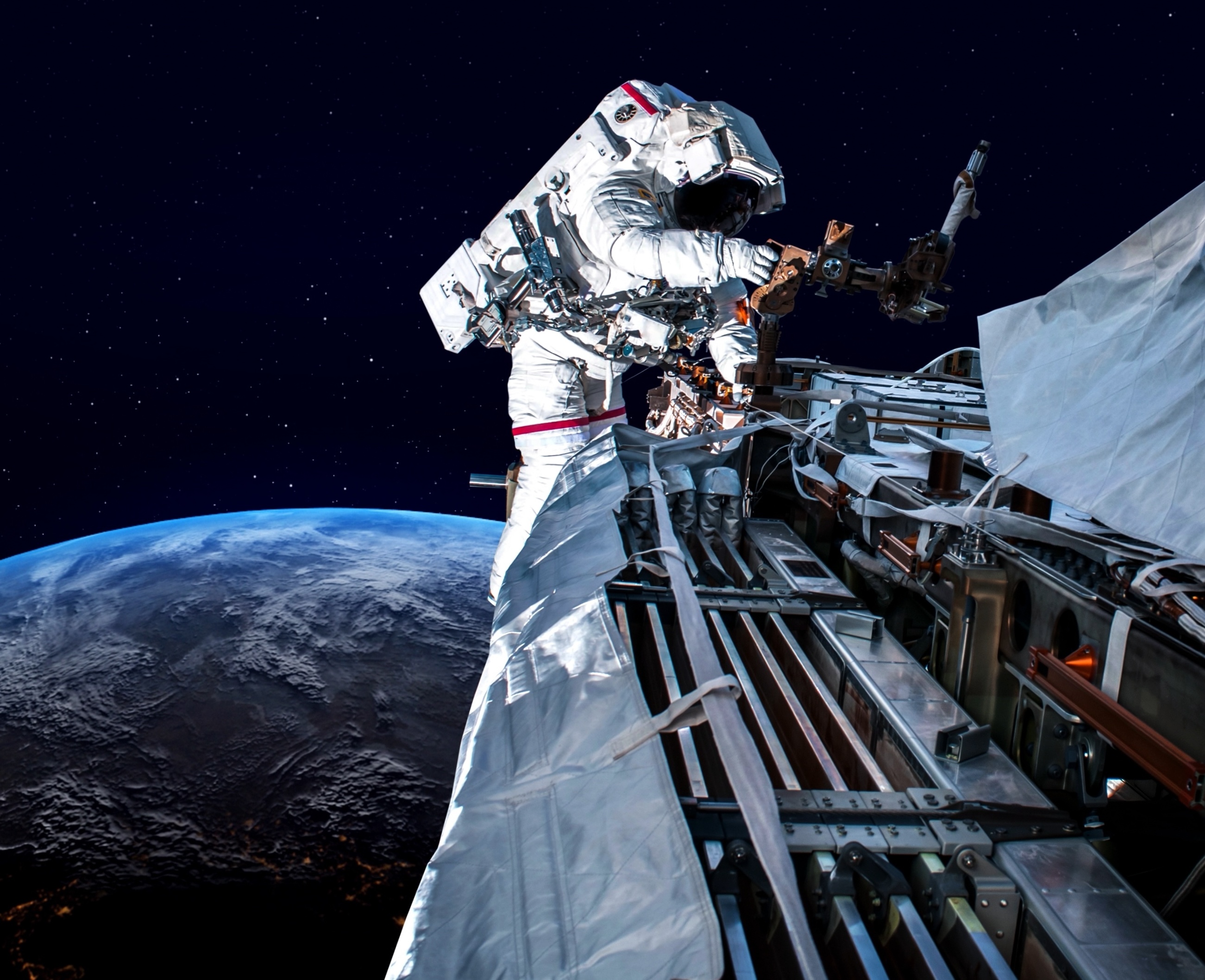
The Space Science and Engineering minor offers students the opportunity to explore space-related subject matter from a curated list of courses and stimulates connections between engineering and science subjects. The interdisciplinary minor is designed to be complementary to students’ majors through the exploration of new subject areas. The goal is to enable students to explore connections between carefully collated courses that span human response to space travel, spacecraft and habitation energy systems, planetary investigation with robotics, equipment testing with simulations and AI, and remote sensing of planetary environments, structure, and change.

Curriculum Requirements
The Space Science and Engineering minor requires a minimum of 16 credit hours, built around a foundation of calculus, physics, and chemistry prerequisites. Students complete two science core courses — Astrophysics and Dynamic Planets — alongside one engineering core course chosen from options like Electric Circuits, Engineering Dynamics, or Materials Science and Engineering. The remaining credits are drawn from a curated list of electives spanning remote sensing, planetary geology, quantitative physiology, and AI/data science, allowing students to tailor their path toward specific space-related career interests. A C average is required across all coursework, and up to three credit hours may overlap with a student's major.
FAQs
Space Science and Engineering is the interdisciplinary study of how humans observe, explore, and operate in space — spanning astrophysics and planetary science, spacecraft and habitation systems, robotics, remote sensing, and the technologies that make satellite communication, security, and human space travel possible. It brings together science and engineering disciplines to prepare students for the rapidly growing workforce behind missions like NASA's Artemis program and the expanding satellite and space technology industries.
Outcome 1: Explain the formation, structure, and evolution of galaxies, stars, and our solar system using calculus-based physics.
Outcome 2: Outline the fundamental concepts of one or more aspects of space science and technology relevant to the pathway through the minor (observation, technology, human travel, robotics, communications, materials, habitation, testing with computer simulations, AI).
Outcome 3: Apply science, engineering, and technology to design and implement solutions to space science and engineering challenges with consideration of safety, welfare, and global factors.
Assessment: Faculty quantitatively measure how well each outcome was satisfied based on student performance. The Space Science and Engineering Task Force will annually review the strengths and weaknesses of each course based on grades as well as feedback; they will conduct surveys of all students in the minor during the first 2 years of the program, and review those outcomes as well.
Given the large number of potential pathways through the minor, we will have the following advisors to guide students to connected electives that will help them achieve career goals.
Dr. Cynthia Ebinger will advise Earth and Environmental Science, Ecology and Evolutionary Biology, and River-Coastal Science & Engineering majors
Dr. Mattew Escarra will advise Physics and Engineering Physics majors
Dr. Kenneth McLaughlin will advise Mathematics and Computer Science majors
Dr. Mark Mondrinos will advise Biomedical Engineering, Neuroscience, and Cell and Molecular Biology majors
Dr. Daniel Straus will advise Chemistry and Chemical and Biomolecular Engineering majors
The Space Science & Engineering minor will not officially be added to the catalog until Fall 2027. In the meantime, if you plan to declare the minor next fall, please contact Dr. Cynthia Ebinger to express your interest and to be connected with internship opportunities.
Contact Us
Laurie O'Brien
Associate Dean for Undergraduate Programs
lobrien2@tulane.edu
Dr. Cynthia Ebinger
Department of Earth and Environmental Sciences
cebinger@tulane.edu