
Master's Degree in Chemistry
Master's Degree in Chemistry
Tulane's Department of Chemistry is the ideal size for a graduate program-we are large enough to provide you with exciting research opportunities, yet small enough to treat you as an individual. We hope you will visit our campus to discuss how our graduate program fits with your research interests and career goals.
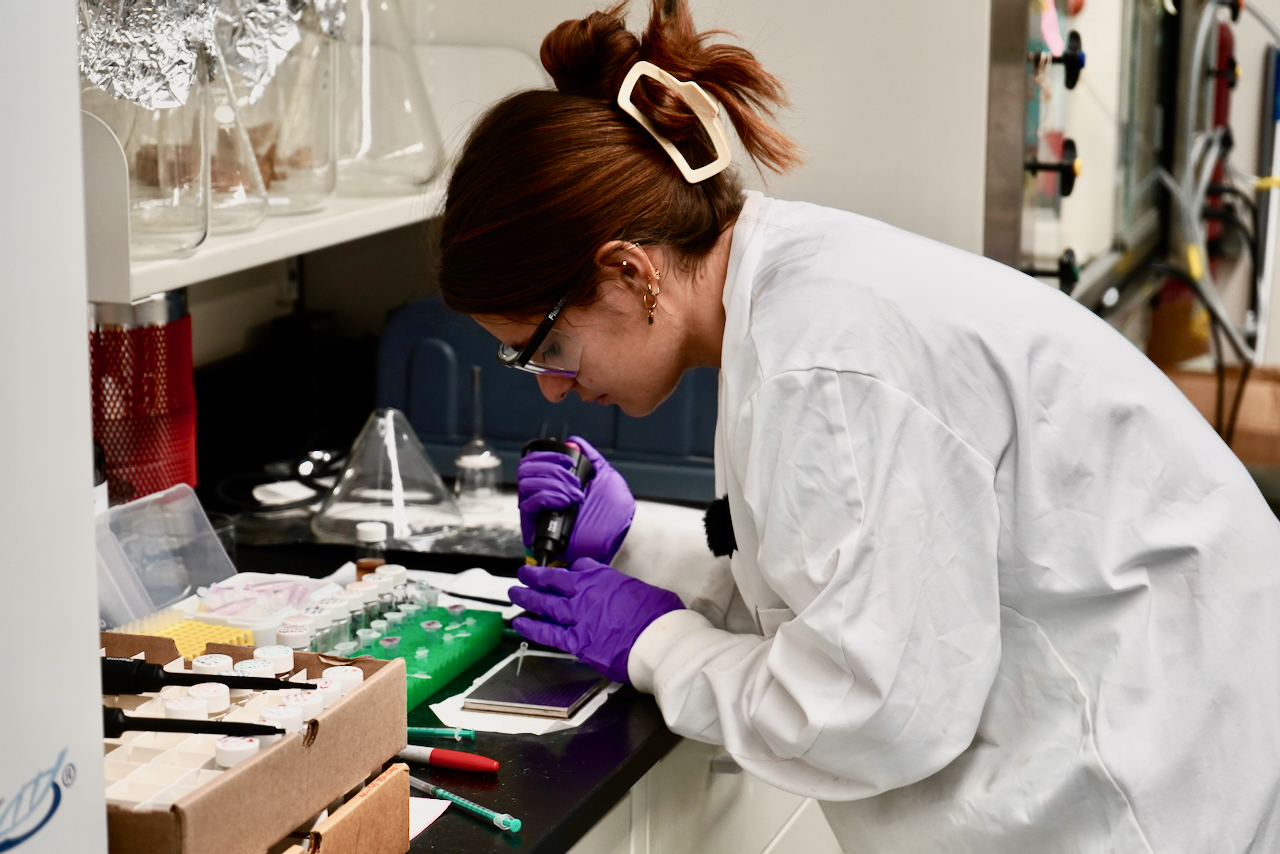
Tulane's graduate program in chemistry offers a balance between coursework and research. During the first two semesters, in addition to starting courses, students meet with individual faculty members and select a dissertation research advisor. After the first year, emphasis shifts towards research.
4+1 Accelerated Master's Program
Current Tulane undergraduate students can earn this M.S. degree with just one additional year of study. This accelerated program allows you to count graduate-level courses toward both your B.S. and M.S. degrees, providing a fast track to an advanced credential.

What You'll Learn
The Chemistry MS program balances rigorous coursework with hands-on research, letting students build depth in areas like quantum mechanics, statistical mechanics, inorganic and organometallic chemistry, and advanced organic chemistry. Students choose four core courses aligned with their interests, then round out the degree with electives and, optionally, research within the department. Weekly participation in departmental seminars throughout the program keeps students connected to current work and ideas across the field.
Research
While the Chemistry MS is a non-thesis degree, students have the option to incorporate hands-on research into their program, working within the department under faculty in areas like bio-organic, biophysical, organometallic, and synthetic organic chemistry. Students who choose this path commit at least four hours per week of research for each credit hour earned and submit a summary paper to their supervising faculty member. This research option, paired with required weekly departmental seminars, gives students meaningful exposure to the department's active research beyond the classroom.
Meet Our Faculty
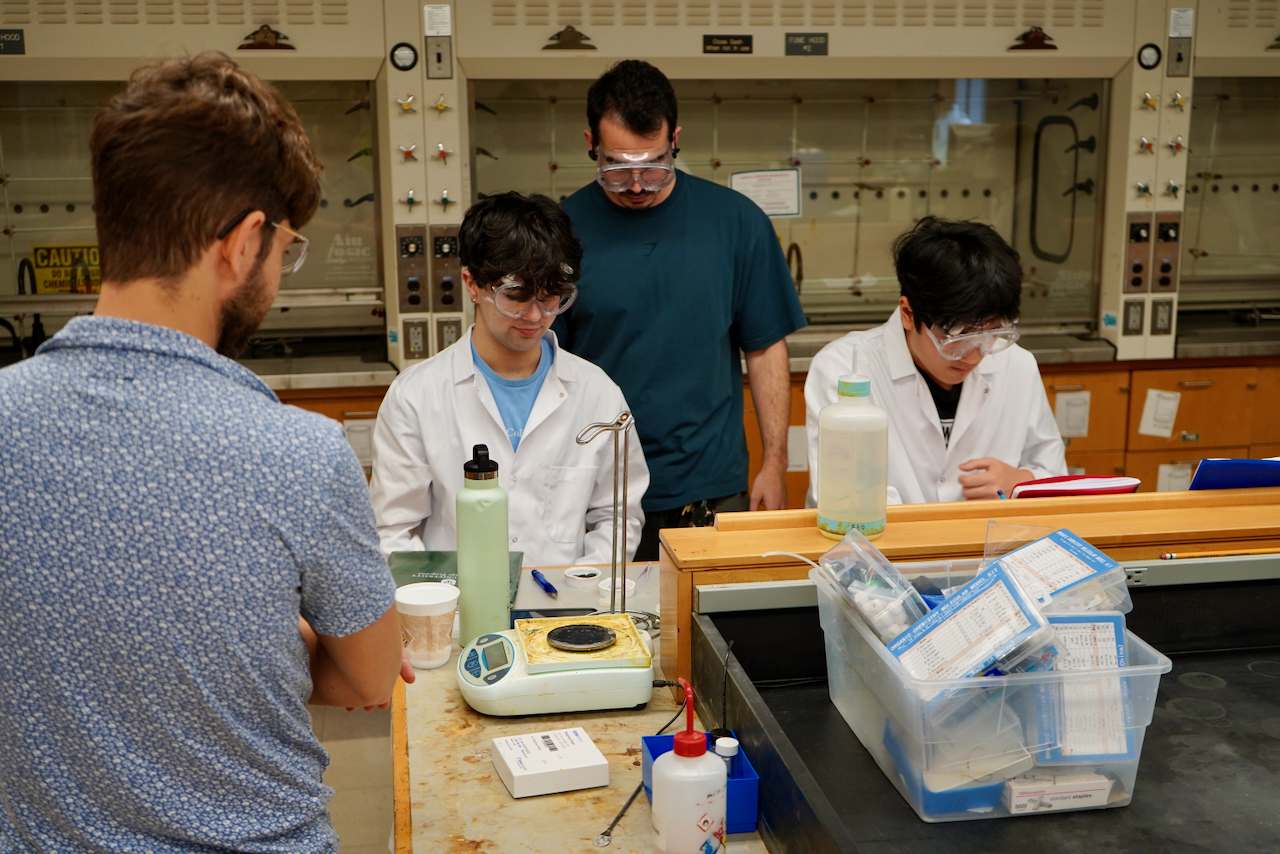
Chemistry faculty at Tulane bring deep expertise across specialized research areas, including bio-organic, biophysical, physical inorganic, organometallic, and synthetic organic chemistry, as well as crystallography, spectroscopy, and quantum theory. During their first year, students meet individually with faculty members to explore research interests and identify potential mentors before selecting a research advisor. Tulane's chemistry department is intentionally sized to be large enough to offer a wide range of research opportunities while remaining small enough for faculty to treat every student as an individual.
Curriculum Requirements
Completion of the Ph.D. degree requires four core courses and two additional courses, along with successful completion of six cumulative examinations. Students must also present a literature seminar and maintain seminar attendance throughout the program. Beyond coursework, degree completion requires a dissertation research prospectus, demonstrated progress in research, and an oral defense of the dissertation research.
Career Benefits and Pathways
A Master's in Chemistry from Tulane opens doors across the chemical and pharmaceutical industries as well as continued academic research. Many graduates go on to careers as research chemists, quality control or process chemists, or laboratory scientists at chemical and pharmaceutical companies. Others use the degree to strengthen their path toward a Ph.D. or a post-doctoral research appointment at a university.
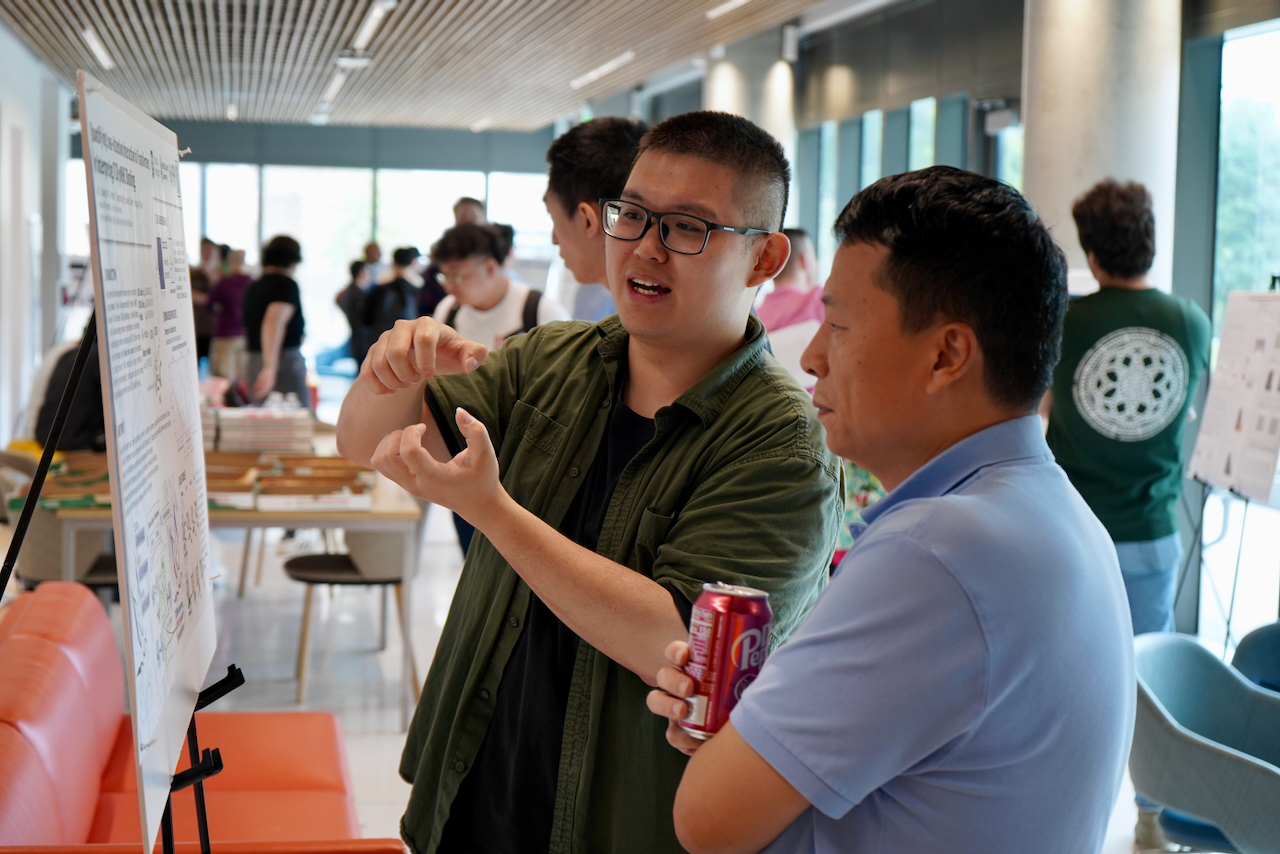
Learn more about the admissions process or apply now!
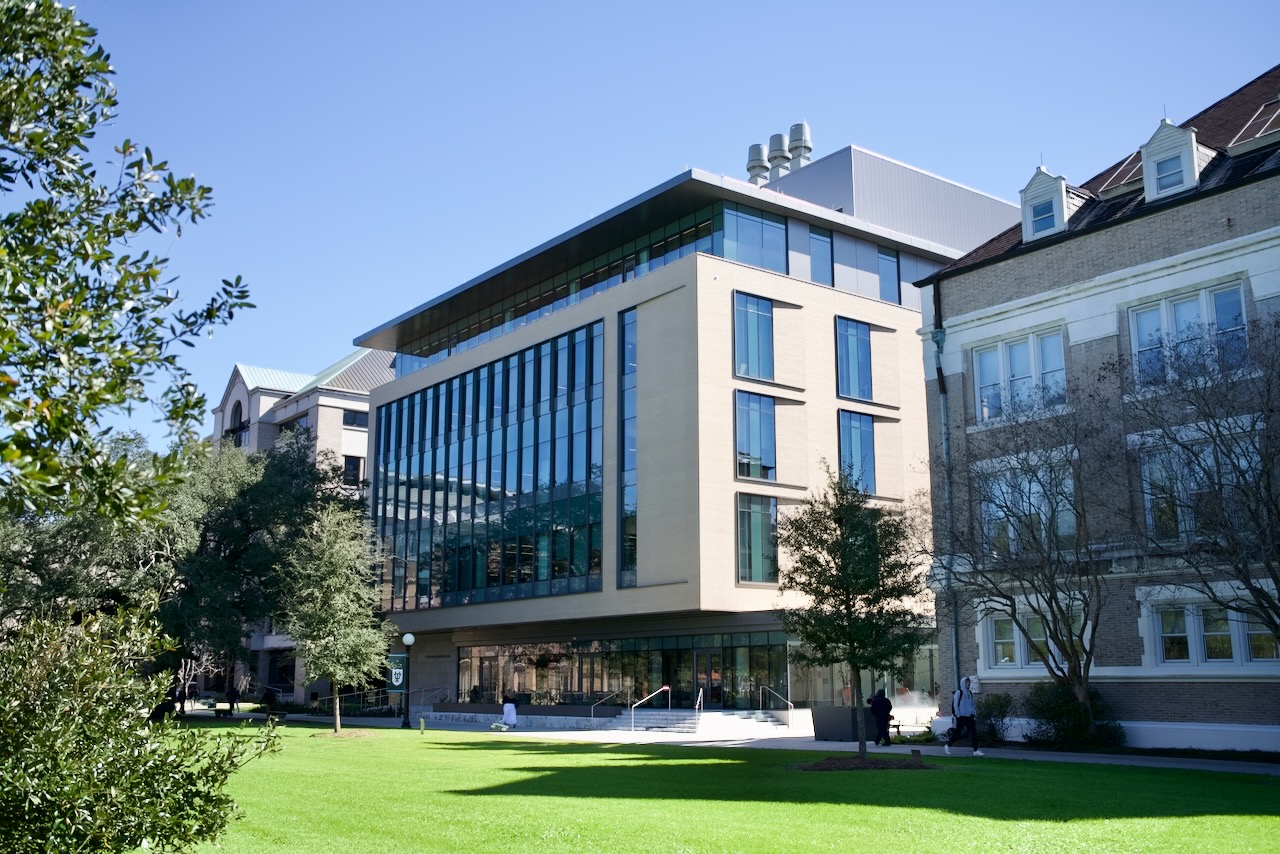
Find full tuition information and the financial aid process.
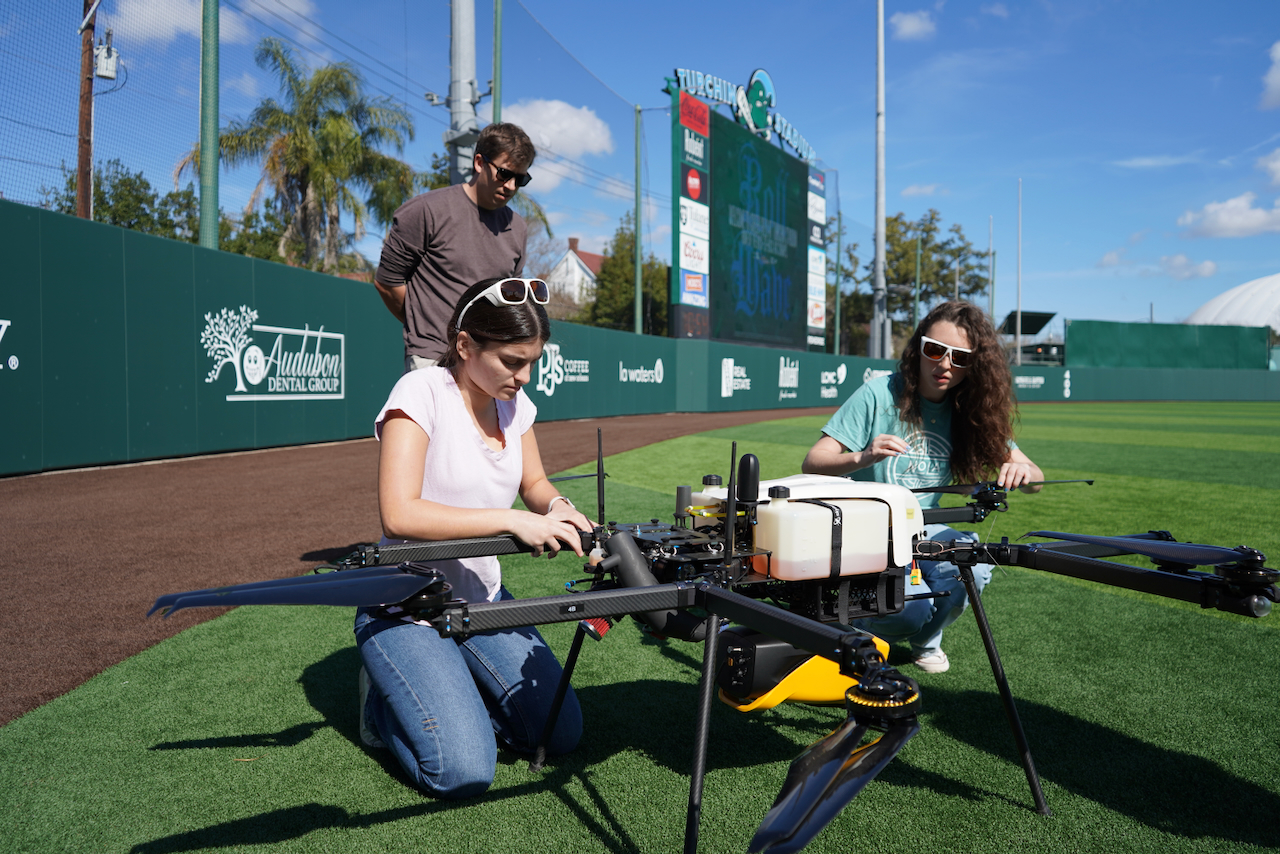
Get to know what makes this place a launchpad for the next generation of scientists and engineers.
FAQs
Chemistry is the study of matter and the reactions and interactions that shape it, spanning specialties from organic and inorganic chemistry to biochemistry and physical chemistry. It combines classroom learning with laboratory investigation to understand the fundamental building blocks of the physical and biological world.
Graduate students desiring transfer of graduate credits earned at another school should submit their requests in writing to the Graduate Advisory Committee. A maximum of 18 hours of transfer credit will be accepted in the case of a student entering with a Master's degree. Students will not be excused from core courses unless they can demonstrate having taken for credit an equivalent course. University regulations state that courses cannot be transferred to Tulane until the student has been in residence at Tulane at least one semester.
To petition courses for transfer, the student must present the following information to the Graduate Studies Committee:
-A copy of his/her transcript from the University where the course to be transferred was taken
-A syllabus from the course including information on the textbook(s) used
-Any additional information, such as copies of tests given, will be helpful
Students may, on occasion, need to leave the university during the course of their degree program for extended periods. The student should, if able, submit a written petition for a leave to the Graduate Affairs Committee of the department. The statement should include an explanation of the need for taking the leave and state the duration of the requested leave. In general, teaching assistantship and Fellowship support will be discontinued during leaves of absence. Degree requirements and tenure requirements will be postponed by the length of the leave or by a period of time deemed appropriate by the Graduate Affairs Committee.
Graduate students are expected to maintain the highest ethical standards while performing all course and laboratory work. Graduate students serve as a part of the academic core of the University; a high degree of integrity is required within the University in order for the information generated by its members to be of any use to the society it serves. The obligations of Graduate students include, but it is not limited to, the following:
-Completing examinations and other written coursework following the instructions of the professor. Unless explicitly instructed to do otherwise, students will work independently using only materials approved by the instructor. Cheating on coursework is a violation of the Honor Code, and individuals accused of cheating will be subject to investigation and potential sanctions as outlined in the University Honor Code.
-Accurately citing the work of others in all written coursework, and all professional activities such as papers submitted to scientific journals. Knowingly plagiarizing the work of another individual is a violation of the Honor Code and will be penalized according to procedures outlined in the Tulane Graduate School Bulletin.
-Presenting only laboratory results which the student believes to be correct. Falsification of data is a serious violation of the Honor Code and is subject to sanctions by the Graduate School.
Courses
Students are encouraged to complete their course requirements as quickly as possible after entering the program, preferably within their first four semesters. An ordinary load in the program is 9 to 12 hours (at least three 3-lecture courses). Students must meet the Continuous Registration Requirement of the Chemistry Department (as defined in Appendix A). In addition, the Department requires that students must successfully complete 6 hours of coursework (not including independent study or thesis research) each semester during the first two semesters of graduate study. Students unable to satisfy this requirement may be subject to academic probation. Failure to comply with this requirement in two consecutive semesters is adequate justification for expulsion from the program.
Cumulative Exams
The written requirements for both the M.S. and Ph.D. degrees are fulfilled by passing Cumulative exams; PhD requires the passing of 6 cumulative exams, and the M.S. requires the passing of 2 cumulative exams. Exams are given 10 times a year, with separate examinations being given in the areas of inorganic, organic, and physical chemistry. Students may attempt one or more individual exams each exam period
Full-time Residence Status
A student must be registered for at least three hours of graduate credit per semester. A student must be registered in full-time residence status in order to hold a fellowship, a scholarship, or any of the various kinds of assistantship.
Tenure for Degree Students
Tenure is the maximum period of time normally permitted for the completion of all requirements for a degree, and it is determined on the basis of consecutive academic years from the date of registration for Graduate Study at Tulane or another institution. Tenure is not affected by residence status. Under certain circumstances, the Dean may extend tenure, but a student whose period of graduate study is unduly prolonged or interrupted may be required to perform additional work. Specific tenure requirements are given for each degree below.
The maximum time allowed by the Department to obtain an M. S. degree is three years, or one year from entering the M.S. program, whichever is greater.
Graduate Prospectus
By the end of their fourth semester, students must submit a written proposal of their dissertation research project and make an oral presentation of it to their dissertation committee. The prospectus should be approximately two thousand words in length (excluding legends and references). The cover sheet should state the student’s name, department/program, the title of the proposed dissertation, and the name of the chair and the other members of the committee. The introduction of the prospectus should contain a summary of earlier work on the problem in question. The body should include an orderly description of the work accomplished to date and a plan for future investigations. The conclusion should clearly state the anticipated nature of the investigation results. Major sources of information should be indicated, and a selective bibliography included. The prospectus should be submitted to the SSE Dean’s Office along with a signed copy of the prospectus approval form.
Grade Point Evaluation
Graduate students are expected to maintain a cumulative B average (3.0 on the system outlined below) in formal coursework.
The B average is determined by this scale:
A = 4.0 points per credit hours
A- = 3.67 points per credit hours
B+ = 3.33 points per credit hours
B = 3.0 points per credit hours
B- = 2.67 points per credit hours
No grades below B- count towards graduate credits. Written approval of the Graduate Affairs Committee is required prior to dropping a course.
A student who does not possess a cumulative average of 3.0 will be placed on probation for one or more semesters or dismissed. During the semester(s) on probation, the student must regain a 3.0 average while taking a full load of courses. Failure to regain a 3.0 average during the probationary semester will result in either dismissal, provisional status for one semester, or limitation to a Master of Science degree, depending on faculty decision. A student on provisional status must remove him/herself from provisional status within one semester or face automatic dismissal.
In addition to the departmental requirement of a 3.0 cumulative average, the SSE Graduate Program requires that any student receiving a grade of B- (irrespective of his/her GPA) be considered for probation. Receipt of two grades of B- or one grade below B- results in automatic probation and consideration for dismissal by the Graduate Dean in consultation with the department.
Graduate School Deadlines
The SSE Dean's Office website should be consulted to determine the appropriate deadlines for submission of the prospectus and for submission of the dissertation/thesis in order to be awarded a diploma for a Ph.D. Degrees earned in the School of Engineering (SSE) are awarded three times a year: December, May, and August. There is only one commencement program, and that is held in May. A candidate must be present to receive the degree unless the candidate has been excused by the associate dean. A request to receive a degree in absentia must be filed in the dean’s office at the time the diploma form is submitted. Candidates for degrees are required to complete an application for degree form on or before the deadline dates.
A student admitted to the Department of Chemistry Graduate Program must maintain continuous registration in a degree-granting division of the University (exclusive of Summer Session) until the awarding of the degree. A student who is not registered for course work in a degree-granting division of the University must be registered in Master's Research or Dissertation Research in order to remain in continuous registration, including the summer semesters.
The continuous registration requirement applies both to resident and non-resident students.
Students who have not completed the minimum course work requirement of the department must enroll for a minimum of 3 hours of coursework per semester, including Techniques of Research (CHEM 7900) and Division Seminar (CHEM 7880). All students who have completed their minimum coursework requirements, passed all required courses, and successfully completed their dissertation prospectus are required to register for Master's Research (CHEM-9980) or Dissertation Research (CHEM-9990). This entitles students to full student privileges. The Department will assume that students failing to maintain continuous registration have withdrawn from the University. The Department reserves the right not to readmit. If a student is readmitted, he/she is obligated to pay the applicable fee required to maintain continuous registration. Students who have completed minimum course work requirements may register for additional courses in lieu of Master's Research or Dissertation Research. Tuition and fees will be assessed according to the usual schedule.
Compensation and Employment Outside the University
Non-research-related employment outside the department is strictly prohibited. Any off-campus employment for remuneration may disqualify a student from receiving SSE Graduate Program financial aid. Research-related activities endorsed by the Department, such as paid internships or exchange fellowship programs, are allowed.
Chemistry Forms
- Chemistry PhD Requirements Checklist
- Research Advisor Selection Form
- Thesis/Dissertation Committee Form
- Prospectus Review Form
- Annual Report Form
- Missing Receipt Affidavit
- Graduate Travel Reimbursement Form
Chemistry Graduate Handbooks
Tulane Resources
Contact Us
Ilianna H. Kwaske, Ph.D.
Associate Dean for MS Programs & Professional Education
ikwaske@tulane.edu
Sarah Berry
Director of MS and Certificate Programs
smccarty@tulane.edu
Rosie Chavez
Director of Graduate Programs
rchavez@tulane.edu
Department of Chemistry
For graduate affairs, recruiting, and registration, contact:
Jennifer French, jfrench2@tulane.edu, or Professor Russell Schmehl, russ@tulane.edu