
Department of
Earth & Environmental Sciences
Where Earth is Our Laboratory
The Department of Earth and Environmental Sciences explores the connections between land, water, air, and life. Our faculty and students investigate everything from earthquakes, mountains, rivers, and coastlines to climate, ecosystems, the atmosphere, and other planets. They bring together field research, laboratory experiments, computational modeling, GIS and remote sensing to answer questions that cross traditional scientific boundaries. With New Orleans and the Gulf Coast as an extraordinary living laboratory, students at every level gain opportunities to conduct meaningful research, learn alongside internationally recognized scientists, and build the knowledge and skills needed to address environmental challenges around the world.




EENS in the Spotlight


FAQs
Earth and Environmental Science is the interdisciplinary study of how the Earth formed and continues to evolve — using chemistry, biology, and physics to understand the workings of Earth and planetary systems, from climate and water to earthquakes, volcanoes, and the deep history of life on the planet. It's a field grounded in understanding how natural processes shape the world, and increasingly, how human activity is reshaping it in turn.
The Department of Earth & Environmental Sciences offers the following:
- A curriculum that emphasizes active and collaborative learning and provides ample opportunities for research, field trips, and study abroad coursework around the world.
- Field seminar courses including courses with field trips to local coastal settings, Death Valley National Park, and sites in the Ouachita Mountains.
- Undergraduate research opportunities, which may accrue course credit and/or may be part of a Grand Challenges or Honors thesis.
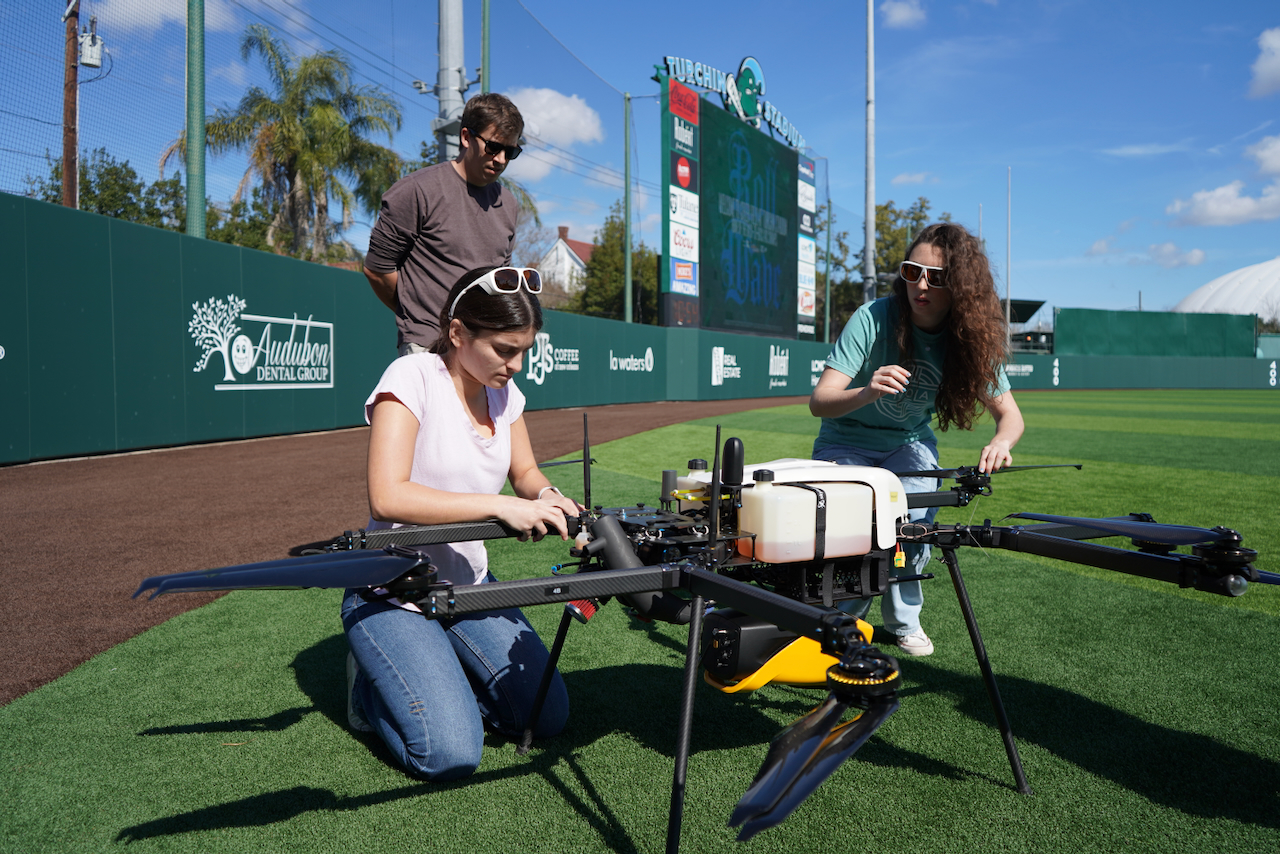
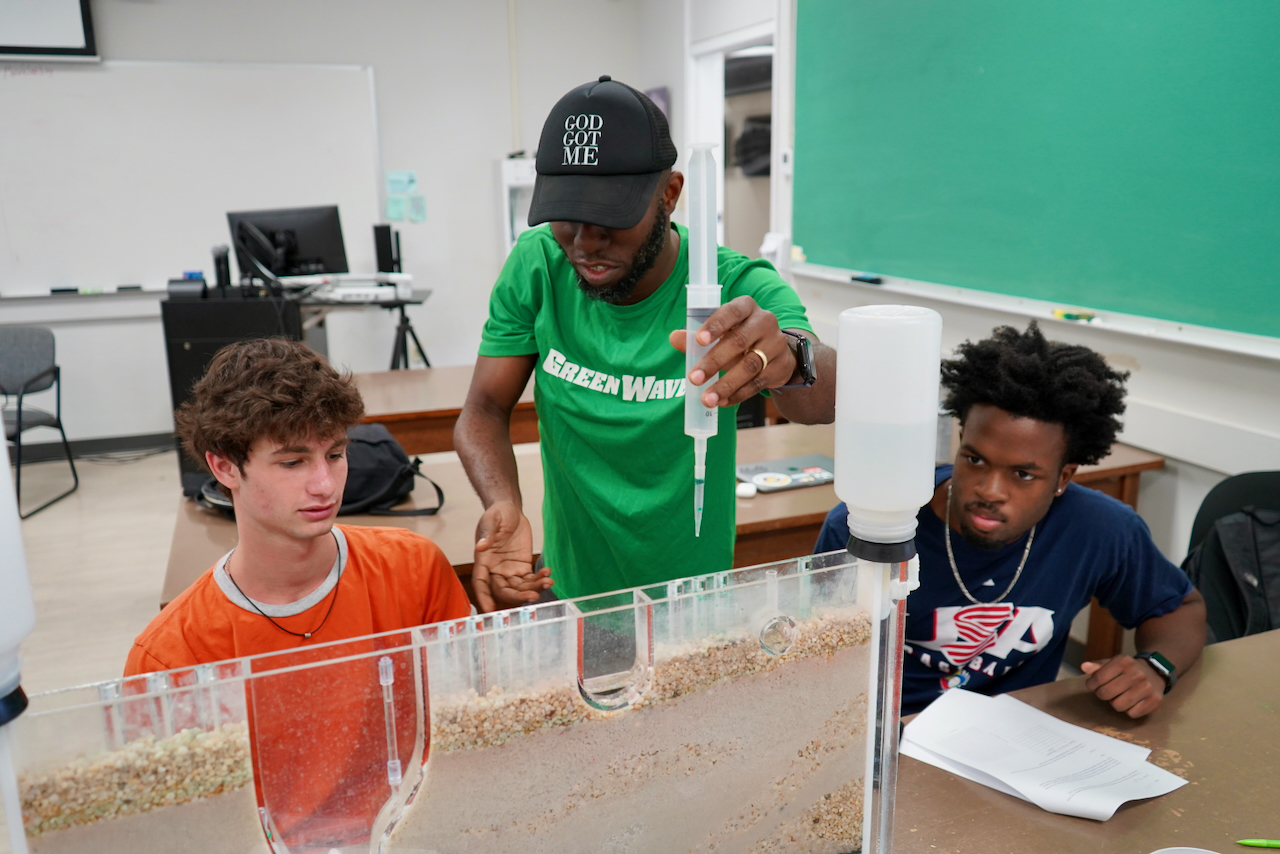
- Laboratory, computer facilities, and field equipment with the latest technologies that support both hands-on coursework and undergraduate research.
- Opportunities for Geographic Information Systems (GIS) Certificate Program and training for career paths in the energy industry, environmental and coastal geoscience consulting, and governmental research labs and agencies.
- If you are planning to declare a major (or minor) in the Department of Earth & Environmental Sciences, please fill out this form and return it to the department office (101 Blessey Hall) or email it to ees@tulane.edu. We will match you with a faculty advisor based on your responses.
Please contact our undergraduate major advisors to become a major!
Department Graduate Handbook (see this for EES MS and PhD program requirements, milestones and policies)
Qualifying Exam Preparation Tips
Ph.D. Qualifying Exam Outcome Form
Dissertation Prospectus Approval Form
Masters Thesis Committee Approval Form
Emergency loans through Tulane
Conference Travel Grants
Tulane Office of Graduate & Postdoctoral Studies
SEPM - Society for Sedimentary Geology
Research Grants
American Association of Petroleum Geologists’ Grants in Aid Program
Geological Society of America
--Graduate Student Research Grants
--GSA Division Grants
--Farouk El-Baz Student Research Award
Gulf Coast Association of Geological Societies’ Student Grant Program
Mineralogical Society of America’s Grant for Student Research in Mineralogy & Petrology
SEPM - Society for Sedimentary Geology’s Student Assistance Grants
Sigma Xi’s Grants in Aid of Research Program
Fellowships
NASA’s Earth and Space Science Fellowship Program
National Science Foundation’s Graduate Research Fellowship Program
The National Academies – Graduate and Postdoctoral Fellowships
If you are planning to declare a major (or minor) in the Department of Earth & Environmental Sciences, please fill out this form and return it to the department office (101 Blessey Hall), or email ees@tulane.edu. We will match you with a faculty advisor based on your responses.
EENS 1110/1115 – Planet Earth
EENS 1300/1305 – Earth as a Living Planet
EENS 2220/2225 - Earth and Life Through Time
COLQ 4120 – The Grand Canyon
EENS 3550 – Shark Paleobiology
EENS 3056 – Communicating Natural Hazards
SCEN 3880 – Writing Intensive (to make upper-level EENS courses writing intensive, with the instructor's permission)
EENS 1050 – Dinosaurs
EENS 1400 – Global Climate Change
EENS 2020 – Environmental Geology
EENS 2060 – Intro to Geography
EENS 2070 – Weather and Climate
EENS 2230 – Oceanography
EENS 3050 – Natural Hazards and Mitigation Website: Natural Disasters
COLQ 4120 – Grand Canyon Colloquium
Contact Us
Tulane University
101 Blessey Hall
New Orleans, LA 70118
Email: ees@tulane.edu
Phone: 504-247-1798
Fax: 504-865-5199