
Ph.D. in Physics
Ph.D. in Physics
Our program is designed to produce physicists who can tackle complex problems at the frontiers of knowledge. You'll progress through a carefully structured curriculum that builds from foundational courses in classical mechanics, quantum theory, and electromagnetism to advanced specialized topics aligned with your research goals. With access to modern laboratory facilities and computational resources, you'll work on cutting-edge projects that contribute to advancing physics while building a strong publication record. By the time you complete your dissertation, you'll be prepared to lead research programs, mentor students, and make meaningful contributions to physics and related fields.
ApplyRequest InformationDepartment of Physics and Engineering Physics

What You'll Learn
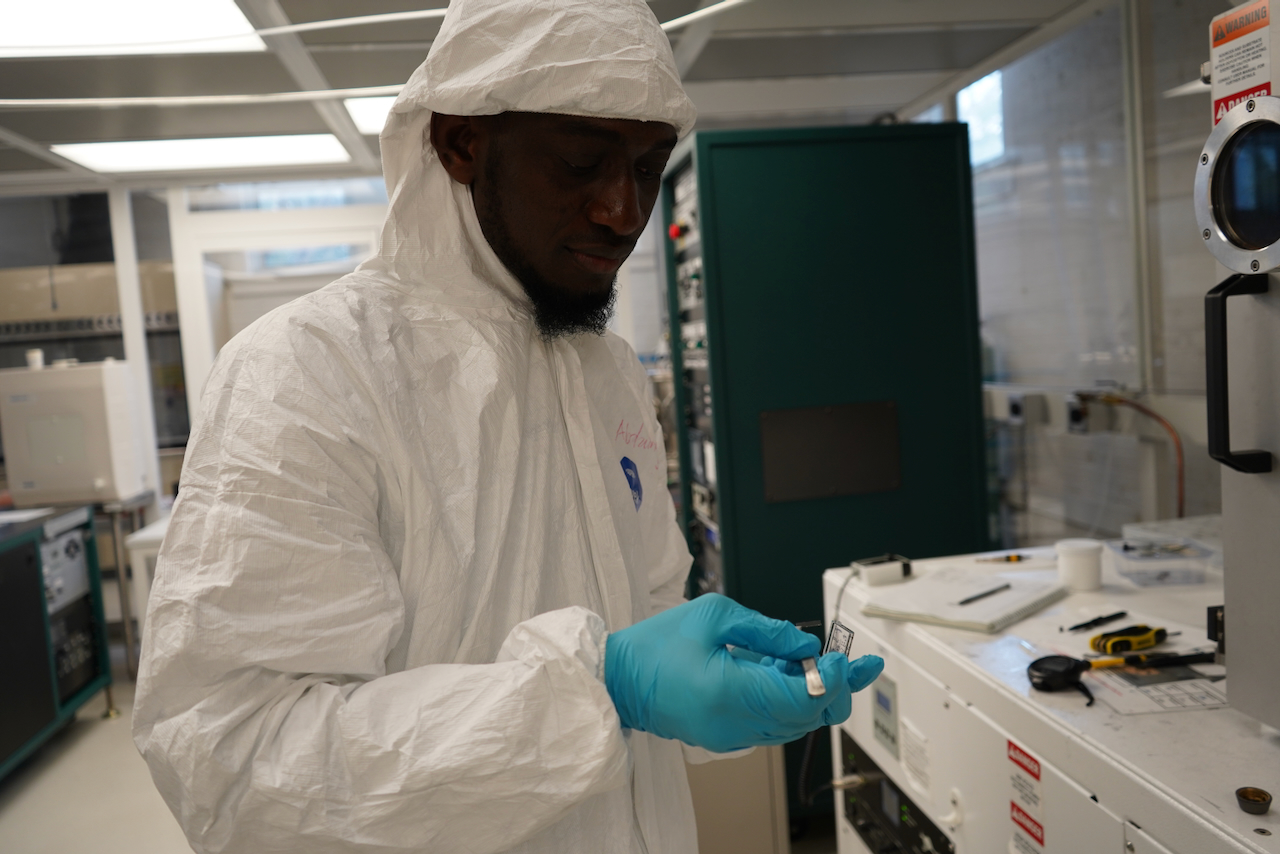
You'll master the foundational principles of physics through advanced coursework in theoretical mechanics, statistical mechanics, quantum mechanics, and electromagnetic theory. Beyond core courses, you'll explore specialized topics through electives and computational physics, gaining expertise in your chosen research area. Through research projects beginning in your first year, you'll learn to design experiments, analyze data, and contribute original discoveries to the field.
Research
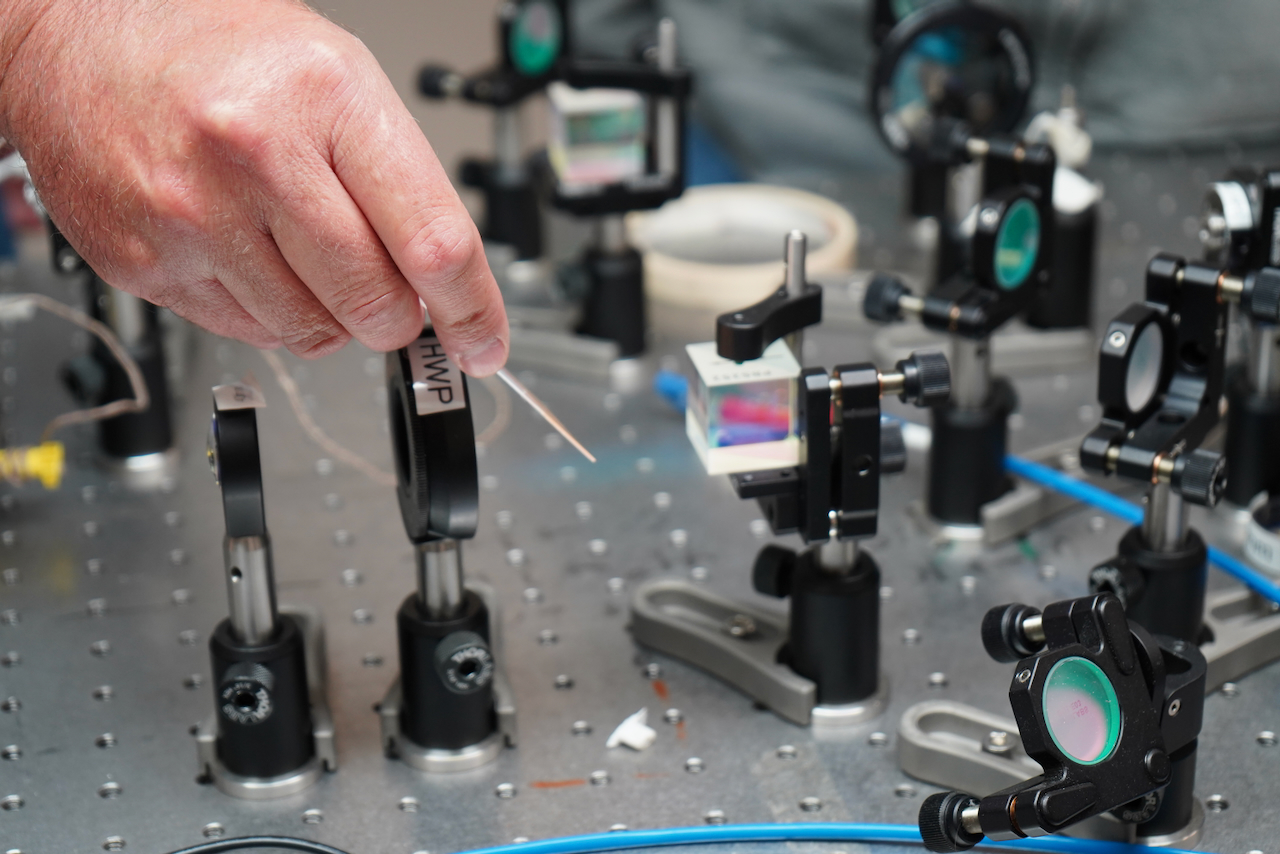
Our faculty conduct cutting-edge research across diverse areas of physics, and you'll engage in original research from your first semester. Working closely with your faculty advisor, you'll design and execute research projects that contribute to advancing physics knowledge. Your dissertation research, conducted over several years, will result in publishable findings and demonstrate your ability to conduct independent, high-impact research.
Meet Our Faculty
Tulane's Physics faculty are accomplished researchers and dedicated mentors committed to your professional development. Your faculty advisor will guide you through coursework and research, while your dissertation committee—comprising faculty experts in your research area—provides ongoing feedback and support. Our faculty maintain a strong commitment to student mentorship and success.
Curriculum Requirements
The PhD requires at least 48 credit hours of graduate coursework, including core courses in theoretical mechanics, statistical mechanics, quantum mechanics (I and II), and electromagnetic theory. You'll complete four research courses, pass a 6-hour written qualifying exam covering classical and modern physics by your fourth semester, defend a dissertation prospectus by your sixth semester, and culminate your studies with a final dissertation defense.
Career Benefits and Pathways
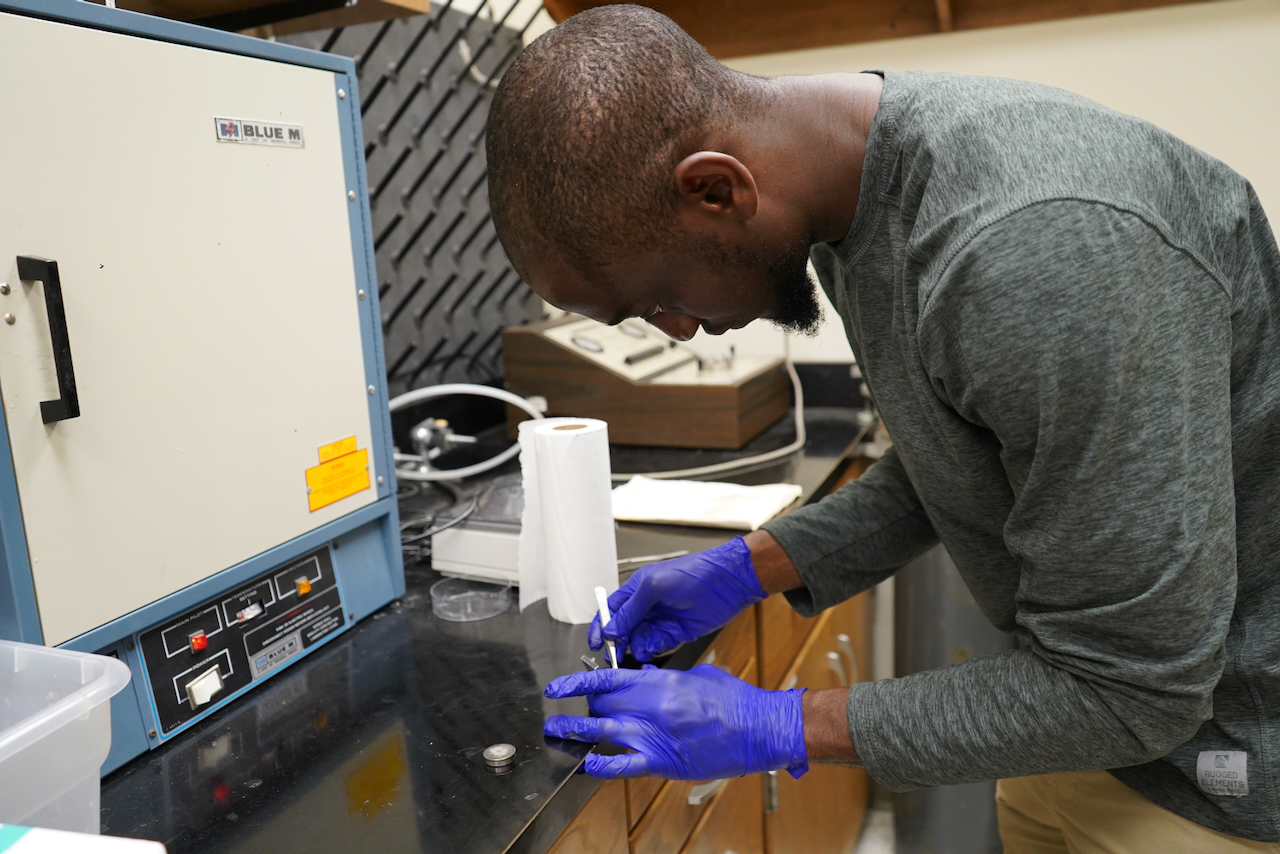
The PhD degree in physics provides the academic foundation and laboratory training to conduct high-quality research at the frontiers of physics. Graduate students from diverse backgrounds become creative physicists with the skills to thrive in educational, industrial, or government laboratory settings.
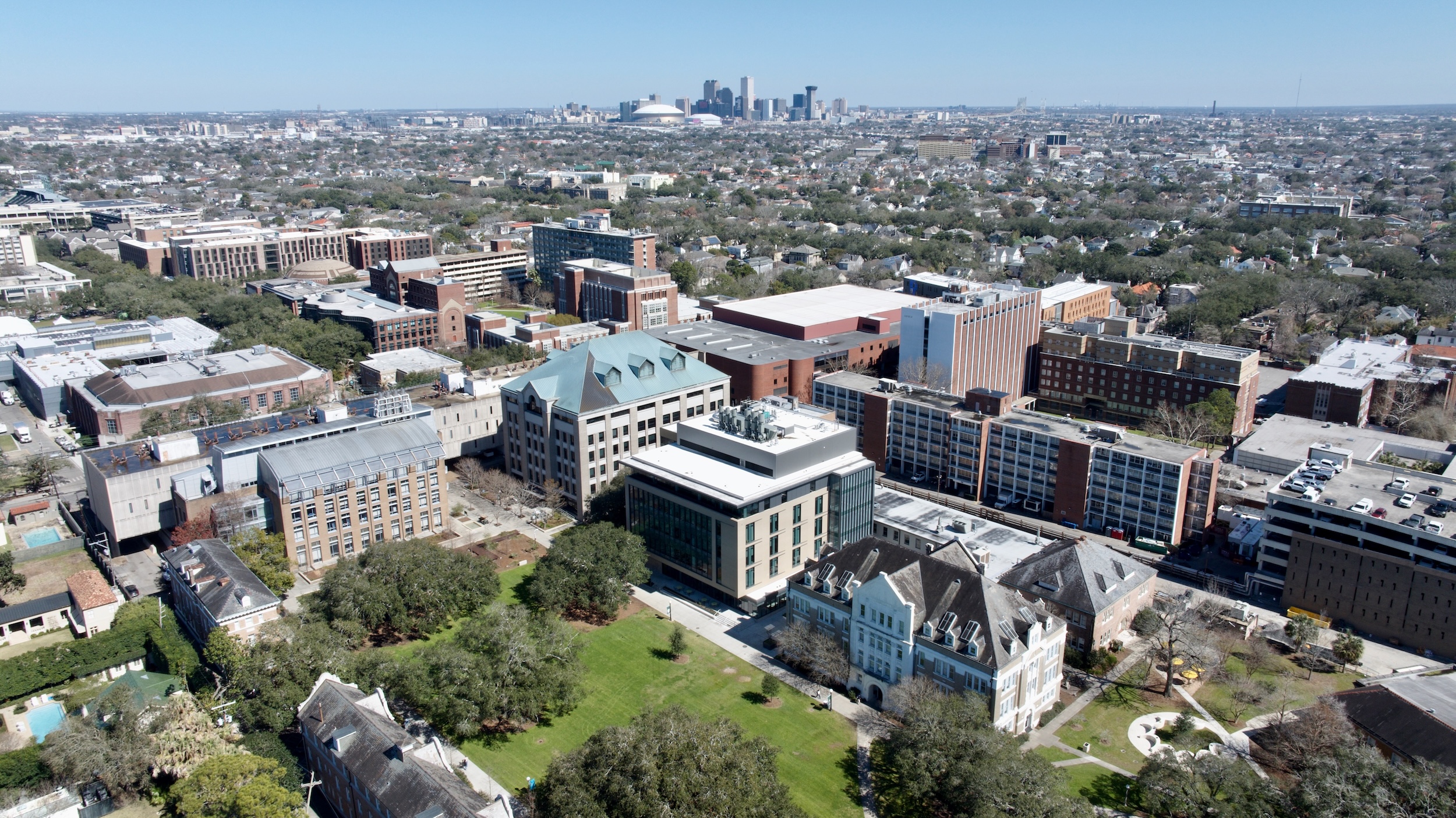
Learn more about the admissions process or apply now!
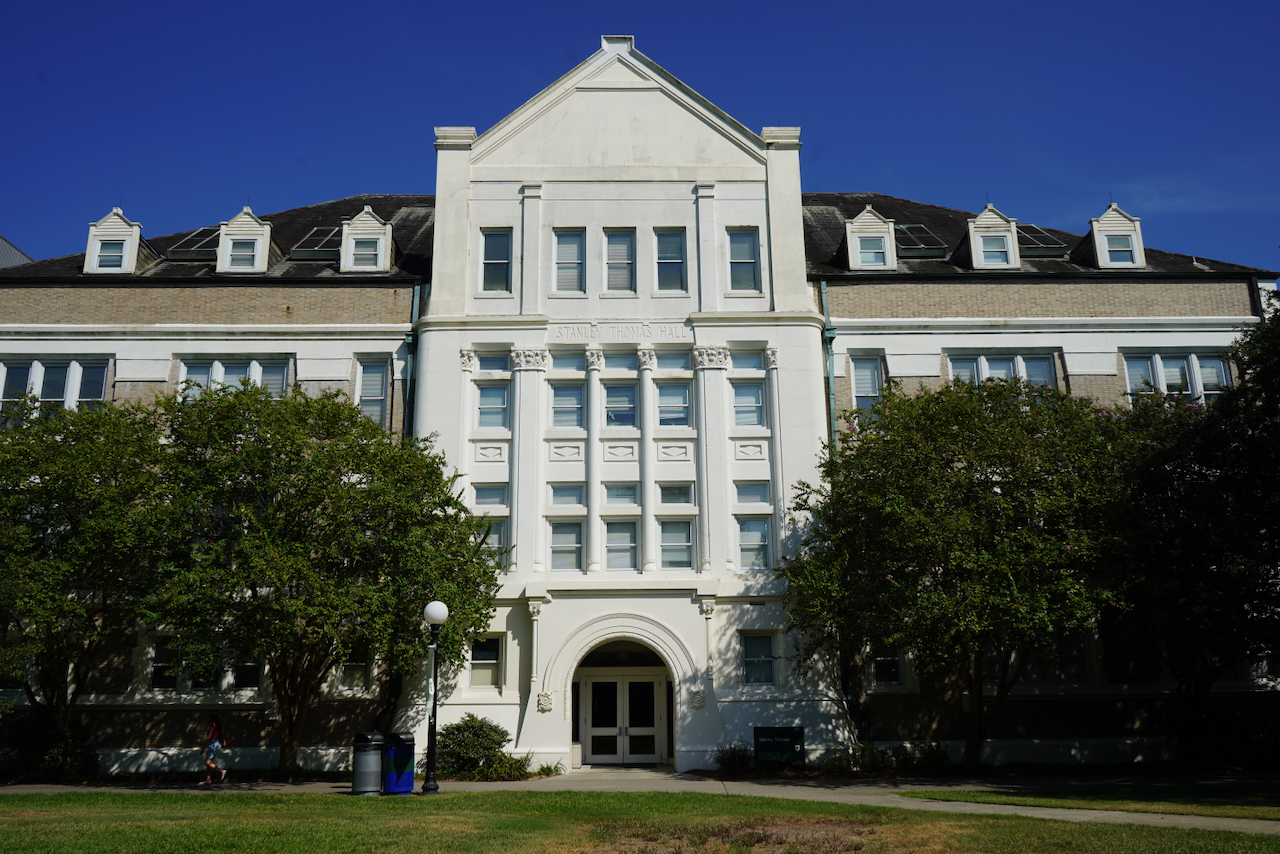
Find full tuition information and the financial aid process.
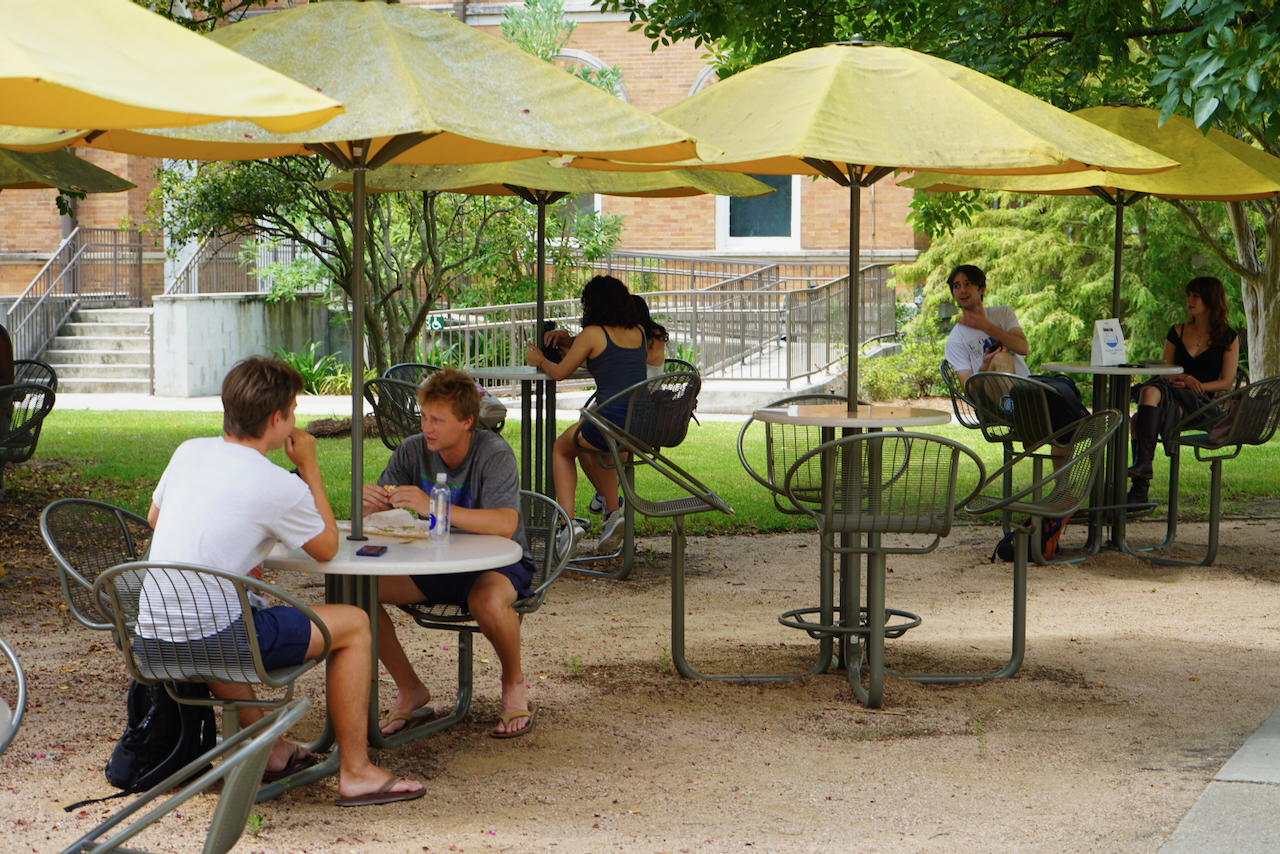
Get to know what makes this place a launchpad for the next generation of scientists and engineers.
FAQs
Physics is the fundamental natural science that seeks to understand how the universe works—from the smallest subatomic particles to the largest cosmic structures. It combines observation, experimentation, and mathematical theory to explain the forces, energy, and matter that govern all natural phenomena.
Per the SSE Handbook: “A course in which a grade of C+ or less is earned cannot be counted toward a graduate degree. If a student receives one B- grade, the student is immediately considered for probation by the Associate Dean for Graduate Studies in consultation with the appropriate department/program. If a student receives two grades of B-, or one grade less than B-, during his/her tenure in the School of Science and Engineering, the student is placed on probation and considered for dismissal by the Associate Dean in consultation with the appropriate department/program.”
A student who does not maintain the minimum 3.0 GPA in graduate course work will be subject to disenrollment.
The Ph.D. qualifying exam is a 6-hour written examination covering classical and modern physics, given by the department once per semester. It covers the typical U.S. undergraduate physics curriculum with an emphasis on classical electrodynamics and quantum mechanics. The qualifying exam must be attempted no later than the fourth semester of graduate study. Students who are sufficiently prepared may take it during the first year with approval of the research supervisor. The passing score is 60%. Students who fail the qualifying exam must retake it until passed. Students may attempt the qualifying exam up to three times. Any student who has not passed the qualifying exam by the end of the fifth semester of graduate study will be disenrolled from the program.
Students who have met course requirements and have passed the qualifying exam become degree candidates. Those who have not are required to attend the weekly departmental colloquium.
Prior to the prospectus defense, the student and research supervisor form the faculty dissertation committee, which consists of the research supervisor (chair) and at least two other faculty members. One member may be from another Tulane department or other appropriate institution. The faculty dissertation committee (henceforth the committee) examines the student at the prospectus defense and oral dissertation defense, and approves the final written dissertation.
The prospectus defense demonstrates to the committee that the student has acquired sufficient knowledge in the specific research area and can effectively express that knowledge orally and in writing. A student must pass the written qualifying exam before undertaking the prospectus defense. The prospectus defense consists of a written proposal and an oral defense:
The written research proposal (10-15 pages) contains an introduction, proposed research and justification, methods, preliminary results, and discussion. It must be reviewed and approved by the committee before the end of the sixth semester of graduate study.
The oral defense is a two-hour oral examination, including a research presentation (about 45 minutes) prepared by the student, given by the committee. The examination includes specific questions about the student's research as well as broadly focused questions on the general area of research. The oral defense must be attempted following approval of the written proposal, no later than the sixth semester of graduate study. If failed, the student is normally given a second attempt in the following semester. After two failures the student will be disenrolled from the program (exceptions due to extenuating circumstances may be granted by vote of the faculty).
Students who are sufficiently prepared are strongly encouraged to take the prospectus defense before the end of the 4th semester of graduate study.
It is expected that, after completion of the oral prospectus defense, the Ph.D. candidate will obtain a Research Assistantship (RA) in the same research group. In order to encourage this, the faculty have adopted a policy for allocating graduate students on TA's to research groups.
In April of each year, every Ph.D. student will submit a brief annual progress report (1-2 pages) to the research supervisor (and committee, when formed) summarizing research progress and accomplishments over the previous year, and future plans and milestones. This requirement is waived in the years when the prospectus and thesis defenses are completed.
The final requirement for the Ph.D. degree is a written dissertation based on original research, approved by the committee, and its defense in an oral exam by the committee.
The master's degree is not a requirement for the Ph.D. in physics. Admission with financial aid is only for doctoral students. However a graduate student may receive an M.S. in Physics based on 30 hours of approved graduate credit, or (if the research supervisor agrees to offer this option) an M.S. in Physics based on 24 hours of approved graduate credit plus a thesis deemed acceptable by the research supervisor. Research course credit does not count toward the M.S. in Physics degree.
Students in the Physics Ph.D. program cannot transfer to the Materials Physics and Engineering Ph.D. program without going through the regular admissions process.
Exceptions to the requirements, due to extenuating circumstances, may be granted by vote of the PEP faculty.
There is currently no application fee for either the Physics or Materials Physics and Engineering (MPE) Ph.D. program.
Every student on a TA, RA, or fellowship receives a full waiver of Tulane tuition. The student is responsible for paying student fees and 50% of their health insurance (the School of Science and Engineering subsidizes the other 50% of the health insurance premium).
We accept students from many foreign countries, including China and India.
The GRE General Test is required for all applicants. The GRE Physics subject exam is strongly recommended, but not required, for applicants to the Physics Ph.D. Program. The TOEFL exam is required for all applicants who are non-native English speakers.
We have no minimum required GRE scores. We do have a minimum TOEFL score of 80. The test scores are used, along with other indicators such as GPA and recommendation letters, to make relative comparisons of applicants. We look for a complete picture in the application to find the students who we think will fit in best in our department. Test scores are just one part of that picture.
Every applicant is automatically considered for a TA, RA, or fellowship. Most admitted students are offered a TA position. Fellowships are available for exceptional applicants in the Physics program. RA positions may also be available in some research groups.
Our staff is not able to provide individual advice or review your qualifications, other than through the admissions process. We encourage you to submit an application and assure you that every application will receive full consideration in due time.
We can accept unofficial TOEFL and GRE scores, such as photocopies of ETS score reports, at the time of your application. We will use the unofficial scores to make admission decisions. However, if you are admitted and decide to enroll at Tulane, you will need to submit the official ETS scores.
All graduate students are required to carry health insurance, either through the Tulane plan or privately. In the Tulane plan, the student is responsible for paying 50% of their health insurance. The School of Science and Engineering subsidizes the other 50% of the health insurance premium.
Please see the Research section of our website for a description of the research groups in our department. Each student must join one of these groups in order to pursue a Ph.D. in Physics or Materials Physics and Engineering at Tulane. If your area of interest is not represented, you should consider applying to a different university. If you do see a research area at Tulane that interests you, you are welcome to contact the professor in charge to discuss research possibilities in that group.
Graduate students in the department receive financial assistance through teaching assistantships, research assistantships, tuition scholarships, University loans, and Louisiana Board of Regents Fellowships.
Research assistantships are provided by a student's faculty research advisor and are available at the advisor's discretion. Stipend amounts and durations are decided by the advisor, although the research assistantship is normally accompanied by a tuition waiver.
Graduate students in the department receive financial assistance through teaching assistantships, research assistantships, tuition scholarships, University loans, and Louisiana Board of Regents Fellowships.
Research assistantships are provided by a student's faculty research advisor and are available at the advisor's discretion. Stipend amounts and durations are decided by the advisor, although the research assistantship is normally accompanied by a tuition waiver.
In most cases, Ph.D. students who make satisfactory progress toward their degree also receive a summer research stipend. A small number of summer teaching assistantships are normally available and are usually reserved for students with special circumstances.
Contact Us
Rosie Chavez
Director of Graduate Programs
rchavez@tulane.edu
Dan Shantz
Associate Dean for Research and Ph.D. Programs
dshantz@tulane.edu
Dr. Ryan Glasser
Graduate Admissions Director (Physics), rglasser@tulane.edu
Dr. Diyar Talbayev
Graduate Advisor (Physics), rglasser@tulane.edu