
Ph.D. in Computer Science
Ph.D. in Computer Science
The PhD Program in Computer Science guides students from the beginning of graduate study in Computer Science all the way through to completion of their dissertation research.
The objective of the program is to ensure students obtain a solid foundation by requiring them to take graduate courses in a number of core areas of computer science. A depth requirement involving the attendance of a sequence of courses from one or more areas will enable the student to acquire world-class expertise in a research area of concentration.

What You'll Learn
You'll develop both breadth and depth in computer science through core courses spanning foundational areas, specialized electives in your concentration, and hands-on research from day one. From algorithms and systems to computational biology and data visualization, you'll gain cutting-edge knowledge while learning to conduct independent research that contributes original insights to the field.
Research
Students are expected to engage in research early on, possibly as early as their incoming semester, but no later than the third semester. This is facilitated through research courses, as well as through the interdisciplinary project. Students are required to take at least three research classes (9 credit hours). Typically, these classes consist of CMPS 7010 Research Seminar (3 c.h.) and two offerings of CMPS 7020 Research in Computer Science (3 c.h.) across their first two years. CMPS 7010 Research Seminar (3 c.h.) introduces students to research methods in Computer Science and to the research conducted in the department. In the CMPS 7020 Research in Computer Science (3 c.h.) course, PhD students engage in a research project in Computer Science, under the direction of a faculty member, normally the student's faculty advisor.
Meet Our Faculty
Tulane's Computer Science faculty are active researchers and dedicated mentors who involve PhD students in their work from the start. Your faculty advisor will guide you through coursework, research projects, and dissertation work, while your PhD committee—comprising both departmental experts and external scholars—provides ongoing feedback and support throughout your doctoral journey.
Curriculum Requirements
The Ph.D. program requires both breadth and depth in coursework. The breadth requirement ensures students obtain a solid foundation in core computer science areas, while the depth requirement allows students to gain an in-depth and up-to-date understanding of a particular area of concentration. In parallel with coursework, students are also expected to engage in research as early as their incoming semester.
The program requires 48 credit hours of graduate coursework, including core computer science courses, research courses starting in the first year, as well as an interdisciplinary research project. After an oral qualifying examination at the end of the fifth semester, the prospectus presentation is scheduled at the beginning of the seventh semester, and the final milestone is to complete and defend a dissertation.
Career Benefits and Pathways
Tulane Computer Science PhD graduates are well-positioned for careers in academia, industry research labs, and technology companies. Your dissertation research, often published in top-tier conferences and journals, demonstrates your ability to solve complex problems and contribute to advancing the field—opening doors to leadership roles in research, software development, artificial intelligence, cybersecurity, and emerging computing technologies.
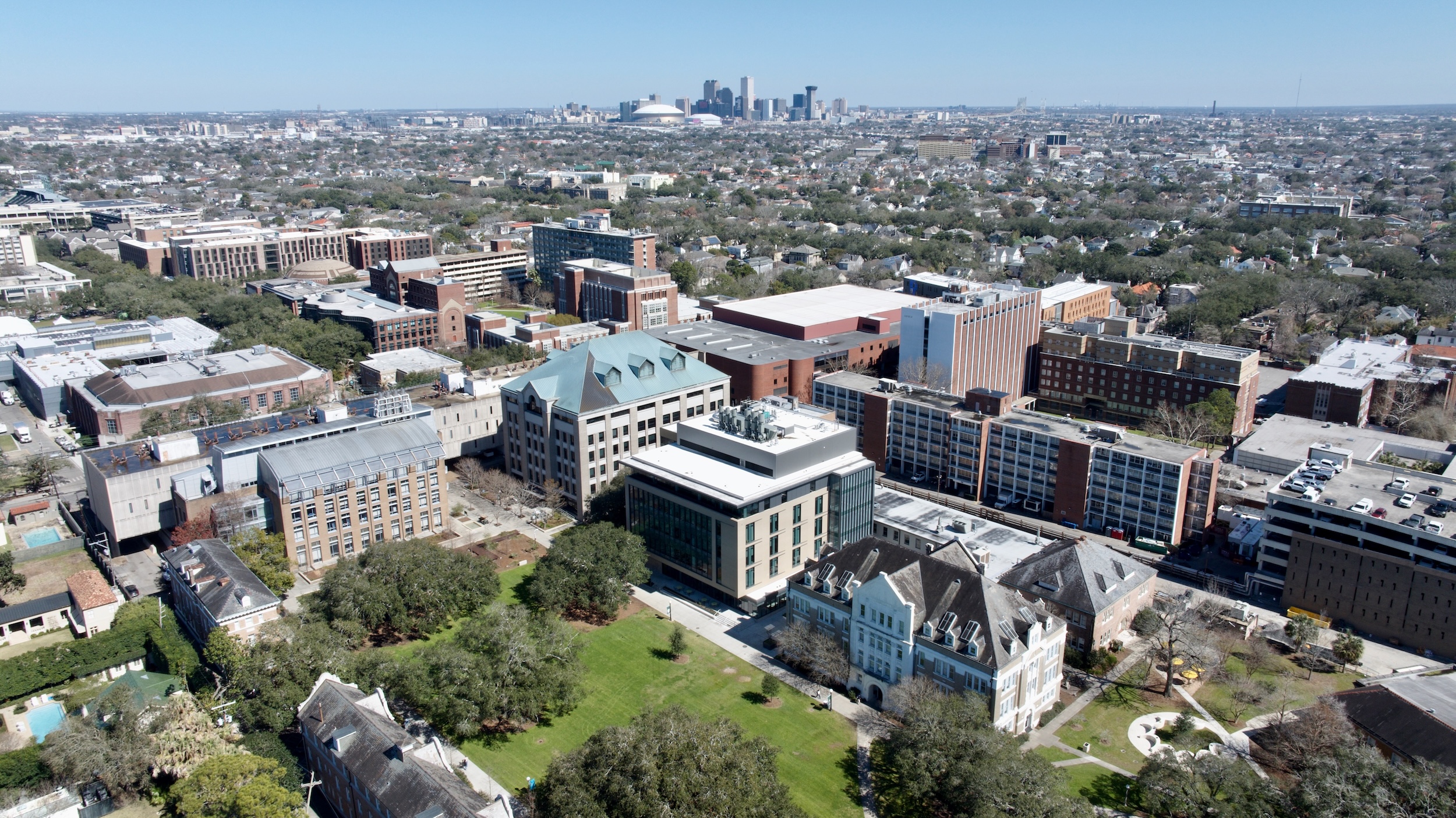
Learn more about the admissions process or apply now!
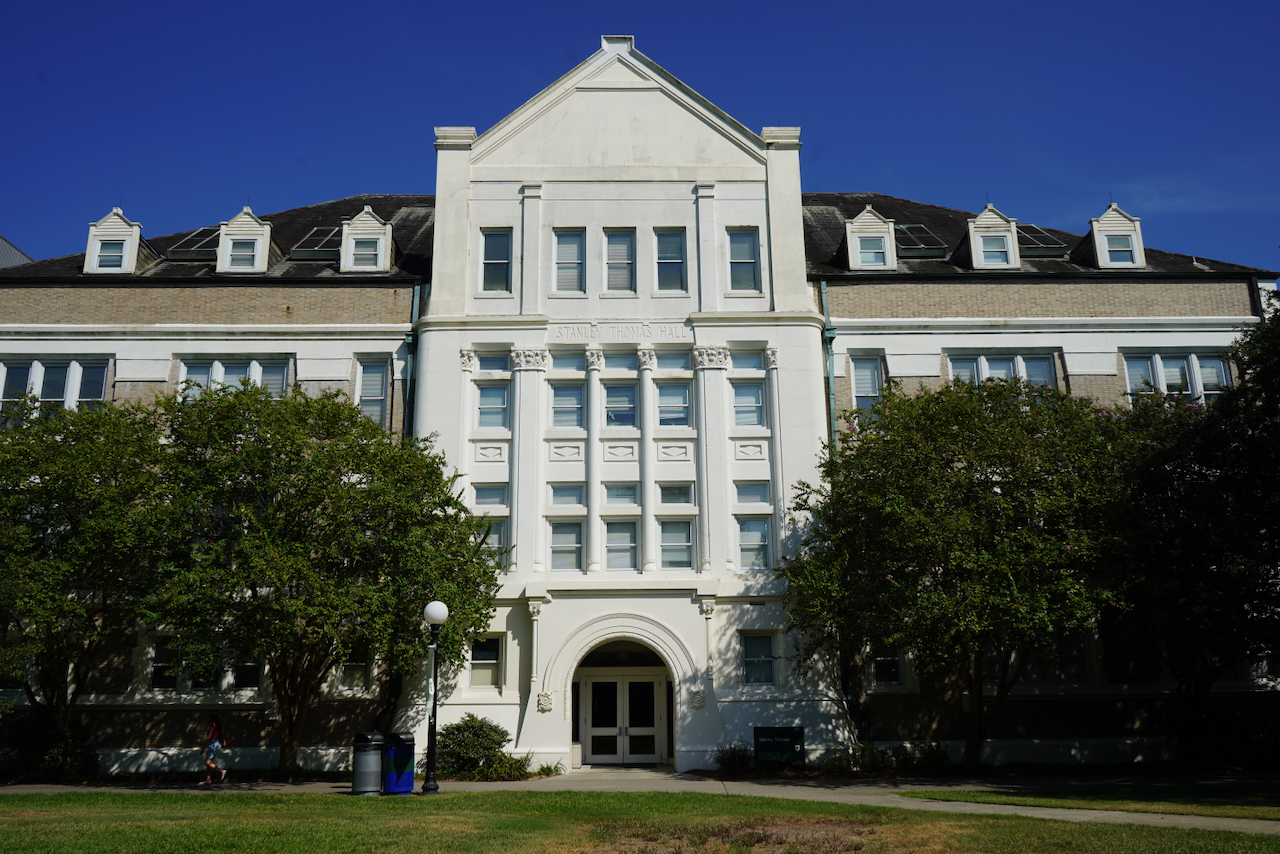
Find full tuition information and the financial aid process.
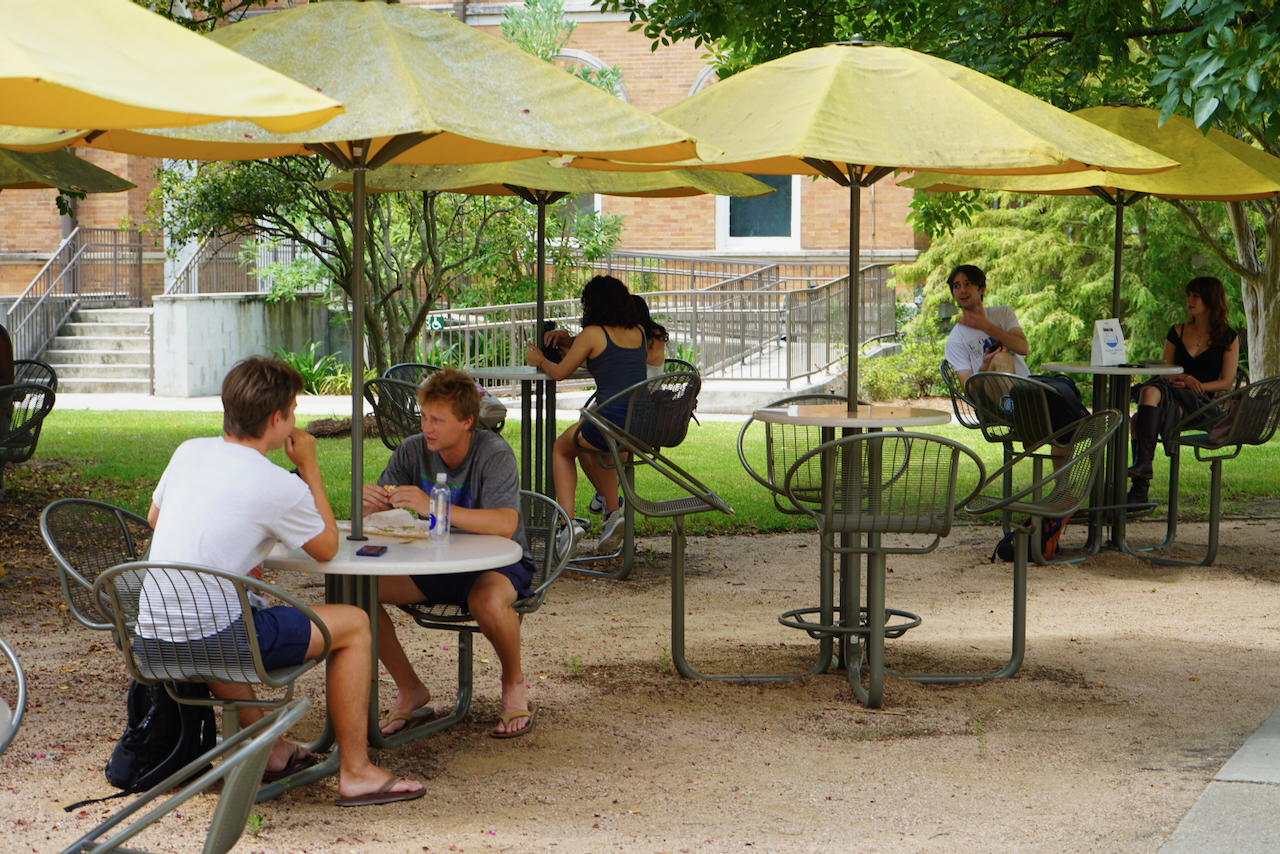
Get to know what makes this place a launchpad for the next generation of scientists and engineers.
FAQs
Computer science is the study of computation, algorithms, and information—exploring what problems can be solved with computers and how to solve them efficiently. It combines theoretical foundations with practical applications, bridging mathematics, engineering, and domain-specific fields to create technologies that transform society.
Up to 24 credit hours of graduate work at Tulane or another university may be transferable for credit if the work is in Computer Science or in a related area. In particular, students who have completed a Master's degree may be able to have some of their Master's coursework count for the Ph.D. degree. The suitability of a course transfer is approved on a course-by-course basis and is not guaranteed.
-Must be submitted within the first semester
-Can transfer at most 1 core course; must have an A- or higher
-Other courses must have a B or higher
-An exception could be given to transferring PhD students
-Attach detailed syllabi of the requested courses to transfer
-Fill out the form and email it with the detailed syllabi to cs-grad@tulane.edu.
Artificial Intelligence and Data Science
Students with an interest in multi-agent systems, artificial intelligence, and/or data science, with applications to group decision-making, recommender systems, and issues in AI, ethics, and society, are invited to contact Professor Nicholas Mattei. Possible areas for interdisciplinary collaboration include mathematics, economics, psychology, and law.
Accessible Computing and Human-Computer Interaction
Students with an interest in human-computer interaction, accessible computing, and computational social science are invited to contact Professor Saad Hassan. Professor Hassan conducts interdisciplinary research on technologies to facilitate inclusion, learning, and creative expression for individuals with disabilities, with a focus on Deaf and Hard of Hearing (DHH) users. Possible areas for collaboration include linguistics, psychology, neuroscience, sociology, art, and design. Students with disabilities are welcome and encouraged to apply.
Computational Biology and Bioinformatics
Students interested in research in computational biology and bioinformatics are invited to contact Professor Ramgopal Mettu. Professor Mettu currently conducts research in protein structure prediction, protein-protein interactions, compound screening, and computational immunology. This research is performed in collaboration with faculty from the Tulane Medical School.
Computational Geometry, Shape Matching, or Trajectory Analysis
Students with interest in computational geometry, shape matching, or trajectory analysis, possibly in combination with topology or statistics or with biomedical image analysis, are invited to contact Professor Carola Wenk. Possible areas for an interdisciplinary collaboration include mathematics, biomedical engineering, and biology.
Machine Learning
Students interested in working in the theory, algorithms, and applications of machine learning are invited to contact Professor Jihun Hamm. Professor Hamm's current research topics include deep learning, adversarial machine learning, non-convex optimization, and machine learning applications in biomedical sciences.
Students interested in machine learning algorithms for natural language processing are invited to contact Professor Aron Culotta. Professor Culotta conducts interdisciplinary research on social media analysis with applications to public health, emergency management, and political science. His recent methodological focus includes domain adaptation, semi-supervised learning, and causal inference.
Students interested in working on the algorithms and applications of computer vision and machine learning are invited to contact Professor Zhengming (Allan) Ding. Professor Ding's current research focuses on developing advanced AI learning algorithms to generate accurate, reliable, and transparent decisions, including topics such as deep learning, transfer learning, and multi-view learning, and applies to AI-assisted interdisciplinary applications such as smart transportation, medical data analysis, WiFi-based robot localization, and material fracture detection.
Students interested in reinforcement learning and multi-agent learning are invited to contact Professor Zizhan Zheng. Professor Zheng's current research topics include (deep) reinforcement learning, federated learning, learning in games, machine learning security and safety, and their applications in robotics, healthcare, environmental science, and social sciences.
Networking and Security
Students interested in the theory and applications of networking and security are invited to contact Professor Zizhan Zheng. Professor Zheng develops optimization and learning-based solutions to improve the efficiency and security of wireless networks, cyber-physical systems, and cloud and edge computing systems. Possible areas for interdisciplinary collaboration include smart transportation, energy systems, and environmental science.
Scientific Visualization and Computer Graphics
Students with interest in data visualization, computer graphics, and/or image processing are invited to contact Professor Brian Summa. Possible areas for interdisciplinary collaboration include mathematics, biology, neuroscience, physics, earth and environmental sciences, and chemical and biochemical engineering.
Computer Systems and Architecture
Students with interest in computer systems and architecture are invited to contact Professor Lu Peng. Currently, his research topics include GPU/CPU performance, power, reliability, and security design, deep learning neural network accelerators and applications, blockchain acceleration and applications, and quantum processor architecture and compilers. Possible areas for an interdisciplinary collaboration include physics, healthcare, and biological sciences.
Contact Us
Rosie Chavez
Director of Graduate Programs
rchavez@tulane.edu
Dan Shantz
Associate Dean for Research and Ph.D. Programs
dshantz@tulane.edu
Interested students should contact the graduate office director/manager at
cs-grad@tulane.edu