
Seminars, News, and Events
Seminars, News, and Events
Computer science at Tulane extends well beyond the classroom. Throughout the year, the department brings faculty, students, and visiting scholars together through colloquia and distinguished lectures that feature leading voices in the field, while news from the department highlights the research, awards, and achievements of its community. From advances in artificial intelligence and data science to privacy and security, these conversations reflect the interdisciplinary spirit that defines computer science at Tulane.
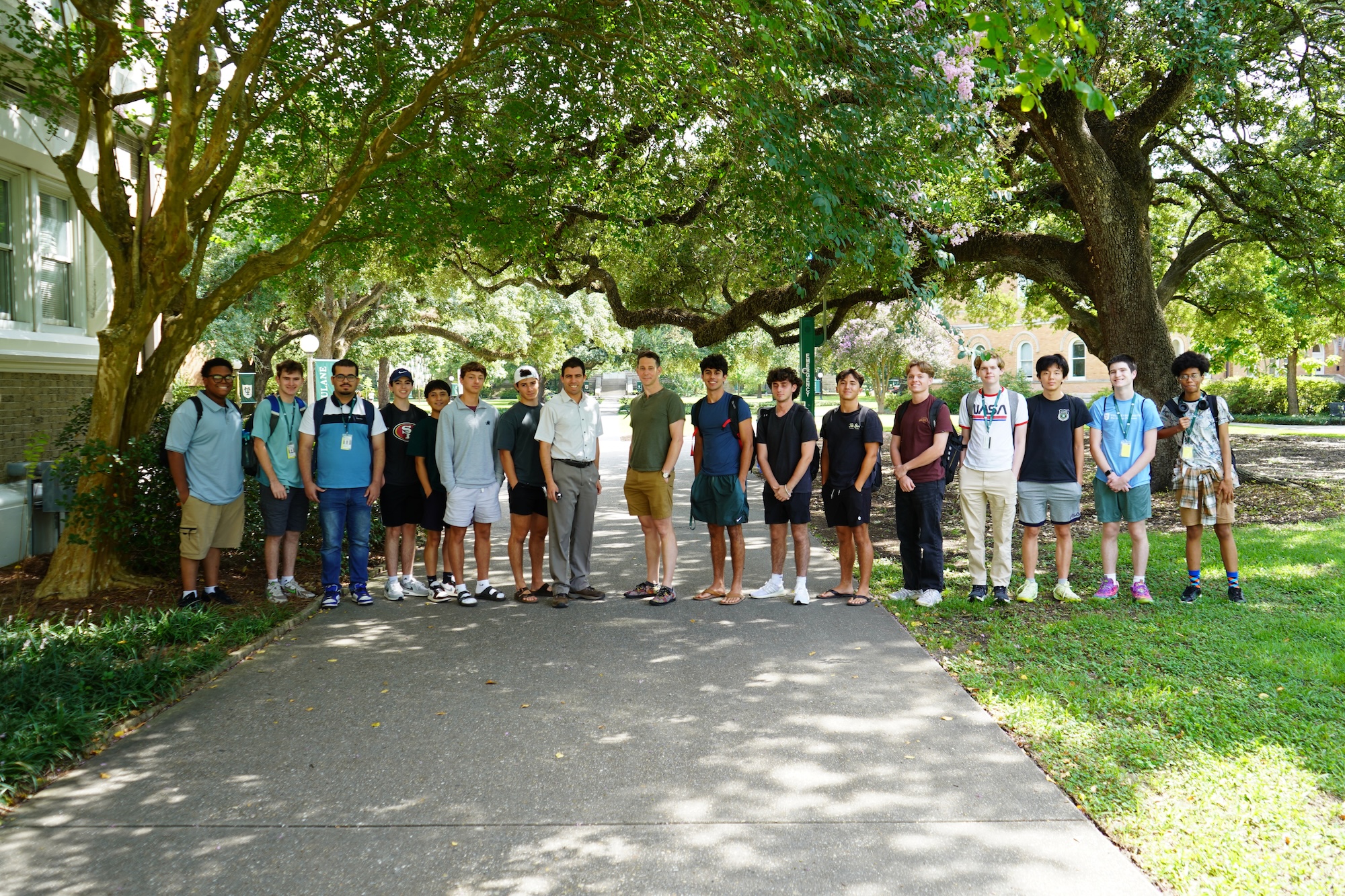

Colloquia
Fall 2026 Colloquia
Oct 22
Measuring and Mitigating Interactive Social Engineering Attacks at Scale
Phani Vadrevu | Louisiana State University
This talk will be held on Thursday, October 22nd, at 12:30 p.m. in Stanley Thomas 316. Zoom details will be provided via the announcement listserv, or you may email mrougelot@tulane.edu to request the corresponding link.
Abstract: Social engineering attacks are often treated as a content classification problem, with defenses focused on detecting malicious emails or websites. However, many real-world scams are fundamentally interactive, evolving over time through conversations, persuasion, and adaptive attacker behavior. In this talk, I will argue that understanding and mitigating modern social engineering attacks requires moving beyond passive analysis and toward interactive, measurement-driven methodologies.
To support this view, I will present insights from my recent work that exclusively studies the interactive component of social engineering attacks. This includes large-scale frameworks for baiting scammers on social media platforms, tracking end-to-end scam execution, and quantifying real financial harm, as well as analyses of how attackers coordinate and adapt during live interactions. I will also discuss how qualitative analysis techniques can be used to uncover new insights into how interactive attacks are orchestrated in practice, including which user interface elements and workflows are most frequently exploited.
Building on these results, I will outline my ongoing research agenda focused on AI-driven methodologies for documenting and analyzing interactive social engineering attacks. This work explores how carefully designed AI agents can safely and ethically engage with scammers to collect realistic behavioral data that is otherwise inaccessible, with the goal of enabling more robust, scalable, and ecosystem-level defenses. Ultimately, this research aims to shift the security community’s perspective away from user-centric blame and toward systemic solutions that remain effective even in the presence of human vulnerability.
About the Speaker: Phani Vadrevu is an Assistant Professor in the Department of Computer Science at Louisiana State University. His research spans web security and cybercrime measurement, with a focus on understanding and mitigating real-world social engineering, phishing, and bot-driven attacks.
His work combines large-scale empirical measurement, attacker-centric analysis, and human-centered studies to expose weaknesses in deployed security systems and inform practical defenses. His research has appeared at leading security and metrics venues, including the IEEE Symposium on Security and Privacy, USENIX Security, ACM CCS, NDSS, IMC, and WWW, and his work has identified vulnerabilities in widely deployed web and email security infrastructures. He recently received the NSF CAREER Award for his research on countering interactive scams. He has also received additional support from NSF and industry partners for his broader web security research and maintains active collaborations across academia and government. In his teaching, he develops and delivers hands-on courses in web security and cryptography and contributes to the research community through sustained program committee service and leadership roles.
Spring 2026 Colloquia
Feb 11
Two Cryptographic Protocols for Defeating Censorship and Surveillance
Ellis Fenske | United States Naval Academy
This talk will be held on Wednesday, February 11th at 11:00 a.m. in Stanley Thomas 316. Zoom details will be provided via the announcement listserv, or you may email mrougelot@tulane.edu to request the corresponding link.
Abstract: This talk will discuss two major recent research results about using cryptography in network protocols to protect users from certain types of network censorship or unwanted surveillance.
Specifically, the talk will first discuss Fully Encrypted Protocols, which are network protocols intended to appear byte-for-byte as uniformly random data. These protocols are designed for metadata-hiding and are widely used in the context of censorship circumvention and have many distinct variants. The talk will discuss their effectiveness, cryptographic flaws, and propose new security definitions and modifications to improve them.
Second, the talk will discuss a new protocol designed to replace the Apple Find My protocol or protocols like it, which govern how Apple AirTags report their locations. The protocol introduces new cryptographic techniques to improve the protocol primarily by fixing a specific flaw in the Find My protocol which allows malicious actors to produce devices that can be attached to individuals and used as tracking devices through the Find My network, but do not alert their victims that they are being tracked, and pose a risk to victims of stalking and unwanted tracking more generally.
About the Speaker: Ellis Fenske is an Associate Professor of Cyber Science at the US Naval Academy in Annapolis, Maryland. He graduated from Tulane University with a PhD in Mathematics in 2018, studying under Michael Mislove and was one of the first graduate students located in Tulane's post-Katrina Computer Science graduate program. He works mostly on applied problems in privacy and anonymity, primarily using methods from cryptography and information theory.
Feb 23
Software Protection, Artifact Sharing, and the Future of Computer Science at Tulane
Christian Collberg | University of Arizona
This talk will be held on Monday, February 23rd at 12:30 p.m. in Lindy Claiborne Boggs Center, Room 600. Zoom details will be provided via the announcement listserv, or you may email mrougelot@tulane.edu to request the corresponding link. Reception to follow.
Abstract: The area of Man-At-The-End (MATE) software protection and reverse engineering is suffering from an evaluation crisis. The lack of solid and universally accepted evaluation methodologies and benchmark suites has hampered development, made it difficult to fairly compare new algorithms to existing ones, and impossible to answer fundamental questions such as "how long will a particular combination of protection techniques stand up to a particular attack strategy?" or "what attacks are most effective against a particular protection technique?"
In this talk we will discuss what needs to change in order for the MATE area to gain a solid scientific footing. In particular, we will discuss the availability of freely accessible protection tools, the generation of benchmark suites, the design of evaluation methodologies, and the need for a strict policy of artifact availability in scientific publications.
About the Speaker: Christian Collberg is a Professor in the Department of Computer Science at the University of Arizona. His main research interest is computer security, in particular the so-called Man-At-The-End Attack which occurs in settings where an adversary has physical access to a device and compromises it by tampering with its hardware or software. He received his PhD from Lund University, Sweden, and, prior to moving to Arizona, taught at the University of Auckland, New Zealand. He is the author of the software protection textbook "Surreptitious Software: Obfuscation, Watermarking, and Tamperproofing for Software Protection", the Tigress software protection tool (https://tigress.wtf), and the LigerLabs suite of lectures on software protection and reverse engineering (https://ligerlabs.org).
Feb 26
Building Robust AI Systems and A Vision for the Future
Lydia Tapia | University of New Mexico
This talk will be held on Thursday, February 26th at 12:30 p.m. in Lindy Claiborne Boggs Center, Room 105. Zoom details will be provided via the announcement listserv, or you may email mrougelot@tulane.edu to request the corresponding link. Reception to follow in Stanley Thomas, Room 307.
Abstract: AI systems often rely on sequential decision making, selecting actions over time to achieve goals in dynamic and uncertain environments. In motion planning, this requires identifying the best sequence of motions though the solution of a high-dimensional optimization that is, in most cases, computationally intractable. As a result, practical systems rely on approximations. Deep reinforcement learning (RL) has emerged as a powerful framework for approximating these solutions, producing high empirical success rates without explicit planning structure. However, learned policies often lack robustness. In this talk, I examine the gap between full motion planning formulations and their deep RL approximations, identifying where structural guarantees are lost and how this manifests as fragility in learned solutions. I then present algorithmic approaches that reintroduce structure into learning-based systems, focusing on exploiting symmetries and invariances in system dynamics to extend competence into poorly learned regions of the system. By leveraging these structural properties, we improve robustness without sacrificing scalability. Ultimately, I tie this research to my overall contributions on reliable, human-in-the-loop AI systems, spanning biological modeling and autonomous robotics, where approximations and adaptive AI solutions are better quantified, understood, and employed.
About the Speaker: Lydia Tapia is a Professor of Computer Science and former Department Chair at the University of New Mexico. She earned her B.S. in CS from Tulane University and her Ph.D. in CS from Texas A&M University, followed by a Computing Innovation Postdoctoral Fellowship at the University of Texas at Austin. Her research advances robust motion planning and learning-based decision systems, integrating classical planning methods with deep reinforcement learning to improve reliability in robotics and computational biology. She is the recipient of the NSF CAREER Award, the CRA-W Borg Early Career Award, and the Denice Denton Emerging Leader ABIE Award, as well as a Best Paper Award at the IEEE International Conference on Robotics and Automation. She currently serves on the Board of the Computing Research Association and has contributed to National Academies initiatives on safety-critical machine learning
Apr 8
Reliability-Aware Quantum Compilation For NISQ Systems: Modeling, Routing, and Circuit Pruning
Fang Qi | Tulane University
Please join us for Fang Qi's PhD dissertation defense talk, which is described below.
This talk will be held on Wednesday, April 8th at 1:00 p.m. in Lindy Claiborne Boggs Center, Room 600. Please note the special weekday, time, and venue for this event. Zoom details will be provided via the announcement listserv, or you may email mnelson@tulane.edu to request the corresponding link. Reception to follow.
Abstract: Reliable execution remains one of the central barriers to useful noisy intermediate-scale quantum (NISQ) computing. Although superconducting quantum processors have advanced rapidly in qubit count, control, and accessibility, practical performance is still limited by gate and readout error, decoherence, crosstalk, and the compilation overhead imposed by restricted qubit connectivity.
This dissertation argues that near-term quantum software should be designed around output-relevant error flow: how errors accumulate over time, propagate through entangling operations, and ultimately affect the qubits that are actually measured. To operationalize that idea, the dissertation presents three contributions. Quantum Vulnerability Analysis (QVA) introduces a propagation-aware success-rate estimator based on Cumulative Quantum Vulnerability, substantially improving prediction fidelity over simple product-style estimators. Error Propagation-Aware Routing (EPAR) then uses this perspective during mapping and routing, selecting swap paths that reduce the risk of delivering accumulated error to measured outputs. Finally, PruningQC exploits partial-measurement structure to identify and remove logically redundant gates that cannot affect the observed result, reducing circuit depth, communication overhead, and exposure to hardware noise.
Together, these contributions show that significant reliability gains can be achieved across the quantum software stack without assuming full fault tolerance, offering a practical path toward higher-quality execution on current superconducting quantum computers.
About the Speaker: Fang Qi is a Ph.D. candidate in Computer Science at Tulane University, where he is advised by Prof. Lu Peng. His research lies at the intersection of quantum computing, computer architecture, and machine learning, with a focus on reliability-aware quantum compilation, quantum system optimization, quantum machine learning, and AI-assisted methods for quantum computing. Before joining Tulane, he completed his undergraduate and master’s studies at Oregon State University. His work has appeared in venues including IEEE Transactions on Quantum Engineering and the ACM Great Lakes Symposium on VLSI, spanning topics such as quantum vulnerability analysis, routing, qubit allocation, and circuit pruning.
Apr 22
Robust Sequential Decision-Making under Adversarial and Strategic Manipulation
Xiaolin Sun | Tulane University
Please join us for Xiaolin Sun's PhD dissertation defense talk, which is described below.
This talk will be held on Wednesday, April 22nd at 5:00 p.m. in the Lavin-Bernick Center, Room G01. Please note the special weekday, time, and venue for this event. Zoom details will be provided via the announcement listserv, or you may email mnelson@tulane.edu to request the corresponding link. Reception to follow in Room 307, Stanley Thomas Hall.
Abstract: Sequential decision-making systems have become increasingly important in modern artificial intelligence, supporting applications such as robotics, autonomous control, game playing, and large language model-based systems. Unlike supervised learning systems that make one-shot predictions, these agents interact repeatedly with dynamic environments, where current decisions shape future observations and outcomes. This closed-loop nature makes them especially vulnerable to adversarial interference, since small manipulations can accumulate over time and substantially degrade long-term performance.
This dissertation studies robustness in sequential decision-making from both single-agent and multi-agent perspectives, with a focus on adversarial state perturbations and insider attacks. In the single-agent setting, existing defense methods often suffer from a mismatch between training on clean states and deployment under perturbed observations. They also often fail to model uncertainty about the true underlying state, limiting their effectiveness against strong attacks and large perturbation budgets. To address these challenges, this dissertation develops a belief-enriched pessimistic Q-learning framework that models the agent and adversary as a two-player Stackelberg game with asymmetric observations, integrates belief-state inference from historical observations and actions, and incorporates diffusion-based state purification for high-dimensional observations.
To strengthen defenses, adversarial training with strong attacks is a promising direction. However, prior attack methods largely focus on low-level pixel perturbations or simple transformations that fail to remain realistic or capture decision-relevant semantic changes. To overcome this limitation, this dissertation introduces SHIFT, a diffusion-guided attack framework that generates adversarial states that are temporally consistent, semantically meaningful, and realistic, enabling more faithful evaluation of agent robustness under perceptually plausible attacks.
Beyond single-agent systems, this dissertation extends the study of robustness to multi-agent sequential decision-making, where adversaries may act as insiders within the interaction process. In such settings, effective attacks must scale to complex multi-agent interactions and optimize long-term influence rather than single-step disruption. This dissertation addresses these challenges by examining insider manipulation in voting systems through pandering behavior and exploring insider attacks in LLM-based multi-agent consensus systems. Together, these studies provide a unified view of robustness in sequential decision-making and show how principled modeling can improve both understanding and defense across diverse decision-making settings.
About the Speaker: Xiaolin Sun is a Ph.D. candidate in the Department of Computer Science at Tulane University, advised by Prof. Zizhan Zheng. His research centers on robust sequential decision-making, with interests in reinforcement learning, trustworthy AI, adversarial attacks and defenses, and multi-agent systems. Before joining Tulane, he completed his undergraduate studies at Colgate University. His work has been published in leading venues including NeurIPS, ICLR, and UAI.
Summer 2025 Colloquia
July 18
Probing-Enhanced Online Learning for Wireless Scheduling, Sequential User-Centric Selection, and Fair Multi-Agent Allocation
Tianyi Xu | Tulane University
Please join us for Tianyi Xu's PhD dissertation defense talk, which is described below.
This talk will be held on Friday, July 18, at 7:00 p.m. CST via Zoom. Please note the special weekday and time for this event. Zoom details will be provided via the announcement listserv, or you may email mrougelot@tulane.eduto request the corresponding link.
Abstract: Making sequential decisions under uncertainty is a fundamental challenge in resource allocation problems, from wireless scheduling to ridesharing and recommendation systems. In practice, decision-makers often have the ability to probe—gather limited side information before acting—but face tight constraints on probing cost and timeliness. This dissertation investigates how to jointly optimize probing and scheduling decisions in both single-agent and multi-agent systems, aiming to maximize cumulative rewards under realistic probing budgets.
The dissertation first considers adaptive wireless scheduling for a single agent in dense WLANs, where probing link qualities incurs overhead, but making uninformed decisions leads to throughput loss. A probing-augmented learning model is developed to capture this trade-off, and efficient offline and online algorithms are proposed that leverage structural insights to balance short-term probing costs with long-term performance gains.
Building on this foundation, the work extends to sequential user-centric selection, where multiple plays must be assigned to arms with unknown rewards and stochastic resource constraints. The Probing-augmented User-Centric Selection (PUCS) framework is introduced, which formalizes the coupled challenge of selecting which arms to probe and how to assign plays. A greedy probing algorithm with approximation guarantees is designed for the offline case, and an online learning algorithm is proposed that effectively balances exploration, exploitation, and probing costs in dynamic environments.
Finally, recognizing the importance of equity, fairness objectives are incorporated into the multi-agent setting. By embedding Nash Social Welfare into the probing and allocation process, fair probing strategies are developed that ensure balanced outcomes across agents without compromising overall system efficiency.
Across these three settings, this dissertation highlights how probing and scheduling decisions are inherently intertwined, and how carefully designed algorithms can systematically handle uncertainty, resource constraints, and fairness requirements. The proposed methods are validated through theoretical analysis and extensive experiments on real-world datasets, demonstrating their practical effectiveness in diverse applications.
About the Speaker: Tianyi Xu is a Ph.D. candidate in Computer Science at Tulane University, specializing in Reinforcement Learning (RL), Large Language Model (LLM) Reasoning/Agents, Network and Transportation Optimization, Recommendation Systems, and Operations Research. Academically, he has developed novel algorithms and frameworks, with his research published in top conferences such as INFOCOM. In the industry, he has completed internships at Splunk and MultiPlan, working on multi-agent LLM systems for enhancing Chain-of-Thought reasoning, pricing recommendation using contextual bandits, and fine-tuning models for text-to-SQL tasks.
July 21
The Learning-Robustness Paradox in Foundation Models: The Good, the Bad, and the Ugly
Mohit Prabhushankar | Georgia Institute of Technology
This talk will be held on Monday, July 21, at 3:00 p.m. CST in Stanley Thomas Hall, Room 316. Please note the special weekday and time for this event. Zoom details will be provided via the announcement listserv, or you may email mrougelot@tulane.edu to request the corresponding link.
Abstract: Foundation models are billion parameter large-scale neural networks that generalize across data domains and tasks. They are used as backbones for multifarious downstream applications and processing. Billions of samples and terabytes of data are integrated during learning to construct foundation models. The generalizability of self-supervised learning (SSL) and the multi-modal long-context attention within transformers are key in foundation models adapting to different domains. Additionally, foundation models leverage user prompts as a means of guiding the model to predict the desired output. In this talk, we focus on the robustness of foundation models. While traditional measures of robustness including reliability, sensitivity, and resilience are (partially) satisfied by foundation models, user interactivity and prompts bring up new challenges. The goal of the talk is three-fold: (i) discuss the role of dimensionality property of SSL and transformers to overcome the learning-robustness paradox, (ii) expand the theoretical definitions of robustness to include uncertainty quantification under user-interactivity, and (iii) uncertainty-interpretability challenge in large-scale neural networks.
About the Speaker: Mohit Prabhushankar received his Ph.D. degree in electrical engineering from the Georgia Institute of Technology (Georgia Tech) in 2021. He is currently a Postdoctoral Research Fellow and Instructor of Record in the School of Electrical and Computer Engineering at Georgia Tech in the Omni Lab for Intelligent Visual Engineering and Science (OLIVES). He is working in the fields of image processing, machine learning, active learning, healthcare, and robust and explainable AI. He is the recipient of the Best Paper award at ICIP 2019,Top Viewed Special Session Paper Award at ICIP 2020, and Best Paper runner-up award at BigData’24. He is the recipient of the ECE Outstanding Graduate Teaching Award, the CSIP Research award, and of the Roger P Webb ECE GRA Excellence award in 2022 and the Research Excellence Award in 2025. He has delivered short courses and tutorials at IEEE IV'23, ICIP'23, BigData'23, WACV'24, AAAI'24, CVPR'24, ICME'24,MIPR'24., WACV'25, and AAAI'25.
Spring 2025 Colloquia
Feb 17
Understanding the Security Threats in Public Blockchains
Kai Li | San Diego State University
This talk will be held on Monday, February 17th, at at 11:00 a.m. in Stanley Thomas 316. Please note the special weekday and time for this event. Zoom details will be provided via the announcement listserv, or you may email mrougelot@tulane.edu to request the corresponding link.
Abstract: Over the last decade, public blockchains have been increasingly adopted to revolutionize various traditional businesses, such as finance, supply chain, healthcare, and gaming. The advantages of blockchain are mainly attributed to its design of an open, decentralized, and anonymous peer-to-peer (P2P) network, which can eliminate centralized authority and protect users' privacy. However, such a design of the P2P network has brought new security threats. First, blockchain's open membership nature allows everyone to join the P2P network, which creates new attack surfaces for adversaries to join the network and launch Denial-of-Service (DoS) attacks against critical network infrastructures. Second, the anonymity nature of blockchain allows everyone to trade assets without revealing their real identity, which has created an ideal place for criminals to conduct various cybercrimes and steal assets from victims. These security threats are jeopardizing the usability of blockchain and posing significant financial risks to blockchain users.
In this talk, I will discuss how we have enhanced public blockchains' security in two directions. In the first direction, we systematically analyzed and tested critical network infrastructures inside the blockchain, including RPC services, P2P networks, and Mempool, which has discovered and fixed multiple severe DoS vulnerabilities. In the second direction, we developed novel detection systems to identify emerging investment scams and phishing attacks on the blockchain, including free giveaway scams, arbitrage bot scams, and address poisoning attacks, which shed light on their deceiving strategies and protected users from falling into such fraudulent activities.
About the Speaker: Kai Li is a tenure-track Assistant Professor at San Diego State University. He received a Ph.D. from Syracuse University in 2022. His research interests are broadly in system and network security, with the current focus on discovering vulnerabilities and detecting cybercrime activities in widely deployed decentralized systems such as blockchain. His research papers were published at top-tier cybersecurity conferences such as USENIX Security, ACM CCS, NDSS, ACM SIGMETRICS, ACM IMC, ESEC/FSE, etc. He also received several research grants from NSF and the Ethereum Foundation. He is currently serving on the Technical Program Committee in leading conferences such as ACM CCS, NDSS, ACM Web, ACSAC, CODASPY, ICCCN, etc. In addition, his research findings have been widely acknowledged by the bug bounty programs in the blockchain developer community.
Feb 20
Hardware-Assisted Software Support for Heterogeneous Computing
Jiyuan Wang | University of California, Los Angeles
This talk will be held on Thursday, February 20th, at 12:30 p.m. in Stanley Thomas 316. Please note the special time for this event. Zoom details will be provided via the announcement listserv, or you may email mrougelot@tulane.edu to request the corresponding link.
Abstract: The end of Moore’s law has led to a plateau in traditional single-core and software-based performance optimizations, highlighting the importance of incorporating hardware heterogeneity and specialization in software systems. Specialized hardware accelerators like FPGAs, GPUs, and quantum computers have become—or are poised to become—the prominent part of the future computing landscape. However, developing heterogeneous applications is limited to a small subset of programmers with specialized hardware knowledge. To unlock the full potential of heterogeneous computing, now is the time that the software engineering community should design new waves of testing and debugging tools for heterogeneous application development.
In this talk, I will demonstrate how software tools can be reengineered to better support heterogeneous systems by understanding and leveraging hardware accelerators. First, I will show how understanding the root causes of quantum hardware noise enables the redesign of differential testing to isolate quantum software bugs from quantum hardware-induced noise. Second, I will illustrate how leveraging the parallel processing capabilities of FPGAs can enhance fuzz testing by accelerating test case generation and significantly boosting performance. Finally, I will share my vision for the future of compiler development in heterogeneous and quantum computing..
About the Speaker: Jiyuan Wang is a PhD student in the Computer Science Department at University of California, Los Angeles, where he is co-advised by Miryung Kim and Harry Xu. His research focus on developing efficient and effective testing and debugging methods for heterogenous computing, including GPUs, FPGAs, and quantum computer. By redesigning traditional software approaches with hardware-aware optimizations, he creates developer tools that bridge the gap between hardware accelerators and traditional software development. His work appears in top-tier conferences such as ICSE, FSE, ASE, and ASPLOS, and has been awarded an ACM SIGSOFT research highlight.
Feb 25
Redundancy Removal for Accelerating Graph Processing Workloads
Mahbod Afarin | University of California, Riverside
This talk will be held on Tuesday, February 25th, at 12:30 p.m. in Stanley Thomas 316. Please note the special weekday and time for this event. Zoom details will be provided via the announcement listserv, or you may email mrougelot@tulane.edu to request the corresponding link.
Abstract: Analyses of large graphs are becoming an increasingly important computational workload as graph analytics are applied across various domains. Consequently, a significant amount of research has focused on developing frameworks that exploit parallelism across diverse hardware platforms, from a single GPU or multicore server to clusters of servers and GPUs. This talk explores a complementary approach that, in addition to parallelism, comprehensively reduces redundancy to enhance scalability. Redundancy exists not only in computation and value propagation but also in graph traversal and data transfer across the memory hierarchy, all of which can be optimized for improved performance. In this talk, I will present three techniques to reduce redundancy in static and dynamic graph processing: Core Graph, Common Graph, and Unchanged Vertex Values (UVVs). Core Graph eliminates redundancy in static graphs by constructing a small proxy graph and leveraging a two-phase query evaluation. The first phase runs on the proxy graph, incurring low overhead while producing nearly precise results. The second phase refines these results on the original graph, ensuring full precision. Common Graph optimizes evolving graph processing by converting costly edge deletions into cheaper edge additions. To eliminate redundancy across snapshots, we identify a common subgraph across all snapshots and perform a single shared computation followed by incremental computations for each snapshot. This method also breaks the sequential dependency of traditional streaming approaches, unlocking new parallelism opportunities. UVVs leverage the observation that many vertex values remain unchanged across snapshots. Using intersection-union analysis, UVVs compute lower and upper bounds on vertex values, skipping redundant computations and focusing only on vertices with potential changes. By processing these efficiently across snapshots, we further minimize redundancy and enhance performance.
About the Speaker: Mahbod Afarin is a Ph.D. candidate at the University of California, Riverside, working with Professors Rajiv Gupta and Nael Abu-Ghazaleh. His research lies at the intersection of graph algorithms and computer architecture, focusing on the performance and scalability of graph applications. His current interests include graph hardware accelerators, streaming and evolving graph processing, and code size reduction for ARM and x86 binaries. His papers have been published in MICRO, ASPLOS, and EuroSys. He has received several awards and fellowships, including the UCR Dissertation Completion Fellowship and the Dean’s Distinguished Fellowship. For more information, please visit his website at https://mahbod-afarin.github.io/.
Feb 27
AI for Security: Adaptive Attacks and Proactive Defenses in Dynamic and Distributed Systems
Henger Li | Tulane University
Please join us for Henger Li’s PhD dissertation defense talk, which is described below.
This talk will be held on Thursday, February 27th, at 12:30 p.m. in the Lavin-Bernick Center, Room 210 (McKeever Conference Room). Please note the special time and venue for this event. Zoom details will be provided via the announcement listserv, or you may email mrougelot@tulane.edu to request the corresponding link.
Abstract: The escalating complexity of cyber threats calls for transformative approaches that leverage artificial intelligence (AI) to develop adaptive attacks and proactive defenses. This dissertation explores "AI for Security" as a unifying theme, focusing on how advanced AI techniques including reinforcement learning (RL), game theory, and meta-learning, can address critical security challenges. By examining the interplay between offensive and defensive strategies, the research advances the understanding of vulnerabilities in existing systems and proposes innovative mechanisms to enhance resilience. The study is centered on two key domains: Moving Target Defense (MTD) and Federated Learning (FL).
MTD employs dynamic system configuration changes to introduce uncertainty and mitigate risks, yet optimizing the spatial-temporal dynamics of these changes remains challenging. This dissertation develops a Stackelberg game-based model for MTD that integrates both migration and timing strategies, accounting for configuration-dependent costs and attack timing distributions. By modeling the defender's problem as a semi-Markov decision process, a nearly optimal strategy is derived, demonstrating how game theory and RL can significantly improve MTD's adaptability to persistent threats.
In the realm of FL, traditional defenses often fall short against adaptive attacks. To better expose these vulnerabilities, the research introduces a model-based RL framework capable of simulating advanced poisoning and backdoor attacks. Experimental results reveal that non-myopic attacks can undermine even state-of-the-art defenses, emphasizing the need for more sophisticated, AI-driven countermeasures.
Recognizing the shared challenges across MTD and FL, the dissertation proposes a unified Bayesian Stackelberg Markov game framework to address unknown and uncertain attack scenarios. This framework culminates in a meta-Stackelberg defense strategy that combines meta-learning with online adaptation, enhancing the system’s capacity to counter diverse and evolving threats. By showcasing the synergy between RL, game theory, and meta-learning, this research lays the foundation for a cohesive AI-driven methodology that advances both offensive and defensive capabilities, setting the stage for more robust security paradigms in dynamic and distributed environments.
About the Speaker: Henger Li is a Ph.D. candidate in Computer Science at Tulane University, specializing in (Deep) Reinforcement Learning (RL), (Generative) AI Security, Large Language Model (LLM) Reasoning/Agents, Federated Learning, and Game Theory. He leverages learning-based tools, such as (deep) reinforcement learning, generative models, meta-learning, and game theory, to optimize and safeguard machine learning models and systems, including state-of-the-art classification models, federated learning frameworks, and large language models (LLMs), ensuring their efficiency and robustness. Academically, he has developed novel algorithms and frameworks, with his research published in top conferences such as NeurIPS, ICML, and ICLR, with open-source code on GitHub. In the industry, he has successfully completed internship projects at Amazon and Quantiphi that combined reinforcement learning with large language models, focusing on optimizing supply chain operations and enhancing the reasoning capabilities of generative models.
Mar 13
Advancing Approximate Queries with Innovative Data Summaries and Generative Models
Fuheng Zhao | University of California, Santa Barbara
This talk will be held on Thursday, March 13th at 12:30 p.m. in Stanley Thomas 316. Please note the special time for this event. Zoom details will be provided via the announcement listserv, or you may email mrougelot@tulane.edu to request the corresponding link.
Abstract: The exponential growth of data has introduced significant challenges for traditional query processing systems, creating a pressing need for faster and more resource-efficient approaches. Approximation techniques have emerged as a promising solution, striking an optimal balance between accuracy and performance. Data summaries, such as samples, sketches, and histograms, play a crucial role in this paradigm by condensing large datasets into compact representations and maintaining critical insights. Additionally, recent advances in generative models (including large language models) open new possibilities for handling incomplete information, accommodating diverse data types, and approximating complex computations at scale. In this talk, I will discuss my research on theoretically grounded data summarization methods, as well as my latest efforts to integrate generative models into data systems. Together, these contributions advance approximate query processing toward realistic, high-impact applications in modern data analytics.
About the Speaker: Fuheng Zhao is a Ph.D. candidate at University of California Santa Barbara, advised by Professor Divyakant Agrawal and Professor Amr El Abbadi. His research has been recognized at top database and machine learning conferences such as VLDB, NeurIPS, and CIDR. He is a recipient of the Microsoft Ph.D. Fellowship, the Charles Dana Fellowship, and was honored with the Outstanding Paper Award from UCSB’s Computer Science Department.
Fall 2024 Colloquia
Nov 4
Metric Learning on Topological Descriptors
Yu (Demi) Qin | Tulane University
Please join us for Demi Qin’s PhD dissertation defense talk, which is described below.
This talk will be held on Monday, November 4, at 1:00 p.m. in Boggs 600. Please note the special weekday, time, and venue for this event. Zoom details will be provided via the announcement listserv, or you may email dramil1@tulane.edu to request the corresponding link.
Abstract: In today's data-driven world, analyzing and visualizing large, complex datasets, ranging from graph-structured data to high-dimensional point clouds and scalar fields, presents significant challenges in terms of scalability, efficiency, and noise robustness. Topological Data Analysis (TDA) has emerged as a powerful tool for capturing the inherent structure of such data through topological descriptors like persistence diagrams and merge trees. However, TDA faces limitations in computational scalability and model interpretability when applied to large-scale datasets. This dissertation bridges the gap TDA and machine learning (ML) by integrating advanced ML techniques to enhance the scalability, robustness, and interpretability of topological analysis for large-scale datasets. The core contributions include: (1) evaluating and applying topological descriptors across diverse domains, (2) developing efficient ML models for rapid topological descriptor comparisons, and (3) designing visualization techniques to enhance the interpretability of topological features in classification tasks. Applications span medical imaging, climate modeling, and graph analysis, providing improved diagnostic tools, precise weather forecasting, and efficient graph comparisons. This work establishes a foundational connection between machine learning and TDA, laying the groundwork for future advancements through scalable algorithms, enhanced interpretability, and a unified framework for diverse data types.
About the Speaker: Yu (Demi) Qin is a Ph.D. candidate at Tulane University with expertise in machine learning, topological data analysis, and large-scale data processing. Her research focuses on developing advanced machine learning models for scalable data analysis and visualization. Her innovative work has been recognized through multiple internships and publications in leading venues, including a Best Paper Award at IEEE VIS 2024.
Nov 11
MAGIC: Map And Geographic Information Construction, Comparison and Conflation
Erfan Hosseini Sereshgi | Tulane University
Please join us for Erfan Hosseini Sereshgi’s PhD dissertation defense talk, which is described below.
This talk will be held on Monday, November 11, at 9:00 a.m. in Stanley Thomas 316. Please note the special weekday and time for this event. Zoom details will be provided via the announcement listserv, or you may email dramil1@tulane.edu to request the corresponding link.
Abstract: With the high volume usage of GPS devices and location-based services, new opportunities are created for data collectors to use such data and possibly improve on their products. This new direction brings several obstacles forward in both theory and application fronts of spatial computing. This dissertation investigates the process of updating road maps using GPS data, introducing novel approaches, enhancing existing methods, and establishing new theoretical frameworks. The map update pipeline is comprised of independent, scalable ideas that leverage concepts from computational geometry and topology to achieve the desired outcomes. The research consists of three main stages: Construction: Utilizing GPS data to create roadmaps, particularly for areas where alternative data sources are limited, optimizing an existing method based on Fréchet clustering. Comparison: Assessing results through refined Graph Sampling and introducing Length-Sensitive Fréchet Similarity (LSFS), a novel approach for comparison. Conflation: Merging road maps using Graph Sampling, identifying and integrating missing segments.
Nov 11
Interdisciplinary Project Presentations
Yunbei Zhang, Fangzheng Wu, Jiarui Li, Zixuan Liu, Harper Lyon, Zixiang (Zach) Yin, Yunsung Chung, Arie Glazier| Computer Science PhD Students, Tulane University
This event will be held on Monday, November 11th, from 12:30 p.m. to 2:00 p.m. in Boggs 600. Please note the special weekday, time, and venue for this event. Zoom details will be provided via the announcement listserv, or you may email dramil1@tulane.edu to request the corresponding link.
Yunbei Zhang
Optimal Transport-guided Visual Prompting for Test-Time Adaptation
Abstract: Vision Transformers (ViTs) have shown remarkable capabilities in learning representations. However, their performance degrades when applied to unseen domains. Previous methods have typically engaged in prompt learning during training or modified model parameters at test time through entropy minimization. These approaches have limitations: the former often neglects unlabeled target data, while the latter does not fully address domain shifts. Our method, Optimal Transport-guided Test-Time Visual Prompting (OT-VP), addresses these challenges by leveraging prompt learning at test time to align target and source domains without altering pre-trained model parameters or accessing the training process. This method optimizes the Optimal Transport distance to learn a universal visual prompt for the target domain. With only four learned prompt tokens, OT-VP exceeds state-of-the-art performance across three stylistic datasets—PACS, VLCS, OfficeHome—and one corrupted dataset, ImageNet-C. Furthermore, OT-VP is efficient in terms of memory and computation and can be extended to online settings.
Fangzheng Wu
The Visualization of 3D Medical Large Image Segmentation
Abstract: This study explores the potential of the Segment Anything Model 2 (SAM2) for effective 3D segmentation in medical imaging. By leveraging memory attention mechanisms, we investigate how SAM2 can capture relationships across 2D slices to build accurate 3D segmentations. A dedicated user interface (UI) facilitates this process, allowing users to input points or bounding boxes to generate initial 2D masks, which are then propagated through subsequent slices. The UI also supports iterative refinement, where users can adjust inputs at any slice to regenerate updated masks across the dataset. This design enables a smooth transition from 2D to 3D segmentation, providing a holistic view of medical structures through stacked 2D masks. Our work highlights SAM2’s adaptability to 3D medical data and offers insights into its capabilities for enhancing segmentation accuracy and user control in complex medical imaging scenarios.
Jiarui Li
Acceleration And Optimization of Conformational Stability Computation for CD4+ T-Cell Epitope Prediction
Abstract: CD4+ T cells are crucial for adaptive immunity, and predicting antigenic peptides that bind to these cells remains a computational challenge. Traditional methods focus on peptide-MHCII binding, neglecting antigen processing. To address this, our group developed the Antigen Processing Likelihood (APL) algorithm, which utilizes COREX, a time-consuming conformational stability calculation algorithm. While the CPU-parallelized version of COREX reduced computation from hours to minutes, our GPU-accelerated version further cuts this to seconds. This enables both desktop and server use for rapid epitope prediction. Our approach incorporates novel GPU memoization and GPU-parallelizable Markov Chain Monte Carlo sampling, showing high efficiency on multiple antigen benchmarks.
Zixuan Liu
Enhancing LLM Safety Via Constrained Direct Preference Optimization
Abstract: The rapidly increasing capabilities of large language models (LLMs) raise an urgent need to align AI systems with diverse human preferences to simultaneously enhance their usefulness and safety, despite the often conflicting nature of these goals. To address this important problem, a promising approach is to enforce a safety constraint at the fine-tuning stage through a constrained Reinforcement Learning from Human Feedback (RLHF) framework. This approach, however, is computationally expensive and often unstable. In this work, we introduce Constrained DPO (C-DPO), a novel extension of the recently proposed Direct Preference Optimization (DPO) approach for fine-tuning LLMs that is both efficient and lightweight. By integrating dual gradient descent and DPO, our method identifies a nearly optimal trade-off between helpfulness and harmlessness without using reinforcement learning. Empirically, our approach provides a safety guarantee to LLMs that is missing in DPO while achieving significantly higher rewards under the same safety constraint compared to a recently proposed safe RLHF approach.
Harper Lyon
Improving Peer Selection Mechanisms with Incentives and Reviewer Allocation
Abstract: Peer selection problems are a type of social choice problem in which a group of agents must decide on a rank, using only valuations of that group, themselves in order to assign a benefit or prize to the top ranked agents. Peer selection problem shows up in many areas, but the most familiar to academics is the peer review process used in many large conferences (e.g. NeurIPS). Most of the obvious mechanisms for collecting, aggregating, and selecting winners in these situations fall victim to agents attempting to game the system for their own benefit. Designing mechanisms that are “strategy proof” and do not fall victim to these pitfalls is a key area of research in social choice. A strategy proof mechanism is one that ensures that agents can not benefit themselves by lying about their ratings of other agents. In this presentation I will explain the basic elements of the peer selection problem and describe two lines of work that I and our research group have pursued towards improving the outcome of strategy proof peer selection mechanisms - the first by adding a secondary mechanism which attempts to grade agents based on the effort and accuracy of their reviews, improving the incentives of any peer selection mechanism, and the second an empirical evaluation of an already-in-use technique for efficiently allocating agent reviews to marginal agents/proposals to improve the accuracy of the overall mechanism.
Zixiang (Zach) Yin
iMIND: Interpretable Multi-subject Invariant Neural Decoding
Abstract: Deep learning models have achieved remarkable success across various computer vision tasks, prompting increased interest in their application to neuroscience, particularly for decoding visual information. Recent studies have focused on reconstructing visual stimuli captured during neural recordings, yielding high-resolution, high-precision results that bridge brain activity with visual imagery. Despite these advancements, existing methods provide limited insight into the underlying mechanisms of visual processing in the brain. To mitigate this gap, we present the Multi-subject Invariant Neural Decoding (MIND) model, a novel dual-decoding framework (encompassing semantic and biometric decoding) that facilitates neural interpretability in a data-driven manner and aims to deepen understanding of brain vision functionalities. Our MIND model consists of three key steps: establishing a shared neural space across subjects using a ViT-based masked autoencoder, disentangling neural features into subject-specific and object-specific ones, and performing dual decoding for both biometric and semantic classification tasks. Experimental results demonstrate that MIND achieves state-of-the-art decoding performance with minimal scalability limitations. Furthermore, MIND empirically generates voxel-object activation fingerprints that reveal object-specific neural patterns, and enables investigation of subject-specific variations in attentional response to identical stimuli. These findings lay the groundwork for more interpretable and generalizable multi-subject neural decoding, advancing our understanding of the object-voxel relationship and the brain’s visual processing dynamics.
Yunsung Chung
FBA-Net: Foreground and Background Aware Contrastive Learning for Semi-Supervised Atrium Segmentation
Abstract: Medical image segmentation of gadolinium enhancement magnetic resonance imaging (GE MRI) is an important task in clinical applications. However, manual annotation is time-consuming and requires specialized expertise. Semi-supervised segmentation methods that leverage both labeled and unlabeled data have shown promise, with contrastive learning emerging as a particularly effective approach. In this paper, we propose a contrastive learning strategy of foreground and background representations for semi-supervised 3D medical image segmentation (FBA-Net). Specifically, we leverage the contrastive loss to learn representations of both the foreground and background regions in the images. By training the network to distinguish between foreground background pairs, we aim to learn a representation that can effectively capture the anatomical structures of interest. Experiments on three medical segmentation datasets demonstrate state-of-the-art performance. Notably, our method achieves a Dice score of 91.31% with only 20% labeled data, which is remarkably close to the 91.62% score of the fully supervised method that uses 100% labeled data on the left atrium dataset. Our framework has the potential to advance the field of semi-supervised 3D medical image segmentation and enable more efficient and accurate analysis of medical images with a limited amount of annotated labels.
Arie Glazier
Learning Behavioral Soft Constraints from Demonstrations
Abstract: Many real-life scenarios require humans to make difficult trade-offs: do we always follow all the traffic rules or do we violate the speed limit in an emergency? These scenarios force us to evaluate the trade-off between collective rules and norms with our own personal objectives and desires. To create effective AI-human teams, we must equip AI agents with a model of how humans make these trade-offs in complex environments when there are implicit and explicit rules and constraints. Agents equipped with these models will be able to mirror human behavior and/or draw human attention to situations where decision making could be improved. To this end, we propose a novel inverse reinforcement learning (IRL) method: Max Entropy Soft Constraint IRL (MESC-IRL), for learning implicit hard and soft constraints over states, actions, and state features from demonstrations in deterministic and non-deterministic environments modeled as Markov Decision Processes (MDPs). Our method enables agents to implicitly learn human constraints and desires without the need for explicit modeling by the agent designer and to transfer these constraints between environment parametrizations. Extending prior work, which only considered deterministic hard constraints in deterministic environments, we compare our method to the classical Max Margin method for IRL and observe that our entropy based method is able to better estimate the cost of the constraints.
Nov 14
Learning to Elect a Committee
Ben Armstrong | University of Waterloo
Abstract: Social choice studies problems of how to make group decisions in the presence of conflicting preference information; such as dividing items fairly between recipients or running an election. We apply an axiomatic perspective to the task of selecting multiple alternatives from voter preferences by asking (1) how often existing social choice functions provide desirable axiomatic properties, and (2) whether machine learning can be used to develop a social choice function which is more likely to exhibit the same desirable properties.
We show that by generating informative training data, neural networks are able to avoid violating a wide range of axioms much more frequently than most existing multi-winner social choice functions. Our results also provide insight into the similarity of existing social choice functions and highlight a tension between axioms focused on proportional representation and those focused on individual excellence.
About the Speaker: Ben Armstrong is currently a PhD candidate in the School of Computer Science at the University of Waterloo. He studies topics at the intersection of social choice and machine learning with the goal of demonstrating the benefits of interdisciplinary research and highlighting the longstanding parallels between social choice and machine learning.
Nov 19
Geographical and Temporal Adaptation in Social Media Analysis for Emergency Management and Public Health
Xintian Li | Tulane University
Please join us for Xintian Li’s PhD dissertation defense talk.
This talk will be held on Tuesday, November 19, at 8:30 a.m. in Boggs 600. Please note the special weekday, time, and venue for this event. Zoom details will be provided via the announcement listserv, or you may email mnelson10@tulane.edu to request the corresponding link.
Abstract: Social media has emerged as a crucial resource for capturing public sentiment and behaviors during crises, offering real-time insights that can aid in emergency management and public health response. This dissertation investigates methods to enhance social media analysis by developing adaptable models that account for geographical and temporal variations. Through case studies in public health and natural disaster response, it demonstrates how advanced text classification and forecasting models can be applied to Twitter data to predict behaviors such as vaccination uptake and hurricane evacuation intent. By combining social media sentiment with geographic data and incorporating domain adaptation techniques, these models improve the accuracy and applicability of predictions across diverse regions and events. The findings underscore the value of social media as a tool for crisis management, enabling authorities to make proactive, data-driven decisions that can help save lives and allocate resources more effectively.
Spring 2024 Colloquia
Jan 18
Nanoinformatics: Rational Design of Biocompatible Nanomaterials by Nanostructure Annotation, Machine Learning and Data Platform Development
Hao Zhu | Tulane University School of Medicine
Abstract: The use of nanomaterials has grown substantially over the past decade. Traditional discovery of biocompatible nanomaterials is expensive and time-consuming. Computational modeling methods thus are highly demanded in designing new nanomaterials. Here, we report several novel nanoinformatics techniques that build large virtual nanomaterial libraries to investigate their biological activities/properties and guide the design of new nanomaterials. The key to these approaches is to simulate and annotate complex nanostructures. Then, we can quantify nanostructures by calculating various nanodescriptors, and develop relevant predictive models. Based on the prediction of the resulting models, we can virtually tune the target activities/properties of new nanomaterials to the desired values. All the curated nanomaterial data, modeling approaches and resulted models are being shared publicly via an informatics web portal. Therefore, the new nanoinformatics technique, which was developed based on machine learning and data science, paves the path for a new generation of nanomodeling and can be easily applied to designing biocompatible nanomaterials with multiple desired bioactivities.
About the Speaker: Dr. Zhu is a Professor of Biomedical Informatics and Genomics at the Tulane University Medical School. His major research interest is to use cheminformatics tools to develop predictive models. All resulted models can be used to directly predict the chemical efficacy and toxicity based on the public big data and molecular structure information. His current research interests also include data-driven modeling, artificial intelligence algorithm development and computer-aided nanomedicine design. He is the Principal Investigator (PI) of several prestigious research grants (NIH R01, U01, R15, NSF, and etc) with total amount over 8 million dollars. Dr. Zhu is author/co-author of 90 peer-reviewed journal articles and 10 book chapters with over 6800 citations (H-index as 47). His research was recognized with different awards, such as Rutgers Chancellor’s Award for Outstanding Research and Creative Activity, Society of Toxicology Best Paper of the Year (two times, 2021 and 2023), National Institute of Environmental Health Sciences (NIEHS) Extramural Paper of the Month (three times, 2019, 2020 and 2022) and Drug Discovery Today top citation paper of the year (2018).
Jan 25
Towards User Experience Enhancements for Image Processing
Cody Licorish | Computer Science PhD Student, Tulane University
Please join us for Cody Licorish’s PhD dissertation defense talk, which is described below.
This talk will be held via ZOOM ONLY on Thursday, January 25th, at 12:00 p.m. Please note the special time for this event. Zoom details will be provided via the announcement listserv, or you may email dramil1@tulane.edu to request the corresponding link.
Abstract: Image segmentation, the process of calculating boundaries between distinct parts of images, is used in diverse fields such as art and medicine. Commonly used segmentation algorithms can suffer from artifacts, high runtime cost, and input waste. The works presented here seek to alleviate some of these problems, while using more robust algorithms to enable new interaction modes with existing techniques. Included are projects dealing with non-pixel-specific Live-wire, Graph Cuts with inset image support, and zoom scalar field generation for enhanced image navigation. Each of these projects expand the interaction capabilities of their respective existing techniques. The presented works aim to improve user experience when working with various image editing tasks, and discussion will include future directions of these projects.
Feb 22
Building Web Services for Geospatial and Environmental Non-Image Raster Data
Elias loup | Navy Research Laboratory Center for Geospatial Sciences
This talk will be held on Thursday, February 22nd, at 11:00 a.m. Please note the special time for this event.
Abstract: Geospatial and environmental data is often stored as a raster, a grid of cells with an associated value. While images are the raster products people are most familiar with, there are a number of other non-image data products stored as rasters such as elevation, weather model forecasts, observed sea temperature, and land cover classification. Web-based delivery of this data, especially for interactive Web Services, presents several challenges including extremely large data sets, varying data resolution across the coverage area, temporal variation, data interpolation, and data visualization. Solutions to these challenges will be presented in the context of software applications developed by the Naval Research Laboratory’s Center for Geospatial Sciences for use in applications such as web-based mapping systems, atmospheric and ocean analysis systems, navigation systems, and mission planners.
About the Speaker: Dr. Elias loup is a Computer Scientist and head of Geospatial Computing at the Naval Research Laboratory located at Stennis Space Center in Mississippi. He earned his Ph.D. from the University of New Orleans in 2011. Dr. loup's research interests include geospatial and environmental data management, large data processing, web services, tactical computing architectures, cloud computing architectures, and decision aids. In addition to leading a research group at NRL, Dr. loup provides technical direction to multiple research programs at the Office of Naval Research on topics of AI/ML and Decision Sciences. He is co-author of the book "Tile-Based Geospatial Information Systems: Principles and Practices."
Mar 7
A Behavioral Study on Human Decision-Making over Complex Domain
Andrea Martin | University of West Florida
This talk will be held at 1:00 p.m. Please note the special time for this event.
Abstract: It is common for decision-makers to face choices among multiple options that have several attributes. Such choices can be influenced by a number of factors, including the context in which they are presented. For instance, in the realm of consumer preferences, the context of available products can play a significant role in shaping and even reversing preferences. Studying preferences and human decisions with AI techniques aids in better understanding and modeling the complexities of decision-making. This knowledge can be applied in a variety of settings, from marketing and advertising to policy-making and beyond. Understanding how context shapes preferences and decisions is essential for creating effective decision-making models and ultimately improving outcomes for individuals and society as a whole. This work presents a comprehensive behavioral study aimed at understanding the dynamics of human decision-making across complex domains. The study leverages the combination of AI techniques, a cognitive model and behavioral effects in decision-making to observe how the context, particularly the availability of options, influences preferences and decisions. We employed various models that incorporate a modified Recurrent Neural Network (RNN) architecture to simulate participant choice distributions. A significant finding of our research was that participants tend to pay more attention to expert recommendations, such as those offered by doctors, when making decisions. Our study provides the foundation for future research in modelling complex decision-making processes and can also be used to inform the design of decision-making systems in fields like healthcare, policy-making, and marketing.
About the Speaker: Andrea Martin works as Data Scientist and her research has focused on the interaction of AI and cognitive psychology. She earned her undergraduate degree in Electrical Engineering and Psychology from the University of New Orleans. She later pursued her PhD in computer science at Tulane University and progressed to complete her doctoral degree in Intelligent Systems and Robotics at the University of West Florida. Andrea has spent the last two years working in the AI department at Intuit, where she specializes in the customer behavior space. Outside of her work, Andrea enjoys spending time with her husband and 3 year old daughter as well as practicing her favorite hobbies including reading, walking, and yoga.
Mar 14
Android Analysis and Applications
Raina Samuel | Colgate University
Abstract: The Android mobile system is home to millions of apps that offer a wide range of functionalities. Users rely on Android apps in various facets of daily life, including critical, e.g., medical, settings. Generally, users trust that apps perform their stated purpose safely and accurately. However, despite the platform's efforts to maintain a safe environment, apps routinely manage to evade scrutiny. This talk will address various revealed weaknesses: lapses in device authentication schemes, deceptive practices such as apps covering their traces, as well as behavioral and descriptive inaccuracies in medical apps.
About the Speaker: Raina Samuel received her PhD in Information Systems from the New Jersey Institute of Technology. Her research interests focus on smartphone security and reliability and user privacy. Currently she is a Visiting Assistant Professor at Colgate University.
Mar 19
The Unicycle and the Quantum Computer
Victor Bankston | Tulane University
This talk will be held on Tuesday, March 19th, at 2:00 p.m. in Boggs 600.Please note the special date, time, and venue for this event.
Abstract: Quantum computation is an exciting and mysterious area of computer science that promises to harness the paradoxical nature of quantum mechanics toward practical ends. We will draw an analogy between the unicycle and the quantum computer. Both are exercises in the practical absurd. Through this metaphor, we will describe the quantum paradoxes known as contextuality and nonlocality. We will then apply the theory of distance-regular graphs to understand a subset of quantum measurements called Pauli measurements. Our results show that both types of paradoxes appear in large quantities, like a unicycle that falls unpredictably and an impossibly long bicycle.
About the Speaker: Victor Bankston is a 6th year PhD student at Tulane University. He received his MA from UC Davis, where he learned the art of unicycle.
Mar 20
Interdisciplinary Project Presentations
Cooper Maira, Disa Sariola, and Zhenzhu Zheng | Computer Science PhD Students, Tulane University
This event will be held on Wednesday, March 20th, from 12:30 p.m. to 2:00 p.m. in Norman Mayer Hall, Room 101. Please note the special weekday, time, and venue for this event. Zoom details will be provided via the announcement listserv, or you may email dramil1@tulane.edu to request the corresponding link.
Cooper Maira
Pathcam: Optimal Digitization of Tissue Slides
Abstract: In medical pathology, clinicians make diagnoses by physically examining tissue samples under a microscope. Unlike in medical radiology, where collection methods inherently produce a digitized dataset, pathologists have no efficient method to digitize their samples. The data inefficiency of maintaining physical samples leads to a litany of issues with things like long-term storage and getting secondary diagnostic opinions. While digitization machines exist, there is no reliable way for the machine to know what portions of a slide need to be captured at 100x vs 2x magnification levels. This necessitates capturing the entire slide at the highest resolution, producing unnecessarily large files.
Pathcam is an algorithm that integrates into the normal workflow of a pathologist, capturing their view through cameras already mounted on most microscopes. As pathologists pan and zoom around a slide, Pathcam creates a variable-resolution composite image containing no more or less information than what was required for a diagnosis. In this way, data files achieve maximally efficient digitization.
Disa Sariola
Fairness in Hiring Decisions Using ML Models and Audit Study Data
Abstract: The modern job market is extremely competitive, and callbacks to interview after applying for a job are rare. Different factors contribute to whether an applicant receives a callback, including their skills related to the role, work history, and other factors. This work studies the relationship between applicant features and of callbacks in real-world job applications and the use (or misuse) of machine learning algorithms in interview screening data. The data is from a real-world audit study used to understand whether or not there is systemic bias in hiring decisions against older people. In the social sciences field, audit studies are a type of field experiment that is primarily used to test for discriminatory behaviors. When real-world decisions reflect bias, generally, those biases are perpetuated in the machine learning models trained on that data. Not all bias is visible immediately. Basic metrics like accuracy and precision are poor ways to measure the bias in decision-making for different age groups. Within the computer science and economics literature, there are various techniques to manipulate the training data to expose or mitigate bias, including resampling and rebalancing. In this work, we explore how effective these techniques are in reducing bias in the final trained machine learning models. In general, we find that these techniques can alleviate bias, but they must be applied carefully and thoughtfully to the data.
Zhenzhu Zheng
Interpretable Medical Image Classification: A Probability Prototypical Framework
Abstract: Interpretability plays a crucial role in the realm of medical image classification. This study evaluates the interpretability of the prototypical part network. Our model adopts a reasoning approach akin to ornithologists, physicians, and other experts qualitatively explaining and solving intricate image classification tasks. Notably, the network is trained solely on image-level labels, eliminating the need for annotations regarding specific parts of images. To showcase the effectiveness of our method, we conduct experiments on the ISIC (International Skin Imaging Collaboration) skin disease dataset.
Apr 25
Analyzing and Improving the Robustness of Machine Learning Models to Distribution Shifts
Akshay Mehra | Tulane University
Please join us for Akshay Mehra’s PhD dissertation defense talk, which is described below.
This talk will be held on Thursday, April 25th, at 12:45 p.m. in Norman Mayer Room 200A .Please note the special venue for this event.
Abstract: The resounding success of machine learning (ML) models across diverse applications has enabled their deployment in safety-critical domains such as autonomous vehicles and medical diagnoses. Yet, the fundamental modeling assumption in ML, wherein training and test distributions are identical, rarely holds in practice. This makes it imperative to understand the robustness of the predictions from these models and their failure modes. This dissertation focuses on advancing our understanding of the performance of ML models in real-world scenarios both from a theoretical and an empirical standpoint.
The presented works will focus on analyzing the representations of ML models for the task of Transfer Learning, a vital component of the modern ML training pipeline. The analysis will be presented, which allows us to show how the relatedness between a reference and a downstream target task can be used to gauge the model’s performance on the downstream task (known as transferability). This analysis leads to an upper bound on transferability in terms of task-relatedness, quantified using the difference between the class priors, label sets, and features of the two tasks. With experiments on state-of-the-art pre-trained models, we show the effectiveness of our approach in explaining transferability for various vision and language tasks. Along with providing a rigorous explanation of transferability, the efficient computability of our upper bound (even without labels of the target task) enables its use for various practical applications, including the problem of selecting the best pre-trained model from a model zoo for a given target task.
Apr 25
Hardware Assisted Packed Malware Analysis
Erika Leal | Tulane University
Please join us for Erika Leal’s PhD dissertation defense talk, which is described below.
This talk will be held on Thursday, April 25th, at 3:00 p.m. in Dinwiddie Hall, Room 102 .Please note the special time, and venue for this event.
Abstract: Over the past two decades, malware packed in a compressed or encrypted form has posed a significant challenge to malware forensics and machine-learning based malware classifiers. However, existing malware unpacking solutions often struggle to remain transparent from packed malware. To advance packed malware analysis, my research explores the use of hardware features such as hardware tracing mechanism and hardware events to represent unpacking behaviors. In this defense I will discuss leveraging multiple hardware features, and how an obfuscation-resilient solution was developed that excels in identifying the original malware payload. Then, I will present the follow-up work to measure hardware events for packer classification and low-entropy packer detection. These approaches exhibit strong resistance to anti-unpacking methods that can impede their software-level counterparts and correct nondeterminism in hardware events. Security professionals utilizing these techniques will enjoy a simpler and more streamlined malware unpacking process than ever before.
Apr 30
Quantifying Paradoxes of Pauli Measurements: Exploring Combinatorial Structures
Victor Bankston | Tulane University
Please join us for Victor Bankston’s PhD dissertation defense talk, which is described below.
This talk will be held on Wednesday, April 30th, at 11:00 a.m. in Boggs 600.Please note the special weekday, time, and venue for this event.
Abstract: The Pauli measurements are a central object in quantum information. We show that they have a structure that is analogous to the cube of bitstrings, as studied in the theory of error correcting codes. We use this structure to construct and quantify paradoxes involving the Pauli measurements, because paradoxes are discrepancies between classical and quantum capabilities. Our study branches into two cases: qubits and qudits, which are quantum systems with an odd prime dimension.
For qudits, the Pauli measurements' behavior can be described in terms of negative probabilities. We illustrate this and give bounds for some of the paradoxes that can be constructed. For qubits, our results show that the Pauli measurements are maximally paradoxical, according to the metrics that we propose.
This research aims to provide a foundational understanding of the difference between quantum and classical information. More concretely, we introduce the Pauli Agreement Game, a game that can be won with certainty using quantum resources, but cannot be played (asymptotically) better than random without quantum resources. This task (or some variant) could be used as a starting point for a quantum cryptographic protocol.
About the Speaker: Victor Bankston is a 6th year PhD student at Tulane University. He received his MA from UC Davis.
Fall 2023 Colloquia
Sept 14
Droplet: A First Step in Autonomous Underwater Construction
Sam Lensgraf | Dartmouth College
Abstract: I will present Droplet, the first free-floating autonomous underwater construction system. Droplet builds mortarless interlocking cement block structures weighing up to 100Kg (75Kg in water), the heaviest structures built by a single free-floating robot. Droplet is the first construction robot to apply dynamic buoyancy adjustments to transport construction materials efficiently.
The underwater domain places unique challenges on construction robots: turbidity and currents make precise positioning challenging. To overcome these challenges, we take the perspective of co-design. We consider the robot and its building materials as a unit which works together to achieve construction. Through this perspective, we allow robust underwater assembly while limiting the complexity of any single component. Droplet uses a novel one degree-of-freedom manipulator that allows compliant, error correcting grasps of cement blocks. The cement blocks are designed to correct placement error by passively sliding together..
About the Speaker: I am a Ph.D. student at Dartmouth College where I work on autonomous underwater construction. I’m interested in applying computational techniques to solve fabrication, engineering and construction problems. I’ve developed the first autonomous underwater construction robot and developed algorithms for analyzing the stability of large systems of loosely connected building blocks. I’ve also worked on developing planning algorithms that optimize fabrication plans to speed up 3D printing on standard hardware; this work received the Best Automation Paper award at IEEE ICRA 2016. My work on underwater construction is supported by an NSF GRFP fellowship.
I graduated from Tulane in 2015 with a BS in Math and Computer Science. After undergrad, I spent several years making schedule optimization algorithms in the moving industry. I enjoy applying an engineering mindset to build robust, large-scale prototypes of novel ideas.
Oct 26
Similarity Measures for Geometric Graphs
Sushovan Majhi | George Washington University
Abstract: Many applications in pattern recognition represent patterns as a geometric graph. A geometric graph is a combinatorial graph, endowed with a geometry that is inherited from its embedding in a Euclidean space. Formulation of a meaningful measure of (dis-)similarity in both the combinatorial and geometric structures of two such geometric graphs is a challenging problem. The geometric graph distance (GGD) is a naturally arising similarity measure, which was developed and studied recently. Alongside some of the intriguing theoretical properties of the GGD, we discuss the NP-hardness of its computation. Due to the computational challenges, the distance measure proves an impractical choice for applications. As a computationally tractable alternative, the Graph Mover’s Distance (GMD) has very recently been proposed. This cubic-time computable distance measure demonstrates extremely promising empirical evidence in practical applications. In this talk, we further discuss the compatibility of the two measures and some relevant questions that are still open.
About the Speaker: Sushovan Majhi is currently a visiting assistant professor for the data science program at George Washington University. He obtained his Ph.D. in mathematics at Tulane University. Afterward, he spent two years as a postdoctoral researcher at the University of California, Berkeley. Sushovan's research interest lies in the mathematical foundations of data science, with a particular focus on the applications of algebraic topology and computational geometry. Sushovan also maintains a keen interest in teaching. His teaching interests span a broad spectrum of fields—including foundations of data science, statistics, mathematics, and computer science.
Nov 7
How Safe Is the Web? Analyzing the Robustness of Prevalent Social Engineering Defense Mechanisms via Honeypots
Bhupendra Acharya | CISPA Helmholtz Center for Information Security, Saarbrucken, Germany
This talk will be held online only on Tuesday, November 7th at 12:45 p.m. Central Time. Please note the special weekday for this event. Zoom details will be provided via the announcement listserv, or you may email dramil1@tulane.edu to request the corresponding link.
Abstract: Most cybersecurity attacks begin with a social engineering attack component that exploits human fallibilities. Hence, it is very important to study the prevailing defense mechanisms against such attacks. Unfortunately, not much is known about the effectiveness of these defense mechanisms. This talk attempts to fill this knowledge gap by adopting a twofold approach that conducts a holistic analysis of social engineering attacks via the deployment of novel Honeypots. In the first fold, the talk focuses on phishing attacks, which remain a predominant class of social engineering attacks despite two decades of their existence. Entities such as Google and Microsoft deploy enormous Anti-Phishing Entity systems (APEs) to enable automatic and manual visits to billions of candidate phishing websites globally. The talk presents a novel, low-cost framework named PhishPrint to evaluate several flaws of 22 companies that enable attackers to easily deploy evasive phishing sites that can blindside them. In the second fold, the talk focuses on emerging social engineering attacks and their defense mechanisms by choosing cryptocurrency scams that run rampant on social media networks such as Twitter, Instagram, Telegram, and WhatsApp. In order to evaluate such effectiveness author presents HoneyTweet a novel framework that posts baiting tweets on Twitter luring scammers. HoneyTweet further reveals the scammer’s payment profile via direct message engagement and linkage of scammers across multiple social media platforms. The talk presents multiple evaluation frameworks that can be used for continuous measurement of social engineering defense systems and aid in building defenses against any weaknesses found. .
About the Speaker: Bhupendra Acharya received his Ph.D. from the University of New Orleans (2018-2022). Currently, he is a postdoctoral researcher at CISPA Helmholtz Center for Information Security, Saarbrucken, Germany. He works with Professor Thorsten Holz and mentors several graduate and undergraduate students at SysSec Lab at CISPA. His research focus is on web and network security. In particular, his areas of interest lie in conducting hands-on security and privacy measurements related to web security crawlers, advertisement ecosystems, browser fingerprinting attacks, cryptocurrency scams, and other in-the-wild social engineering attacks. He is also interested in developing robust defenses against such attack vectors. Prior to joining as a Ph.D. student at UNO, he worked for eight years in several industries (Amazon, Microsoft, and Raima) in the areas of software design, development, and assurances.
Nov 7
Inclusive Design of Creative Technology
Willie Payne | The University of North Carolina at Chapel Hill
This talk will be held at the Howard-Tilton Memorial Library, Room 430 (4th Floor) on Tuesday, November 7th at 2:00 p.m. Please note the special venue, weekday, and time for this event. Zoom details will be provided via the announcement listserv, or you may email dramil1@tulane.edu to request the corresponding link.
Abstract: The entry barrier for novices to make compelling music and art with technology has never been lower. Yet, creative technologies can prevent access among individuals with diverse abilities, interests, and values, perpetuating cycles of exclusion. For example, music notation and production environments use highly visual interfaces that limit engagement among Blind and Visually Impaired (BVI) people.
To advance arts and computing education, I develop interactive systems that leverage multiple modalities (e.g., audio, tactile, visual) and machine learning (e.g., pose detection). I use an iterative, inclusive approach to research: I conduct formative studies, co-design prototypes with educators and learners, and deploy creative systems in learning environments that culminate in original art and performance. In this talk, I will discuss three recent projects that follow this approach - 1) Cyclops eye-gaze synthesizer, 2) danceON movement-based programming, and 3) Fil Laptop Orchestra (FiLOrk). I will conclude by reflecting on recurring challenges and outlining future plans to broaden participation in both the arts and computing.
About the Speaker: Dr. William (Willie) Payne is an Assistant Professor of User Experience and Design at the UNC School of Information and Library Science (SILS). Dr. Payne studies how technology can facilitate creative expression and open pathways for individuals to express themselves on their own terms. Across his research, he uses participatory methods to co-design and deploy novel systems with community partners. For example, he developed the creative coding environment danceON with STEM from Dance, and the music notation software SoundCells with blind musicians at FMDG Music School. Dr. Payne publishes in Human-Computer Interaction (HCI) venues including CHI, ASSETS, NIME, and MOCO. His work may be found at https://williepayne.com.
Nov 8
Interdisciplinary Project Presentations
Cristian Garces, Erika Leal, and Kun Liu | Computer Science PhD Students, Tulane University
This event will be held on Wednesday, November 8th, from 12:00 p.m. to 2:00 p.m. in Gibson Hall 400A. Please note the special weekday, time, and venue for this event. Zoom details will be provided via the announcement listserv, or you may email dramil1@tulane.edu to request the corresponding link.
Cristian Garces
An Improved Ground Truth for Indirect Call Prediction and Potential Security Applications
Abstract: In binary analysis, predicting the target or set of targets) of indirect call site is a challenging task to accurately perform. This is because an operand of a call instruction is not known until the program reaches that instruction (cal eax) at runtime. In this presentation, we will briefly discuss how previous traditional methods attempted to solve this challenge. In addition, we will provide context on why current state of the art machine learning approaches lack sufficient information to accurately train their models. Lastly, we will discuss how this model can assist in bolstering security measures by means of software debloating.
Erika Leal
Leveraging Hardware Counters for Efficient Classification of Binary Packers
Abstract: The detection and classification of packers serves as a fundamental approach in the study of malware unpacking. In our research, we employ Hardware Performance Counters (HPCs) as features for our classification process. Hardware Performance Counters are integrated into a processor’s Performance Monitoring Unit. The advantages of utilizing hardware performance counters include low overhead access and obviating the need for source code. By selecting hardware features relevant to the unpacking process, we train machine learning classifiers in a supervised learning manner. In our study, we investigated the use of hardware performance counters for the classification purpose of binary packers. Our findings indicate that when configured to alleviate nondeterminism, Hardware Performance Counters possess the capability and potential to classify prevalent packers that are readily accessible.
Kun Liu
Apply Deep Learning in Binary Indirect Call Analysis
Abstract: The analysis of binary code involves the intricate examination and understanding of machine-level instructions encoded in binary form. Traditionally, this process encompasses various techniques, including disassembly, control flow analysis, and data flow analysis, to reveal the underlying functionality, structure, and potential security vulnerabilities of a program. In the evolving landscape of technology, the increasing maturity of deep learning techniques has introduced a new dimension to binary code analysis. My presentation will primarily focus on the integration of deep learning methodologies into binary code analysis, exploring their effectiveness and applications in enhancing our understanding of binary code structures and functionalities.
Nov 10
Interdisciplinary Project Presentations
Xin Hu, Kiran Shrestha, and Ziyu Zhou | Computer Science PhD Students, Tulane University
This event will be held on Friday, November 10th, from 12:00 p.m. to 2:30 p.m. in Gibson Hall 400A. Please note the special weekday, time, and venue for this event. Zoom details will be provided via the announcement listserv, or you may email dramil1@tulane.edu to request the corresponding link.
Xin Hu
Weakly-Supervised Temporal Action Localization with Multi-Modal Plateau Transformers
Abstract: Weakly-Supervised Temporal Action Localization (WS-TAL) aims to jointly localize and classify action segments in untrimmed videos with only video-level annotations. To leverage video-level annotations, most existing methods adopt the multiple-instance learning paradigm where frame-/snippet-level action predictions are first produced and then aggregated to form a video-level prediction. Although there are trials to improve snippet-level predictions by modeling temporal relationships, we argue that those implementations have not sufficiently exploited such information. In this project, we propose Multi-Modal Plateau Transformers (M2PT) for WS-TAL by simultaneously exploiting temporal relationships among snippets, complementary information across data modalities, and temporal coherence among consecutive snippets. Specifically, M2PT explores a dual-Transformer architecture for RBB and optical flow modalities, which models intra-modality temporal relationship with a self-attention mechanism and inter-modality temporal relationship with a cross-attention mechanism. To capture the temporal coherence that consecutive snippets are supposed to be assigned with the same action, M2PT deploys a Plateau model to refine the temporal localization of action segments.
Kiran Shrestha
Weakly-Supervised Fracture Detection in X-ray Material Tomography
Abstract: Automatic fracture detection is an important tool, given its ability to identify fracture regions and monitor fracture changes quickly and accurately. The challenge, however, lies in the lack of detailed fracture annotations, as pixel-level annotation of high-resolution images is time consuming and expensive, especially with complex fracture textures. This problem underscores the importance of leveraging existing models, such as pre-trained AI models, for fracture detection. We can consider crack detection as an anomaly detection problem where the crack regions are the anomalies. While PADIM has been implemented previously in an unsupervised setting for anomaly detection in MVTec dataset, its performance drops a lot on crack images without available normal or anomalous classes and due to complex crack structure. To overcome the label shortage, we plan to use Segment Anything (SAM) large model to generate pseudo masks for crack regions using Fast Fourier Transform (FFT) generated points. Using image thresholding on FFT images, we generate points lying on the crack regions, which are then used as SAM prompts to generate crack masks. The goal is to filter the embedding features for normal classes in this modified PADIM using pseudo masks to build a normal representation of crack images and thus use it to detect the cracks as an outlier.
Ziyu Zhou
An Interpretable Cross-Attentive Multi-modal MRI Fusion Framework for Schizophrenia Diagnosis
Abstract: Both functional and structural magnetic resonance imaging (fMRI and SMRI) are widely explored for computer-assisted diagnosis of mental disorders, such as schizophrenia. However, combining the valuable information from these two modalities is challenging due to their inherent heterogeneity. Man, existing methods fall short of fully capturing the interaction between these modalities, often resorting to a simple concatenation of latent features. In this project, we propose a novel multi-modal transformer-based fusion framework, which not only leverages intra-modal information but also delves into the inter-modal relationships between fMRI and SMRI to overcome the overfitting issue. We subsequently assess its performance in diagnosing schizophrenia and explicitly identify key biomarkers, including disease-related brain regions. These identified biomarkers are aligned with previous research findings, underscoring their significance in schizophrenia diagnosis.
Nov 14
Computer Aided Proofs for the VC-Dimension of Art Gallery Variants
Zhongxiu Yang | University of Texas at San Antonio
This talk will be held on Tuesday, November 14th in ST 316 at 12:45 p.m. Please note the special weekday for this event.
Abstract: Visibility problems are fundamental to computational geometry, and many versions of geometric set cover where coverage is based on visibility have been considered. In most settings, points can see “infinitely far” so long as visibility is not “blocked” by some obstacle. In many applications, this may be an unreasonable assumption. We consider a limited visibility variant of the art gallery problem where each point has a sight radius ρ. We show that the VC-dimension of a limited visibility terrain is exactly 7, and the VC-dimension of limited visibility on the boundary of a simple polygon is exactly 8. To do that, we give the lower bound construction, and we prove the upper bound by showing several key structural lemmas, and then use a computer program to show that there is no permutation of the points and the viewpoints that satisfies all of the visibility requirements. We also show the VC-dimension of the art gallery problem using half guards in various settings. Finally, we start from Knutt’s axioms to improve the upper bound of the VC-dimension of visibility of a simple polygon where points can be placed inside the polygon.
About the Speaker: Zhongxiu Yang was born in Hangzhou, China. He is a Ph.D. candidate at the University of Texas at San Antonio. He obtained his B.S. at CSU Fullerton in 2016 and M.S. at CSU East Bay in 2018. During his time at UT San Antonio, he served as an instructor for C programming, discrete math, and algorithms. He has been working in the San Antonio Geometry Algorithms (SAGA) research lab since 2018, his research interests include algorithms and computational geometry, specifically in the variants of the art gallery problem.
Nov 30
Video Analysis from a Spatio-Temporal Perspective
Yu-Ke Li | Tulane University
In this talk, I will briefly introduce a few topics of my past works, e.g., agent activity forecasting and trajectory analysis.
Agent activity forecasting: We aim to forecast both upcoming actions and paths of all agents in a scene based on their past activities, which can be jointly formulated by a probabilistic model over time. Learning this model is challenging because: 1) it has a large number of time-dependent variables that must scale with the forecast horizon and the number of agents; 2) distribution functions have to contain multiple modes in order to capture the spatio-temporal complexities of each agent’s activities. To address these challenges, we put forth a novel Energy-based Learning approach for Multi-Agent activity forecasting (ELMA) to estimate this complex objective via maximum log-likelihood estimation. Specifically, by sampling from a sequence of factorized marginalized multi-model distributions, ELMA generates most possible future actions efficiently. Moreover, by graph-based representations, ELMA also explicitly resolves the spatio-temporal dependencies of all agents’ activities in a single pass. Our experiments on two large-scale datasets prove that ELMA outperforms recent leading studies by an obvious margin.
Trajectory analysis: In order to predict a pedestrian’s trajectory in a crowd accurately, one has to take into account her/his underlying socio-temporal interactions with other pedestrians consistently. Unlike existing work that represents the relevant information separately, partially, or implicitly, we propose a complete representation for it to be fully and explicitly captured and analyzed. In particular, we introduce a Directed Acyclic Graph-based structure, which we term Socio-Temporal Graph (STG), to explicitly capture pair-wise socio-temporal interactions among a group of people across both space and time. Our model is built on a time-varying generative process, whose latent variables determine the structure of the STGs. We design an attention-based model named STGformer that affords an end-to-end pipeline to learn the structure of the STGs for trajectory prediction. Our solution achieves overall state-of-the-art prediction accuracy in two largescale benchmark datasets. Our analysis shows that a person’s past trajectory is critical for predicting another person’s future path. Our model learns this relationship with a strong notion of sociotemporal localities. Statistics show that utilizing this information explicitly for prediction yields a noticeable performance gain with respect to the trajectory-only approaches.
About the Speaker: Dr. Yuke obtained his joint Ph.D. from Wuhan University, China, and Telecom Paris, France, in 2018. He is currently a Research Scientist working with Prof. Carola Wenk at Tulane University.
Dec 13
Towards Developing Machines That Understand Multi-modal Medical Records
Edward Choi | Kim Jaechul Graduate School of AI, KAIST
This talk will be held on Wednesday, November 13th, in ST 302 at 4:30 p.m. Please note the special weekday, venue, and time for this event.
Abstract: It is a non-trivial task for humans to understand medical records and obtain meaningful insight from them, as they are large in volume, complex in structure, and include multiple modalities. When it comes to machines understanding medical records, it holds great promise as such machines can assist providers in practice, perform large-scale analysis, or even design research experiments such as clinical trials. However, this seems far from reality despite the revolutionary advance of AI technologies in the last decade, including the recent large language models. In this talk, I will first establish question answering as a means for testing machines' understanding of medical records, and describe some of the recently developed QA datasets. Then I will talk about what role I think LLMs can play in the big picture. Lastly, I will introduce how we can develop clinically fine-tuned LLMs without access to medical records, allowing biomedical AI research by a larger research community.
About the Speaker: Edward Choi is an assistant professor at Kim Jaechul Graduate School of AI, KAIST. He received his PhD in Georgia Tech, under the supervision of Prof. Jimeng Sun, focusing on interpretable deep learning methods for electronic health records. Prior to joining KAIST, he worked on developing and analyzing deep learning models for medical prediction at Google Brain and Google Health. His current research interests include general prediction framework for EHRs, multi-modal learning, medical data generation, question answering for medical records, and clinical LLMs. For more information, please see his Google Scholars page.
Dec 14
Towards Reinforcement Learning for Real-time and Dynamic Robotic Tasks
Josiah Hanna | University of Wisconsin - Madison
Abstract: Recent years have seen a surge of interest in reinforcement learning (RL) as a powerful method for enabling AI agents to learn how to take actions to achieve the goals set by their designers. In robotics, RL should be a natural choice for developing high performing controllers and yet a number of challenges prevent its application especially when robust behavior is critical. In this talk I will start by briefly describing my lab’s work on enabling RL in the real time and dynamic domain of robot soccer. This work will then motivate a deeper dive into recent work that addresses two of the central challenges encountered when deploying RL in such challenging domains: data efficiency and safe deployment of learned behaviors. In the first part of the talk I will introduce a new RL algorithm that increases the data efficiency of the widely used policy gradient class of reinforcement learning algorithms. The key novelty of this approach is a technique for controlling the learning agent’s data distribution to improve the accuracy of gradient estimation. In the second part of the talk I will describe recent work on predicting how well an untested learned behavior will perform without actually deploying it.
About the Speaker: Josiah Hanna is an assistant professor in the Computer Sciences Department at the University of Wisconsin -- Madison. He received his Ph.D. in the Computer Science Department at the University of Texas at Austin. Prior to attending UT Austin, he completed his B.S. in computer science and mathematics at the University of Kentucky. Before joining UW--Madison, he was a post-doc at the University of Edinburgh and also spent time at FiveAI working on autonomous driving. Josiah is a recipient of the NSF Graduate Research Fellowship and the IBM Ph.D. Fellowship. His research interests lie in artificial intelligence and machine learning, seeking to develop algorithms that allow autonomous agents to learn (efficiently) from their experience. In particular, he studies reinforcement learning and methods to make reinforcement learning more broadly applicable to real world domains.
Summer 2023 Colloquia
May 22
Machine Learning for Engineering
Pascal Van Hentenryck | Georgia Tech
This talk will be held on Monday, May 22nd, at 4:00 p.m. in Stanley Thomas 302. Please note the special weekday and time for this event.
Abstract: The fusion of machine learning and optimization has the potential to achieve breakthroughs in science and engineering that the two technologies cannot accomplish independently. This talk reviews a number of research avenues in this direction, including the concept of optimization proxies and end-to-end learning. Principled combinations of machine learning and optimization are illustrated on case studies in energy systems, mobility, and supply chains. Preliminary results show how this fusion makes it possible to perform real-time risk assessment in energy systems, find near-optimal solutions quickly in supply chains, and implement model-predictive control for large-scale mobility systems..
About the Speaker: Pascal Van Hentenryck is an A. Russell Chandler III Chair and Professor in the H. Milton Stewart School of Industrial and Systems Engineering at Georgia Tech. He is also the the director of the NSF Artificial Intelligence Institute for Advances in Optimization. Prior to this appointment, he was a professor of Computer Science at Brown University for about 20 years, he led the optimization research group (about 70 people) at National ICT Australia (NICTA) (until its merger with CSIRO), and was the Seth Bonder Collegiate Professor of Engineering at the University of Michigan. Van Hentenryck is also an Honorary Professor at the Australian National University.
Van Hentenryck is a Fellow of AAAI (the Association for the Advancement of Artificial Intelligence) and INFORMS (the Institute for Operations Research and Management Science). Van Hentenryck’s research focuses on artificial intelligence and operations research for engineering applications: He explores methodologies that includes large-scale optimization and machine learning and applies them in challenging applications in energy, mobility, supply chains and logistics, privacy, and resilience. In particular, he leads the NSF AI Institute for Advances in Optimization, the Socially-Aware Mobility (SAM) project with a major focus on on-demand multi-modal transit systems, and the RAMC Project whose goal is to study risk-aware market clearing algorithms to integrate large shares of renewable energy. Together with MARTA, he piloted MARTA Reach, an on-demand service to explore the viability of on-demand multi-modal transit systems in Atlanta. Earlier in his career, Van Hentenryck designed and implemented several widely used optimization systems, including the constraint programming language CHIP (the foundation of modern constraint-programming systems) and the modeling language OPL (now an IBM product).
July 18
Interpretable Visual Domain Adaption from Feature Representation to Multi-modal Semantics
Taotao Jing | Computer Science PhD Student, Tulane University
Please join us for Taotao Jing’s PhD dissertation defense talk, which is described below.
This talk will be held via ZOOM ONLY on Tuesday, July 18th, at 10:00 a.m. Zoom details will be provided via the announcement listserv, or you may email dramil1@tulane.edu to request the corresponding link.
Abstract: Transfer learning has revolutionized the field of deep learning, allowing the utilization of pre-trained models to address challenges such as limited training data and expensive computational resources. However, the lack of interpretability and transparency in transfer learning methods poses significant obstacles to their practical deployment and trustworthiness. This doctoral dissertation is dedicated to enhancing the transparency and interpretability of visual domain adaptation, a critical task of transfer learning, encompassing feature representation analysis and integration of multimodal semantic knowledge. By addressing the domain shift across domains and providing human-friendly explanations simultaneously, we seek to provide deeper insights into the transfer learning process and facilitate more interpretable and trustworthy outcomes in real-world applications. The research provides valuable insights for integrating AI systems across domains, promoting transparency, interpretability, and trustworthiness in decision-making. Overall, it contributes to the development of interpretable transfer learning techniques, enhancing the understanding and practical application of deep learning models, and fostering transparent and collaborative human-AI interactions.
July 21
Avik Bhattacharya | Computer Science PhD Student, Tulane University
Please join us for Avik Bhattacharya’s PhD dissertation defense talk, which is described below.
This talk will be held in Stanley Thomas 302 on Friday, July 21st, at 10:00 a.m. Zoom details will be provided via the announcement listserv, or you may email dramil1@tulane.edu to request the corresponding link.
Abstract: CD4+ T-cell receptors recognize peptide-MHCII complexes displayed on the surface of antigen-presenting cells to induce an immune response. A fundamental problem in immunology is to characterize which peptides (i.e., epitopes) in an antigen induce such a response; this is the problem of computational epitope prediction. Almost all state-of-the-art CD4+ T-cell epitope prediction tools rely exclusively on peptide-MHCII binding affinity scores to make predictions and ignore the crucial phenomena of antigen processing. In this dissertation, we developed computational approaches that incorporate a structure-based model of antigen processing as a crucial part of epitope prediction framework. We discuss the application of the our approaches in multiple settings ranging from epitope prediction of pathogenic antigens to personalized epitope prediction for cancer neo-antigens. Our approaches show significant improvement over state-of-the-art approaches and provide better understanding of the MHCII pathway.
Spring 2023 Colloquia
Jan 24
Understand, Predict and Enhance User Behavior in Mixed Reality
Yukang Yan | Carnegie Mellon University
This talk will be held on Tuesday, January 24th, at 12:45 p.m. in Stanley Thomas 316. Please note the special weekday for this event.
Abstract: My research is based on the observation that Mixed Reality blurs the boundary between virtuality and reality, and significantly impacts how humans perceive the world and themselves. To understand this impact, I conduct user studies to observe and model the user’s behavioral and perceptual patterns when they interact with Mixed Reality. Based on the obtained findings, I build interaction techniques to facilitate the two way communication of how users deliver the interaction intents to the computer and how the computer displays the information and feedback to the user. More specifically, I develop multimodal input techniques leveraging the user’s hand gestures, head movements and facial expressions and adaptive user interfaces considering the user’s mental state and environmental context to optimize the information display. A step further, I explore leveraging the unique behavioral patterns that users have in Mixed Reality to enhance their interactions. In previous projects, I enabled users to embody healthier virtual avatars and non-humanoid avatars to gain novel experiences that are less possible to have in reality.
About the Speaker: My name is Yukang Yan. I’m a postdoc at Carnegie Mellon University, working with David Lindlbauer. Before that, I obtained my Ph.D. degree at Tsinghua University under the supervision of Yuanchun Shi. My research interests lie in the intersection area between Human-Computer Interaction (HCI) and Mixed Reality (MR). I publish at top HCI venues (ACM CHI, UIST, Ubicomp) and MR venues (IEEE VR), with one Best Paper Honorable Mention Award at CHI 2020. I served on the program committee of CHI 22-23, UIST 21-22, and the SIGCHI Communications Committee.
Jan 30
Content Experience in 3D Virtual Reality Worlds: Lens on Learning Transformation
Gayathri Sadanala | Missouri Valley College
This talk will be held on Monday, January 30th in Boggs 600 at 3:00 p.m. Please note the special weekday for this event.
Abstract: A little over the past two decades, the advent of digital technology has transformed online learning drastically. With the increase of online students every year and especially during the period of pandemic that suggests social distancing, online orientation is necessary for the students to have a smooth transition into online learning. This talk will present the important factors that contribute successful student learning, engagement, and experiences within the educational 3d virtual reality orientation and research contribution to intersection of education, human computer interaction and computer science.
About the Speaker: Gayathri Sadanala is an Assistant professor at Missouri Valley College. She is a doctoral candidate at the University of Missouri majoring in Human-Computer Interaction from Information Science and Learning Technologies. She holds Master’s in Engineering Technology and bachelor’s in computer science Engineering. Her research interests are interactions in Virtual Reality Environments, data science, visualization, Usability, and User experience studies.
Feb 7
Designing Adaptive and Context-aware AR/VR Interactions
Rawan Alghofaili | George Mason University
This talk will be held on Tuesday, February 7th, at 12:45 p.m. in Stanley Thomas 316. Please note the special weekday for this event.
Abstract: Anyone who has witnessed the adoption of the Internet remembers the static and non-context-aware websites of the past. Compare that with the powerful engines behind the websites of today. These context-aware engines are equipped with machine learning and optimization algorithms that allow them to adapt and cater to their user's behavior and environment. This deep understanding of the user and their needs created a more personalized and efficient experience. Current AR/VR systems are not quite as static as the websites of yesteryear but still a long way to go from becoming as powerful and context-aware as browsing the web today. Rawan aspires to facilitate the road to achieving context-aware AR/VR systems that elegantly adapt their interactions to their user's behavior and environment. Rawan will discuss her work in AR/VR adaptive navigation aids, VR environment design via visual attention, and in-situ mobile AR content-authoring via 2D to 3D curve projection.
About the Speaker: Rawan Alghofaili received her Ph.D. in Computer Science graduate from George Mason University under the mentorship of Professor Craig (Lap-Fai) Yu. She received an M.S. from the University of Massachusetts-Boston in 2018 and an MEng. from Cornell University in 2014. Rawan was a research intern with Adobe's Creative Intelligence lab in the Summer of 2020 and a research intern with Meta Reality Labs in the Summer and Fall of 2021. Her work focuses on creating context-aware adaptive interactions for AR/VR via computational interaction design, which involves blending the wonderful worlds of ML, Computer Graphics, and HCI.
Feb 9
Holistic Data Protection: Policy-based Privacy-preserving Data Management
Primal Pappachan | Pennsylvania State University
Abstract: The era of Big Data, AI, and the IoT is resulting in a significant increase in the generation of personally identifying data. Protecting personal information has become more critical than ever, especially as new privacy laws like the General Data Protection Regulation (GDPR), the California Consumer Privacy Act (CCPA), and the Virginia Consumer Data Protection Act (VCDPA) recognize the importance of both privacy and security in data management. However, effective data protection involves more than just addressing security challenges like unauthorized access. It also requires addressing privacy concerns, including the risk of inferences that can potentially threaten individuals' anonymity and safety.
In this talk, I will discuss my research on designing and implementing data protection methods that take into account the trade-offs between privacy, utility, and user customization. First, I will delve into policy-based approaches, which use access control as their primary defense against unauthorized access to personal data and provide users with the ability to customize their own data protection preferences. I will also explore the challenges of scalability and inference control and present algorithmic solutions that can help address these challenges. Next, I will present my work on a privacy-preserving mechanism based on Differential Privacy, which provides stronger guarantees for protecting personal data under certain assumptions. Specifically, I will discuss a new privacy-preserving mechanism for location privacy, which offers end-user customization while preserving strong privacy guarantees.
Lastly, I will outline my research plans for developing the next generation of data management systems, which integrate these two data protection methods to support secure, private, and reliable computing for individuals. Through this holistic approach, my work aims at providing a balanced approach to data protection that prioritizes both security and privacy, while also providing users with the ability to customize their own data protection preferences.
About the Speaker: Primal Pappachan is a Postdoctoral Scholar at Penn State University's College of Information Sciences and Technology, where he works with Professor Anna Squicciarini. He received his Ph.D. in Computer Science from the University of California, Irvine in 2021, where he was advised by Professor Sharad Mehrotra. Primal's research focuses on data management and privacy, particularly on designing and implementing data protection mechanisms. He has published his work in top-tier venues including VLDB and SIGSPATIAL and has received awards to support his postdoctoral work including the Penn State Center for Security Research and Education Seed Grant and the Penn State Center for Socially Responsible AI Collaboration Pilot Funding. In addition to his research, Primal has served on program committees for conferences and workshops and is currently co-organizing a workshop (ASTRIDE) at ICDE 2023.
Feb 13
Knowledge in Pieces and Computing
Suleman Mahmood | University of Illinois at Urbana Champaign
This talk will be held on Monday, February 13th in Boggs 600 at 1:00 p.m. Please note the special weekday, venue, and time for this event.
Abstract: Knowledge in pieces is one of the prominent perspectives on how students access different concepts to solve a problem. This perspective emphasizes the role of context in how students solve problems. This perspective has been used in computing education research to explain the fragile nature of students’ knowledge in early programming classes. In my presentation, I will explain knowledge in pieces perspective of conceptual change. I will discuss several examples from prior research where knowledge in pieces perspective has been used to explain the observations about how students solve problems. I will also describe how I used this theoretical framework explains my own observation of students’ knowledge of cache memories. In the end I will discuss, I will discuss the implications of knowledge in pieces perspective for classroom teaching.
About the Speaker: Suleman Mahmood is a Ph.D. candidate in the Department of Computer Science at University of Illinois Urbana-Champaign. He is interested in exploring how students learn computing concepts, effectiveness of assessments and building tools to help students learn. His current research is focused on exploring how students learn caches within the context of an undergraduate computer science course. He has also developed tools to help students learn memory system performance analysis and coding techniques that can improve memory system performance. He has been included in the list of students ranked excellent by students twice at University of Illinois. Suleman completed his master’s in computer science at Lahore University of Management Sciences. He also worked as a software engineer for 5 years.
Feb 14
Party Tricks: On Primaries and Gerrymandering
Omer Lev | Ben-Gurion University of the Negev
This talk will be held on Tuesday, February 14th, at 1:00 p.m. in Stanley Thomas 316. Please note the special weekday and time for this event.
Abstract: In the last few years, the effects that primaries and gerrymandering have on election outcomes became a commonly debated issue, particularly in the US. Both primaries (candidate selection by parties) and district-based elections are examples of mechanisms that involve adding stages to a decison-making procedure. I will discuss several results on how these particular stages change elections, including the effect parties may have on the quality of winners, how population distribution affects the possibility of manipulation of the districts ("gerrymandering power”), and some new results showing gerrymandering effects in real-world data.
Joint work (in different papers) with Yoram Bachrach, Allan Borodin, Yoad Lewenberg, Jeffrey S. Rosenschein, Nisarg Shah, Tyrone Strangway, and Yair Zick.
About the Speaker: Omer Lev is a faculty member at the department of Industrial Engineering and Management in Ben-Gurion University of the Negev. Before joining Ben-Gurion University, he did his post doctoral fellowship at the department of Computer Science of the University of Toronto, following his PhD at the Hebrew University. Omer is interested in various areas of AI and theoretical computer science, mostly involving a game-theoretical analysis trying to understand various phenomena, while keeping the research closely related to real-world data and observable behavior. Lately, his focus has been on multi-staged decision mechanisms, peer evaluation, and crowd-activities.
Feb 24
Data Science for Software Engineering
Tung Thanh Nguyen | Auburn University
This talk will be held on Friday, February 24th, in Boggs 102 at 1:00 p.m. Please note the special weekday, venue, and time for this event.
Abstract: I believe that software and data are changing the world, as said by famous quotes "Software is eating the world" and "Data is feeding the world". Therefore, I am doing research on software and data, especially, how to use data to help people build software faster, smarter, and safer. In this talk, I will present our intelligent tool for code completion as a representative example. Our tool uses hidden Markov models to learn programming patterns from more than 200,000 mobile apps. It then uses those models to provide context-sensitive method call suggestions. The empirical evaluation shows that it is highly effective with top-3 accuracy of 90%.
About the Speaker: Dr. Tung Nguyen is an Assistant Professor from the Department of Computer Science and Software Engineering at Auburn University. He has a PhD in Computer Engineering from Iowa State University. He has more than 10 years of research and teaching experience in Software Engineering and Data Science. He has published nearly 70 peer-reviewed papers at the top venues in the field and won three Best Paper Awards.
Feb 28
Enabling Visualization of Data Analysis Programs
Rebecca Faust | Virginia Tech
This talk will be held on Tuesday, February 28th, at 12:45 p.m. in Stanley Thomas 316. Please note the special weekday for this event.
Abstract: Data analysis methods inherently lose information when moving from initial data to final results, such as context from the underlying data features. The loss of such information inhibits analysts' ability to reason about the processes performed on their data and interpret the results. In this talk, I will discuss my efforts to design visualization and interaction methods that re-expose some of the information lost during analysis. First, I will focus on using visualization to re-introduce underlying data features in dimension reductions. I will demonstrate how my DimReader method provides lost context of the underlying data features via gradient visualization. Additionally, I will discuss how explainable, interactive projections provide context while enabling data exploration through feature-based reorganization. Then, I will broaden the scope and illustrate how visualizing analysis scripts, via my Anteater method, provides context from the internal script data that illuminates how the analysis reaches its final results.
About the Speaker: Rebecca Faust is a postdoctoral researcher and Computing Innovations Fellow in the Sanghani Center for AI and Data Analytics at Virginia Tech working with Dr. Chris North. She received her Ph.D. from the University of Arizona, where she was advised by Dr. Carlos Scheidegger. Her research interests lie at the intersection of data visualization and data analysis, with an emphasis on designing interactive visualization methods to enable explainability and interpretability of analysis methods and results.
Mar 2
Designing AI-Based Applications to Benefit Deaf and Hard-of-Hearing Individuals and Sign-Language Users: A Human–Computer Interaction Perspective
Saad Hassan | Rochester Institute of Technology
This talk will be held on Thursday, March 2nd, at 12:45 p.m. in Stanley Thomas 316.
Abstract: Recent advancements in speech and language-based technologies have opened up new opportunities to design innovative technologies for Deaf and hard-of-hearing people and other sign-language users. In this talk, I will discuss my research at the intersection of accessible computing, human-computer interaction (HCI), and computational linguistics. This includes three main areas of research: sign-language interfaces, caption evaluation and enhancements, and detection of intersectional ableist biases in language models. To investigate designing and evaluating sign-language technologies, I have used HCI methodologies such as interviews, prototyping, task-based experiments, and observational studies. DHH users face challenges during conversational interaction or when viewing media, and individuals who are learning sign-language face challenges in looking up the meaning of unfamiliar sign-language words. To address the challenges experienced by both these groups, I have explored the best ways to structure the user experience, given the limitations of current sign-recognition technologies. This talk will focus on two systems I have developed for learners and two systems for DHH individuals, and I will share findings from studies that revealed how these systems benefit sign-language users. This research required collaboration with AI researchers, two Deaf professional organizations, and industry research partners. Finally, I discuss my future plans to address barriers faced by people with disabilities when using technologies or accessing information, to support their social interactions in digital spaces.
About the Speaker: Saad Hassan (https://saadh.info/) is a Ph.D. candidate in the Computing and Information Science program at Rochester Institute of Technology; his research focuses on Human-computer Interaction, Computing Accessibility, and AI for Social Good. This involves designing and evaluating linguistic and speech technologies to benefit individuals with disabilities, with a focus on deaf or hard-of-hearing (DHH) individuals. He has also worked on the critical and interpretive analysis of language models to uncover intersectional biases against individuals within language models. During his graduate studies, he has worked as a research scientist intern and visiting researcher with the sign-language understanding group at Google AI and audio experiences and central accessibility teams at Meta Reality Labs, where he helped build, evaluate, and deploy innovative technologies. Saad has published research at highly selective computing venues, including ACM Conference on Human Factors in Computing Systems (CHI), ACM SIGACCESS Conference on Computers and Accessibility (ASSETS), ACM Transactions on Accessible Computing (TACCESS), and Conference on Empirical Methods in Natural Language Processing (EMNLP). In 2022, Saad was awarded a Duolingo dissertation research grant to support his future research on language learning with technology. The same year, he received a best paper nomination at ASSETS. He has served on the program committees for ASSETS and CHI. Saad has served as a teaching assistant for several graduate and undergraduate courses and mentored more than 22 undergraduate and graduate students.
Apr 11
Machine Learning and Physically Based Modeling Application to Coastal and Riverine Environments
Ehab Meselhe, Kelin Hu, and Laura Manuel | River-Coastal Science and Engineering, Tulane University
This talk will be held on Tuesday, April 11th, at 12:45 p.m. in Stanley Thomas 316. Please note the special weekday for this event.
Abstract: Coastal and riverine environments are facing challenges due to a host of natural and anthropogenic factors. Climate change, aggressive urbanization, and improperly designed grey infrastructure are examples of factors that impacting natural systems. Computer models are widely used to improve our understanding of system dynamics, evaluate restoration strategies, develop long term plans. They are also used for real time forecasting. Advancements in computer modeling include integration of physical, biological and socioeconomic components. These complex models, especially when applied to large spatial scales and for long-term simulations, require substantial computational resources. Machine learning tools are an attractive tool for environmental applications to supplement physically-based models. In this presentation, we share modeling applications for hurricanes, compound flooding, and coastal restoration strategies. We will examine impacts on marsh creation, health of marine mammals, sustainability of oysters, and land loss rates.
About the Speakers: Laura Manuel is a 3rd year PhD student at the River-Coastal Science and Engineering (RCSE) Department. Her research focus is on real-time forecasting and evaluation of restoration strategies. Kelin Hu is an Assistant Professor-Research at RCSE. He is an expert in coastal modeling applications especially storm surge, hydrodynamics, waves, and water quality. Ehab Meselhe is a Professor at RCSE. His research focus is development and application of computer models to coastal, deltaic and riverine systems.
Apr 13
Visual Cross-Domain Adaption Under Various Data Access Privileges
Haifeng Xia | Computer Science PhD Student, Tulane University
Please join us for Haifeng Xia’s PhD dissertation defense talk, which is described below.
This talk will be held on Thursday, April 13th, at 2:00 p.m. CST in Gibson Hall, Room # 308. Please note the special time and venue for this event.
Abstract: Deep neural networks have achieved tremendous progress on solving computer vision tasks such as image classification and object detection by training model on large-scale label-sufficient dataset. However, the manual annotations on abundant instances are laborious and expensive and distribution shift across training (source) and test (target) sets significantly reduces model performance. These causes hinder the widespread application of deep learning techniques. To breakthrough this bottleneck, transfer learning is a feasible and effective solution paradigm by borrowing and adapting the existing source knowledge into target domain with the similar tasks. This thought facilitates the exploration on unsupervised domain adaptation using source and target samples to fulfill cross-domain alignment. Although UDA methods have indicated powerful ability on overcoming cross-domain learning problem, accessing data of all domains is unrealistic and impossible in real-world industrial applications. Hence, this dissertation mainly discusses domain adaptation under various data access privileges and effectively overcomes these scenarios including source-free domain adaptation, imbalanced domain generalization and incomplete multi-view domain adaptation.
Keywords: Domain Adaptation, Data Access Privileges, Knowledge Transfer
Apr 21
Title: VR Implementations in Computer Science
Gulsebnem Bishop| Campbellsville University
This talk will be held on Friday, April 21st, at 3:00 p.m. Venue: TBA. Please note the special weekday for this event.
Abstract: The most challenging aspect of teaching is still delivering the course material to the students in an environment where engagement and learning take place. So many new technologies are at our disposal to use, and we are reluctant to use them for many reasons. Implementing new technologies is scary. As instructors, we think we need to have complete mastery of these technologies before we even think about implementing them in our classrooms. We try to learn as time permits. We do our best to develop new and exciting solutions to eliminate boredom and promote student interaction and excitement. We get lost. We quit. In this presentation, Dr. Bishop talks about how she started implementing VR in her classroom, why it is important to use these new technologies and how we can implement them in computer science education as well as other disciplines. We will have time to do a demo session of a classroom environment using a visor at the end of the talk.
About the Speaker: Dr. Gulsebnem (Sheb) Bishop is currently teaching at Campbellsville University, as an Assistant Professor of Computer Information Systems, in the Department of Business, Economics, and Technology. She graduated with a doctorate in Computer Science and Information Systems from Pace University, NY, in 2006. She holds an MBA and a Cybersecurity degree from Stratford University, VA. She is a certified PMP and serves as an at-large board member in the Syracuse PMI chapter. Her area of interest is software development, design and security, data warehousing and database administration, and data analytics. Dr. Bishop worked in non-profit IT, specifically in database administration, for over thirteen years and in other IT areas, such as web design, systems integration/conversion, and IT project management. She worked for several non-profits in New York and Washington, DC (American Museum of Natural History, NAACP, Legal Defense and Education Fund, and Human Rights Campaign). Dr. Bishop is currently working on incorporating VR technology into her own classes and experimenting with different platforms.
Apr 25
Computational Models of User Engagement with Online News
Karthik Shivaram | Computer Science PhD Student, Tulane University
Please join us for Karthik Shivaram’s PhD dissertation defense talk, which is described below.
This talk will be held on Tuesday, April 25th, at 1:00 p.m. CST in Stanley Thomas Hall, Room # 316. Please note the special date and time for this event.
Abstract: The shift from traditional print media to online platforms has revolutionized the way people consume and engage with current events. To enhance user involvement, these platforms typically employ personalization algorithms like recommendation systems, that learn about users’ preferences from their past interactions and suggest relevant content. Nevertheless, the use of such algorithms may result in biased engagement patterns caused by confounded data, leading to concerns about "filter bubbles" and "echo chambers". Such entities cause users to be over-exposed to information that conforms with their pre-existing beliefs while limiting exposure to opposing viewpoints. As a result, this type of news consumption habits can bias users, leading to negative consequences such as the hyper- partisanship, online polarization, and the spread of misinformation. In this dissertation we aim to better understand factors that affect short-term and long-term news engagement behavior on social media. To achieve this, we conduct simulation studies to understand which aspects of recommendation systems contribute to filter bubble formation. We propose attention-based neural networks to mitigate these effects in content-based recommenders. In addition, long-term news engagement behavior is examined by analyzing observational data collected from Twitter over a decade. Our analysis focuses on a specific type of engagement behavior where users exhibit distrust towards the news media they engage with and examine its impact on engagement diversity. Finally, we propose forecasting methods to predict future news engagement behavior of users which reveal factors that shape long-term news consumption habits on social media.
Apr 27
Augmented Reality for Computer Science Education
Sing Chun Lee | Johns Hopkins University
This talk will be held on Thursday, April 27th, at 1:00 p.m. in Stanley Thomas 316. Please note the special time for this event.
Abstract: Augmented Reality (AR) has revolutionized how we interact with the world. By overlaying virtual digital content into the real world, AR enriches and supplements our sensing, opening up new ways to interact with the environment around us. Nowadays, we see AR everywhere, such as in the football game on TV (the virtual 10-yard line), in entertainment (Pokemon Go), and in healthcare (enhanced medical data visualization), etc. In education, AR promotes active learning and improves students’ engagement. In this talk, we will first see some examples of AR and discuss two key components of successful AR applications – calibration/registration and user acceptance. Then, we will explore the directions for applying AR to computer science education – where and how we should integrate AR to improve learning outcomes and make learning more fun.
About the Speaker: Sing Chun Lee is a PhD Candidate at Johns Hopkins University, where he discovered his passion for teaching and is interested in integrating research into undergraduate education. His research focuses on Augmented Reality and Geometry Processing, specifically on intuitive data augmentation and geometric calculus. At Hopkins, he received Professor Joel Dean Excellence in Teaching Award in 2022, recognizing his effort and dedication to improving undergraduate computer science education. Besides teaching and research, he immerses himself in virtual reality escape room games.
Fall 2022 Colloquia
Sept 6
Introduction to NSF OAC Research Programs Supporting Software and Data Cyberinfrastructure Development
Seung-Jong Jay Park | Louisiana State University/National Science Foundation
This talk will be held on Tuesday, September 6th, at 1:00 p.m. in Boggs 600. Please note the special weekday, time, and venue for this event.
About the Speaker: Dr. Seung-Jong Jay Park is the Dr. Fred H. Fenn Memorial Professor of Computer Science and Engineering at Louisiana State University, where he has worked in cyberinfrastructure development for large-scale scientific and engineering applications since 2004. He received Ph.D. in the school of Electrical and Computer Engineering from the Georgia Institute of Technology. He has performed interdisciplinary research projects including (1) big data and deep learning research including developing software frameworks for large-scale science applications; and (2) cyberinfrastructure development using cloud computing, high-performance computing, and high-speed networks. Those projects have been supported by federal and state funding programs including NSF, NASA, NIH, ONR, and AFRL. He received IBM faculty research awards between 2015-2017. He also served an associate director for the Center for Computation and Technology of LSU between 2016-2018. Since 2021 he has served at the U.S. National Science Foundation (on leave from LSU) as a program director managing research support programs, such as Cyberinfrastructure for Sustained Scientific Innovation (CSSI), Principles and Practice of Scalable Systems (PPoSS), Computational and Data-Enabled Science and Engineering (CDS&E), and others.
Nov 28
Recent Advances in Robust Machine Learning
Masashi Sugiyama| RIKEN/The University of Tokyo
This talk will be held on Monday, November 28th, at 11:00 a.m. in Boggs 600. Please note the special weekday, time, and venue for this event.
Abstract: When machine learning systems are trained and deployed in the real world, we face various types of uncertainty. For example, training data at hand may contain insufficient information, label noise, and bias. In this talk, I will give an overview of our recent advances in robust machine learning, including weakly supervised classification (positive-unlabeled classification, positive-confidence classification, complementary-label classification, etc), noisy label learning (noise transition estimation, instance-dependent noise, clean sample selection, etc.), and domain adaptation (joint importance-predictor learning for covariate shift adaptation, dynamic importance-predictor learning for full distribution shift, etc.).
About the Speaker: Masashi Sugiyama received a Ph.D. in Computer Science from Tokyo Institute of Technology in 2001. He has been a Professor at the University of Tokyo since 2014 and concurrently Director of the RIKEN Center for Advanced Intelligence Project (AIP) since 2016. His research interests include theories and algorithms of machine learning. He served as Program Co-chairs for Neural Information Processing Systems (NeurIPS) Conference in 2015, International Conference on Artificial Intelligence and Statistics (AISTATS) in 2019, and Asian Conference on Machine Learning (ACML) in 2010 and 2020. He (co)authored Machine Learning in Non-Stationary Environments (MIT Press, 2012), Density Ratio Estimation in Machine Learning (Cambridge University Press, 2012), and Machine Learning from Weak Supervision (MIT Press, 2022).
Dec 8
The National Science Data Fabric: Democratizing Data Access for Science and Society
Valerio Pasucci| University of Utah
This talk will be held at 3:30 p.m. in Stanley Thomas 302. Please note the special time for this event.
Abstract: Effective use of data management techniques for the analysis and visualization of massive scientific data is a crucial ingredient for the success of any experimental facility, supercomputing center, or cyberinfrastructure that supports data-intensive scientific investigations. Data movements have become a central component that can enable or stifle innovation in the progress towards high-resolution experimental data acquisition (e.g., APS, SLAC, NSLS II). However, universal data delivery remains elusive, limiting the scientific impacts of these facilities. This is particularly true for high-volume/high-velocity datasets and resource-constrained institutions.
This talk will present the National Science Data Fabric (NSDF) testbed, which introduces a novel trans-disciplinary data fabric integrating access to and use of shared storage, networking, computing, and educational resources. The NSDF technology addresses the key data management challenges involved in constructing complex streaming workflows that take advantage of data processing opportunities that may arise while data is in motion. This technology finds practical use in many research and industrial applications, including materials science, precision agriculture, ecology, climate modeling, astronomy, connectomics, and telemedicine.
This NSDF overview will include several techniques that allow building a scalable data movement infrastructure for fast I/O while organizing the data in a way that makes it immediately accessible for processing, analytics, and visualization with resources from Campus Computing Cybeinfrastructures, the Open Storage Network, the Open Science Grid, NSF/DOE leadership computing facilities, the CloudLab, Camelion, and Jetstream, just to name a few. For example, I will present a use case for the real-time data acquisition from an Advanced Photon Source (APS) beamline to allow remote users to monitor the progress of an experiment and direct integration in the Materials Commons community repository. We accomplish this with an ephemeral NSDF installation that can be instantiated via Docker or Singularity at the beginning of the experiment and removed right after. In general, the advanced use of containerized applications with automated deployment and scaling makes the practical use of clients, servers, and data repositories straightforward in practice, even for non-expert users. Full integration with Python scripting facilitates the use of external libraries for data processing. For example, the scan of a 3D metallic foam can be easily distributed with the following Jupyter notebook https://tinyurl.com/bdzhf2nx.
Overall, this leads to building flexible data streaming workflows for massive imaging models without compromising the interactive nature of the exploratory process, the most effective characteristic of discovery activities in science and engineering. The presentation will be combined with a few live demonstrations of the same technology including notebooks which are being used to provide undergraduate students of a minority-serving institution (UTEP) with real-time access to large-scale data normally used only by established scientists in well-funded research groups. About the Speaker: Valerio Pascucci is the Inaugural John R. Parks Endowed Chair, the founding Director of the Center for Extreme Data Management Analysis and Visualization (CEDMAV), a Faculty of the Scientific Computing and Imaging Institute, and a Professor of the School of Computing of the University of Utah. Valerio is also the President of ViSOAR LLC, a University of Utah spin-off, and the founder of Data Intensive Science, a 501(c) nonprofit providing outreach and training to promote the use of advanced technologies for science and engineering. Before joining the University of Utah, Valerio was the Data Analysis Group Leader of the Center for Applied Scientific Computing at Lawrence Livermore National Laboratory and an Adjunct Professor of Computer Science at the University of California, Davis. Valerio's research interests include Big Data management and analytics, progressive multi-resolution techniques in scientific visualization, discrete topology, and compression. Valerio is the coauthor of more than two hundred refereed journal and conference papers and was an Associate Editor of the IEEE Transactions on Visualization and Computer Graphics.
About the Speaker: Valerio Pascucci is the Inaugural John R. Parks Endowed Chair, the founding Director of the Center for Extreme Data Management Analysis and Visualization (CEDMAV), a Faculty of the Scientific Computing and Imaging Institute, and a Professor of the School of Computing of the University of Utah. Valerio is also the President of ViSOAR LLC, a University of Utah spin-off, and the founder of Data Intensive Science, a 501(c) nonprofit providing outreach and training to promote the use of advanced technologies for science and engineering. Before joining the University of Utah, Valerio was the Data Analysis Group Leader of the Center for Applied Scientific Computing at Lawrence Livermore National Laboratory and an Adjunct Professor of Computer Science at the University of California, Davis. Valerio's research interests include Big Data management and analytics, progressive multi-resolution techniques in scientific visualization, discrete topology, and compression. Valerio is the coauthor of more than two hundred refereed journal and conference papers and was an Associate Editor of the IEEE Transactions on Visualization and Computer Graphics.
Dec 13
Interdisciplinary Project Presentations
Fang Qi, Linsen Li, and Xiaolin Sun | Computer Science PhD Students, Tulane University
This event will be held at 12:30 p.m. in Stanley Thomas 302. Please note the special weekday for this event.
Fang Qi
Quantum Vulnerability Analysis to Accurately Estimate the Quantum Algorithm Success Rate
Abstract: Quantum technology is still in its infancy, but superconducting circuits have made great progress toward pushing forward the computing power of the quantum state of the art. Due to limited error characterization methods and temporally varying error behavior, quantum operations can only be quantified to a rough percentage of successful execution, which fails to provide an accurate description of real quantum execution in the current noisy intermediate-scale quantum (NISQ) era. State-of-the-art success rate estimation methods either suffer from significant prediction errors or unacceptable computation complexity. Therefore, there is an urgent need for a fast and accurate quantum program estimation method that provides stable estimation with the growth of the program size. Inspired by the classical architectural vulnerability factor (AVF) study, we propose and design Quantum Vulnerability Factor (QVF) to locate any manifested error which generates Cumulative Quantum Vulnerability (CQV) to perform SR prediction. By evaluating it with well-known benchmarks on three 27-qubit and one 65-qubit quantum machines, CQV outperforms the state-of-the-art prediction technique ESP by achieving on average 6 times less relative prediction error, with best cases at 20 times, for benchmarks with a real SR rate above 0.1%.
Linsen Li
Online Reviews Are Leading Indicators of Changes in K-12 School Attributes
Abstract: School rating websites are increasingly used by parents to assess the quality and fit of U.S. K-12 schools for their children. These online reviews often contain detailed descriptions of a school’s strengths and weaknesses, which both reflect and inform perceptions of a school. Existing work on these text reviews has focused on finding words or themes that underlie these perceptions, but have stopped short of using the textual reviews as leading indicators of school performance. In this paper, we investigate to what extent the language used in online reviews of a school is predictive of changes in the attributes of that school, such as its socio-economic makeup and student test scores. Using over 300K reviews of 70K U.S. schools from a popular ratings website, we apply language processing models to predict whether schools will significantly increase or decrease in an attribute of interest over a future time horizon. We find that using the text improves predictive performance significantly over a baseline model that does not include text but only the historical time-series of the indicators themselves, suggesting that the review text carries predictive power. A qualitative analysis of the most predictive terms and phrases used in the text reviews indicates a number of topics that serve as leading indicators, such as diversity, changes in school leadership, a focus on testing, and school safety.
Xiaolin Sun
Pandering in a (Flexible) Representative Democracy
Abstract: In representative democracies, the election of new representatives in regular election cycles is meant to prevent corruption and other misbehavior by elected officials and to keep them accountable in service of the “will of the people." This democratic ideal can be undermined when candidates are dishonest when campaigning for election over these multiple cycles or rounds of voting. Much of the work on COMSOC to date has investigated strategic actions in only a single round. We introduce a novel formal model of pandering, or strategic preference reporting by candidates seeking to be elected and examine the resilience of two democratic voting systems to pandering within a single round and across multiple rounds. The two voting systems we compare are Representative Democracy (RD) and Flexible Representative Democracy (FRD). For each voting system, our analysis centers on the types of strategies candidates employ and how voters update their views of candidates based on how the candidates have pandered in the past. We provide theoretical results on the complexity of pandering in our setting for a single cycle, formulate our problem for multiple cycles as a Markov Decision Process, and use reinforcement learning to study the effects of pandering by both single candidates and groups of candidates across a number of rounds.
Spring 2022 Colloquia
January 24
AI-Driven Big Data Analytics
Justin Zhan | University of Arkansas
Abstract: Data has become the central driving force to new discoveries in science, informed governance, insight into society, and economic growth in the 21st century. Abundant data is a direct result of innovations including the Internet, faster computer processors, cheap storage, the proliferation of sensors, etc, and has the potential to increase business productivity and enable scientific discovery. However, while data is abundant and everywhere, people do not have a fundamental understanding of data. Traditional approaches to decision making under uncertainty are not adequate to deal with massive amounts of data, especially when such data is dynamically changing or becomes available over time. These challenges require novel techniques in AI-driven data analytics, In this seminar, a number of recent funded AI-driven big data analytics projects will be presented to address various data analytics, mining, modeling and optimization challenges.
About the Speaker: Dr. Justin Zhan is the Arkansas Research Alliance Scholar and Professor of Data Science at the Department of Computer Science and Computer Engineering, University of Arkansas. He is the Director of Data Science, Arkansas Integrative Metabolic Research Center. He is a joint professor at the Department of Biomedical Informatics, School of Medicine, University of Arkansas for Medical Sciences. He received his PhD degree from University of Ottawa, Master degree from Syracuse University, and Bachelor degree from Liaoning University of Engineering and Technology. His research interests include Data Science, Biomedical Informatics, Deep Learning & Big Data Analytics, Cyber Security & Blockchain, Network Science & Social Computing. He has served as a conference general chair, a program chair, a publicity chair, a workshop chair, or a program committee member for over one-hundred and fifty international conferences and an editor-in-chief, an editor, an associate editor, a guest editor, an editorial advisory board member, or an editorial board member for about thirty journals. He has published 246 articles in peer-reviewed journals and conferences and delivered 30 keynote speeches and invited talks. His research has been extensively funded by National Science Foundation, Department of Defense, and National Institute of Health.
January 28
The Privacy Policy Permission Model: A Methodology for Modeling Privacy Policies
Maryam Majedi |University of Calgary
This event will be held on Friday, January 28th. Please note the special weekday for this event.
Abstract: Organizations use privacy policies to communicate their data collection practices to their clients. A privacy policy is a set of statements that specifies how an organization gathers, uses, discloses, and maintains clients' data. However, most privacy policies lack a clear, complete explanation of how data providers' information is used. In this talk, I will present a modeling methodology, called the Privacy Policy Permission Model (PPPM), that provides a uniform, easy-to-understand representation of privacy policies, which can show how data is used within an organization's practice.
About the Speaker: Dr. Maryam Majedi completed a teaching stream postdoc at the University of Toronto, where she worked with the Embedded Ethics Education Initiative (E3I) team and developed and delivered ethics modules for computer science courses. Dr. Majedi completed her Ph.D. in data privacy at the University of Calgary, where she introduced a new technique to model privacy policies. She holds a M.Sc. in High-Performance Scientific Computing from the University of New Brunswick and a Fellowship in Medical Innovation from Western University.
January 31
Designing the Next Generation of User Interfaces for Children
Julia Woodward | University of Florida
Abstract: Children are increasingly interacting with technology, such as touchscreen devices, at home, in the classroom, and at museums. However, these devices are not designed to take into account that children interact with devices differently than adults. As children’s everyday use of technology increases, these devices need to be tailored towards children. In this talk, I will present research exploring the differences between how children and adults interact and think about different technology. Our findings lead to a better understanding of how to design technology for children. I will also present some recent work examining how to design information in augmented reality (AR) headsets for both children’s and adults’ task performance. I will conclude with some takeaways and plans for future work in designing the next generation of user interfaces for children.
About the Speaker: Julia Woodward is a Doctoral Candidate studying Human-Centered Computing in the Department of Computer and Information Science and Engineering at the University of Florida, as well as a National Science Foundation Graduate Research Fellow. Her main research areas include examining how to design better user interfaces tailored towards children, and understanding how children think about and use technology. Through her research, she has identified specific differences between how adults and children interact with technology and has provided recommendations for designing technology for children. Her current dissertation work focuses on understanding how to design information in augmented reality (AR) headsets to aid in adults’ and children’s task performance and how it differs between the two populations. Julia is graduating this year and plans to continue researching and designing technology tailored for children.
February 4
Personality and Emotion in Strong-Story Narrative Planning
Alireza Shirvani |Saint Louis University
This talk will be held online only on Friday, February 4th, at 4:00 p.m. CST. Please note the special weekday for this event. Zoom details will be provided via the announcement listserv, or you may email dramil1@tulane.edu to request the corresponding link.
Abstract: Interactive virtual worlds provide an immersive and effective environment for training, education, and entertainment purposes. Virtual characters are an essential part of every interactive narrative. I propose models of personality and emotion that are highly domain independent and integrate those models into multi-agent strong-story narrative planning systems. My models of emotion and personality enable the narrative generation system to create more opportunities for players to resolve conflicts using certain behavior types. In doing so, the author can encourage the player to adopt and exhibit those behaviors.
About the Speaker: Dr. Alireza Shirvani is a visiting professor at Saint Louis University in the Department of Computer Science. He received his PhD in Computer Science from the University of Kentucky in 2021. His research focuses on Computational Narrative, with a more general interest in Artificial Intelligence for Games. He is particularly interested in generating believable behavior by integrating emotion and personality into virtual characters. One of his major projects, called Camelot, provides a free easy-to-use 3D tool to visualize interactive stories. This engine acts as a presentation layer to an external program, called the experience manager, which can be written in any programming language.
February 14
Overcoming Heterogeneity in Autonomous Cyber-Physical Systems
Ivan Ruchkin |University of Pennsylvania
Abstract: From autonomous vehicles to smart grids, cyber-physical systems (CPS) play an increasingly important role in today's society. Often, CPS operate autonomously in highly critical settings, and thus it is imperative to engineer these systems to be safe and trustworthy. However, it is particularly difficult to do so due to CPS heterogeneity -- the high diversity of components and models used in these systems. This heterogeneity substantially contributes to fragmented, incoherent assurance as well as to inconsistencies between different models of the system.
This talk will present two complementary techniques for overcoming CPS heterogeneity: confidence composition and model integration. The former technique combines heterogeneous confidence monitors to produce calibrated estimates of the run-time probability of safety in CPS with machine learning components. The latter technique discovers inconsistencies between heterogeneous CPS models using a logic-based specification language and a verification algorithm. The application of these techniques will be demonstrated on an unmanned underwater vehicle and a power-aware service robot. These techniques serve as stepping stones towards the vision of engineering autonomous systems that are aware of their own limitations.
About the Speaker: Ivan Ruchkin is a postdoctoral researcher in the PRECISE center at the University of Pennsylvania. He received his PhD in Software Engineering from Carnegie Mellon University. His research develops integrated high-assurance methods for modeling, analyzing, and monitoring modern cyber-physical systems. His contributions were recognized with multiple Best Paper awards, a Gold Medal in the ACM Student Research Competition, and the Frank Anger Memorial Award for crossover of ideas between software engineering and embedded systems. More information can be found at https://www.seas.upenn.edu/~iruchkin.
February 21
Using Kernel-level Data Provenance for Intrusion Detection
Xueyuan (Michael) Han |Harvard University
Abstract: Attacks today are increasingly difficult to detect and their damage continues to skyrocket. For example, it takes an average of over 200 days to identify a data breach and costs about $4 million to rectify. More than 18,000 organizations were affected in the late 2020 SolarWinds supply chain attack. Devastating attacks that make headlines (e.g., Equifax, Target, and Kaseya) are no longer isolated, rare incidents.
In this talk, I will present my work on leveraging kernel-level data provenance to detect system intrusions. Kernel-level data provenance describes system activity as a directed acyclic graph that represents interactions between low-level kernel objects such as processes, files, and sockets. I will describe CamFlow, an OS infrastructure that captures such provenance graphs with negligible performance overhead. I will then describe a host intrusion detection system (IDS), called Unicorn, that uses provenance graphs to detect particularly dangerous attacks called advanced persistent threats (APTs). APTs are the main cause of many of today’s large-scale data breaches. Unicorn applies machine learning to provenance graphs to identify system anomalies caused by APTs in real time without a priori attack knowledge.
I will close the talk by discussing challenges and opportunities in provenance-based intrusion detection, including efforts to develop a robust IDS that not only provides timely anomaly detection, but also explains the manner in which an attack unfolds.
About the Speaker: Xueyuan (Michael) Han is a computer science doctoral candidate advised by Professor James Mickens at Harvard University and Professor Margo Seltzer at the University of British Columbia. His research interests lie at the intersection of systems, security, and privacy. His work focuses on combining practical system design and machine learning to detect host intrusions, and designing language-level frameworks that respect user directives for handling private data. He has previously spent time at the University of Cambridge, Microsoft Research, and NEC Labs America. He is a Siebel Scholar and holds a B.S. in computer science from UCLA.
March 7
Automatic Program Repair and Inconsistency Detection
Thibaud Lutellier |University of Waterloo
Abstract: From bug detection to bug repair, software reliability is involved in all parts of the development cycle. Automation is desirable as it can reduce developers' time on these tasks and discover issues that would be hard to find manually. This job talk will present our recent advancements in automatic program repair and inconsistency detection. In the first part of the talk, I will introduce a new automatic program repair technique that uses ensemble learning and a new neural machine translation (NMT) architecture to automatically fix bugs in multiple programming languages. We then extend this work by introducing a pre-trains programming language model and a new code-aware search strategy. This extended approach outperforms all existing automatic program repair techniques on popular benchmarks. In the second part of the talk, I will explain how we propose a new automated inconsistency detection technique to find bugs in PDF readers and files and how we extended it to find bugs in another domain.
About the Speaker: Thibaud Lutellier is a PostDoc Fellow in the Electrical and Computer Engineering Department at the University of Waterloo. His research interests lie at the crossroad between software engineering and artificial intelligence. His recent work includes proposing new AI-driven program repair techniques and new solutions for detecting bugs in deep learning libraries. He got an ACM SIGSOFT Distinguished Paper Award at ASE'20 for his work on analysing variance in DL training.
April 4
More Benign Point-Based Additive Manufacturing Through Process Planning
Lee Clemon |University of Technology Sydney
This talk will be held on Monday, April 4th, at 3:00 p.m. in Boggs 239. Please note the special time, and venue for this event.
Abstract: Additive manufacturing is a rapidly growing consumer and commercial fabrication industry that may invert the design and manufacturing paradigm for many products. However, this suite of technologies is currently limited by slow cycle times, and a direct trade-off between throughput and precision. Current deposition methods rely on simple algorithms and sequential fabrication of each layer. Improvements in deposition planning can accelerate throughput and reduce resource use. We establish new approaches that leverage the structure of the intended model and relax unnecessary fabrication constraints to circumvent current speed limitations and maximize value adding operations. These efforts explore multiple algorithms to construct an improved toolpath. In addition, material use and energy consumption in additive manufacturing pose a challenge in production scale-up, particularly when considering climate change and waste generation. We characterize the resource intensity in current machines and by typical users to enable designers to make more informed decisions and identify opportunities for waste reduction. With these advances in deposition planning and enabled by multi-material fabrication we propose, new opportunities for creating circular economies leveraging additive manufacturing to give new live to waste materials. We then evaluate the structural implications of material sequestration to enable a redesign of products and product lifecycles for these circular economies. ----
About the Speaker: Dr. Lee Clemon, P.E. is a research scientist in advanced manufacturing and high consequence design and licensed professional engineer. He focuses on the interplay of materials, design, and manufacturing for a more reliable and environmentally conscious industrial world. His current research interests are in process improvement and material property manipulation in advanced manufacturing processes, with an emphasis on additive and hybrid additive-subtractive manufacturing through particulate, wire, layer, and ensemble fabrication methods. He is a management member of the Centre for Advanced Manufacturing, program co-lead of the ARC Training Centre for Collaborative Robotics in Advanced Manufacturing, and member of the RF and Communications Laboratory. Lee also serves the mechanical engineering profession as an active volunteer for ASME providing professional development and training. Lee M Clemon holds a Ph.D. and a M.S. in Mechanical Engineering from the University of California at Berkeley, and a B.S. in Mechanical Engineering from the University of Kansas. He was previously a staff member at Sandia National Laboratories as a design and Research and Development engineer on hazardous substance processing systems and manufacturing process development. Lee became a Lecturer at the University of Technology Sydney, in the School of Mechanical and Mechatronic Engineering.
May 2
A Life in Logic: Colloquium in Honor of Michael Mislove
This event will be held in honor of Prof. Michael Mislove, who is retiring from Tulane University after over 50 years of service. Please join us in celebrating his work and his time at Tulane.
This event will be held on Monday, May 2nd, from 4:00 p.m. - 6:30 p.m. (CDT) in Boggs 600. Please note the special venue for this event.
4:00 p.m - Welcome and short intro, Carola Wenk (Computer Science) and Morris Kalka (Math)
4:10 p.m. - 4:40 p.m.: Mike Mislove and Tulane, Some Reminiscences
Jimmie Lawson |Louisiana State University
Abstract: Mike Mislove's professional career at Tulane has intersected significantly with mine over the years, and I would like to share some (by no means complete) reminiscences, recollections, and reflections from those years of his research, leadership, and service, with some important Tulane personalities forming a backdrop.
4:40 p.m. - 5:10 p.m.: Additional Talks
Peter Bierhost |University of New Orleans
Ellis Fenske |United States Naval Academy
5:10 p.m.: Video
Reception with drinks and snacks to follow.
The event will also be available over Zoom for those that cannot attend in person. As referenced above, Zoom details will be provided via the announcement listserv, or you may email dramil1@tulane.edu to request the corresponding link.
May 11
Title: Security Analysis of Binary Code via Architectural and Compiler Support
Jiang Ming |University of Texas at Arlington
This talk will be held on Wednesday, May 11, at 4:00 p.m. in Stanley Thomas 302. Please note the special weekday and venue for this event.
Abstract: Software security has become a hugely important consideration in all aspects of our lives. As software vulnerabilities and malware occupy a large portion of cyberattacks, automated security analysis of binary code is booming over the past few years. Binary code is everywhere, from IoT device firmware to malicious programs. However, binary code analysis is highly challenging due to binary code's very low-level and complicated nature. My research explores cross-disciplinary methodologies to effectively address the security problems in binary code. In this talk, I will first present my recent work on the security hardening of embedded systems (ASPLOS '22). We take advantage of architectural support to safely eliminate unused code of shared libraries on embedded systems. Our work can significantly reduce the code-reuse attacking surface with zero runtime overhead. Then, I will look into the most common source leading to binary code differences: compiler optimization. Our PLDI '21 awarded paper takes the first step to systematically studying the effectiveness of compiler optimization on binary code differences. We provide an important new viewpoint on the established binary diffing research area and challenge long-held optimization-resistance claims with compelling evidence.
About the Speaker: Jiang Ming is an Assistant Professor in the Department of Computer Science and Engineering at the University of Texas at Arlington. He received his Ph.D. from Pennsylvania State University in 2016. His research interests span Software and Systems Security, with a focus on binary code analysis, hardware-assisted software security analysis, mobile systems security, and language-based security. His work has been published in prestigious conferences, including IEEE S&P, ASPLOS, PLDI, USENIX Security, ACM CCS, NDSS, ICSE, FSE, ASE, and MobiSys. Jiang has been funded by multiple NSF grants, Cisco research award, and UT System Rising STARs program. He was the recipient of UTA College of Engineering Outstanding Early Career Research Award, ACM SIGPLAN Distinguished Paper Award, and ACM SIGSOFT Distinguished Paper Nomination.
May 26
Title: Puzzles in Life, Work, and Computer Science
Matthew Toups |University of New Orleans
This talk will be held on Thursday, May 26, at 4:00 p.m. in Stanley Thomas 302. Please note the special weekday and venue for this event.
Abstract: Jigsaw puzzles have been produced for centuries, and printed puzzles have been a daily part of newspapers since the early 20th century. Puzzles can provide lightweight recreation, can serve as a distraction during the recent pandemic, or can even be the subject of rigorous computational complexity analysis. Puzzles and puzzle-solving also inform how I approach teaching Computer Science at the undergraduate level. Not only are puzzles a way to add both fun and challenge to courses, but more broadly I have several observations on CS pedagogy which I use puzzles to illustrate. Puzzles not only teach problem-solving, but they can motivate both through competition and co-operation, and can scale up and down in difficulty as needed. We can also step back from small puzzle pieces to examine the larger picture of what we want students to synthesize. I will also figuratively put together some puzzle pieces from my time as a student as a way to introduce my perspective on our discipline.
About the Speaker: Matthew Toups, born and raised in New Orleans, holds a B.S. in Computer Science from Carnegie Mellon University and an M.S. from the University of New Orleans. Since 2016 he has served as I.T. Director for the University of New Orleans' Computer Science Department, providing a wide range of research and teaching technology needs. Additionally he has taught numerous undergraduate systems courses at UNO, and he sponsors a student cybersecurity competition team. He also enjoys solving puzzles.
Fall 2021 Colloquia
Oct 4
Complex Proteoform Identification by Top-down Mass Spectrometry
Xiaowen Liu | Biomedical Informatics and Genomics Division, Tulane University
Abstract: Mass spectrometry-based proteomics has been rapidly developed in the past decade, but researchers are still in the early stage of exploring the world of complex proteoforms, which are protein products with various primary structure alterations resulting from gene mutations, alternative splicing, post-translational modifications, and other biological processes. Proteoform identification is essential to mapping proteoforms to their functions and discovering novel proteoforms and new protein functions. Top-down mass spectrometry is the method of choice for identifying complex proteoforms because it provides a “bird’s eye view” of intact proteoforms. The combinatorial explosion of various alterations on a protein may result in billions of possible proteoforms, making proteoform identification a challenging computational problem. We propose to use mass graphs to efficiently represent proteoforms and design mass graph alignment algorithms for proteoform identification by top-down mass spectrometry. Experiments on top-down mass spectrometry data sets show that the proposed methods are capable of identifying complex proteoforms with various alterations.
About the Speaker: Dr. Xiaowen Liu is a professor of bioinformatics in the Division of Biomedical Informatics and Genomics, Tulane University School of Medicine. He received his Ph.D. degree in computer science from the City University of Hong Kong in 2008. After 4-year postdoc training at the University of Western Ontario, the University of Waterloo, and the University of California, San Diego, Dr. Liu took positions as an Assistant Professor and Associate Professor at the Department of BioHealth Informatics, Indiana University-Purdue University Indianapolis from 2012 to 2021. Recently, he joined Tulane University School of Medicine. His research focuses on developing computational methods for analyzing mass spectrometry data, especially top-down mass spectrometry data. His lab developed TopPIC suite, a widely used software package for proteoform identification by top-down mass spectrometry.
Nov 8
Interdisciplinary Project Presentations
Tianyi Xu, Taotao Jing, and Haifeng Xia | Computer Science PhD Students, Tulane University
Tianyi Xu
Contextual Bandits With Probing
Abstract: In various practical applications from clinical trials to recommendation systems and anomaly detection, the problem of sequential decision-making is often encountered. Usually, each action (for example, the user's profile) has related information or context, and only the reward for the selected action is revealed (i.e., the bandit feedback). Since the reward is often a random variable, a statistical approach (contextual bandits) can be applied to solving these problems. Different from choosing one arm each time, we consider a novel extension of the bandit learning framework to incorporate joint probing and play. We assume that before the decision maker chooses an arm to play in each round, it can probe a subset of arms and observe their rewards (in that round). The decision maker then picks an arm to play according to the observations obtained in the probing stage and historical data. Our bandit learning model and its extensions can potentially be applied to a large body of sequential decision-making problems that involve joint probing and play under uncertainty. We will present an efficient algorithm for these problems and establish the regret bound using tools from online learning and statistics.
Taotao Jing
Augmented Multi-Modality Fusion for Generalized Zero-Shot Sketch-based Visual Retrieval
Abstract: Augmented Multi-Modality Fusion for Generalized Zero-Shot Sketch-based Visual Retrieval Abstract: Zero-shot sketch-based image retrieval (ZS-SBIR) has attracted great attention recently, due to the potential application of sketch-based retrieval under the zero-shot scenario, where the categories of query sketches and gallery photo pool are not observed in the training stage. However, it is still under insufficient exploration for the general and practical scenario when the query sketches and gallery photos contain both seen and unseen categories. Such problem is defined as generalized zero-shot sketch-based image retrieval (GZS-SBIR), which is also the focus of this work. To this end, we propose a novel Augmented Multi-modality Fusion (AMF) framework to generalize seen concepts to unobserved one efficiently. Specifically, a novel knowledge discovery module named cross-domain augmentation is designed in both visual and semantic space to mimic novel knowledge unseen from the training stage, which is the key to handle GZS-SBIR challenge. Moreover, a triplet domain alignment module is proposed to couple the cross-domain distribution across photo and sketch in visual space. To enhance the robustness of our model, we explore embedding propagation to refine both visual and semantic features by removing undesired noise. Eventually, visual-semantic fusion representations are concatenated for further domain discrimination and task-specific recognition, which tends to trigger the cross-domain alignment in both visual and semantic feature space.In addition to popular ZS-SBIR benchmarks, a new evaluation protocol specifically designed for GZS-SBIR problem is constructed from DomainNet dataset with more diverse sub-domains, and the promising results demonstrate the superiority of the proposed solution over other baselines.
Haifeng Xia
Privacy Protected Multi-Domain Collaborative Learning
Abstract: Unsupervised domain adaptation (UDA) aims to transfer knowledge from one or more well-labeled source domains to improve model performance on the different-yet-related target domain without any annotations. However, existing UDA algorithms fail to bring any benefits to source domains and neglect privacy protection during data sharing. With these considerations, we define Privacy Protected Multi-Domain Collaborative Learning (P2MDCL) and propose a novel Mask-Driven Federated Network (MDFNet) to reach a “win-win” deal for multiple domains with data protected. First, each domain is armed with individual local model via a mask disentangled mechanism to learn domain-invariant semantics. Second, the centralized server refines the global invariant model by integrating and exchanging local knowledge across all domains. Moreover, adaptive self-supervised optimization is deployed to learn discriminative features for unlabeled domains. Finally, theoretical studies and experimental results illustrate rationality and effectiveness of our method on solving P2MDCL.
Nov 29
Hard Instances From Generalized Error Correcting Codes
Victor Bankston | Department of Computer Science, Tulane University
Abstract: Understanding the tractability of certain instances of NP-hard problems is an important issue in modern complexity theory. For example, when restricted to perfect graphs, Independent Set, $\alpha(G)$ can be solved in polynomial time by computing a semidefinite relaxation, Lovasz's theta function $\vartheta(G)$. To better understand the intractability of Independent Set, we seek families of instances of graphs for which $\vartheta(G)$ and $\alpha(G)$ differ to the largest possible extent. We propose a method for constructing such instances based on the fact that $\vartheta(G) > \alpha(G)$ may be viewed as a Bell Inequality. We present a toy model where measurements may be viewed as codes in $\mathbb{F}_5^n$. We then study the Bell Inequalities using the techniques for analyzing error correcting codes. We then study the more natural Pauli measurements and observe that these also have the structure of a generalized error correcting code, an association scheme. Thus, we argue that we can construct hard instances of Independent Set by constructing 2-designs of Pauli measurements.
Dec 6
Automated Deep Learning for Open & Inclusive AI
Jun (Luke) Huan | StylingAI Inc.
Abstract: Big Data, AI, and cloud computing are transforming our society. In areas such as game playing, image classification, and speech recognition, AI algorithms may have already surpassed human experts’capability. We are observing transformations AI and data science produce to industry sectors such as e-commerce, social-networking, finance, health, and transportation among others. My talk covers two parts: (1) a brief introduction to the Baidu AutoDL project where we use deep learning to design deep learning networks and (2) the applications of automated deep learning in different vertical areas including content generation and digital human.
About the Speaker: Dr. Jun (Luke) Huan is the founder, president, and chief scientist of StylingAI Inc., a start-up aiming to developing and applying AI capabilities for automated content generation. Before that he served as a distinguished scientist and the head of Baidu Big Data Laboratory at Baidu Research. Before joining industry, he was the Charles E. and Mary Jane Spahr Professor in the EECS Department at the University of Kansas. From 2015-2018, Dr. Huan worked as a program director at the US NSF in charge of its big data program.
Dr. Huan works on Data Science, AI, Machine Learning and Data Mining. Dr. Huan's research is recognized internationally. He has published more than 150 peer-reviewed papers in leading conferences and journals and has graduated eleven Ph.D. students. He was a recipient of the NSF Faculty Early Career Development Award in 2009. His group won several best paper awards from leading international conferences. Dr. Huan service record includes Program Co-Chair of IEEE BIBM in 2015 and IEEE Big Data 2019.
Dec 8
Special Joint Talk in Both the Algebraic Geometry and Geometric Topology Seminar of the Department of Mathematics and the Department of Computer Science Colloquium
Erin Wolf Chambers| Saint Louis University
This talk will be held on Wednesday, December 8th, at 3:00 p.m. in Gibson 310. Please note the special weekday, time, and venue for this event.
Reeb Graph Metrics From the Ground Up
Abstract: The Reeb graph has been utilized in various applications including the analysis of scalar fields. Recently, research has been focused on using topological signatures such as the Reeb graph to compare multiple scalar fields by defining distance metrics on the topological signatures themselves. In this talk, we will introduce and study five existing metrics that have been defined on Reeb graphs: the bottleneck distance, the interleaving distance, functional distortion distance, the Reeb graph edit distance, and the universal edit distance. This talk covers material from a recent survey paper, which has multiple contributions: (1) provide definitions and concrete examples of these distances in order to develop the intuition of the reader, (2) visit previously proven results of stability, universality, and discriminativity, (3) identify and complete any remaining properties which have only been proven (or disproven) for a subset of these metrics, (4) expand the taxonomy of the bottleneck distance to better distinguish between variations which have been commonly miscited, and (5) reconcile the various definitions and requirements on the underlying spaces for these metrics to be defined and properties to be proven.
About the Speaker: Dr. Erin Wolf Chambers is a Professor at Saint Louis University in the Department of Computer Science, with a secondary appointment in the Department of Mathematics. Her research focus is on computational topology and geometry, with a more general interest in combinatorics and algorithms. Complementing this work, she is also active in projects to support and improve the culture and climate in computer science and mathematics at all levels. She currently serves as editor for several journals, on the board of trustees for the Society for Computational Geometry, and on the SafeToC organizing committee and as an advocate. She received her PhD in Computer Science from the University of Illinois at Urbana-Champaign in 2008, and was a Visiting Research Professor at Saarland University in Summer 2011.
Dec 13
Architectural Support for Interdisciplinary Data Science Research
Lu Peng | Louisiana State University
Abstract: The ever-increasing amount of global data introduces big challenges to computer systems in the aspect of performance, power consumption, reliability, and security. Deep learning and other advanced algorithms have been proposed to handle the problems in the layers of software, however, they require significant computing resources and memory bandwidth. In consequence, traditional CPU-based platforms are no longer the best choices for deploying these algorithms because they do not provide sufficient parallelism. Graphics Processing Units (GPUs) can provide improved performance but at the cost of higher power consumption. FPGAs and ASICs have garnered attention due to their application-specific nature, ability to achieve high degrees of parallelism, and high energy efficiency. In this talk, I will introduce our recent work in the computer system and architectural support for interdisciplinary data science research including hardware accelerator for deep neural networks, accelerator design for smart contracts processing, and an application of blockchain in contact tracing against COVID-19. Other recent work including adapting the B+ tree on Graphics Processing Units (GPUs) and improving resilience for Big Data kernels will be briefly introduced.
About the Speaker: Lu Peng is the Gerard L. “Jerry” Rispone professor with the Division of Electrical and Computer Engineering, Louisiana State University, Baton Rouge, Louisiana. His research interests include computer systems and architecture focusing on many design issues on CPUs and GPUs, hardware accelerators, and applications for deep learning neural networks and blockchains. As PI or Co-PI, he has led or co-led several interdisciplinary research projects with collaborating researchers from different fields: Computer Science, Electrical Engineering, Statistics, Chemistry, Pathobiological Sciences, and Meteorology. His work has been supported by multiple federal and state agencies including NSF, NIH, NRL, DOE/LLNL, ORAU, NASA/LaSpace, BoR, and LSU RoC, as well as industrial companies including Chevron and Xilinx. He was a recipient of the ORAU Ralph E. Power junior faculty enhancement awards in 2007 and the Best Paper Award from IEEE IGSC in 2019 and IEEE ICCD in 2001
Summer 2021 Colloquia
July 29
Dissertation Defense Talk
Majid Mirzanezhad | Computer Science PhD Student, Tulane University
Please join us for Majid Mirzanezhad’s PhD dissertation defense as described below. This is our first in-person colloquium in a long time! While there is an option to join remotely, we sincerely hope you will be able to join in person. There will be a reception with snacks afterwards.
This talk will be held on Thursday, July 29th, at 2:00 p.m. CST in Stanley Thomas, Room # 302. Please note the special weekday and time for this event. This presentation will also be delivered online at https://tulane.zoom.us/j/99919478181?pwd=d2wvR0ltbjhWSUF6bVZ6VHIrSHVVZz09.
Abstract: The rapid growth of the need for using Geographic Information Systems (GIS), for a better understanding of the environment, has led many researchers and practitioners of various disciplines to design efficient algorithmic methods for confronting the real-world problems arising in the realm of intelligent transportation systems, urban planning, mobility, surveillance systems, and other disciplines over the past few decades. In this dissertation, we consider several topics in computational geometry that involve applications in maps and networks in GIS. We first propose several algorithms that capture the similarity between linear features, notably curves, whose edges are relatively long. One of the popular metrics to capture the similarity between curves is the Fréchet distance. We give a linear-time greedy algorithm deciding and approximating the Fréchet distance and a near linear-time algorithm computing the exact Fréchet distance between two curves in any constant dimension. We also propose several efficient data structures for the approximate nearest-neighbor problem and distance oracle queries among curves under the Fréchet distance.
We exploit the metric studied above for simplification purposes. We specifically consider the problem of simplifying a feature, e.g., graph/tree/curve with an alternative feature of minimum-complexity such that the distance between the input and simplified features remains at most some threshold. We propose several algorithmic and NP-hardness results based on the distance measure we use and the vertex placement of the simplified feature that can be selected from the input's vertices, or its edges, or any points in the ambient space.
About the Speaker: Majid Mirzanezhad is a Ph.D. candidate in the Department of Computer Science at Tulane University. His research area is on computational geometry with applications in GIS and primarily focused on approximation algorithms and data structures for curves and graphs. Prior to pursuing his Ph.D., Majid received his MSc and BSc in computer science from Amirkabir University of Technology (Tehran Polytechnic), Tehran, Iran.
Spring 2021 Colloquia
Apr 26
Interdisciplinary Project Presentations
Karthik Shivaram and Xintian Li | Computer Science PhD Students, Tulane University
These presentations will be delivered online. You may access the presentations on Monday, April 26th, at 4:00 pm CST via the following link: https://tulane.zoom.us/j/94777604484?pwd=MGNHUGNWb09va05NQ0taNDI1NDduUT09 . Meeting ID: 947 7760 4484. Passcode: 511369. Please be sure to mute your microphone when you log on.
Karthik Shivaram
Combating Partisan Homogenization in Content-Based News Recommendation Systems
Abstract: Content-based news recommendation systems build user profiles to identify important terms and phrases that correlate with the user’s engagement to make accurate recommendations. Prior work by Ping et al. [1] suggests that these recommendation systems tend to have a homogenization effect when a user’s political views are diverse over a set of topics. In this work we propose a novel attention-based neural network architecture in a multitask learning setting to overcome this problem of partisan homogenization.
Xintian Li
Evacuation Diffusion Modeling from Twitter
Abstract: Evacuations have a significant impact on saving human lives during hurricanes. However, as a complex dynamic process, it is typically difficult to know the individual evacuation decisions in real time. Since a large amount of information is continuously posted through social media platforms from all populations, we can use them to predict individual evacuation behavior. In this project, we collect tweets during Hurricane Irma 2017, and train a text classifier in an active-learning way to identify tweets indicating positive evacuation decisions from both negative and irrelevant ones. We predict the demographic information for each identified evacuee, based on which we use time series modeling to predict evacuation rate changes over time. We also use the demographic information to help predict possible evacuees in different time ranges. The results can be used to help inform planning strategies of emergency response agencies.
Fall 2020 Colloquia
Oct 19
Interdisciplinary Project Presentations
Demi Qin and Akshay Mehra | Computer Science PhD Students, Tulane University
These presentations will be delivered online. You may access the presentations on Monday, October 19th, at 4:00 pm CST via the following link: https://tulane.zoom.us/j/95685637204 . Meeting ID: 956 8563 7204. Please be sure to mute your microphone when you log on.
Demi Qin
Fast Prostate Cancer Diagnosis using Topological Data Analysis
Abstract: Topological data analysis (TDA) is attracting increasing interest among researchers in machine learning due to the power of capturing shapes and structure in data. In this talk, we particularly consider biopsy image classification of prostate cancer with TDA that can utilize the topological summaries of images in machine learning tasks. We begin with the theoretical background of TDA and show our previous work on prostate cancer diagnosis by applying TDA in machine learning applications. Next, we define two aspects to improve the use of TDA: 1) A parallel computation pipeline of our previous work; 2) Comparing distance metric on topological summaries. Our results give new insights on when topological summaries could be more suitable and can be used to design better feature-based learning models with TDA.
Akshay Mehra
Penalty Method for Inversion-Free Deep Bilevel Optimization
Abstract: Bilevel optimization problems are at the center of several important machine learning problems such as hyperparameter tuning, learning with noisy labels, meta-learning, and adversarial attacks. In this presentation, I will talk about our algorithm for solving bilevel problems using the penalty method and discuss its convergence guarantees and show that it has linear time and constant space complexities. Small space and time complexities of our algorithm make it an effective solver for large-scale bilevel problems involving deep neural networks. I will present results of the proposed algorithm on data denoising, few-shot learning, and data poisoning problems in a large-scale setting and show that it outperforms or is comparable to previously proposed algorithms based on automatic differentiation and approximate inversion in terms of accuracy, run-time and convergence speed.
Nov 9
Interdisciplinary Project Presentations
Erfan Hosseini, Pan Fang, and Henger Li | Computer Science PhD Students, Tulane University
These presentations will be delivered online. You may access the presentations on Monday, November 9th, at 4:30 pm CST via the following link: https://tulane.zoom.us/j/93662271094 . Meeting ID: 936 6227 1094. Please be sure to mute your microphone when you log on.
Erfan Hosseini
The Study of Gentrification on Social Urban Simulation - How Income and Interest Can Shape Neighborhoods
Abstract: Gentrification is well-known among sociologists for its complexity and vast effects on urban life. In fact, gentrification can be so complex that sociologists only study specific instances of it. The study of gentrification is important since changes in gentrified urban areas directly affect surrounding suburban and rural areas hence a huge population is involved. In this project, we aim to simulate an urban environment and observe how gentrification starts and how it can affect the city in different situations. Furthermore, we experiment with the factors of gentrification to find possible bottlenecks and try to prevent it. This study can help us understand gentrification better and manage the city in a proper manner while facing it.
Pan Fang
Distance Measures for Embedded Graphs
Abstract: Measuring similarity of two objects is an essential step in many applications, particularly in comparing objects that can be modeled as graphs. In this project, we explore and learn the existing distance measures for planar graphs. When comparing their performance regarding different factors such as computability, quality of similarity and robustness, none of them have desired result in all these aspects. Besides these computational parts, we also take account of theoretic parts in mathematics for comparison. Specifically, if a distance measure of planar graphs is a metric, we investigate some topological properties of the metric space (e.g., connectedness, completeness and compactness). We comprehensively summarize the existing work in this area and analyze the strengths and weaknesses of these methods. This project will present a critical assessment and concise review of this field that is directly accessible to most people.
Henger Li
Learning to Pool: Multi-Arm Bandit for COVID-19 Group Testing
Abstract: The worldwide pandemic coronavirus (COVID-19) has grown exponentially and caused huge life and economic loss. Due to its highly contagious nature, it is vital to have a large scale and rapid testing to screen for the virus's presence to control its spread. The recent RT-PCR based group testing or pooled testing seems like an effective method to vastly reduce the number of tests. However, the current group testing suffers from the dilution in pooled samples, which makes it harder to detect early-stage infection with low viral load. We propose a multi-arm bandit framework to balance the trade-off between the number of tests and false-negative rate through dynamically decide the group size and which group to test according to the historical test result during the group testing.
Nov 25
Thesis Defense Talk
Sushovan Majhi | Mathematics PhD Student, Tulane University
This presentation will be delivered online. You may access the presentation on Tuesday, November 25th, at 10:00 am CST via the following link: https://tulane.zoom.us/j/99521555848 .
Topological Methods in Shape Reconstruction and Comparison
Abstract: Most of the modern technologies at our service rely on "shapes" in some way or the other. Be it the Google Maps showing you the fastest route to your destination or the 3D printer on your desk creating an exact replica of a relic---shapes are being repeatedly sampled, reconstructed, and compared by intelligent machines. With the advent of modern sampling technologies, shape reconstruction and comparison techniques have matured profoundly over the last two decades. In this defense talk, we will catch a glimpse of the provable topological methods we propose to advance the study of Euclidean shape reconstruction and comparison. We investigate how topological concepts and results---like the Vietoris-Rips and Cech complexes, Nerve Lemma, discrete Morse theory, etc---lend themselves well to the reconstruction of geodesic spaces from a noisy sample. Our study also delves into the approximation of Gromov-Hausdorff distance, which is deemed as a robust shape comparison framework. We address some of the pivotal questions and challenges pertaining to its efficient computation---particularly for Euclidean subsets. Finally, we present an approximation algorithm, with a tight approximation factor of (1+1/4), for the Gromov-Hausdorff distance on the real line.
Spring 2020 Colloquia
Feb 10
Interactive Visual Analysis at Scale: From Data to Actionable Insights
Fabio Miranda | New York University
Abstract: Over the past decade, technological innovations have produced a wealth of large and complex data sets on almost every aspect of human life, from natural science to business and social science. The analysis of this data is usually an exploratory process in which domain expertise plays an important role. It is, therefore, essential to integrate the user into the analysis loop, enabling them to formulate hypotheses and gain actionable insights into domain-specific problems. Interactive visualization is central in the support of this process, but the scale and complexity of the data present several challenges. My research focuses on proposing new methods and systems that allow for the interactive visual analysis of large data of different types, such as time-series, spatio-temporal, geometry, and image data. By combining visualization, machine learning, data management, and computer graphics, my work tackles fundamental challenges in data science, enabling effective analysis of large data to untangle real-world problems. In this talk, I will present my most recent contributions in the interactive visual analysis and exploration of large urban data, motivated by problems such as urban noise, neighborhood characterization, accessibility, and shadow impact on public spaces. The techniques and tools have been used by different domain experts, including urban planners, architects, occupational therapists, and acoustics researchers, allowing them to engage in data-driven science to better understand cities.
About the Speaker: Fabio Miranda is a postdoctoral research associate at the Visualization and Data Analytics Center (VIDA) and the Center for Urban Science and Progress (CUSP) at New York University. He received his PhD from New York University in 2018, advised by Professor Claudio T. Silva. During his PhD studies, he completed internships at Argonne National Laboratory, IBM Research, AT&T Labs Research, and Sandia National Labs. His research proposes new techniques that allow for the interactive visual analysis of large-scale data. He has worked closely with domain experts from different fields, from urban planning to occupational therapy, and the outcome of these collaborations includes not only research published in leading visualization, database, HCI, and AI venues, but also systems that were made available to experts in academia, industry, and government agencies. His work has also received extensive coverage from different media outlets, including The New York Times, The Economist, Architectural Digest, Curbed, among others.
Feb 12
Trajectories - My Journey So Far
Dieter Pfoser | George Mason University
This talk will be held on Wednesday, February 12th, at 4:00 p.m. in Stanley Thomas 302. Please note the special weekday for this event.
Abstract: Trajectory datasets have sparked a lot of research ranging from physical database work and graph algorithms to becoming a valuable resource in urban science. We will initially discuss fundamental algorithmic efforts related to spatiotemporal database queries and using trajectories to calculate travel times for road networks and their effect on shortest path calculations. While interesting as a data type, trajectories are also an important resource when it comes to understanding human mobility and what goes on in a city. Here, we will look at how people’s itineraries can be used to compile a trajectory-driven travel guide and how we identify underlying transportation networks and respective travel choices. The talk concludes with current challenges and research directions.
About the Speaker: Dr. Dieter Pfoser is a professor and chair of the Dept. of Geography and GeoInformation Science at George Mason University. He received his PhD in computer science from Aalborg University, Denmark in 2000. At GMU he teaches courses related to geospatial data management, Linked Data, Web application development using open-source software, and data visualization. His research interests include data management, data mining for spatial and spatiotemporal data, graph algorithms for dynamic networks, and user-generated content, e.g., map-matching and map construction algorithms. Over the years, Dr. Pfoser’s research has been supported by grants from NSF, DARPA, NGA, DHS, and the European Commission. More information on his work can be found at http://www.dieter.pfoser.org.
Feb 13
Optimizing Distributed Machine Learning with Reinforcement Learning
Hao Wang | University of Toronto
This talk will be held on Thursday, February 13th, at 2:00 p.m. in Norman Mayer, Room # 200A. Please note the special weekday, time, and venue for this event.
Abstract: In the era of Internet of Things, mobile computing and Big Data, millions of sensors and mobile devices are constantly generating massive volumes of data. To utilize the vast amount of data without violating data privacy, Federated Learning has emerged as a new paradigm of distributed machine learning that orchestrates model training across mobile devices. In this talk, I will first introduce the current challenges in distributed machine learning, and then present my recent work on statistical heterogeneity in federated learning, and distributed machine learning on a serverless architecture. Specifically, I will talk about applying reinforcement learning to optimize distributed machine learning by learning the best choice for task scheduling and resource provisioning.
About the Speaker: Hao Wang is a 5th year Ph.D. candidate at the University of Toronto under the supervision of Professor Baochun Li. Hao received both of his B.E. degree in Information Security and M.E. degree in Software Engineering from Shanghai Jiao Tong University in 2012 and 2015, respectively. His research interests include large-scale data analytics, distributed machine learning, and datacenter networking. He has published 16 papers (including eight first-author papers) in prestigious networking and system conferences and journals, such as INFOCOM, SoCC, TPDS, and ToN. For more information about Hao, please visit https://www.haow.ca/.
Feb 17
Enabling Multidisciplinary Science With Social Media Using Natural Language Processing and Network Analysis
Aron Culotta | Illinois Institute of Technology
Abstract: Online social networks present exciting opportunities for conducting multidisciplinary research in human sciences such as public health, sociology, political science, and marketing. However, properly analyzing this noisy, non-representative data requires advances in natural language processing, network analysis, machine learning, and causal inference. In this talk, I will summarize our recent progress in three fundamental areas that support this growing field: (1) controlling for confounds in text classification; (2) using distant supervision to train machine learning models; (3) using causal inference to understand how language affects perception. Applications discussed will include smoking cessation, deceptive marketing, political sentiment, and disaster management.
About the Speaker: Aron Culotta is an Associate Professor of Computer Science at the Illinois Institute of Technology in Chicago, where he leads the Text Analysis in the Public Interest Lab and co-directs the bachelor's and master's programs in artificial intelligence. He obtained his Ph.D. in Computer Science from the University of Massachusetts, Amherst in 2008, where he developed machine learning algorithms for natural language processing. He was a Microsoft Live Labs Fellow, completed research internships at IBM, Google, and Microsoft Research, received paper awards at AAAI and CSCW, and is a Program co-Chair for ICWSM-2020. His research is supported by several NSF-funded collaborations with researchers in public health, political science, marketing, and emergency management.
Mar 2
Making Decisions From Human Knowledge and Preferences
Rupert Freeman | Microsoft Research
Abstract: Even in the age of big data and machine learning, human knowledge and preferences still play a large part in decision making. For some tasks, such as predicting complex events like recessions or global conflicts, human input remains a crucial component, either in a standalone capacity or as a complement to algorithms and statistical models. In other cases, a decision maker is tasked with utilizing human preferences to, for example, make a popular decision over an unpopular one. However, while often useful, eliciting data from humans poses significant challenges. First, humans are strategic, and may misrepresent their private information if doing so can benefit them. Second, when decisions affect humans, we often want outcomes to be fair, not systematically favoring one individual or group over another.
In this talk, I discuss two settings that exemplify these considerations. First, I consider the participatory budgeting problem in which a shared budget must be divided among competing public projects. Building on classic literature in economics, I present a class of truthful mechanisms and exhibit a tradeoff between fairness and economic efficiency within this class. Second, I examine the classic online learning problem of learning with expert advice in a setting where experts are strategic and act to maximize their influence on the learner. I present algorithms that incentivize truthful reporting from experts while achieving optimal regret bounds.
About the Speaker: Rupert Freeman is a postdoc at Microsoft Research New York City. Previously, he received his Ph.D. from Duke University under the supervision of Vincent Conitzer. His research focuses on the intersection of artificial intelligence and economics, particularly in topics such as resource allocation, voting, and information elicitation. He is the recipient of a Facebook Ph.D. Fellowship and a Duke Computer Science outstanding dissertation award.
Mar 4
Towards an Efficient, Scalable, Dynamic and Flexible NFV-based Data Plane
Wei Zhang | Microsoft Azure Cloud
This talk will be held on Wednesday, March 4th, at 4:00 p.m. in Stanley Thomas 302. Please note the special weekday for this event.
Abstract: Network function virtualization (NFV) allows traditional hardware middleboxes such as routers and firewalls to run as software on commodity servers, which enables complex, flexible and customized network services. Unfortunately software is typically slower than hardware. In addition, different network flows may need to be steered into different sequences of network functions (called service chains) with customized needs. Furthermore, as network functions become more complex, we need to bring together advances in OS and networking to build efficient and scalable network functions.
In this talk, I will describe an efficient and flexible data plane platform - openNetVM with zero extra packet copy, which can process packets at line rate. Next, I will show a management controller in data plane, Flurries which can provide flow-level performance management and customized service chain. Then, I will describe a software-based load balancer as an example to show how to build efficient and scalable network functions on top of NFV platform. Finally, I will conclude the talk with a brief discussion of my future research plan.
About the Speaker: Wei Zhang is currently a R&D engineer at Microsoft. In August 2018, she finished her Ph.D degree in the Department of Computer Science at the George Washington University. Her projects cover various aspects of computer network and system issues aiming at building efficient, scalable, and flexible network platforms for software-based network functions and developing efficient resource management and scheduling solutions for cloud systems. Her research interests include cloud computing, operating system, distributed system and network system, software & hardware co-design, and resource disaggregation. Her research has appeared in a number of premier conferences and workshops in networking and cloud systems, including CoNext, SIGCOMM, Middleware, SOSR and HotCloud. She received a Best Paper Award from ICAC 2016, Cisco scholarship 2016, second prize in Geni networking competition 2015, Beihang outstanding graduate student and national scholarship in 2014. She has taken research internships in HP labs, AT&T labs research, Futurewei, VMware, Baidu, and Oracle in system, networking and cloud groups.
Mar 9
Robust Multi-view Visual Learning: A Knowledge Flow Perspective
Zhengming (Allan) Ding | Indiana University-Purdue University Indianapolis
Abstract: Multi-view data are extensively accessible nowadays thanks to various types of features, viewpoints, and different sensors. For example, the most popular commercial depth sensor Kinect uses both visible light and near-infrared sensors for depth estimation; automatic driving uses both visual and radar/lidar sensors to produce real-time 3D information on the road, and face analysis algorithms prefer face images from different views for high-fidelity reconstruction and recognition. All of them tend to facilitate better data representation in different application scenarios. This talk covers most multi-view visual data representation approaches from two knowledge flows perspectives, i.e., knowledge fusion and knowledge transfer, centered from conventional multi-view learning to zero-shot learning, and from transfer learning to few-shot learning.
About the Speaker: Zhengming Ding received the B.Eng. degree in information security and the M.Eng. degree in computer software and theory from the University of Electronic Science and Technology of China (UESTC), China, in 2010 and 2013, respectively. He received the Ph.D. degree from the Department of Electrical and Computer Engineering, Northeastern University, USA in 2018. He is a faculty member affiliated with the Department of Computer, Information and Technology, Indiana University-Purdue University Indianapolis since 2018. His research interests include transfer learning, multi-view learning and deep learning. He received the National Institute of Justice Fellowship during 2016-2018. He was the recipient of the best paper award (SPIE 2016) and the best paper candidate (ACM MM 2017). He is currently an Associate Editor of the Journal of Electronic Imaging (JEI) and IET Image Processing. He is a member of IEEE, ACM, and AAAI.
Mar 16
Discerning Code Changes From a Security Perspective
Yue Duan | Cornell University
This presentation will be delivered online. You may access the presentation on Monday, March 16th, at 3:30 pm CST via the following link:
Meeting ID: 782 675 4964
Abstract: Programs are not immutable. In fact, most programs are under constant changes for security (e.g, vulnerability fix) and non-security (e.g., new features) reasons. These code changes have exposed great security challenges. In this talk, I will present my unique approach that combines static/dynamic program analysis with other techniques including deep learning and virtual machine introspection (VMI), to understand code changes from a security perspective in mobile and PC software domains, and further solve real-world security issues. First, Android packers, as a set of code transformation techniques, have rendered existing malware detection techniques obsolete. I will talk about DroidUnpack, which is a VMI based Android packing analysis framework, to perform the first large-scale systematic study on Android packing techniques, and report some surprising findings. Second, Android third-party libraries (TPL) have become one of the major sources of Android security issues. We propose LibBandAid to automatically generate updates for TPLs in Android apps in a non-intrusive fashion. Third, I will present a novel technique named DeepBinDiff, an unsupervised deep neural network based program-wide code representation learning technique for binary diffing.
About the Speaker: Yue Duan is currently a Postdoctoral Researcher at Cornell University. He received his Ph.D in Computer Science from UC Riverside. He earned his M.S and B.S from Syracuse University and Xi'an Jiaotong University respectively. During his PhD studies, he interned at NEC Labs and Fujitsu Laboratories of America. Before that, he served as a system software engineer at Nvidia GPU driver team for 1.5 years. His research interests mainly lie in System Security, Mobile Security, Deep Learning and Blockchain. His work has been extensively published in leading security conferences including ACM CCS, NDSS and RAID.
Mar 18
Information Extraction and Fusion for Improving Personal and Public Health Safety
Sarah Preum | University of Virginia
This presentation will be delivered online. You may access the presentation on Wednesday, March 18th, at 3:30 pm CST via the following link:
Meeting ID: 536 848 068
Abstract: We are increasingly interacting with pervasive applications from a wide variety of domains, including smart health, intelligent assistants, and smart cities. However, tremendous challenges remain about understanding the effects of such interactions and ensuring the safety of pervasive systems. In this talk, I will demonstrate how deep semantic inference of the data generated from interactive, pervasive systems can improve personal and public health safety. For personal health safety, I tackle the challenge of detecting conflicting information and interventions originating from various information sources and health applications, respectively. I will present novel textual inference, time-series prediction, and information fusion techniques to (i) detect and predict conflicts and (ii) deliver safe, interpretable, and personalized health interventions. For public health safety, I address the challenge of providing real-time decision support to emergency responders. I will demonstrate a novel, weakly-supervised information extraction solution that enables the protocol-driven decision support pipeline of an intelligent assistant for emergency response. Throughout the talk, I will demonstrate how I address the challenges of low training data, knowledge integration, and interpretability for safety-critical, pervasive applications with low tolerance of error and domain constraints. Finally, I will propose natural language processing, multi-modal data fusion, and knowledge engineering techniques to develop more capable intelligent assistance and enhance data-driven decision support systems.
About the Speaker: Sarah Preum is a Ph.D. candidate in the Department of Computer science at the University of Virginia (UVA), where she works with Professor John Stankovic. Sarah's research interest lies broadly in the intersection of artificial intelligence and cyber-physical systems, with a focus on increasing the safety and effectiveness of human-centric systems through information extraction and fusion. Sarah has developed novel natural language processing, knowledge integration, and temporal modeling techniques to provide personalized decision support for health safety. She received her M.Sc. in Computer Science at the University of Virginia in 2015. Sarah graduated from Bangladesh University of Engineering and Technology (BUET) in 2013 as a Summa Cum Laude with her B.Sc. degree in Computer Science and Engineering (CSE). Before joining UVA, she served as a lecturer in CSE at BUET. She also spent time at the Bosch Research and Technology Center as an AI research intern. Sarah is a recipient of the UVA Graduate Commonwealth Fellowship, the Adobe Research Graduate Scholarship, the NSF Smart and Connected Health Student Award, and the UVA Big Data Fellowship. Her work has been published in premier CS conference proceedings and journals, including ICDE, CIKM, PerCom, IPSN, ACM CSUR, and IEEE Trans. of CPS. More information about Sarah and her work can be found on her website: http://www.cs.virginia.edu/~sp9cx/
Apr 24
Computational Models of Heuristics and Bias in Human Behavior
Jaelle Scheuerman | Tulane University
This presentation will be delivered online. You may access the presentation on Friday, April 24th, at 3:00 pm CST via the following link: https://tulane.zoom.us/j/480228077 . Please be sure to mute your microphone when you log on.
Abstract: Heuristics allow us to navigate a complex and uncertain world, react to new situations, and make decisions without needing all the information. While this is often helpful, using heuristics can sometimes lead to biased actions and potentially costly errors. Many algorithms are developed with the goal of improving human performance: either by offering recommendations or by seeking to predict and thereby mitigate human error. Such tools benefit when they can account for human bias and behavior, either through analysis of behavioral data in the design process or by incorporating computational cognitive models that simulate and predict behavior. This dissertation explores several novel computational approaches for simulating bias and heuristics in human behavior at different cognitive levels of abstraction. First, we develop a model of attentional bias in spatial auditory attention for the cognitive architecture, ACT-R. We then move to a more complex task, modeling confirmation bias that occurs when making decisions with noisy feedback. Finally, we consider behavior in a multi-agent setting, collecting and analyzing experimental data about heuristics in voting. In all three instances, we implement different computational models of human behavior to evaluate them on behavioral data. This work provides tools that support a better understanding of human behavior and enables the integration of bias and heuristics in human-aware computing, laying the groundwork for designing new computational approaches inspired by human heuristic behavior.
About the Speaker: Jaelle Scheuerman is a Ph.D. Candidate in the Computer Science department at Tulane University. In her research, she uses a combination of computational methods and behavioral data to inform the design of human-aware tools. Prior to pursuing her Ph.D., Jaelle received an M.S. in Human-Computer Interaction at Iowa State University and a B.S in Computer Science at South Dakota School of Mines.
Fall 2019 Colloquia
Sept 6
Cultivating Students' Moral Imagination in Science, Technology, and Engineering Courses
Emanuelle Burton | University of Illinois at Chicago
This event will be held on Friday, 9/6/2019, from 4:00 - 5:00 p.m. in Stanley Thomas, Room 316. Please note the special weekday and venue for this event.
Abstract: Many engineering and science fields accreditation bodies require student instruction on ethics education. While typically this takes the form of case studies relating to research conduct, we contend that a meaningful education in ethics requires more than just transmitting information. An effective course enables students to begin (or continue) the work of self-transformation into more thoughtful and conscientious citizens of the profession and the world. How can we create classrooms and curricula that create the conditions for our students' transformation? And how can we as instructors induce students to undertake the messy and challenging work that this transformation entails? This session will include both a brief talk and an open discussion.
About the Speaker: Emanuelle Burton is a lecturer in ethics for the CS department at UIC. She holds a PhD in religion and literature form the University of Chicago. She is the co-author, with Judy Goldsmith, Nicholas Mattei, Sara-Jo Swiatek, and Corey Siler, of the forthcoming textbook "Understanding Technology Ethics Through Science Fiction," from MIT Press. Her courses have recently been featured in Wired Magazine (https://www.wired.com/story/how-we-learn-computer-science-ethics/) and the Communications of the ACM (https://cacm.acm.org/magazines/2018/8/229765-how-to-teach-computer-ethics-through-science-fiction/fulltext).
Oct 21
Interdisciplinary Project Presentations
Victor Bankston and Avik Bhattacharya | Tulane University
Title: A Distributed Search for Graphs for Which Lovasz's Theta Is a Poor Approximation of the Independence Number
Speaker: Victor Bankston (Computer Science PhD Student, Tulane University)
Title: Improving Prediction of MHC Class II Antigen Presentation Using Conformational Stability Data
Speaker: Avik Bhattacharya (Computer Science PhD Student, Tulane University)
Oct 29
Machine Learning for Medical Image Processing
Dong Hye Ye | Marquette University
This event will be held on Tuesday, 10/29/2019, from 12:30 p.m. - 1:45 p.m. in Stanley Thomas, Room 302. Please note the special weekday and time for this event.
Abstract: Medical image processing is essential for clinical diagnosis by providing quantitative visualization and analysis of underlying anatomy. In recent years, it has become increasingly easy to gather large quantities of medical images. Processing these large image databases is key to unlocking a wealth of information with the potential to be used. However, both interpretation of that big data and connecting it to downstream medical image processing is still challenging. To tackle this challenge, I unlock the valuable prior knowledge from large image databases via machine learning techniques and use it to improve medical image processing. In this talk, I will present how machine learning can help medical image processing such as CT Metal Artifact Reduction, Organ Segmentation, and High-Throughput Microscopic Imaging.
About the Speaker: Dr. Dong Hye Ye is an Assistant Professor in Electrical and Computer Engineering at Marquette University. His research interests are in advancing image processing via machine learning. His publications have been awarded Best Paper at MICCAI-MedIA 2010, Best Paper Runner-Up at ICIP 2015, and Best Paper at EI-IMAWM 2018. During his PhD, Dong Hye conducted research at Section of Biomedical Image Analysis (SBIA) in Hospital of the University of Pennsylvania (HUP) and Microsoft Research Cambridge (MSRC). He received Bachelor’s degree from Seoul National University in 2007 and Master's degree from Georgia Institute of Technology in 2008.
Nov 1
Borda Count in Collective Decision Making: A Summary of Recent Results
Jörg Rothe | Heinrich-Heine-Universität Düsseldorf
This event will be held on Friday, 11/01/2019, from 4:00 p.m. - 5:00 p.m. in Stanley Thomas, Room 302. Please note the special weekday for this event.
Abstract: Borda Count is one of the earliest and most important voting rules. Going far beyond voting, we summarize recent advances related to Borda in computational social choice and, more generally, in collective decision-making. We first present a variety of well-known attacks modeling strategic behavior in voting—including manipulation, control, and bribery—and discuss how resistant Borda is to them in terms of computational complexity. We then describe how Borda can be used to maximize social welfare when indivisible goods are to be allocated to agents with ordinal preferences. Finally, we illustrate the use of Borda in forming coalitions of players in a certain type of hedonic game. All these approaches are central to applications in artificial intelligence.
About the Speaker: Jörg Rothe received his diploma in 1991, his PhD in 1995, and his habilitation degree in 1999, each from Friedrich-Schiller-Universität Jena, Germany. In 1993-1994 he was a visiting scholar and in 1997-1998 a visiting assistant professor at the CS department of University of Rochester, each with a DAAD research fellowship for working with Lane A. Hemaspaandra. Since 2000 he has been a professor of computer science at Heinrich-Heine-Universität Düsseldorf, Germany; in 2013 he was a visiting professor at the CS department of Stanford University, and since 2014 he has been the chair of the CS department at Heinrich-Heine-Universität Düsseldorf. After receiving a DFG Heisenberg Fellowship in 2000 he has been the principal investigator of six DFG projects, a principal investigator in a EUROCORES project of the European Science Foundation (ESF), and was involved in various other international collaborative research projects. His research interests are in computational social choice, algorithmic game theory, fair division, and argumentation theory, typically focusing on the algorithmic and complexity-theoretic properties of the related problems.
Nov 20
Geometric Algorithms and Data Structures for Curves and Maps
Majid Mirzanezhad | Tulane University
Please join us for a PhD Prospectus presentation by Tulane computer science PhD student, Majid Mirzanezhad. This event will be held on Wednesday, 11/20/2019, at 3:00 p.m. in the Boggs Center for Energy and Biotechnology, Room 122. Please note the special weekday, time, and venue for this event.
Abstract: Because of its applications, Geographic Information Systems (GIS) interest researchers in various disciplines to develop methods and tools for a better understanding of the world and surrounding environment. In this prospectus, we consider several problems and future studies that involve applications in maps and networks in a geographic scene. We propose algorithmic methods for solving some important problems described in the following:
We first consider computing the Frechet distance for a special class of curve which is a very commonly used and popular metric for capturing the similarity between GPS trajectories, piecewise linear functions and generally any linear features on a map. The classical algorithm for computing this distance runs in quadratic time in terms of the total complexity of two piecewise linear curves. We propose several algorithms and a data structure that compute the Frechet distance substantially faster for the special case when the Frechet distance is relatively small. In particular, we give a linear-time greedy algorithm deciding and approximating the Frechet distance and a near-linear time algorithm computing the exact value of the distance between two curves in any constant dimension.
Next, we exploit the metric studied above for simplification purposes. We study how to simplify a polygonal curve on a map that may not need redundant details or high resolution. Simplification reduces the complexity of the input object and therefore speeds up any future computations under some approximation attained by itself in the preprocessing stage. We specifically consider the problem of computing an alternative polygonal curve with the minimum number of links whose distance to the input curve is at most some given real value. From the theoretical point of view, we prove that when the distance measure changes, the problem becomes either NP-hard or polynomially solvable. We also propose several exact and approximation algorithms when the placement of the output curve respects some degrees of freedom in the ambient space.
In our future studies, we intend to extend the simplification problem to geometric input trees and graphs since they represent a non-linear structure of features on a map such as rivers, watersheds, transportation networks and so forth. We obtain some preliminary results and end this prospectus with some interesting algorithmic problems in this context.
Dec 2
Uncertainty Visualization: From Metrics to Imagery
Kristi Potter | National Renewable Energy Laboratory (NREL)
Abstract: Uncertainty is ubiquitous in scientific data. Aberrations such as variability, error, and missing data are key characteristics providing insights into the reliability of a given dataset. Without this information, data is often considered incomplete; however many visualizations do not include uncertainty due to increased complexity in the visual design. In my own work, I often encounter uncertainty stemming from large-scale, multi-run simulations where the variability between simulation runs reflects the range of possible outcomes. My approach to these problems often include multiple linked-windows, color mapping, and contouring, as well as more sophisticated, but domain-specific methods.
In this talk, I will go over the basics of uncertainty characterization and the challenges in including uncertainty in data visualization. I will briefly cover the types of uncertainty and the mathematical metrics most often used to measure uncertainty for visualization purposes including descriptive statistics and probability distributions. I will also provide a short history of uncertainty visualization techniques and a small subset of modern approaches that are easily applied in readily available software. Finally, I discuss my own work in ensemble visualization including the tools and techniques used to produce the resulting visualizations.
About the Speaker: Dr. Kristin Potter is a Senior Scientist specializing in data visualization at the National Renewable Energy Lab (NREL). Her current research is focused on methods for improving visualization techniques by adding qualitative information regarding reliability to the data display. This work includes researching statistical measures of uncertainty, error, and confidence levels, and translating the semantic meaning of these measures into visual metaphors. She is also interested in topics related to decision making, performance visualization, method evaluation, and application specific techniques. Kristi has over 15 years of experience in visualization creation, design and deployment spanning multiple disciplines including atmospheric sciences, materials modeling, geographical mapping, and the humanities. Prior to joining NREL in 2017, she worked as a research computing consultant at the University of Oregon providing visualization services, computational training and education, and other support to researchers across campus, and as a research scientist at the University of Utah, working on projects related to the visualization of uncertainty and error in data. Her dissertation work focused on the visual representation of variability within ensemble suites of simulations covering multiple parameter settings and initial conditions. Her master's work developed the use of sketch-based methods for conveying levels of reliability in architectural renderings. Kristi is currently working in NERL's Insight Center on high-dimensional data visualization techniques and web-based deployment of visualization applications.
Spring 2019 Colloquia
Jan 14
Approximation Algorithms for Optimal Packing in Two and Three Dimensions
Helmut Alt | Visiting Professor, Tulane University
Abstract: Space efficient packing of geometric objects in two or three dimensions is a very natural problem which has interested mathematicians for centuries. Unfortunately, the computational complexity of finding space optimal packings seems to be very high. Even simple variants are NP-hard so that efficient approximation algorithms are called for. In the lecture, it will be shown how to approximate optimal packing for convex polygons in two and convex polyhedra in three dimensions if rigid motions are allowed for moving the objects. If only translations are allowed, we still can approximate the optimal packing of convex polygons. In three dimensions however, this problem seems to be much harder and we could only find algorithms for very special kinds of objects. This is joint work with Nadja Scharf.
About the Speaker: Helmut Alt studied mathematics since 1968 at Universitaet des Saarlandes, Germany. He graduated with a PhD which focused on complexity theory in 1976. He was a research associate at Universitaet des Saarlandes and an assistant professor at Pennsylvania State University. Since 1986 he was a Professor of Computer Science at Freie Universitaet Berlin, Germany. The focus of his work is on algorithms and complexity, in particular computational geometry.
Jan 23
Using Interactive Learning Activities to Address Challenges of Peer Feedback Systems
Amy Cook | Carnegie Mellon University
This event will be held on Wednesday, 1/23/2019, from 4:00 - 5:00 p.m. in Stanley Thomas, Room 302. Please note the special weekday for this event.
Abstract: Project-based learning helps prepare students for jobs by providing not only the technical experience of completing a project, but also the soft skills such as teamwork and communication that employers desire. Peer feedback, where students critique each other’s work, is an essential aspect of project-based learning. However, students often struggle to engage in peer feedback, to improve the quality of feedback they provide, and to reflect on the feedback they receive. My research explores how digital systems and interactive learning activities can improve the peer feedback process.
About the Speaker: Amy Cook is a PhD candidate in the Human-Computer Interaction Institute at Carnegie Mellon University. Her research lies at the intersection of human-computer interaction and STEM education. Her work involves designing both digital systems and learning activities to facilitate effective classroom interaction.
Jan 28
What Happens If You Postpone Your Decision?
Christer Karlsson | South Dakota School of Mines & Technology
Abstract: Many of our algorithms when it comes to decision making are constructed using a greedy approach. The algorithms often conduct an evaluation, make an early decision on what path to take upon what seems to be most profitable at that moment. What happens if we first walk down both the path less traveled and the most promising one, and at the next intersection evaluate the progress and sees what looks most promising? I will describe work done on trying to arrange heterogeneous processes within a message passing interface, as well as work conducted using a delayed greedy approach on decision tree classifiers. I will try to answer questions like: What befits are there? What are the costs? Is it worth the effort?
About the Speaker: Dr. Christer Karlsson has had a long and winding road. He started his career as an officer in the Swedish army, where he among other things, spent almost nine months with the peace keeping forces in the Balkans, followed by almost 3 years as a teacher at the War Academy, where he was responsible for teaching computer science, electronics and ballistics. He came to the United States in 1999, and became a citizen in 2006. Dr. Karlsson earned his Ph.D. in computer science at Colorado School of Mines in 2012 while working mostly on optimization problems for message passing on systems with heterogeneous nodes. He has since January 2013 worked as an Assistant Professor at South Dakota School of Mines and Technology.
Feb 11
Deep Adversarial Learning
Jihun Hamm | Ohio State University
Abstract: Adversarial machine learning in a broad sense is the study of machine learning theory and algorithms in environments with multiple agents that have different goals. This broad definition of adversarial machine learning includes narrow-sense adversarial machine learning which studies the vulnerability of learning algorithms in the presence of adversarial data perturbation during the training or the testing phases. However, there are many learning problems that involve multiple agents and objectives in different contexts. For example, generative adversarial nets, domain adaptation, data sanitization, attacking/defending deep neural net, and hyperparameter optimization can all be formulated as adversarial learning problems. In this talk, I will introduce several applications of adversarial learning focusing on privacy preservation, and then discuss the challenges of adversarial optimization and propose new solutions. I will also present ongoing and future research in this direction.
About the Speaker: Dr. Hamm is a Research Scientist at the Department of CSE, the Ohio State University. He received his Ph.D. from the University of Pennsylvania in 2008 with a focus on nonlinear dimensionality reduction and kernel methods, and was a post-doctoral researcher at the Penn medical school working on machine learning applied to medical data analysis. Dr. Hamm's recent research is focused on machine learning theory and algorithms in adversarial settings and in the field of security and privacy. He has received the best paper award from MedIA-MICCAI (2010), was a finalist for MICCAI Young Scientist Publication Impact Award (2013), and is a recipient of the Google Faculty Research Award (2015). He has served as a reviewer for JMLR, IEEE TPAMI/TNN/TIP/TIFS, NN, PR, IJPR, and others, and also as a program committee member for NIPS, ICML, AAAI, and AISTATS.
Feb 20
Large-Scale Analysis of Online Social Networks for Social Understanding, Crisis Informatics, and Information Security
Cody Buntain | New York University
This event will be held on Wednesday, 2/20/2019, from 4:00 - 5:00 p.m. in Stanley Thomas, Room 302. Please note the special weekday for this event.
Abstract: The volume of data now available in online social networks has accelerated research into social good and advances in understanding both the real and virtual world, but this volume also makes finding useful information difficult and facilitates the spread of malicious content. In this talk, I discuss these intersectional issues, wherein online social networks simultaneously enable and corrupt the flow of information in society, and I present my research into potential solutions.
First, I describe two computational social science efforts, demonstrating how these online spaces enable understanding but also lead to polarization and conflict. In this description, I show how politicized topics evolve and how malicious actors have tried to leverage online platforms to increase polarization. Second, I present research on information retrieval and real-time summarization for making the information contained in these online systems more accessible to those individuals who most need it. This work includes real-time stream processing of social networking data to extract timely and concise information and a large-scale machine learning effort for identifying information needs and priorities for crisis responders. Third, to combat exploitation in the online ecosystem, I discuss a related machine learning effort to automate credibility assessment in online discussions.
I conclude with an overview of my research agenda for advancing my work into the larger, multi-platform information ecosystem. My research in this context includes applications of multi-view learning and social contagion for tracking topical and community evolution across platforms and time; unifying these cross-platform interactions into consistent models of information security, reputation, and resiliency; and integrating multi-modal content across these platforms to enhance crisis informatics.
About the Speaker: Cody Buntain received his PhD from the Computer Science Department at the University of Maryland and is a postdoctoral researcher with New York University's Social Media and Political Participation Lab. His primary research areas apply large-scale computational methods to social media and other online content, specifically studying how individuals engage socially and politically and respond to crises and disaster in online spaces. Current problems he is studying include cross-platform information flows, network structures, temporal evolution/politicization of topics, misinformation, polarization, and information quality. Recent publications include papers on influencing credibility assessment in social media, consistencies in social media's response to crises, the disability community's use of social networks for political participation, and characterizing gender and direction in online harassment.
Feb 22
3D Flood Extent Detection From UAV Imagery in Support of Flood Management
Leila Hashemi-Beni | North Carolina AT&T State University
This event will be held on Friday, 2/22/2019, from 4:00 - 5:00 p.m. in Stanley Thomas, Room 302. Please note the special weekday for this event.
Abstract: Unmanned aerial vehicles (UAVs) offer a great potential alternative to conventional platforms for acquiring high-resolution remote sensing data at lower cost and increased operational flexibility for flood modeling and management. UAV data analytic is a key step in the development of UAV remote sensing to correctly predict the extent of the flood, supporting emergency-response planning, and providing damage assessment in both spatial and temporal measurements. In spite of recent developments in UAV data collection technologies that have made them “lighter, smaller and simpler,” more sophisticated processing is required to compensate for the necessarily limited performance of these platforms and sensors. This talk will focus on the data processing on UAVs imagery to construct the inundation areas in 3D using Structure from Motion as well as Deep learning methods.
About the Speaker: Leila Hashemi-Beni is an assistant professor of Geomatics at the Department of Built Environment at College of Science and Technology, North Carolina A&T State University. She holds a BSc. and a MSc. in Civil-Surveying Engineering (Geomatics) and a PhD in Geomatics Science. Her research experience and interests span the areas of 3D data modeling, UAV and satellite remote sensing and data analytics, automatic matching and change detection between various datasets and developing GIS and remote sensing methodologies for different applications. She is currently working as a PI/Co-PI on 5 externally-funded projects totaling $1.7M, including three from the National Science Foundation, and two from the Energy Industry. She has participated to the 3D Nation Elevation Requirements and Benefits Study by NOAA and USGS, North Carolina Chapter.
Feb 25
Learning to Cache: Accuracy or Speed?
Jian Li | University of Massachusetts, Amherst
Abstract: Caching is fundamental to and has been used in many applications, ranging from computing systems on chip-level to content distribution. It becomes particularly important due to the rise of video streaming, which is the dominant application in today's Internet. The content accessed by the user is usually delivered by a large-scale networked system called a content distribution network (CDN). CDNs usually use caching as a mean to reduce access latency as well as bandwidth requirement at a central content repository.
In the talk, I will discuss an online learning approach to study the fundamental performance limit of caching algorithms. Typical analysis of caching algorithms using the metric of steady state hit probability under a stationary request process does not account for performance loss under a variable request arrival process. I instead conceptualize caching algorithms as online learning algorithms, and use this vantage point to study their adaptability from two perspectives: (a) the accuracy of learning a fixed popularity distribution; and (b) the speed of learning items' popularity. I propose a learning error metric representing both how quickly and how accurately an algorithm learns the optimum, and use this to determine the tradeoff between these two objectives of many popular caching algorithms. Informed by the analytical results, I propose a novel hybrid algorithm, Adaptive-LRU, that learns both faster and better the changes in the popularity. I show numerically that it also outperforms all other candidate algorithms when confronted with either a dynamically changing synthetic request process or using real world traces. I will conclude with thoughts on using learning-based approach to build better models, algorithms, and systems to support big data applications.
About the Speaker: Jian Li is a postdoctoral research associate at University of Massachusetts Amherst. He received his Ph.D. in Computer Engineering from Texas A&M University in December, 2016, and B.E. in Electrical Engineering from Shanghai Jiao Tong University in June, 2012. His current research interests lie broadly in the interplay of large scale networked systems and big data analytics focusing on advancing machine learning, data analysis, game theory, and signal processing technologies in big data applications.
Mar 11
Learning from Spatial-Temporal-Networked Data: Dynamics Modeling, Representation Learning, and Applications
Yanjie Fu | Missouri University of Science and Technology
Abstract: The pervasiveness of mobile, IoT, and sensing technologies have connected humans, physical worlds, and cyber worlds into a grand human-social-technological system. This system consists of users and systems that interact with each other in real time and at different locations. Therefore, big spatial-temporal-networked behavioral data have been accumulated from mobile devices and App services. In this talk, I will first introduce what are spatial-temporal-networked data and why it is difficult to make sense of spatial-temporal-networked data.
Then, I will focus on the dynamics, patterns, and applications of spatial-temporal-networked data, including (1) modeling dynamics and annotating semantics of spatial-temporal-networked behaviors; (2) learning deep representations of spatial-temporal-networked behaviors; (3) their applications to smart transportation systems and adaptive human-technology interaction. Finally, I will conclude the talk and present the big picture on developing close-looped intelligent and trustworthy data science systems.
About the Speaker: Dr. Yanjie Fu received his Ph.D. degree from Rutgers University in 2016, the B.E. degree in Computer Science from University of Science and Technology of China in 2008, and the M.E. degree in Computer Engineering from Chinese Academy of Sciences in 2011. He is currently an Assistant Professor at Missouri S&T (University of Missouri-Rolla).
His general interests include data mining and big data analytics. His recent research focuses are collective, dynamic, and structured machine learning, spatial-temporal-networked data mining, automated data science systems, with applications to big data problems, including intelligent transportations, user and system behavior analysis, power grids, recommender systems, disaster and emergency management. He has research experience in industry research labs, such as IBM Thomas J. Watson Research Center and Microsoft Research Asia. He has published prolifically in refereed journals and conference proceedings, such as IEEE Transactions on KDE, ACM Transactions on KDD, IEEE Transactions on MC, ACM Transactions on IST, SIGKDD Conference, AAAI Conference, IJCAI Conference.
Mar 18
The Human Factor in Computing
David Luginbuhl | Air Force Research Laboratory, Maxwell AFB, AL
Abstract: It is easy for us as computer scientists to be so focused on what machines can do that we lose sight of human involvement in the process of computing. To be sure, there has been plenty written about and studied on human-centered computing/user-centered design, and human-machine teaming continues to grow as an interest area as we anticipate autonomous or semi-autonomous systems finding their way into society at large. But these are primarily concerned with the human as user. Humans are really a much larger part of the computing landscape.
In this talk, I will examine several roles that humans play as a part of the computing process. I’ll discuss why those roles are important to consider, and I’ll survey research that addresses each of these roles. I’ll also look at implications for us as computer scientists in comprehending these different roles.
My intent is to demonstrate the need for computer scientists to understand and appreciate the intersection of our field with the human sciences (e.g., psychology, physiology, cognitive science, sociology). Only by taking a comprehensive, multidisciplinary approach can we hope to design machines that will interact effectively with us on an individual basis and that will be beneficial to society.
About the Speaker: Dr. David Luginbuhl’s thirty-five years of professional experience have included posts in higher education, as well as management and leadership in government research and development organizations, both as an Air Force officer and a civilian. He has taught at the Air Force Institute of Technology, Western Carolina University, and the Air War College. He has worked for the Air Force Research Laboratory in a number of posts, including program manager at the Air Force Office of Scientific Research, Assistant Chief Scientist at the 711th Human Performance Wing, and AFRL Chair at Air University. Dr. Luginbuhl received his Doctor of Philosophy degree in computer science from the University of Illinois at Urbana-Champaign and his master’s and bachelor’s degrees in math and computer science from Florida State University.
Mar 29
Code Obfuscation: Why Is This Still a Thing?
Christian Collberg | University of Arizona
This event will be held on Friday, 3/29/2019, from 4:00 - 5:00 p.m. in Stanley Thomas, Room 302. Please note the special weekday for this event.
Abstract: Early developments in code obfuscation were chiefly motivated by the needs of Digital Rights Management (DRM). Other suggested applications included intellectual property protection of software and code diversification to combat the monoculture problem of operating systems.
Code obfuscation is typically employed in security scenarios where an adversary is in complete control over a device and the software it contains and can tamper with it at will. We call such situations the Man-At-The-End (MATE) scenario. MATE scenarios are the best of all worlds for attackers and, consequently, the worst of all worlds for defenders: Not only do attackers have physical access to a device and can reverse engineer and tamper with it at their leisure, they often have unbounded resources (time, computational power, etc.) to do so. Defenders, on the other hand, are often severely constrained in the types of protective techniques available to them and the amount of overhead they can tolerate. In other words, there is an asymmetry between the constraints of attackers and defenders. Moreover, DRM is becoming less prevalent (songs for sale on the Apple iTunes Store are no longer protected by DRM, for example);there are new cryptographically-based obfuscation techniques that promise provably secure obfuscation; secure enclaves are making it into commodity hardware, providing a safe haven for security sensitive code; and recent advances in program analysis and generic de-obfuscation provide algorithms that render current code obfuscation techniques impotent.
Thus, one may reasonably ask the question: "Is Code Obfuscation Still a Thing?"
One of the reasons for this resurgence of code obfuscation as a protective technology is that, more and more, we are faced with applications where security-sensitive code needs to run on unsecured endpoints. In this talk we will show MATE attacks that appear in many novel and unlikely scenarios, including smart cars, smart meters, mobile applications such as Snapchat and smartphone games, Internet of Things applications, and ad blockers in web browsers. We will furthermore show novel code obfuscation techniques that increase the workload of attackers and which, at least for a time, purport to restore the symmetry between attackers and defenders.
About the Speaker: Christian Collberg is a Professor in the Department of Computer Science at the University of Arizona. Prior to arriving in Tucson he worked at the University of Auckland, New Zealand, and before that got his Ph.D. from Lund University, Sweden. He has also held a visiting position a the Chinese Academy of Sciences in Beijing, China, and taught courses at universities in Russia and Belarus.
Dr. Collberg's main research interest is the so-called Man-At-The-End Attack which occurs in settings where an adversary has physical access to a device and compromises it by tampering with its hardware or software. He is the co-author of Surreptitious Software: Obfuscation, Watermarking, and Tamperproofing for Software Protection, published in Addison-Wesley's computer security series. It has also been translated into Portuguese and Chinese.
In addition to his security research, Dr. Collberg is an advocate for Reproducibility, Repeatability, and Sharing in Computer Science. He maintains the site FindResearch.org which aims to be the most authoritative and complete catalog of research artifacts (e.g., code and data) related to Computer Science publications.
Apr 1
Protein Structure Analysis and Comparison: Identifying Regions of Similarity Using a Graph Analysis of Underlying Structural Information
Aaron Maus | University of New Orleans
Abstract: The study and analysis of proteins and their structures is arguably one of the most important endeavors in modern biology with major applications for both the basic understanding of biology and the development and design of the next generation of medicines. In the pursuit of understanding proteins, it is integral to be able to compare and analyze their structures. Whether for the analysis of the protein structure prediction effort, to study conformational changes of the same protein, or to study similar conformations of evolutionarily related proteins, the comparison and analysis of the complex three-dimensional shapes of protein structures is a difficult yet fundamental task. All existing protein structure comparison methods return a score for similarity, but few give an underlying look at the parts of the structures which match. By converting the underlying geometric information of two structures into a graph, a maximum clique analysis can be used to identify the largest non-overlapping regions of similarity between structures. These regions can easily be visualized, and they lend themselves to a deep analysis of the underlying similarities between structures, complementing existing methods of comparison by providing additional information that is not readily available. Applications of this technique will be presented, and it will also be shown that even though this method relies on solutions to an NP-complete problem, these problems are feasible in this context.
About the Speaker: Aaron Maus is a doctoral candidate working with Dr. Christopher Summa in the Engineering and Applied Science program at the University of New Orleans. His research interests include proteins structure prediction, the design of energy functions for structural refinement, and the comparison and analysis of protein structures.
May 7
Discourse Models for Multimodal Communication
Malihe Alikhani | Rutgers University
This event will be held on Tuesday, 5/7/2019, from 10:30 a.m. - 11:30 a.m. in Stanley Thomas, Room 316. Please note the special weekday and time for this event.
Abstract: The integration of textual and visual information is fundamental to the way people communicate. My hypothesis is that despite the differences of the visual and linguistic communication, the two have similar intentional, inferential and contextual properties, which can be modeled with similar representations and algorithms. I present three successful case studies where natural language techniques provide a useful foundation for supporting user engagement with visual communication. Finally, I propose using these findings for designing interactive systems that can communicate with people using a broad range of appropriate modalities.
About the Speaker: Malihe Alikhani is a 4th year Ph.D. student in the department of computer science at Rutgers University, advised by Prof. Matthew Stone. She is pursuing a Certificate in Cognitive Science through the Rutgers Center for Cognitive Science and holds a BA and MA in mathematics. Her research aims at teaching machines to understand and generate multimodal communication. She is the recipient of the fellowship award for excellence in computation and data sciences from Rutgers Discovery Informatics Institute in 2018.
Distinguished Lecture Series
May 5
From Representation to Reasoning: Understanding and Improving Vision-Language Models
Vladimir Pavlovic | Rutgers University
This talk will be held on Tuesday, May 5th at 12:30 p.m. in the Lindy Boggs, Room 600. Please note the special venue for this event. Zoom details will be provided via the announcement listserv, or you may email mrougelot@tulane.edu to request the corresponding link.
Abstract: Large Vision-Language Models (LVLMs) achieve remarkable multimodal capabilities, yet fundamental questions remain about how they represent visual information and perform reasoning. This talk presents recent work investigating these questions through hallucination and counting—two lenses that reveal complementary insights into LVLM mechanisms. First, I demonstrate that object hallucination stems from a surprisingly small subset of image tokens (just 1.5%). Our training-free EAZY method leverages this finding to achieve 15% improvement in hallucination detection while preserving model utility. This reveals hallucination as fundamentally an image encoding problem, not a language generation issue. Second, I examine how LVLMs implement counting through novel mechanistic interpretability methods (Visual Activation Patching and HeadLens), uncovering a structured "counting circuit" shared across visual reasoning tasks. Remarkably, targeted fine-tuning on simple synthetic counting data yields broad improvements: +8.36% on out-of-distribution counting and +1.54% on general visual reasoning, suggesting counting plays a central role in visual reasoning.
I connect these findings to our broader research program in cross-modal representation learning, including visual puzzle generation for studying structured reasoning and nutrition AI where reliable multimodal understanding has direct health impacts. Throughout, I emphasize how mechanistic understanding, not just empirical tuning, provides principled pathways for building more capable and reliable systems.
About the Speaker: Dr. Vladimir Pavlovic is a Full Professor of Computer Science at Rutgers University and currently serves as Program Director in the Division of Information and Intelligent Systems at the National Science Foundation. His research spans multimodal AI, computer vision, and machine learning, with particular focus on vision-language models, human behavior understanding, and cross-modal representation learning. He has co-developed major NSF initiatives totaling over $200M including the Mathematical Foundations of AI program and AI for Mathematical Reasoning (AIMing). Previously, he served as Director at Samsung AI Center Cambridge, leading research in AI for human sensing and digital health. He currently serves as Program Chair for CVPR 2026 and has served as Associate Editor for IEEE TPAMI and other leading journals. He received his Ph.D. from the University of Illinois at Urbana-Champaign under Thomas S. Huang.
Aug 21
Deep Learning for 3D Scene Modeling & AI-Enhanced Healthcare
Andy Duan | Clemson University
This talk will be held on Thursday, August 21st at 12:30 pm in Stanley Thomas 316. Zoom details will be provided via the announcement listserv, or you may email mrougelot@tulane.edu to request the corresponding link.
Abstract: 3D scene modeling is fundamental in many applications including Virtual Reality, Augmented Reality, Autonomous Driving, Robotics, Telehealth, etc. In this talk, I will first discuss some of our recent works in 3D scene modeling including: 1) PanoDepth: a deep learning based omnidirectional depth estimation framework via a novel integration of multi-scale view synthesis and multi-view stereo matching; and 2) OmniFusion: a 360 monocular depth estimation framework via geometry-aware fusion. I will then describe some of our ongoing projects in AI-enhanced healthcare including 3D face recognition and 3D brain imaging for autism subgroup phenotyping and genotyping, digital pathology, and 3D multi-organ segmentation to support Stereotactic MRI guided online Adaptive Radiotherapy (SMART), etc. In the second part of the talk, I will discuss the vision plan for growing AI research.
About the Speaker: Andy Duan is a Program Director in the Directorate for Computer and Information Science and Engineering (CISE) at the National Science Foundation (NSF) and a Professor in the School of Computing at Clemson University. Andy received his B.S. in Mathematics from Peking University in 1991, his M.S. in Mathematics in Utah State University in 1996, and his M.S. and Ph.D. in Computer Science from the State University of New York at Stony Brook in 1998 and 2003, respectively. His research interests include Computer Vision, Machine Learning, Computer Graphics, Virtual Reality and Biomedical Imaging, etc. He was the recipients of the Department of Defense Autism Concept Award, the Brain and Behavior Research Foundation Young Investigator Award, the Best Paper Honorable Mentioning Award at IEEE Visualization Conference, and the Editor’s Choice Award of the Journal of Medical Physics, etc. He was the Workshop Chair for IEEE Workshop on Bioinformatics in Biomedical Imaging in 2013 and the Conference Chairs of the IEEE International Conference on Shape Modeling (SMI) in 2018 and 2019.
Oct 30
Title: Better and Less Expensive: Towards Trustworthy and Computationally Efficient AI for Health and Beyond
Vladimir Braverman | Johns Hopkins University
This talk will be held on Thursday, October 30th at 12:30 pm in Stibbs 203, Lavin-Bernick Center. Zoom details will be provided via the announcement listserv, or you may email mrougelot@tulane.edu to request the corresponding link.
Abstract: The wide deployment of (generative) AI in resource-constrained and mission-critical environments is hindered by multiple challenges. In this talk, we will focus on two such challenges: computational efficiency and trustworthiness, broadly understood. We will argue that multi-disciplinary teams of researchers are essential to tackle these challenges and will provide several examples of such collaborations, including:
- Mitigating “overthinking” in complex LLM reasoning tasks to reduce the length of chain-of-thought (CoT) reasoning paths and improve inference cost and latency
- Designing uncertainty-based SLM routing that offloads high-stakes queries to stronger LLMs to enhance reliability while striking a balance between efficiency and efficacy, and allowing LLMs themselves to decide when longer reasoning is necessary and when shorter reasoning suffices
- Developing new methods for KV cache quantization to significantly reduce the inference costs and enable Llama, Falcon, and Mistral models to maintain almost the same quality while using 2.6x less peak memory.
- Introducing a rare disease question-answering dataset to evaluate the performance of LLMs in diagnosing rare diseases and benchmarking several open-source LLMs, revealing that diagnosing rare diseases remains a significant challenge for these models.
- Using coreset algorithms to compress and denoise medical images for selective experience replay-based lifelong reinforcement learning on MRI images to achieve 27x compression with excellent performance in localizing five anatomical landmarks, such as the left knee, spleen, and lung.
We will also argue that training researchers with cross-disciplinary “AI + X” expertise areas is of critical importance for tackling future challenges. This talk is based on several recent publications in NeurIPS, ICML, and Nature Machine Intelligence.
About the Speaker: Vladimir Braverman is the associate head of faculty and a professor in the Johns Hopkins University Department of Computer Science with a secondary appointment at the Department of Biomedical Engineering. His current research focuses on the algorithmic and practical aspects of large-scale machine learning and their applications to data science and health care.
Braverman works on efficient and provable methods, tools, and algorithms for massive datasets. His methods find applications in large-scale machine learning, software-defined networks, medical imaging, and cosmological simulations. He has published over 100 articles on these topics, and the NSF, DARPA, the Office of Naval Research, and the National Institutes of Health have partially supported his research.
He has received several awards, including an NSF Early CAREER Award, a Google Faculty Award, and a Cisco Faculty Award. He also received a Best Paper Award at the 2019 USENIX Conference on File and Storage Technologies, as well as a Silver Best Paper Award at the 2021 International Conference on Machine Learning (ICML) workshop on adversarial machine learning. Braverman serves on the editorial board for the Journal of Computer and System Sciences, has served as an area chair for ICML and the Conference on Neural Information Processing Systems, and has served on program committees for numerous other conferences, including the Institute of Electrical and Electronics Engineers International Conference on Computer Communications, the Annual ACM Symposium on Theory of Computing, the ACM Symposium on Discrete Algorithms, and ACM SIGMETRICS.
He is additionally a member of the Center for Language and Speech Processing (CLSP), the Mathematical Institute for Data Science (MINDS), and the Data Science and AI Institute (DSAI). Braverman holds an adjunct appointment at the Department of Computer Science at Rice University, a without-salary position in the Department of Diagnostic and Interventional Imaging at the McGovern Medical School, University of Texas Health Science Center at Houston, and is a visiting researcher at Google Research. In the distant past, he led a research group at HyperRoll, a startup that provided fast solutions for financial analytics and was acquired by Oracle in 2009.
Nov 20
Accelerating Cloud Native Environments
Josep Torrellas| University of Illinois at Urbana-Champaign
This talk will be held on Thursday, November 20th at 12:30 p.m. in Stanley Thomas 316. Zoom details will be provided via the announcement listserv, or you may email mrougelot@tulane.edu to request the corresponding link.the corresponding link.
Abstract: Accelerating cloud native environments such as microservices and function-as-a-service (FaaS) is a multi-dimensional problem that requires the combination of multiple improvements. On the hardware side, it is important to have appropriate computer architectures; on the software side, techniques to reduce cold-start effects and costly storage accesses are required. Furthermore, new energy-efficiency frameworks are needed. This talk will describe some of the new techniques that my group has recently developed and evaluated.
About the Speaker: Josep Torrellas is the Saburo Muroga Professor of Computer Science at the University of Illinois at Urbana-Champaign (UIUC). He is the Director of the ACE Center for Evolvable Computing (an SRC/DARPA JUMP 2.0 Center), past Co-Leader of an Intel Strategic Research Alliance (ISRA) on Computer Security, and past Director of the Illinois-Intel Parallelism Center (I2PC). His research interests are multiprocessor computer architectures and parallel computing. Some of his contributions include thread-level speculation (TLS) architectures, the Bulk Multiprocessor concept, deterministic record and replay mechanisms, process variation mitigation techniques, and hardware defenses against speculative execution attacks. In addition, he has contributed to several experimental multiprocessor designs such as IBM’s PERCS Multiprocessor, Intel’s Runnemede Extreme-Scale Multiprocessor, Illinois Cedar, and Stanford DASH. Torrellas has received the IEEE CS Harry H. Goode Memorial Award, the UIUC College of Engineering Daniel C. Drucker Eminent Faculty Award, the UIUC Campus Award for Excellence in Graduate Student Mentoring, the IEEE CS Technical Achievement Award, and was a Willett Faculty Scholar at UIUC. He is a Fellow of IEEE, ACM, and AAAS. He has graduated 51 PhDs. He received a PhD from Stanford University.
Nov 7
Enhancing healthcare with AI-in-the-loop
Sriraam Natarajan | University of Texas at Dallas
Sponsored in part by the Jurist Center for Artificial Intelligence and the Center for Community-Engaged AI.
Abstract: Historically, Artificial Intelligence has taken a symbolic route for representing and reasoning about objects at a higher-level or a statistical route for learning complex models from large data. To achieve true AI in complex domains such as healthcare, it is necessary to make these different paths meet and enable seamless human interaction. First, I will introduce learning from rich, structured, complex and noisy data. One of the key attractive properties of the learned models is that they use a rich representation for modeling the domain that potentially allows for seam-less human interaction. I will present the recent progress that allows for more reasonable human interaction where the human input is taken as “advice” and the learning algorithm combines this advice with data. I will present these algorithms in the context of several healthcare problems -- learning from electronic health records, clinical studies, and surveys -- and demonstrate the value of involving experts during learning.
About the Speaker: Sriraam Natarajan is a Professor and the Director for Center for ML at the Department of Computer Science at University of Texas Dallas, a hessian.AI fellow at TU Darmstadt and a RBDSCAII Distinguished Faculty Fellow at IIT Madras. His research interests lie in the field of Artificial Intelligence, with emphasis on Machine Learning, Statistical Relational Learning and AI, Reinforcement Learning, Graphical Models and Biomedical Applications. He is a AAAI senior member and has received the Young Investigator award from US Army Research Office, President's award for excellence in graduate teaching, several industry awards, ECSS Graduate teaching award from UTD and the IU trustees Teaching Award from Indiana University. He was the program chair of AAAI 2024, the general chair of CoDS-COMAD 2024, program co-chair of SDM 2020 and ACM CoDS-COMAD 2020 conferences. He was the specialty chief editor of Frontiers in ML and AI journal, and is an associate editor of JAIR, DAMI and Big Data journals.
Nov 18
Title: Traversing the AI Innovation to Translation Journey: Advancing Common Good
Nitesh Chawla | University of Notre Dame
Sponsored in part by the Jurist Center for Artificial Intelligence and the Center for Community-Engaged AI.
Abstract: In this talk, I will present our work on fundamental advances in AI, inspired by interdisciplinary problem statements and societal challenges. I will highlight our innovation journey that encapsulates both the opportunities and challenges inherent in harnessing the full potential of AI in addressing a wicked problem, in particular highlighting our work in healthcare and scientific discovery.
About the Speaker: Nitesh Chawla is the Frank M. Freimann Professor of Computer Science and Engineering and the Founding Director of the Lucy Family Institute for Data and Society at the University of Notre Dame. His research is focused on artificial intelligence and data science and is also motivated by the question of how technology can advance the common good through convergence research. He is a Fellow of ACM, AAAI, AAAS, and IEEE. He is the recipient of multiple awards, including the National Academy of Engineers New Faculty Fellowship, IEEE CIS Outstanding Early Career Award, Rodney F. Ganey Community Impact Award, IBM Watson Faculty Award, and the 1st Source Bank Technology Commercialization Award. He is co-founder of Aunalytics, a data science software and cloud computing company.
Nov 21
Quantum Topology and ISA Collaborative Optimizations for Reduced Noise NISQ Circuits
Alex K. Jones | Syracuse University
Abstract: The promise of quantum computation comes from the ability to entangle multiple qubits to solve complex computing problems. Current quantum computer offerings, such as the superconducting-based quantum machines offered by IBM and Google, are strongly entrenched in the Noisy Intermediate Scale Quantum (NISQ) class of machines. Unfortunately, the noise in these machines limits the size of quantum circuits that can be realized before noise channels overcome the work by the quantum circuit. By working collaboratively between the quantum device design, quantum architecture, and quantum transpilation flow, it is possible to significantly decrease circuit depth and increase the problem size that can be computed in NISQ machines. In this talk I will present our recent findings for topology and gate co-design using Transmon qubits with SNAIL couplers. I will discuss methods for reducing two-qubit gate pulse lengths to provide greater control over quantum computations while also addressing the overhead of one-qubit gates. Using a concept called parallel drive, I will show how one-qubit gates can sometimes be eliminated by driving two-qubit and one-qubit gates at the same time without creating substantial calibration problems. I will also discuss a new transpilation approach called MIRAGE that takes advantage of mirror gates to improve circuit depth in the case of restricted radix topologies and for better decomposition in high-radix topologies.
About the Speaker: Alex K. Jones is the Klaus Schroder Endowed Chair Professor of Engineering and Computer Science and Department Chair of EECS (Electrical Engineering and Computer Science) at Syracuse University. Previously from 2003—2024 he was a Professor at the University of Pittsburgh. From 2020—2024 he served in a variety of roles at the NSF including Program Director and Cluster Lead in CISE/CNS/CSR (Computer and Information Science and Engineering/Computer and Network Systems/Computer Systems Research) and Deputy Division Director of ENG/ECCS (Engineering/Electrical, Communications and Cyber Systems). Dr. Jones is well known for advancing the field of sustainable computing with full lifecycle carbon modeling and optimization and actively developing nanoscale magnetic memory systems including spin-transfer-torque and Racetrack memories with an emphasis on processing in memory. Recently he has been investigating quantum system codesign including design of basis gates, topologies, and transpilation from resonator devices to systems. His other interests include compilation for configurable systems and architectures, reliability and fault-tolerance, and computing and memories in harsh environments such as space, among others. Dr. Jones' research interests include compilation for configurable systems and architectures, scaled and emerging memory, reliability, fault tolerance, quantum computing, and sustainable computing. He is the author of more than 200 publications in these areas. His research is funded by the NSF, DARPA, NSA, ARO, LPS, foundation grants, and industry. He is the steering committee chair for the IEEE International Green and Sustainable Computing Conference, a topical editor for the IEEE Transactions on Computers, and an associate editor for the IEEE Transactions on Sustainable Computing. Dr. Jones is a Fellow of the IEEE.
Dec 9
It's Not (All) About You: Adventures in Multistakeholder Recommendation
Robin Burke | University of Colorado Boulder
Abstract: From their origins in the mid-1990s, recommender systems have been presented as a user-centered technology, aimed at improving information efficiency by helping users find items of interest in large and diverse information spaces. Recommender systems are now ubiquitous in our online environments, and it is has become clear that the reality of these systems is different than their origin story suggests. End users receiving recommendations are only one of multiple groups who are impacted by recommender systems and there are others whose viewpoints are valuable in understanding their effects. The term "multistakeholder recommendation" has emerged to describe research that takes this reality as a starting point and explores the consequences that follow from expanding the set of perspectives to be considered in designing and evaluating recommender systems. In this talk, I will describe recent work from That Recommender Systems Lab in multistakeholder recommendation and an emerging agenda of open questions and problems.
About the Speaker: Robin Burke is a Professor in the Department of Information Science at the University of Colorado, Boulder. He conducts research in personalized recommender systems, a field he helped found and develop. His most recent projects explore fairness, accountability and transparency in recommendation through the integration of objectives from diverse stakeholders. Dr Burke obtained his PhD in Computer Science from Northwestern University in 1993 and a BS in Computer Science from Harvey Mudd College in 1986. Professor Burke is the author of more than 150 peer-reviewed articles in various areas of artificial intelligence including recommender systems, machine learning and information retrieval. His work has received support from the National Science Foundation, the National Endowment for the Humanities, the Fulbright Commission and the MacArthur Foundation, among others.
Oct 5
Closing the Gap between Quantum Algorithms and Machines with Hardware-Software Co-Design
Fred Chong | The University of Chicago
Abstract: Quantum computing is at an inflection point, where 433-qubit machines are deployed, and 1000-qubit machines are only a few years away. These machines have the potential to fundamentally change our concept of what is computable and demonstrate practical applications in areas such as quantum chemistry, optimization, and quantum simulation. Yet a significant resource gap remains between practical quantum algorithms and real machines. A promising approach to closing this gap is to design software that is aware of the key physical properties of emerging quantum technologies. I will illustrate this approach with some of our recent work that focuses on techniques that break traditional abstractions and inform hardware design, including compiling programs directly to analog control pulses, computing with ternary quantum bits, 2.5D architectures for surface codes, and exploiting long-distance communication and tolerating atom loss in neutral-atom machines.
About the Speaker: Fred Chong is the Seymour Goodman Professor in the Department of Computer Science at the University of Chicago and the Chief Scientist for Quantum Software at Infleqtion. He is also the Lead Principal Investigator for the EPiQC Project (Enabling Practical-scale Quantum Computing), an NSF Expedition in Computing project. Chong is a member of the National Quantum Advisory Committee (NQIAC), which provides advice to the President on the National Quantum Initiative Program. In 2020, he co-founded Super.tech, a quantum software company, which was acquired by Infleqtion (formerly ColdQuanta) in 2022. Chong received his Ph.D. from MIT in 1996 and was a faculty member and Chancellor's fellow at UC Davis from 1997-2005. He was also a Professor of Computer Science, Director of Computer Engineering, and Director of the Greenscale Center for Energy-Efficient Computing at UCSB from 2005-2015. He is a fellow of the IEEE and a recipient of the NSF CAREER award, the Intel Outstanding Researcher Award, and 13 best paper awards. His research interests include emerging technologies for computing, quantum computing, multicore and embedded architectures, computer security, and sustainable computing.
Oct 12
The Evolution of Computer Hardware and Software for Data-centric Computing
Xiaodong Zhang | The Ohio State University
Abstract: As Moore's Law ended, and Dennard Scaling reached its physical limitations, we have entered a new computing era that is marked by the coexistence of various parallel and highly specialized hardware accelerators with general-purpose processors. Over many years of development, the CPU-centric ecosystem has evolved into a one-size-fits-all environment, accommodating a diverse range of applications. However, the efficiency in performance, computing power and energy consumption has been continuously declining, making the general-purpose computing ecosystem unsustainable for the growing demands of data-centric computing.
In this presentation, I will explore the constraints and obstacles inherent in our current computing ecosystem, driven by Moore's Law. I will also provide case studies to support the evolution of computer hardware and software for high-performance data processing, featuring advanced hardware components such as GPUs, RDMA, and other relevant technologies. All associated algorithms and software implementations are open source, with some having been integrated into production systems.
About the Speaker: Xiaodong Zhang is a University Distinguished Scholar and the Robert M. Critchfield Professor in Engineering at the Ohio State University. His research interests focus on data management in computer and distributed systems. Driven by a commitment to translate his academic research solutions into cutting-edge technology, he has made continuous efforts in advancing the design and implementation of several major production systems. He was recognized by the 2020 ACM Microarchitecture Test of Time Award for his contributions on memory architecture design. He received his Ph.D. in Computer Science from University of Colorado at Boulder, where he was honored with a Distinguished Engineering Alumni Award in 2011. He received the Education Leadership Award from the Lutron Foundation for chairing the Department of Computer Science and Engineering at Ohio State from 2006 to 2018. He is a Fellow of the ACM, and a Fellow of the IEEE.
Oct 20
Blockchains and Related Technologies: Which Ideas are Likely to Endure?
Maurice Herlihy | Brown University
Abstract: Blockchains and distributed ledgers have become the focus of much recent attention. Like many innovations, this field emerged from outside mainstream computer science, although almost all the component ideas were already well-known. As a new area driven mostly by technological and financial innovations, it can be difficult to distinguish accomplishment from aspiration, and especially difficult to tell which ideas are of transient versus lasting interest. This talk surveys the theory and practice of blockchain-based distributed systems from the point of view of classical distributed computing, along with opinions about promising future research directions. This talk is intended for a general audience.
About the Speaker: Maurice Herlihy has an A.B. in Mathematics from Harvard University, and a Ph.D. in Computer Science from M.I.T. He has served on the faculty of Carnegie Mellon University and the staff of DEC Cambridge Research Lab. He is the recipient of the 2003 Edsger W. Dijkstra Prize in Distributed Computing, the 2004 Gödel Prize in theoretical computer science, the 2008 ISCA Influential Paper Award, the 2012 Dijkstra Prize, and the 2013 W. Wallace McDowell Award. He received a 2012 Fulbright Distinguished Chair in the Natural Sciences and Engineering Lecturing Fellowship, and he is a fellow of the ACM, a fellow of the National Academy of Inventors, the National Academy of Engineering, and the National Academy of Arts and Sciences. In 2022, he won his third Dijkstra Prize.
Dec 2
Outracing Champion Gran Turismo Drivers with Deep Reinforcement Learning
Peter Stone | University of Texas at Austin
This talk will be held on Friday, December 2nd, at 4:00 p.m. CST in Stanley Thomas Hall, Room 302. Zoom details will also be provided via the announcement listserv, or you may email dramil1@tulane.edu to request the corresponding link.
Abstract: Many potential applications of artificial intelligence involve making real-time decisions in physical systems while interacting with humans. Automobile racing represents an extreme example of these conditions; drivers must execute complex tactical manoeuvres to pass or block opponents while operating their vehicles at their traction limits. Racing simulations, such as the PlayStation game Gran Turismo, faithfully reproduce the non-linear control challenges of real race cars while also encapsulating the complex multi-agent interactions. Here we describe how we trained agents for Gran Turismo that can compete with the world's best e-sports drivers. We combine state-of-the-art, model-free, deep reinforcement learning algorithms with mixed-scenario training to learn an integrated control policy that combines exceptional speed with impressive tactics. In addition, we construct a reward function that enables the agent to be competitive while adhering to racing's important, but under-specified, sportsmanship rules. We demonstrate the capabilities of our agent, Gran Turismo Sophy, by winning a head-to-head competition against four of the world's best Gran Turismo drivers. By describing how we trained championship-level racers, we demonstrate the possibilities and challenges of using these techniques to control complex dynamical systems in domains where agents must respect imprecisely defined human norms.
About the Speaker: Dr. Peter Stone holds the Truchard Foundation Chair in Computer Science at the University of Texas at Austin. He is Associate Chair of the Computer Science Department, as well as Director of Texas Robotics. In 2013 he was awarded the University of Texas System Regents' Outstanding Teaching Award and in 2014 he was inducted into the UT Austin Academy of Distinguished Teachers, earning him the title of University Distinguished Teaching Professor. Professor Stone's research interests in Artificial Intelligence include machine learning (especially reinforcement learning), multiagent systems, and robotics. Professor Stone received his Ph.D in Computer Science in 1998 from Carnegie Mellon University. From 1999 to 2002 he was a Senior Technical Staff Member in the Artificial Intelligence Principles Research Department at AT&T Labs - Research. He is an Alfred P. Sloan Research Fellow, Guggenheim Fellow, AAAI Fellow, IEEE Fellow, AAAS Fellow, ACM Fellow, Fulbright Scholar, and 2004 ONR Young Investigator. In 2007 he received the prestigious IJCAI Computers and Thought Award, given biannually to the top AI researcher under the age of 35, and in 2016 he was awarded the ACM/SIGAI Autonomous Agents Research Award. Professor Stone co-founded Cogitai, Inc., a startup company focused on continual learning, in 2015, and currently serves as Executive Director of Sony AI America.
Computer Science News

Honoring Academic Excellence: Tulane SSE Celebrates 12 Faculty Promotions
The Tulane University School of Science and Engineering (SSE) is celebrating the promotion of 12 exceptional faculty members, effective July 1, 2026. Spanning departments from Biomedical Engineering to Mathematics, these scholars have demonstrated outstanding leadership in innovative research, student mentorship, and academic service.

As the coding boom fades, computer science grads focus on AI skills in choppy job market
Computer science student Jack Zemke was getting nowhere despite sending out hundreds of job applications that mostly disappeared into the void — ignored.
With his graduation from Tulane University just days away, he was considering moving back in with his parents when he got a break thanks to a group project he had worked on involving an AI-powered search tool. As he touted it at an engineering conference, an employee at a civil engineering firm approached.

Tulane Researcher Awarded Two NSF Grants to Open Up AI's "Black Box"
Zhengming Ding, an associate professor at Department of Computer Science in Tulane University’s School of Science and Engineering, has received two prestigious National Science Foundation awards to advance interpretable artificial intelligence—research focused on making AI systems more transparent, reliable, and understandable to the people who use them.

Tulane researchers aim to reduce cancer treatment time with new tech
NEW ORLEANS (WVUE) - Two years after a presidential visit put a New Orleans cancer research project in the national spotlight, Tulane University researchers are testing a new imaging technology on tissue from cancer surgeries — with the hope that one day it could tell surgeons, within minutes, whether they removed all of a patient’s cancer.

Tulane researchers hope AI will speed up the search for one of science's 'holy grails'
More than a century ago, a Dutch scientist named Heike Kamerlingh Onnes earned a Nobel Prize in physics by discovering the world's first “superconductor,” a material that can transfer electricity without heating up and losing energy.