Department of
Ecology and Evolutionary Biology
Understanding Life on a Changing Planet
The Department of Ecology and Evolutionary Biology is committed to excellence in teaching, research, and service. We pursue our scientific and educational missions in integrative biology by discovering new knowledge and by providing a rich learning and mentoring environment for undergraduate and graduate students. We provide our students with analytical and technological skills for a wide range of disciplines, from biology, environmental science, and conservation to law, medicine, and public health. We study organisms, populations, communities, and ecosystems as we focus our efforts on ecology, evolution, conservation, and global change. We emphasize academic inquiry in tropical and river/coastal biology. Undergraduate and graduate students collaborate in the creation and dissemination of knowledge about organisms and their environments.


EEB in the Spotlight


FAQs
Ecology and evolutionary biology is the study of how organisms interact with their environments and how species change and diversify over time through evolutionary processes. This field combines genetics, physiology, behavior, and ecosystem science to understand the complexity of life and address pressing conservation and environmental challenges.
The Department of Ecology & Evolutionary Biology may approve transfer of credit for courses taken outside of Tulane if certain criteria are met, specific supporting documentation is provided, and the request is approved by the Academic Advising Center.
To have your request reviewed for possible transfer credit in Ecology and Evolutionary Biology, you must meet the following criteria:
- The course must be taught in an accredited college or university.
- The course must be comparable in content to the Tulane course to be given equivalency to a Tulane course.
- Summer laboratory courses must be at least 5 weeks in length for credit.
- We do not give course credit for internships not coordinated by Tulane University.
The following materials must be provided when requesting approval:
- Properly completed Transfer of Credit Form from the Academic Advising Center.
- Course description from the course catalog or summer school bulletin.
- Syllabus for the course.
- List of exercises and/or experiments done in the labs.
The Transfer of Credit Form must be turned in to the EBB main office:
- Students can obtain the Transfer of Credit Form from the Academic Advising Center. For more information, visit the Academic Advising Center's website.
- When the form is completed and signed by the Academic Advising Center, students should bring it to the Department of Ecology & Evolutionary Biology office, 400 Lindy Boggs, along with the required supporting documentation.
- The EEB Department will review the request and determine if the transfer of credit can be approved.
Transfer of Credits from Study Abroad Programs:
- The EBIO department encourages students to study abroad, but doing so requires planning. If you are considering studying abroad, follow the steps outlined in this document, preferably in the order they are presented. If you have any questions, contact Dr. Renata Ribeiro (rduraes@tulane.edu).
Any qualified sophomore, junior or senior may apply to be an Undergraduate Fellow in the Ecology and Evolutionary Biology Scholars Program. Students who have declared a major in the Department of Ecology and Evolutionary Biology, have a cumulative GPA of 3.0 or greater, and a 3.5 or greater GPA in Ecology and Evolutionary Biology may apply to become an Undergraduate Fellow. Applications should be submitted by April 1st for consideration for fellowships the following academic year. A limited number of students will be admitted to the program, therefore, admission is competitive.
As an Undergraduate Fellow in the Department of Ecology and Evolutionary Biology, students will join a cadre of leaders among Ecology and Evolutionary Biology majors by participating in undergraduate teaching as peer teachers. The peer-teaching program involves serving as a laboratory aid in freshman courses under the supervision of the department’s Laboratory Supervisor and a Laboratory Instructor during the junior and senior years. Peer teaching is an extremely valuable educational experience, providing the Ecology and Evolutionary Biology scholars with an in-depth understanding of ecology and evolutionary biology and experience in working effectively in groups.
Fellowships are honorary awards which are renewable each semester and provide each Undergraduate Fellow with a small supplemental income (honorarium) of $400 each semester in their first (usually junior) year and $500 each semester in the second (usually senior) year as long as the scholar meets all of the peer teaching responsibilities and maintains a cumulative 3.0 GPA and a 3.5 GPA in Ecology and Evolutionary Biology as a major in good standing at Tulane. The teaching responsibilities include attendance of the laboratory training and preparation meeting on Monday morning and assisting in one laboratory each week. The time of the laboratory section will be arranged with the Laboratory Supervisor. The total time commitment is about four to five hours per week.
Students interested in applying to become an Undergraduate Fellow in the Department of Ecology and Evolutionary Biology should complete the application form and submit it to the department office, 400 Boggs, by April 1st. The statement of interest in the program, background in Ecology and Evolutionary Biology, and description of the impact the fellowship would have on the undergraduate educational experience are very important. Fellowship awards will be made based on academic qualifications as well as interest and anticipated educational benefits. Please keep in mind that Ecology and Evolutionary Biology Undergraduate Fellowships may be awarded in addition to other scholarship awards, and that they do require a time commitment (training/preparation and one lab each week) to participate in the peer-teaching program.
The Department of Ecology and Evolutionary Biology (EEB) offers three advanced degrees, the Thesis Master of Science, the Non-thesis Master of Science and the Doctor of Philosophy. Students admitted into the graduate program to pursue a Doctor of Philosophy degree ordinarily enter the program with financial support and a tuition waiver. Students admitted to pursue a Master of Science degree usually must obtain independent financial support for tuition.
Most students are admitted without qualifications, however, provisional and probationary admissions are offered in some rare cases. Provisional admission may be granted to students who have not completed all application requirements. Probationary admission may be granted conditionally with requirements the applicant must fulfill in the first semester or year of graduate enrollment in order to have the probationary non-degree status changed to regular degree status.
Special (non-degree) students may take a maximum total of nine semester hours without planning to pursue a graduate degree. Special students may reapply to the Graduate Studies Program in the School of Science and Engineering for admission into a regular degree program.
Graduate students in the Department of Ecology and Evolutionary Biology are supported in three different ways. Most students are supported on Teaching Assistantships that require teaching service each semester. Some students are supported on Research Assistantships, which are available only through the laboratories of individual faculty; they usually involve research responsibilities beyond that which the student pursues for the doctoral degree. Other students are supported on outside fellowships such as the National Science Foundation Graduate Research Fellowship. Prospective students should contact faculty with whom they are potentially interested in working to inquire about any Research Assistantships that are available through that person's laboratory. The other forms of support are described below. All three modes of support carry a full tuition waiver. Although Teaching Assistantships are available only to doctoral students, some Research Assistantships may be awarded to those seeking the Master's degree in addition to doctoral students.
Teaching Assistantships
Qualified applicants may be eligible for teaching assistantships. Teaching assistants receive a cash stipend of $27,680 per academic year for undergraduate teaching or related duties within the department, along with a full tuition waiver.
Financial Support and Graduate School Applications
Potential students should communicate (preferably by e-mail) directly with the faculty member most appropriate to support the relevant research project before making application for graduate school. Admission applications should be made online by December 1.
Contact Us
Main Office Physical and Mailing Address:
Department of Ecology & Evolutionary Biology
Tulane University
6823 St. Charles Avenue
Lindy Boggs Building, Room 400
New Orleans, LA 70118-5698
Telephone: (504) 865-5191
Email: eebiol@tulane.edu
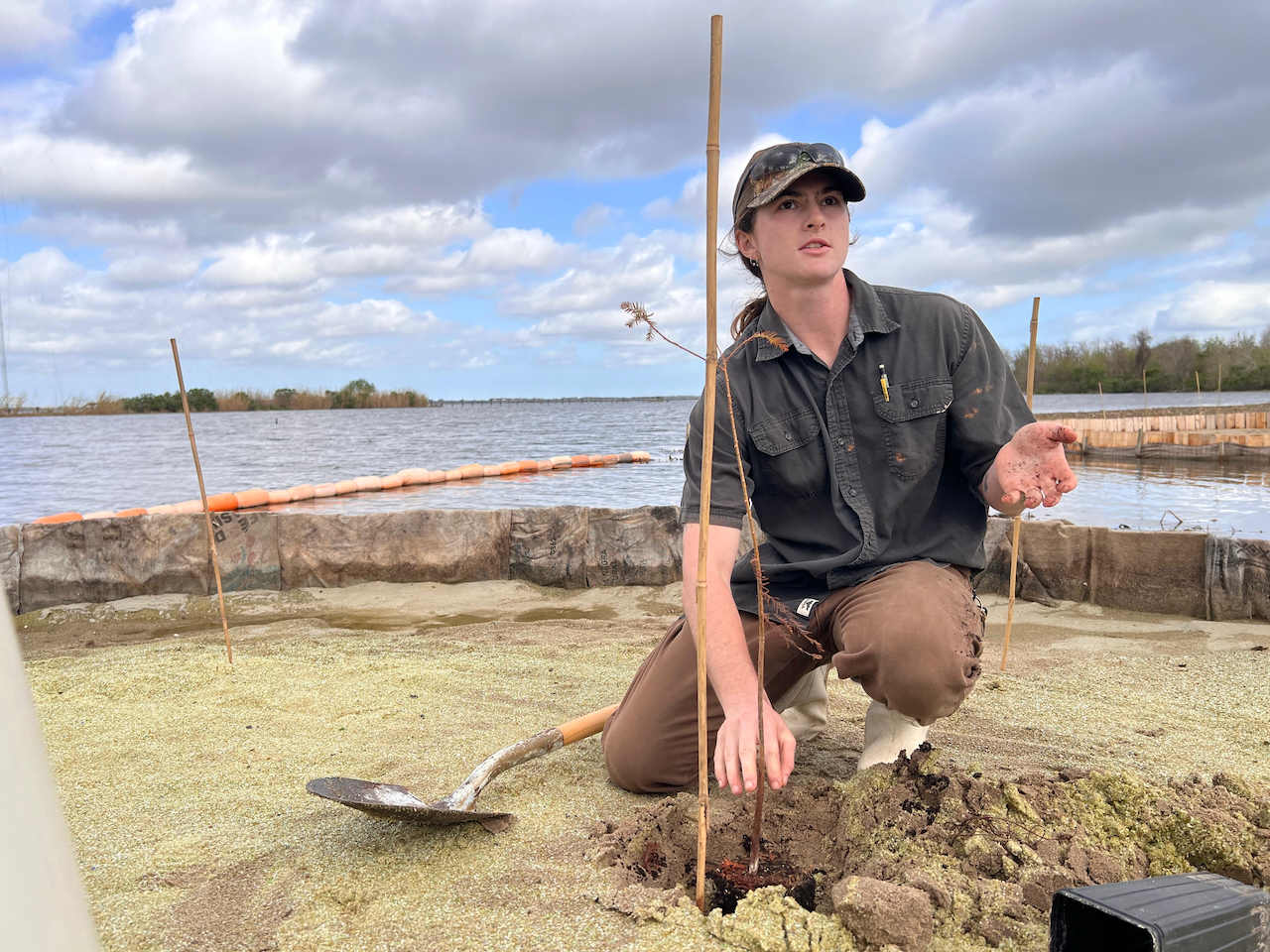
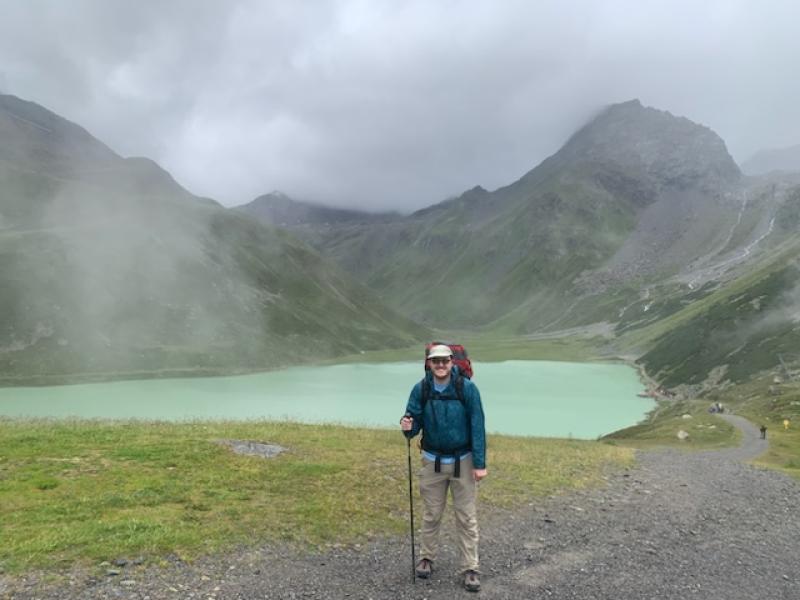
"That kind of experiential field trip-based learning and seeing these ecosystems was really engaging for me."