
Environmental Biology Undergraduate Major
Environmental Biology Undergraduate Major
The major in Environmental Biology is a focused course of study intended for students who are interested in conservation biology, environmental preservation, human health, education, and public policy. Our diverse faculty offer engaging, student-centered courses with ample opportunities for hands-on learning in the lab and field, in addition to research and study abroad programming in Ecuador, Australia, and Scandinavia, for example. Students are encouraged to join our labs, where they can develop a wide range of skills and expertise in areas including coastal, aquatic, tropical, and disease ecology. The major will prepare students who are interested in seeking employment with environmental agencies of federal, state, and municipal governments or non-governmental organizations, and in private industry, including environmental economics and environmental consulting firms. The program also may appeal to individuals planning to enter the field of environmental law. Global Change Biology and Conservation Biology are required electives for the ENVB major.

What You'll Learn
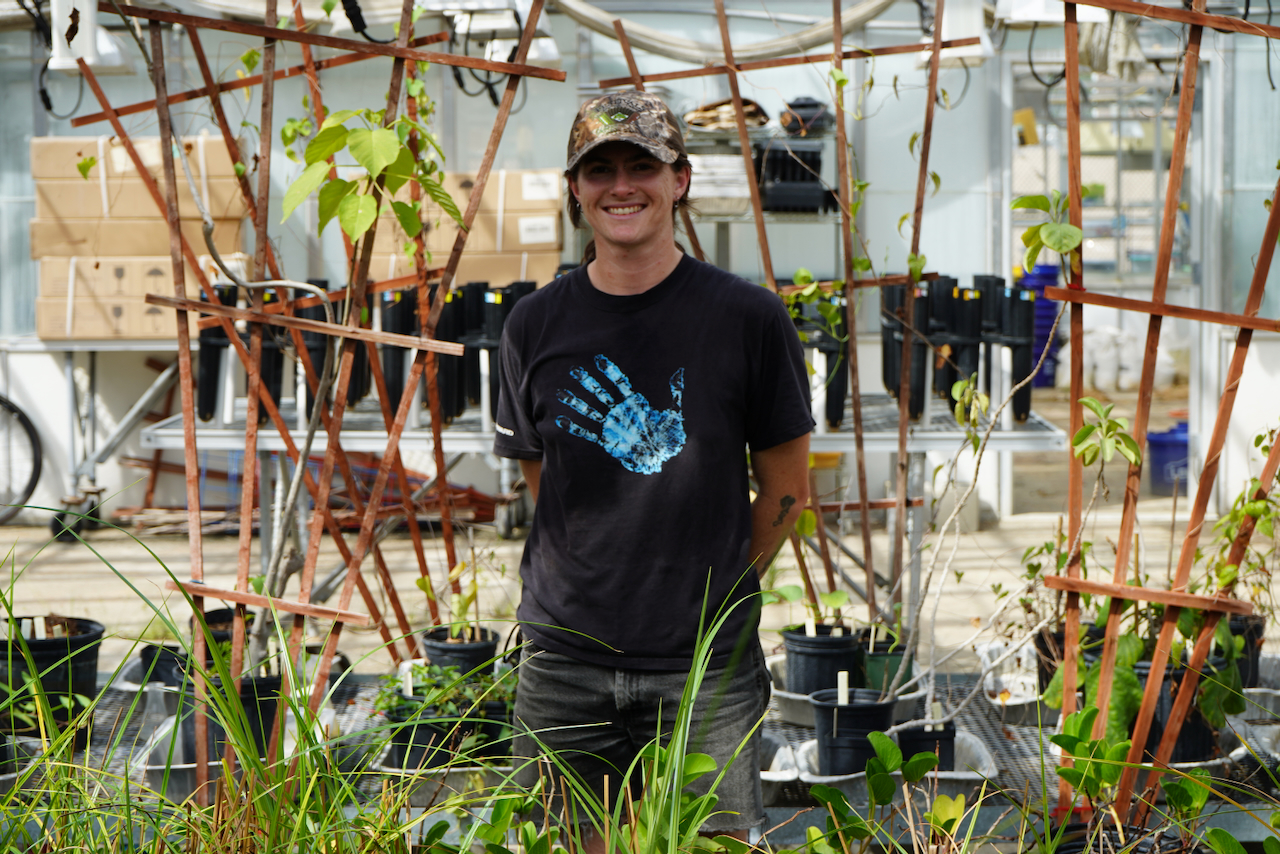
The Environmental Biology major builds an understanding of biological processes among populations, communities, and ecosystems, with required coursework in conservation biology and global change biology at its core. Students round this out with electives in areas like coastal, aquatic, tropical, and disease ecology, paired with hands-on lab and field work and study abroad opportunities in places like Ecuador, Australia, and Scandinavia.
Career Outlook
The Environmental Biology major prepares students for employment with environmental agencies at the federal, state, and municipal level, as well as non-governmental organizations and private industry roles in environmental economics and consulting. The program also appeals to students considering environmental law, giving graduates a wide range of paths across government, industry, and advocacy.
Meet Our Faculty
Environmental Biology faculty bring diverse expertise across coastal, aquatic, tropical, and disease ecology, offering engaging, student-centered courses paired with real hands-on learning in the lab and field. They actively welcome undergraduates into their labs, building close mentorship relationships as students develop specialized skills in these areas.
Curriculum Requirements
The major in environmental biology provides an understanding of biological processes among populations, communities, and ecosystems. Majors must complete eight core courses, three elective courses, three chemistry courses (or alternatives as listed below), two mathematics courses, and the capstone requirement.
Students pursuing this bachelor’s degree must earn a minimum of 30 credit hours in the Newcomb-Tulane College core curriculum, 120 credit hours in their degree, and a minimum cumulative grade point average of 2.000.
Research
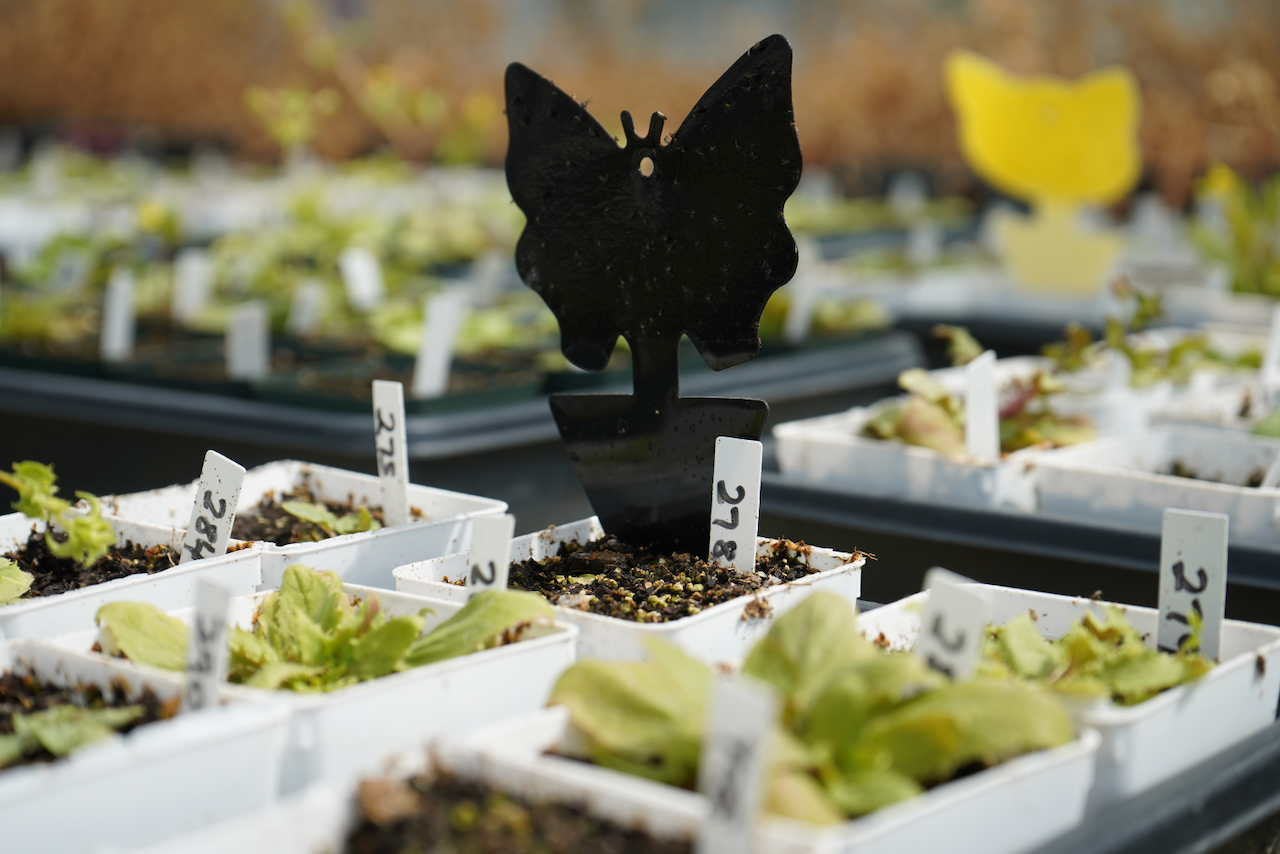
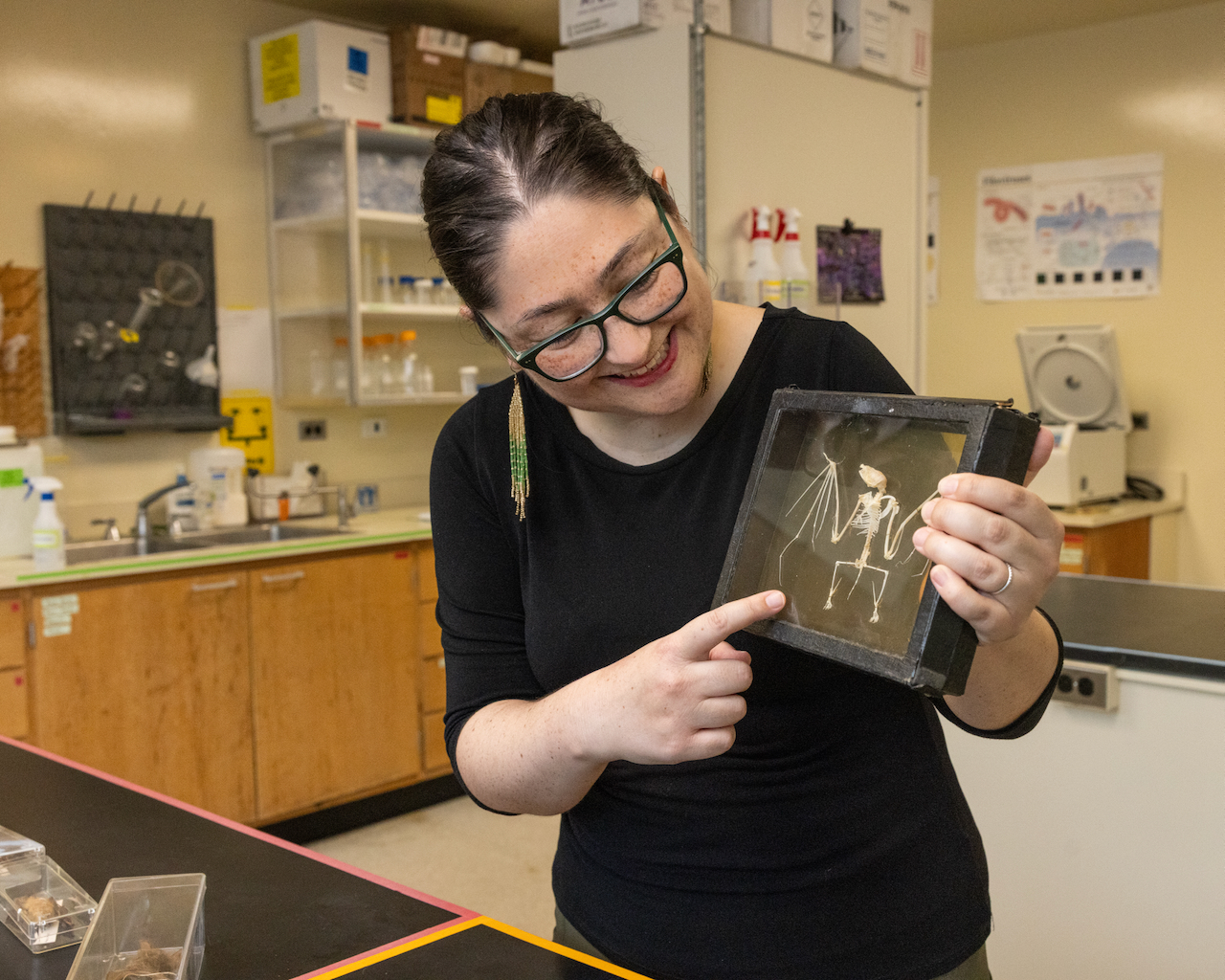
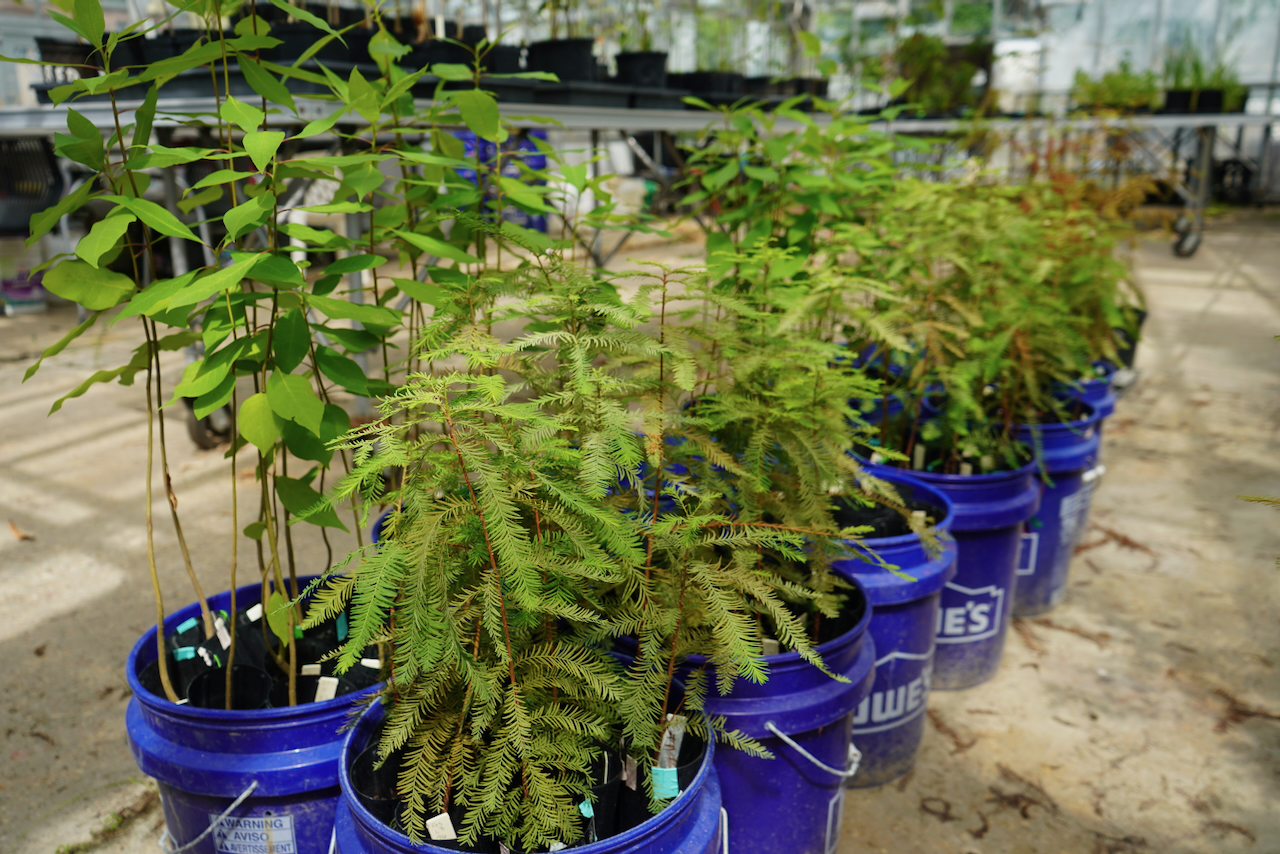
Research tied to the Environmental Biology major spans coastal, aquatic, tropical, and disease ecology, giving students the chance to dig into pressing questions about conservation, environmental preservation, and global change. Undergraduates are encouraged to join faculty labs directly, often alongside research and study abroad opportunities in locations like Ecuador, Australia, and Scandinavia, gaining real fieldwork experience well before graduation.
Learn more about the admissions process or apply now!
Find full tuition information and the financial aid process.
Get to know what makes this place a launchpad for the next generation of scientists and engineers.
FAQs
Environmental Biology is the study of biological processes among populations, communities, and ecosystems, with a focus on conservation, environmental preservation, and the ways human activity is reshaping the natural world. It's a field geared toward tackling real-world environmental challenges — training students for careers spanning government agencies, conservation organizations, environmental consulting, and environmental law.
If you are ready to declare a major in Environmental Biology, please fill out this form, and submit it to the Department of Ecology and Evolutionary Biology. The form will be signed and returned to you, and you can send it along to NTC Advising. Please note that it is your responsibility to send this form to your NTC advisor.
If your major advisor does not reach out, you may want to contact them to introduce yourself or to set up a meeting.
The Department of Ecology & Evolutionary Biology may approve transfer of credit for courses taken outside of Tulane if certain criteria are met, specific supporting documentation is provided and the request is approved by the Academic Advising Center.
To have your request reviewed for possible transfer credit in Ecology and Evolutionary Biology, you must meet the following criteria:
-The course must be taught in an accredited college or university.
-The course must be comparable in content to the Tulane course to be given equivalency to a Tulane course.
-Summer laboratory courses must be at least 5 weeks in length for credit.
-We do not give course credit for internships not coordinated by Tulane University.
The following materials must be provided when requesting approval:
-Properly completed Transfer of Credit Form from the Academic Advising Center.
-Course description from the course catalog or summer school bulletin.
-Syllabus for the course.
-List of exercises and/or experiments done in the labs.
The Transfer of Credit Form must be turned into the EBB main office:
-Students can obtain the Transfer of Credit Form from the Academic Advising Center. For more information, visit the Academic Advising Center's website.
-When the form is completed and signed by the Academic Advising Center, students should bring it to the Department of Ecology & Evolutionary Biology office, 400 Lindy Boggs, along with the required supporting documentation.
-The EEB Department will review the request and determine if the transfer of credit can be approved.
Transfer of Credits from Study Abroad Programs:
-The EBIO department encourages students to study abroad but doing so requires planning. If you are considering studying abroad, follow the steps outlined in this document, preferably in the order they are presented. If you have any questions, contact Dr. Renata Ribeiro (rduraes@tulane.edu).
Any qualified sophomore, junior or senior may apply to be an Undergraduate Fellow in the Ecology and Evolutionary Biology Scholars Program. Students who have declared a major in the Department of Ecology and Evolutionary Biology, have a cumulative GPA of 3.0 or greater, and a 3.5 or greater GPA in Ecology and Evolutionary Biology may apply to become an Undergraduate Fellow. Applications should be submitted by April 1st for consideration for fellowships the following academic year. A limited number of students will be admitted to the program, therefore, admission is competitive.
As an Undergraduate Fellow in the Department of Ecology and Evolutionary Biology, students will join a cadre of leaders among Ecology and Evolutionary Biology majors by participating in undergraduate teaching as peer teachers. The peer-teaching program involves serving as a laboratory aid in freshman courses under the supervision of the department’s Laboratory Supervisor and a Laboratory Instructor during the junior and senior years. Peer teaching is an extremely valuable educational experience, providing the Ecology and Evolutionary Biology scholars with an in-depth understanding of ecology and evolutionary biology and experience in working effectively in groups.
Fellowships are honorary awards which are renewable each semester and provide each Undergraduate Fellow with a small supplemental income (honorarium) of $400 each semester in their first (usually junior) year and $500 each semester in the second (usually senior) year as long as the scholar meets all of the peer teaching responsibilities and maintains a cumulative 3.0 GPA and a 3.5 GPA in Ecology and Evolutionary Biology as a major in good standing at Tulane. The teaching responsibilities include attendance of the laboratory training and preparation meeting on Monday morning and assisting in one laboratory each week. The time of the laboratory section will be arranged with the Laboratory Supervisor. The total time commitment is about four to five hours per week.
Students interested in applying to become an Undergraduate Fellow in the Department of Ecology and Evolutionary Biology should complete the application form and submit it to the department office, 400 Boggs, by April 1st. The statement of interest in the program, background in Ecology and Evolutionary Biology, and description of the impact the fellowship would have on the undergraduate educational experience are very important. Fellowship awards will be made based on academic qualifications as well as interest and anticipated educational benefits. Please keep in mind that Ecology and Evolutionary Biology Undergraduate Fellowships may be awarded in addition to other scholarship awards, and that they do require a time commitment (training/preparation and one lab each week) to participate in the peer-teaching program.
EBIO and ENVB degree tracks:
| EEBI Req | EEBI Major Track | ENVB Major Track | ENVB Req | Year/semester |
| 1 | EBIO1010/1015 Diversity of Life | 1 | ||
| 3 | EBIO1020 Mechanisms of Life (spring only) OR CELL1010 Intro to Cell | 2 | ||
| 4 | EBIO2020 Theory and Methods | 3 | ||
| 5 | EBIO2070/2071 Genetics w/recitation (fall only; CELL2050+QPE can count) | 6 | ||
| 6 | EBIO3040/3045 General Ecology w/lab (fall only) | 7 | ||
| 7 | EBIO3080 Evolution (spring only) | 8 | ||
| 8 | CHEM Gen Chem I | 9 | ||
| 9 | CHEM Gen Chem II | CHEM Gen Chem II OR *options below | 10 | |
| 10 | MATH Calc I | 12 | ||
| 10 | MATH Stats for Scientists or Modelling or ANY second MATH | 12 | ||
| 11 | EBIO lecture elective I | 13 | Include the name of the course | |
| 11 | EBIO lecture elective II | EBIO2040 Conservation Biology | 4 | Include the name of the course |
| 11 | EBIO lecture elective III | EBIO2050 Global Change Biology | 5 | Include the name of the course |
| 12 | EBIO lab elective I | 14 | Include the name of the course | |
| 12 | EBIO lab elective II | 14 | Include the name of the course | |
| 12 | CHEM Orgo I OR EBIO lab elective | CHEM Orgo I OR **options | 11 | Include the name of the course |
| 13 | EBIO5970 (writing intensive) or EBIO5971 (not WI) Contemporary Issues in EBIO Senior Capstone | 15 | ||
| EBIO4992 Honors Thesis Cohort (co-requisite if doing EBIO4990/5000 Honors Thesis) | ||||
One elective course from outside the EEB major/department can count
*ENVB Options:
CHEM2500 Environmental Chemistry
ECON3330 Environmental & Natural Resources
EVST3310 Approaches to Environmental Studies
EVST3950 Special Topics Environmental Thought
POLI4620 Global Environmental Politics
SOCI2600 Environmental Sociology
EBIO 4-credit lab
** ENVB Options
EENS2120 Climate and Extinction w/lab
EENS Environmental Geochemistry
RSCE 6800 Intro to River Science and Engineering
RCSE6802 Intro to Coastal Science & Engineering
RCSE6810 River and Stream Restoration
EBIO 4-credit lab
EEB Degree Policies for undergraduate students
YOU, the student, are ultimately responsible for regularly reviewing and understanding your degree audit. Your advisors provide guidance but do not over-ride the audit. If you have uncertainty about a requirement or course plan, it is your responsibility to ensure that any changes or course modifications still meet the requirements for your degree according to your audit.
- All ENVB/EEBI majors and minors must meet with a major advisor in the EBIO department. We recommend that you meet with your major advisor at least once a semester. You MUST complete this template in order to be certified for graduation.
- Your major advisor can help you with EBIO related questions and the ENVB/EEBI curricula. Your major advisor is NOT responsible for answering questions or advising you on majors or minors in other departments. You should have an academic advisor and a major advisor from each department in which you are seeking a degree or certificate.
- You may earn major credit for EBIO1020 Mechanisms of Life OR CELL1010 Inro to Cell but not both.
- You may earn major credit for either EBIO2070 Genetics OR CELL2050 Genetics+QPE but not both.
- A course that counts for lecture elective credit = 3 credits.
- A course that counts for lab credit = 4 credits.
- For the EEBI major, only one elective lecture or lab credit may be earned outside of the major/department to satisfy requirement 12. For the ENVB major, see the list of approved courses outside of the major for requirements 10 and 11. Requirement 14 must be satisfied within the major/department. The req. numbers may change; see opposite side of this page.
- Requests to transfer credits from other biology departments while studying abroad should be submitted for approval by the EBIO department through Dr. Renata Ribeiro (rduraes@tulane.edu) BEFORE travelling. You can earn credit for one lecture and lab elective at another institution.
- If you are completing a Marine Biology minor and an ENVB/EEBI major there can be NO overlap in elective courses between the degrees. Contact Dr. Jaymes Awbrey (jawbrey@tulane.edu) for more information about the Marine Biology minor.
- You can complete an EEBI minor OR an ENVB/EEBI major but not both. For more information about the EBIO minor contact Dr. Jelagat Cheruiyot (dcheruiyot@tulane.edu). No courses counting towards one minor will count towards a second minor or certificate.
- Students who choose to pursue a double major need to fulfill requirements for both majors AND also take enough courses to have 18 non-overlapping courses.
- A student who would like to request an exception to the ENVB/EEBI degree audit must submit a petition to the EEB curriculum committee for review. Send your specific request about the courses involved and the justification for your request to Dr. Donata Henry (donata@tulane.edu) and cc your academic advisor.
Suggested timeline for Environmental Biology majors:
Freshman Fall
EBIO1010/1015 Diversity of Life (pre-req)
CHEM1070 Gen Chem I
MATH Calc I
Freshman Spring
EBIO2020 Theory and Methods (pre-req)
EBIO1020 Mechanisms of Life or CELL1010 Intro to Cell (pre-req)
CHEM1080 Gen Chem II OR see list of options
Sophomore Fall
EBIO3040/3045 Ecology (fall only)
EBIO2070 Genetics with recitation OR CELL2050 Genetics + QPE
Sophomore Spring
EBIO2040 Conservation Biology (spring only)
EBIO3080 Evolution (spring only)
Junior Fall
EBIO lecture elective I
EBIO lab elective I
Junior Spring
EBIO2050 Global Change Biology (spring only)
EBIO lab elective II
MATH stats for sci (or any second MATH)
Senior Fall
EBIO5970 (WI) or 5971 Senior Capstone (either semester)
Senior Spring
EBIO lab elective III
Contact Us
By Mail
Department of Ecology & Evolutionary Biology
Tulane University
6823 St. Charles Avenue
Lindy Boggs Building, Room 400
New Orleans, LA 70118-5698