
Undergraduate Programs
Your Path Forward at Tulane SSE
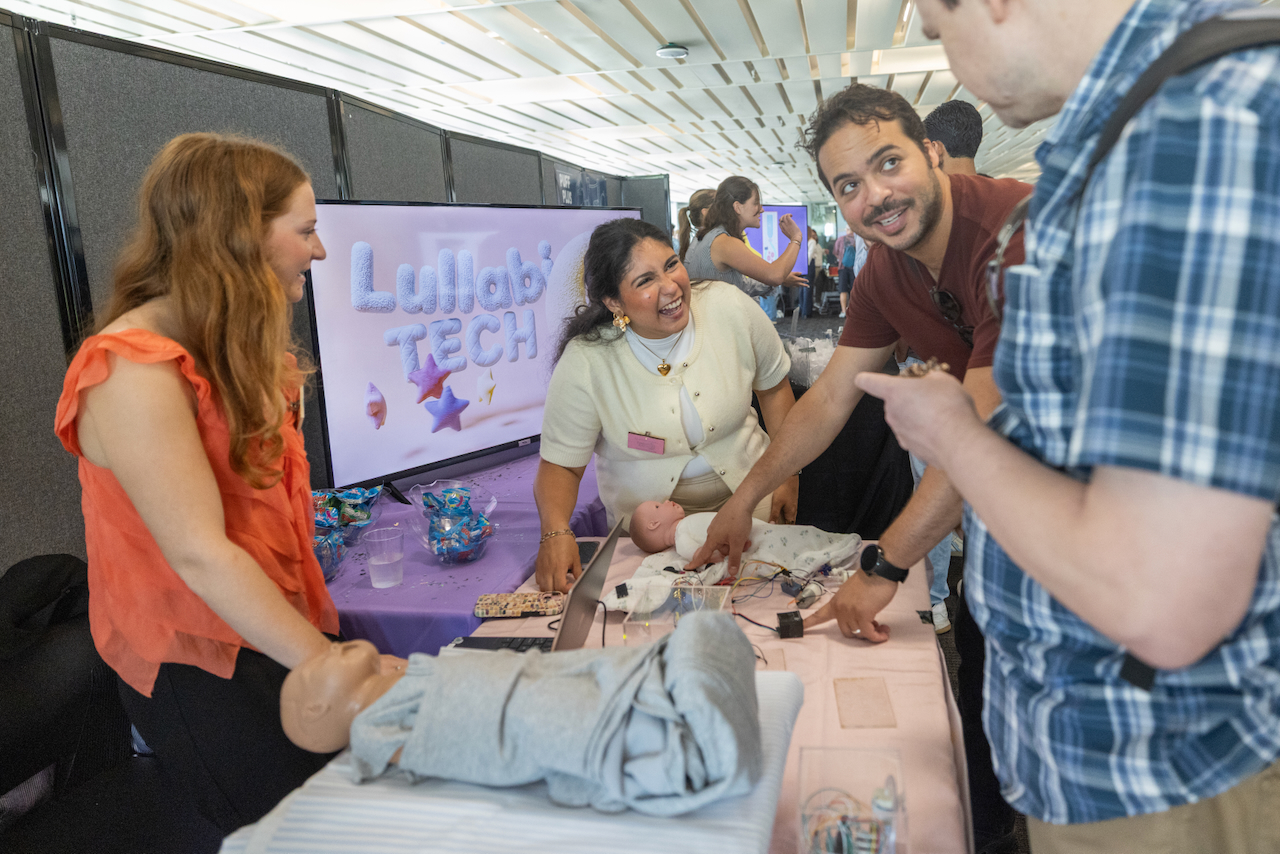
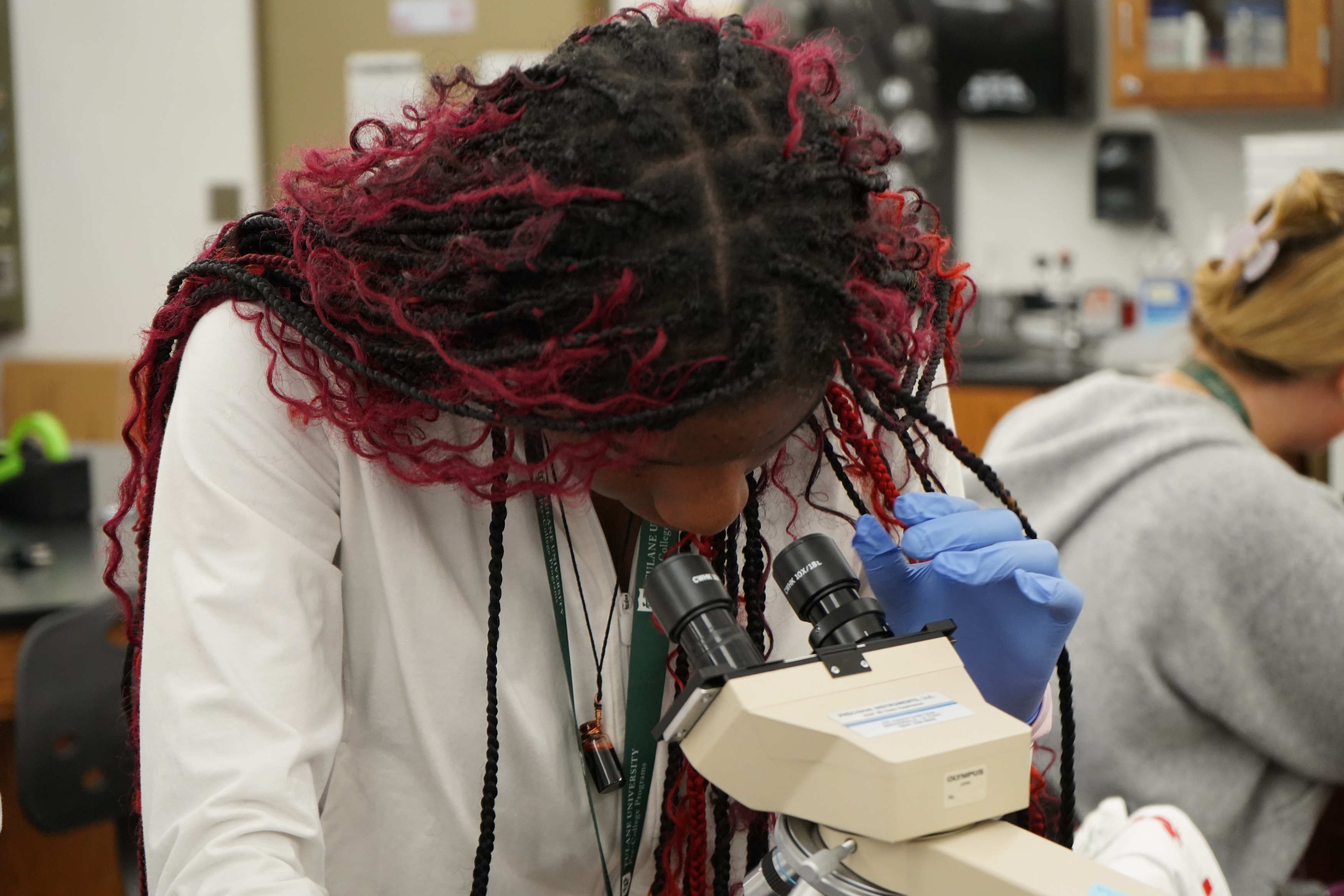
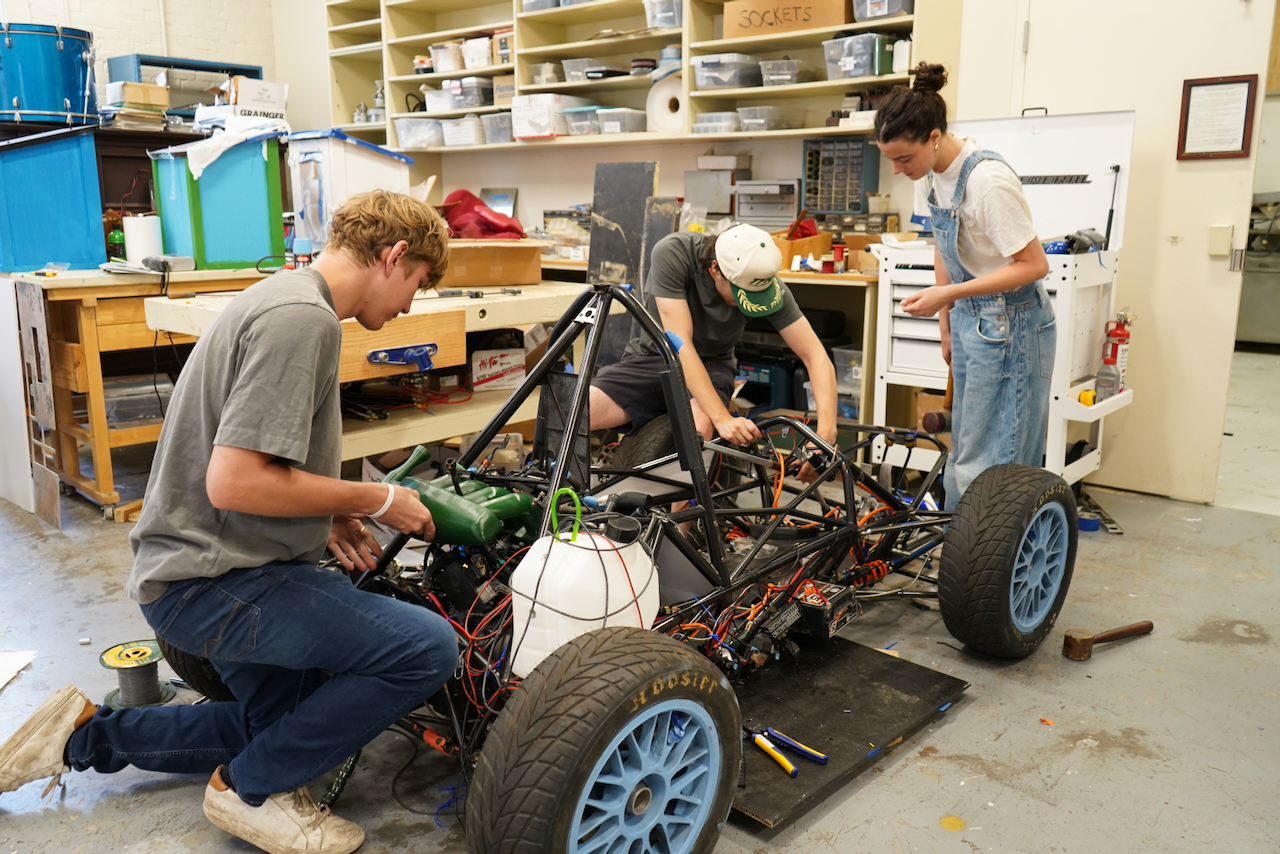
As a student in Tulane’s School of Science and Engineering, you are part of a community that believes in your potential and invests in your growth. Learning here goes beyond the classroom—you are encouraged to ask big questions, explore new ideas, and apply what you learn to real challenges through hands-on research, interdisciplinary collaboration, and creative problem-solving.
SSE offers a broad range of undergraduate programs across the sciences, engineering, and mathematics, along with robust graduate opportunities at the master’s and Ph.D. levels. Many students deepen their academic journey through Tulane’s 4+1 programs, earning a bachelor’s and master’s degree in an accelerated timeframe while gaining advanced training and research experience.
Your undergraduate experience is further enriched through opportunities to engage in research, internships, study abroad, and public service—helping you build skills, confidence, and momentum for careers, graduate study, or both.
Find Your Program


The SSE Advantage
At Tulane's School of Science and Engineering, you'll work side-by-side with faculty on real research, tackle questions that matter, and build the skills and confidence to launch your career or graduate studies. You won't get lost in the crowd here; with a 12:1 faculty-to-student ratio, you'll be known, challenged, and supported. And you'll do it all in New Orleans, a city whose creativity and energy will shape how you learn. Ready to see what SSE is all about?

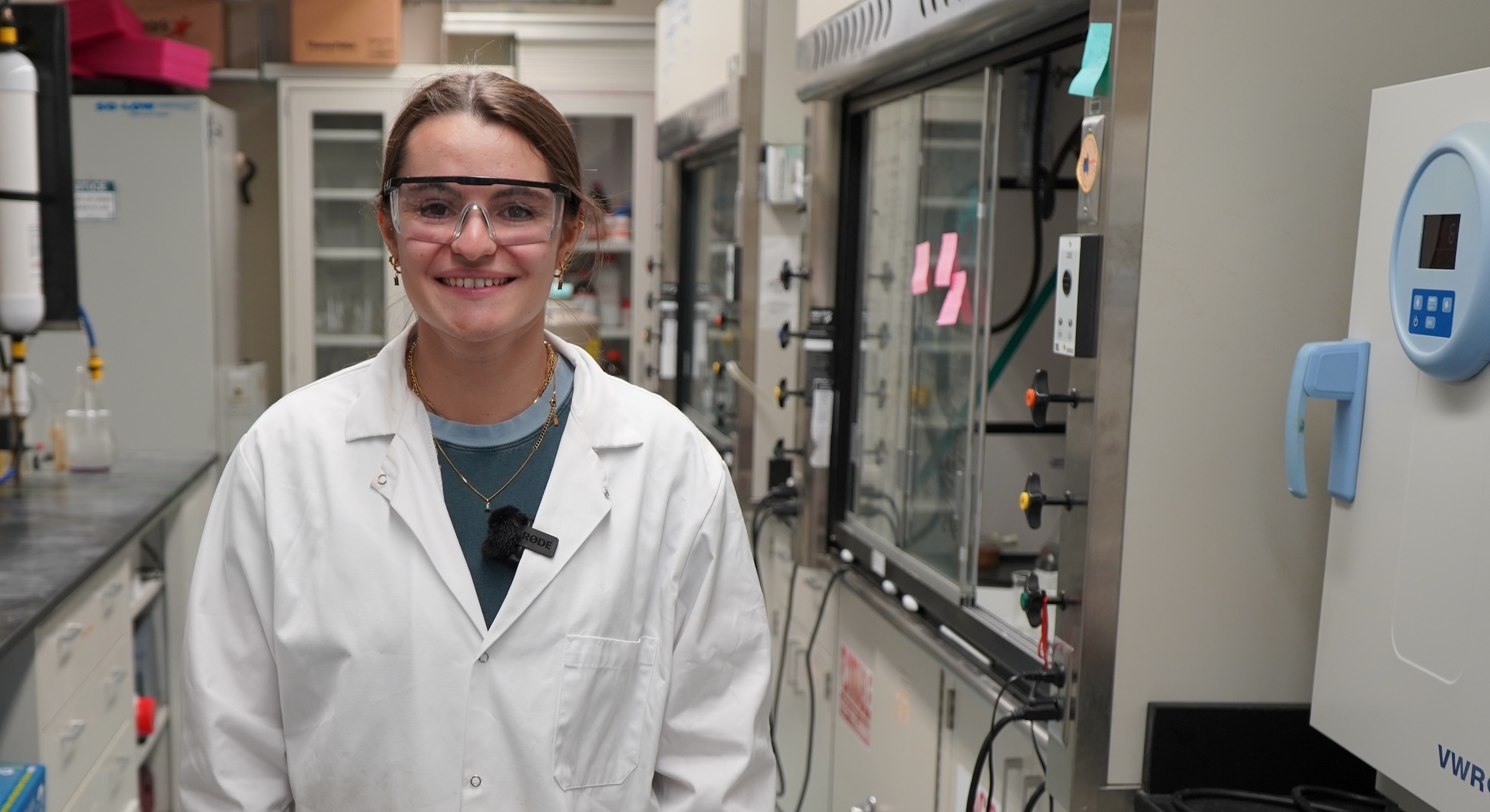
"It's completely transformed my life and the path that I'm on."
Resources
To declare a major or minor in the School of Science and Engineering you must contact the appropriate departmental office. The Major/Minor Declaration Form requires the approval of the Department Chair. When declaring your major you will receive a Major Advisor to help schedule your Major and/or Minor required courses. The signed major/minor declaration form must be turned in to the student's Newcomb-Tulane advisor. Students who choose to pursue a double major need to fulfill requirements for both majors and also take enough courses to have 18 non-overlapping courses. Check with each of your major advisors to determine any additional restrictions (e.g., some majors do not count some courses in the list of non-overlapping courses). Twenty-four credits in the major may not overlap with the minor. No courses counting towards one minor will count towards a second minor. Students must earn a GPA of at least 2.000 in courses counting towards the major or minor.
FIRST Scholarship
Tulane’s School of Science and Engineering is awarding a FIRST (For Inspiration and Recognition of Science and Technology) scholarship in support of their mission to inspire young people to be science and technology leaders. This merit-based scholarship, which is unique to SSE, will be awarded to high school senior(s), who participated on a FIRST team during their junior or senior year of high school. This FIRST Scholar distinction replaces all or a portion of the financial award a student receives from Tulane and does not represent additional funding. It may be utilized for any undergraduate course of study in the School of Science and Engineering at Tulane. The scholarship is renewable over four years, contingent upon maintaining good academic standing. Each recipient must meet the regular academic requirements for admission to Tulane University.
ROTC Scholarships
ROTC Scholarships in each branch of the armed forces provide funding to cover full or partial tuition, fees, book expenses and a monthly expense allowance. Students completing this program are commissioned as officers in their respective branch of the armed forces upon graduation. Assistance to cover the room and board expenses of some ROTC scholarship recipients is provided by the Tulane Cooperative Room and Board Scholarship to undergraduate Tulane students.
Full Major and Minor requirements, department and program information, and courses offered by the School of Science & Engineering can be found on Tulane's Newcomb-Tulane Course Catalog.
SSE students are encouraged to do research with a faculty member to gain additional experience and expertise in their chosen field. Unless a student is paid to do the work, they may earn independent study credit. Students register for independent study in the faculty member's department after discussing the details of the research, time commitment, responsibilities, etc. with the faculty member. Typically students earn 1 credit for 3-4 hours/ week, 2 credits for 6-8 hours/week and 3 credits for 10-12 hours/week, on average. (This means that some weeks the student might work 15 or more hours and another week (e.g., during midterm exams), the student might only work 5 hours.) Scheduling is done with the faculty member. Independent study can be taken for up to six A-F graded credits. Additional credits are earned by signing up for the S/U graded credits. Again, all registration is done within the faculty member's department. For some majors, the independent study may count to fulfill major or minor credit. Check with your major advisor if you are not sure. Some majors also give credit for research performed with other faculty (e.g., at the medical school), so check with your major advisor to see what your options are.
Studying abroad is a meaningful experience for students, because they find education in and outside of the classroom. Many get the chance to visit multiple countries and cultures during their study abroad program. And they return to campus with stories of their adventure and memories to last a lifetime.
A common misunderstanding is that Science and Engineering students are unable to participate because of a regimented course schedules or difficulty in transferring credits from an outside university. The Office of Study Abroad can assist School of Science and Engineering students in planning their study abroad experience. In addition, advisors in each academic department are available to talk to students about fulfilling major requirements while studying abroad.
The School of Science and Engineering strongly encourages you to explore study abroad options. Experiences gained while participating in study abroad programs are very important to you as an individual and serve to enhance your abilities as a member of the international scientific and engineering community.
Study abroad options for SSE majors are varied and include summer, semester, and year-long options all across the globe. You may complete coursework for your major or pursue other interests. More information about the specific programs is available through the Office of Study Abroad.
We recommend that you express your interest in studying abroad as early as possible. Meet with the Office of Study Abroad to obtain information regarding the various programs available. Be sure to discuss your study abroad plans with your academic and faculty advisors; they will be able to help you plan your coursework to include study abroad options.
Internships are a valuable part of your undergraduate education at Tulane. Resources to assist students in obtaining internships are available through Hire Tulane, the Center for Engaged Learning and Teaching, and The Center for Public Service.
The School of Science and Engineering Undergraduate Student Mentor Program pairs incoming freshmen or transfer students interested in pursuing a major or minor degree in science or engineering with a sophomore, junior, or senior mentor currently enrolled in Tulane’s School of Science and Engineering. Mentors serve as an academic resource for mentees and a guide for the transition to college.
If you have any questions, please contact ssementorprogram@wave.tulane.edu.
The mathematics requirement is defined in the Tulane University Undergraduate Course Catalog. Departments may recommend or require particular mathematics or science courses for their majors, and students are advised to consult the major department’s listing in the current course catalog. A review of the required courses for all School of Science and Engineering students has been provided.
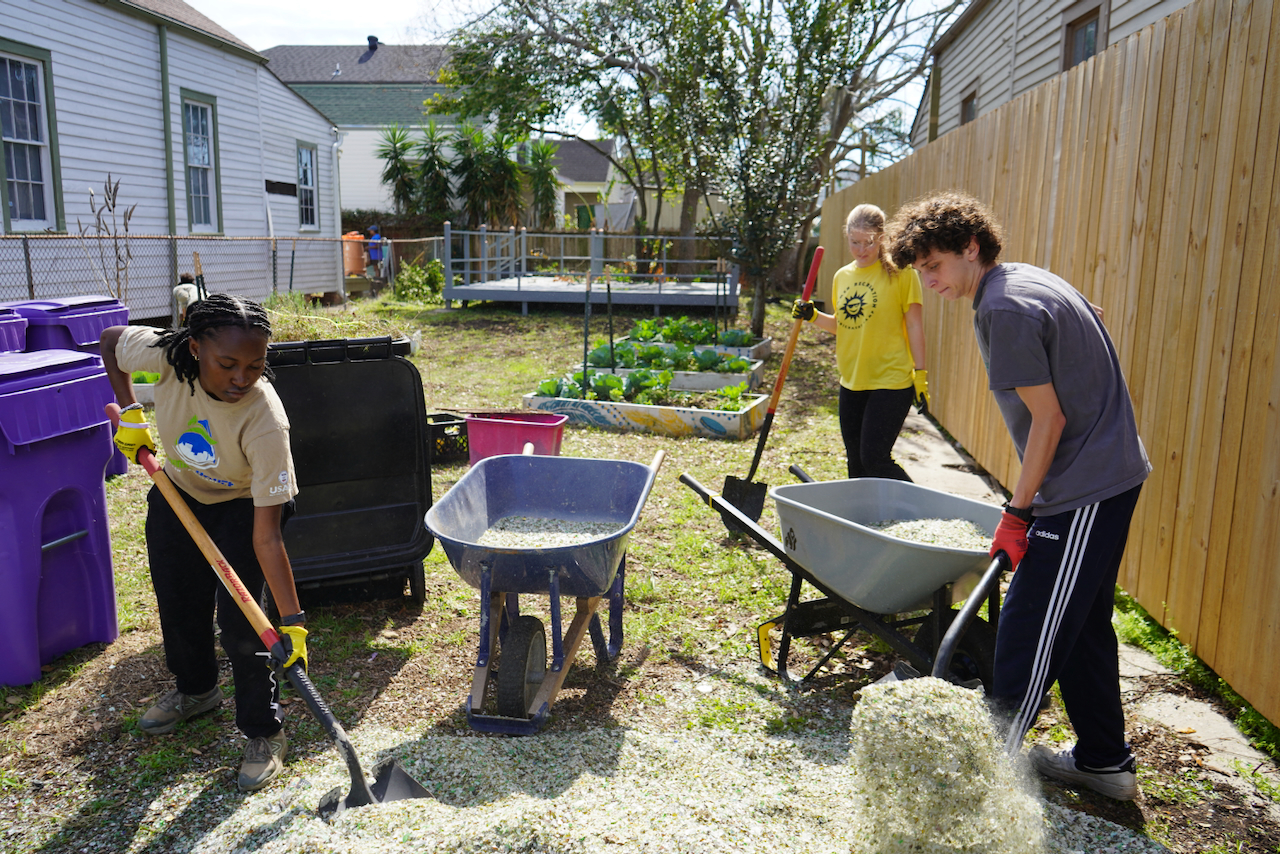
Tulane students involve themselves in community development, aid and enrichment as they complete their public service requirements. The Center for Public Service administers the public service requirement of the undergraduate core curriculum. It is the belief that public service, rooted in an academic setting contributes to the development of student civic engagement and responsibility. Students learn that the community is a place to utilize and showcase their knowledge and skills to bring support and change for the greater good. In turn, students gain a greater understanding of the course material and are able to contextualize the academic knowledge into broader applications.
At Tulane, we believe that effective writing is central to learning and communication. Tulane students develop the intellectual, organizational, and expository skills appropriate to university study. Through writing intensive courses, our students learn to communicate within their chosen field of study.
Neither Newcomb Tulane College nor the School of Science and Engineering have a capstone requirement for graduation. However, some SSE departments require a capstone as part of their major requirements. Students should contact their major department to determine if a capstone is required, and, if so, what options the student has for completing this requirement.
To be eligible for study at another regionally accredited institution in the United States, a student must be in good standing in Newcomb-Tulane College, having earned the minimum credits and cumulative grade point average (GPA) appropriate for her or his class standing. The student also must not be on disciplinary or honor board probation. Any courses taken at another institution must be pre-approved by the department that would give the transfer credit. Students should contact each department directly (start by looking at their website!) to see how it handles transfer credit.
Students who have grievances about grades or other issues should follow the Tulane procedures outlined in the Grievance Procedure.
The Academic Advising Center is a resource provided to Tulane’s undergraduate students for help with course selection, academic planning, monitoring degree requirements, pre-professional planning and more. You are encouraged to meet with your Newcomb-Tulane Academic advisor (in addition to your advisor for your major/minor) to guarantee that you are on the right track academically.
Contact Us
Laurie O'Brien
Associate Dean
lobrien2@tulane.edu