
Biomedical Engineering Undergraduate Major
Biomedical Engineering Undergraduate Major
Since 1977, the Department of Biomedical Engineering has been a leader in engineering science investigations of health and medicine. As you explore this site, you will see that our curriculum and translational studies are targeted and integrated, spanning areas of biomaterials, biomechanics, device development and tissue engineering. Our team of faculty and staff members brings energy and enthusiasm towards educating future generations of biomedical engineers as we solve today’s most complex and interesting basic and applied research problems relevant to healthcare. We welcome the opportunity to develop collaborations at all levels.
Tulane's Biomedical Engineering program is accredited by the Engineering Accreditation Commission of ABET, under the commission’s General Criteria and Program Criteria for Bioengineering and Biomedical and Similarly Named Engineering Programs.

What You'll Learn
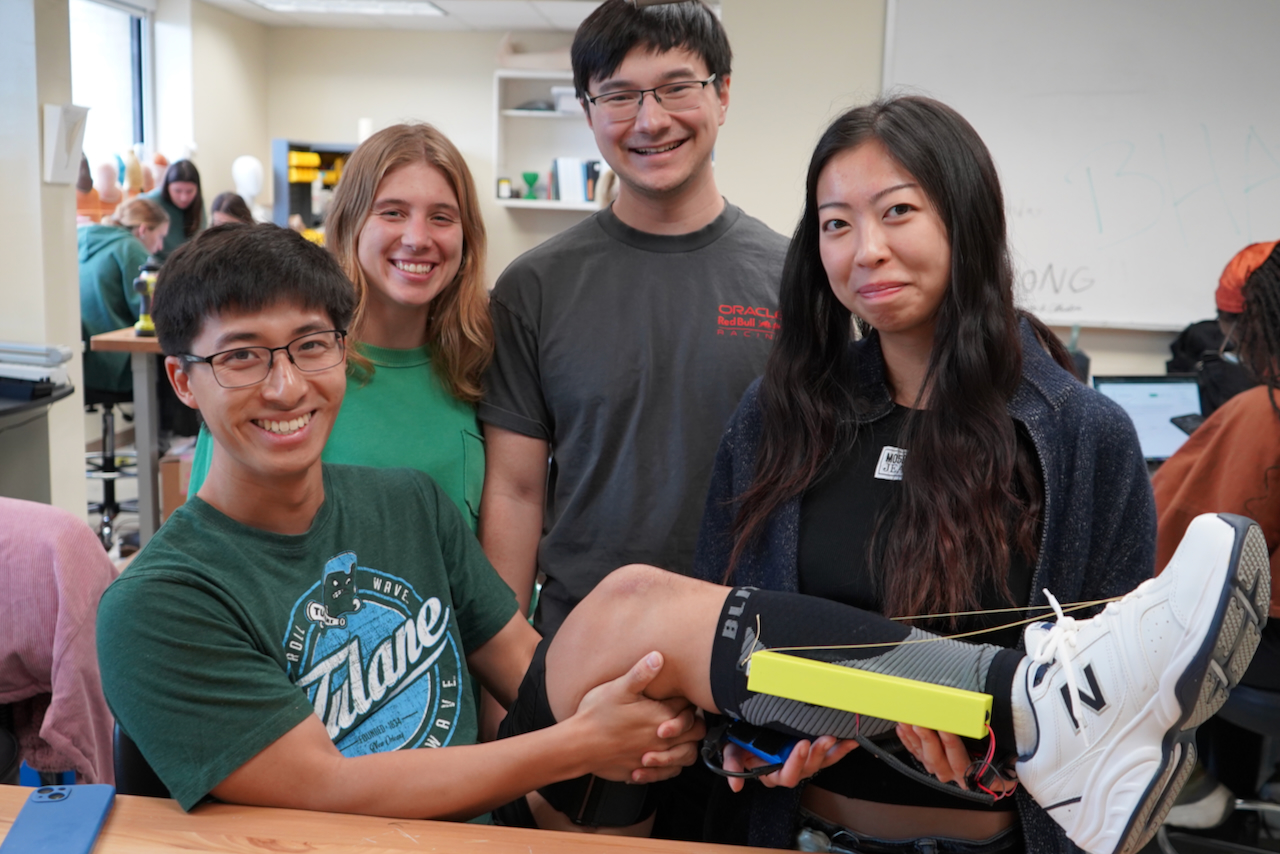
Our undergraduate program provides students with the breadth required for participation in the interdisciplinary field of biomedical engineering and the depth required by engineers to advance the practice in our discipline. Our objective is to prepare graduates who are able to successfully pursue advanced studies leading to research or professional practice in biomedical engineering, advanced studies leading to research or professional practice in the health and medical sciences, or practice in biomedical engineering industries and related technical and professional fields.
Career Outlook
A biomedical engineering degree opens doors across a wide range of industries, since the field sits at the intersection of engineering, biology, and medicine. Tulane's BME program is designed to prepare graduates for several paths at once: advanced study and research in biomedical engineering itself, further training in the health and medical sciences (including medical school), or direct entry into biomedical engineering industries and related technical fields. That breadth translates into real-world career flexibility — graduates go on to work in medical device design, tissue engineering, biomechanics, healthcare technology, pharmaceuticals, and clinical research, among other areas, or use the degree as a springboard to medical, dental, or graduate school. With healthcare and medical technology sectors continuing to grow and innovate, biomedical engineers remain in strong demand for their ability to apply engineering problem-solving directly to human health challenges.
Meet Our Faculty
Meet the faculty behind Tulane's Biomedical Engineering program — a team of researchers, mentors, and innovators dedicated to shaping the next generation of biomedical engineers. Our faculty bring real-world expertise across biomaterials, biomechanics, device development, and tissue engineering, translating cutting-edge research into hands-on learning inside and outside the classroom. Every undergraduate is paired with dedicated class advisors who stay with them throughout their time at Tulane, offering guidance on coursework, research opportunities, and career pathways. Whether students are headed toward graduate school, medical school, or industry, our faculty are invested in helping them get there — combining academic rigor with genuine mentorship every step of the way.
Curriculum Requirements
Tulane's BMEN undergraduate curriculum stands out for several distinctive features. Students complete a full year of Anatomy and Physiology, taking a Human Anatomy course with a Gross Anatomy laboratory in the first semester of junior year, followed by Quantitative Physiology and its lab in the second semester. This is paired with two and a half years of mathematics that culminate in "Mathematical Modeling and Analysis of Biological Systems," giving students a strong quantitative foundation alongside their biological training. At the junior level, students choose from domain courses in Biomaterials and Tissue Engineering, Biomechanics and Biotransport, Biosignals and Bioimaging, and Biomedical Design, completing two of these along with a follow-up graduate-level course in one of them. The program also builds in substantial hands-on experience: every student takes part in an in-depth, one-year group design project developing innovative devices to address biomedical health challenges, followed by a one-year individual research or design project with a required thesis, where they either conduct independent lab research or test their own design. Finally, students are eligible to apply to the 4+1 MS program, which lets them complete a master's degree in just one additional year after graduation.
Students pursuing the Bachelor of Science in Engineering degree with a major in Biomedical Engineering must earn a minimum of 129 credit hours in their degree (with an optional 1-credit SCEN 1400 seminar the major is 130 credits) and a minimum grade point average of 2.000.
Research
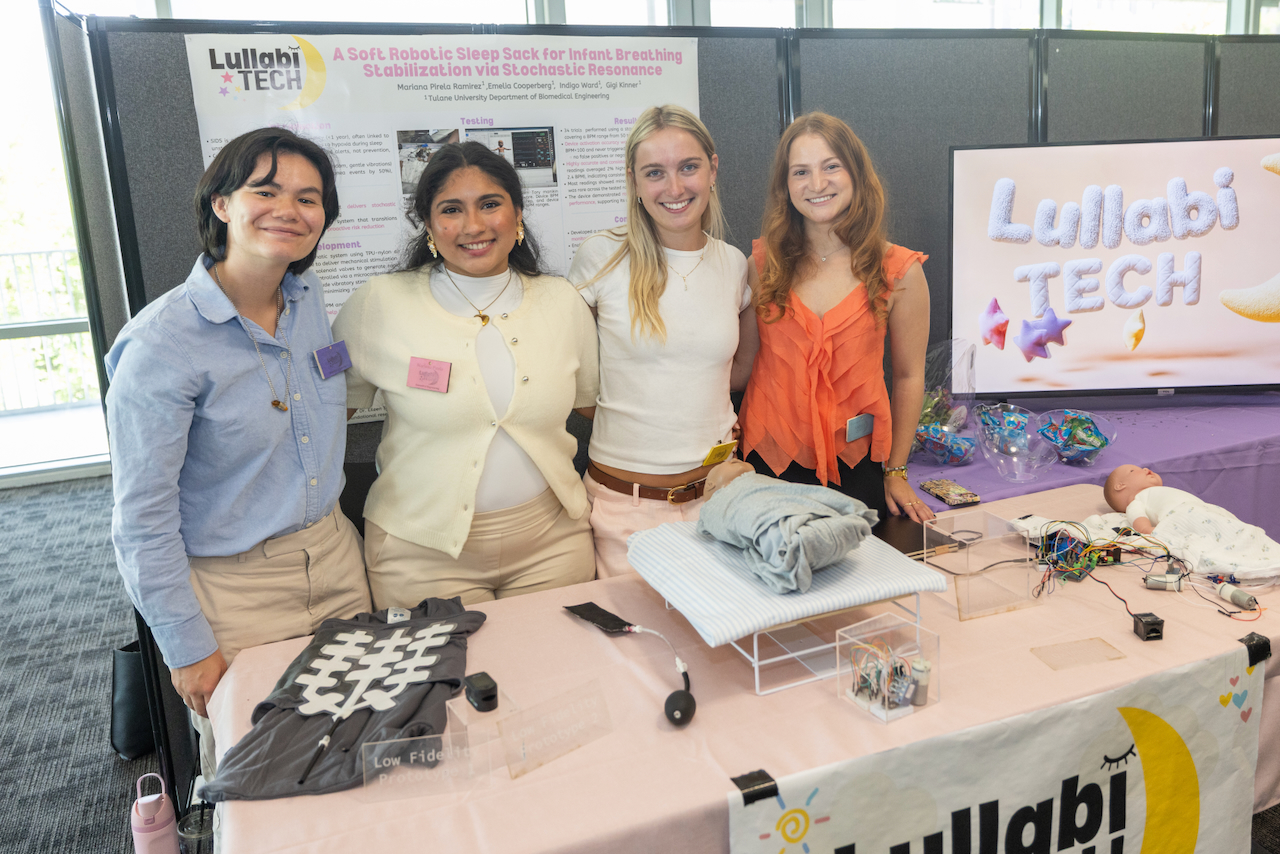
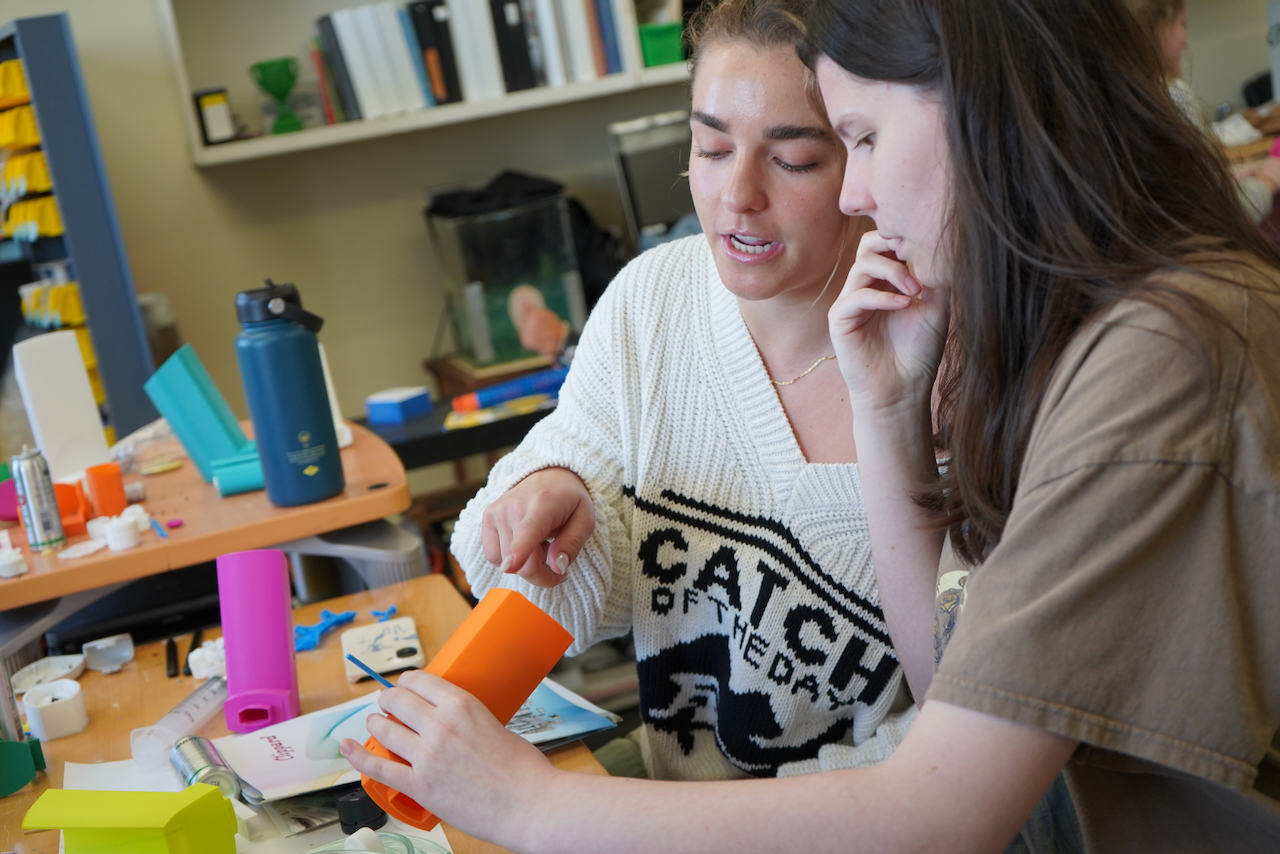
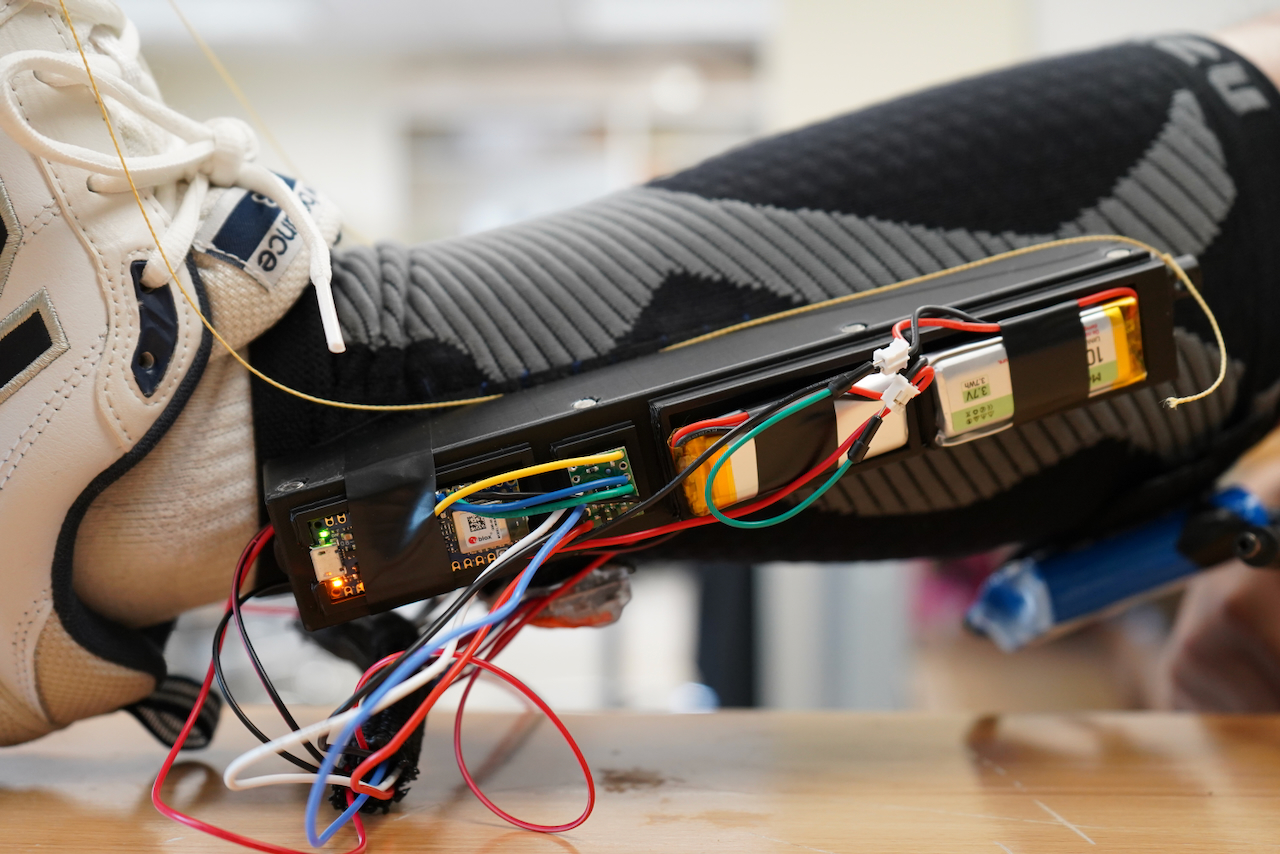
Research is at the heart of the undergraduate experience in Tulane's Biomedical Engineering program. Every student completes a year-long individual research project — alongside team design projects — culminating in an undergraduate thesis and public presentation at the department's Senior Research and Design Conference. Students dive into real biomedical engineering challenges spanning biomaterials, biomechanics, biophotonics, biosignals and bioimaging, and more, working alongside faculty who are actively engaged in federally and privately funded research. From building assistive devices to advancing tissue engineering, undergraduates don't just learn engineering — they practice it, tackling problems that have genuine impact on health and medicine well before graduation.

Learn more about the admissions process or apply now!
Find full tuition information and the financial aid process.
Get to know what makes this place a launchpad for the next generation of scientists and engineers.
FAQs
Biomedical engineering is the application of engineering principles and design to solve problems in biology and medicine, spanning areas like medical devices, tissue engineering, biomechanics, and diagnostic imaging. It's a field where engineers work directly on challenges that improve human health — from designing artificial organs to developing tools that help clinicians diagnose and treat disease.
If you are ready to declare a major in Biomedical Engineering, please fill out this form, and submit it to the Department of Biomedical Engineering by email or in-person. The form will be signed and returned to you, and you can send it along to NTC Advising. Please note that it is your responsibility to send this form to your NTC advisor.
You and your major advisor will be copied on an email to connect. If your major advisor does not reach out, you may want to contact them to introduce yourself or to set up a meeting.
One of the distinctive features of Tulane’s undergraduate program is the requirement that all students participate in a year-long individual research or design project (in addition to the team design projects). These projects, including an undergraduate thesis and public oral presentation, have been a part of Tulane's undergraduate curriculum in Biomedical Engineering since 1977. Since 2003, we have hosted an Undergraduate Research and Design Expo, where students present their research.
Team design projects enable Biomedical Engineering students to use the knowledge and skills acquired in earlier coursework. Teams incorporate appropriate engineering standards and realistic constraints while they produce designs that address healthcare-related needs. Each spring, the teams present their designs in a show which the public is invited to attend.
Study Abroad Contacts
Dr. Katherine Raymond, BME Study Abroad Coordinator
Study Abroad Information Sessions
Tuesday 1/27/2026 at 3:30 pm in Boggs 104
Friday, 1/30/2026 at 1:00 pm in Boggs 239
Please make every effort to attend one of these sessions if you plan to study abroad, especially if you are planning Fall of 26.
Probably fall of the junior year if only one semester. However, fall semester at many EU schools does not end until mid-January. This presents a problem for students trying to return in time for the start of spring semester here. The senior thesis project (integrated with BMEN 4900-4910) usually begins in the spring semester of the junior year, but can be delayed until the summer or fall of the senior year. Arrangements for the senior thesis project are best made prior to leaving for JYA. Additionally, the fall semester curriculum for juniors includes courses that are adequately taught in non-BME-specific curricula. This gives flexibility in the choice of institutions abroad.
The student should consult with his/her faculty advisor before leaving in order to minimize the impact of missing prerequisites for required courses. Generally, this issue is best handled on a case-by-case basis and requires developing a curricular plan outlining the balance of the undergraduate career.
In general, we have no preferred institutions. A school that has no offering of technical courses is less desirable than one with offerings that can fit into our curriculum. Careful advance planning could make it possible to take only liberal arts courses overseas, but it is difficult to do this. The student, along with the faculty advisor, should choose the institution with the student's background and career goals in mind. That said, we've had several students at Imperial College in London, and have been able to find courses that are suitable for Junior year, including Anatomy and Physiology, Fluid Mechanics, etc.
Graduation requirements that are difficult or impossible to meet abroad are Research and Professional Practice, BMEN 4900-4910, and Team Design Projects, BMEN 4030-4040. Other BME-specific courses that are often difficult to match include BMEN 3030 and BMEN 3060, the year-long anatomy and physiology sequence. If the student is at a university with a coordinate medical school (e.g. Strathclyde) then this is not a problem. If matching courses cannot be found, a workable plan may be to move required courses from the junior year to the senior year, emphasizing taking professional electives abroad.
Dr. Katherine Raymond, BME Study Abroad Coordinator
-One full year of Anatomy and Physiology. In the first semester of the junior year, all students take a Human Anatomy course with a Gross Anatomy laboratory followed by a Quantitative Physiology course and lab in the second semester.
-Two and one-half years of Mathematics, culminating in the course "Mathematical Modeling and Analysis of Biological Systems"
-Junior-level "domain" courses in Biomaterials and Tissue Engineering, Biomechanics and Biotransport, Biosignals and Bioimaging, and Biomedical Design. Each student is required to complete two domain courses with a follow-up graduate-level course.
-Each student participates in an in-depth one-year group design project to develop innovative devices to solve biomedical health challenges.
-Each student participates in a one-year individual research or design project with required thesis, where they either conduct independent research in a laboratory or test their design.
-Students are eligible to apply to our 4+1 MS program. This program allows students to complete a master's degree in one year following graduation.