Biomedical Engineering Alumni Show Students Where a Tulane Degree Can Lead

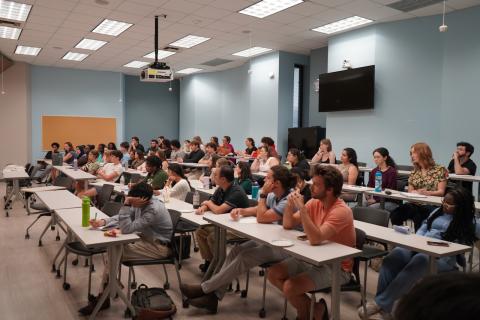
From developing robotics software for autonomous laboratories to supporting cardiac procedures and overseeing medical technology across a VA medical center, four Tulane biomedical engineering alumni showed current students how many forms an engineering career can take. During an Oct. 8 industry panel in Boggs Hall, Erin Cooper, Luke Orlando, Emma Rogers and Gage Garrity returned to Tulane to share what their work is really like and how their careers have developed since graduation.
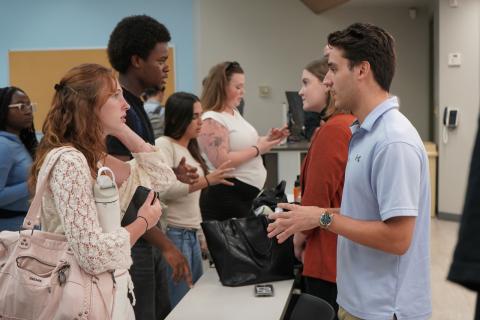
The conversation was driven as much by the audience as by the presenters. Students remained highly engaged throughout the panel and asked thoughtful questions that gave the alumni opportunities to move beyond job titles, describe the realities of their work and reflect on the choices that shaped their paths.
Cooper earned a BSE in biomedical engineering in 2019 along with a coordinate major in computer science. She has built software for biotechnology and health care companies, primarily at early-stage startups. As a staff engineer and technical lead at Vivodyne, she led development of robotics control software for autonomous laboratories that grow and test thousands of lab-grown human tissues to generate data for artificial intelligence. Now back in New Orleans, she is a founding engineer at Confida, a legal AI startup.
Orlando, a 2024 biomedical engineering graduate, works as a clinical account specialist with Johnson & Johnson MedTech’s Electrophysiology division. He works alongside physicians and clinical teams during complex cardiac procedures, supporting advanced cardiac mapping and ablation technologies. His role gave students a view of how engineering expertise is applied in a clinical setting where technology directly supports patient care.
Rogers, a 2020 graduate, manages teams of scientists across food and oil chemistry testing departments within the Eurofins laboratory network. She began her career in New Orleans as a tissue engineer at a biotechnology startup and grew into managing stem cell manufacturing operations. She later moved into food safety and regulatory testing and is pursuing a professional MBA at Tulane’s Freeman School of Business, adding business and leadership skills to her technical background.
Garrity earned a BSE in 2020 and an MSE in biomedical engineering in 2021. As chief biomedical engineer at the New Orleans VA Medical Center, he oversees five specialized teams responsible for the full lifecycle of medical equipment, servers and clinical applications, from blood pressure monitors to MRI systems. His path also highlighted the importance of project management, customer relations, presentation skills and clear communication across technical, clinical and administrative teams.
Together, the panelists represented startup innovation, clinical technology, laboratory science, health care operations and leadership. Their paths were different, but each demonstrated the range and adaptability of a biomedical engineering education. For the students in the room, the panel made the future more tangible by connecting their coursework with graduates who once faced many of the same questions about what would come next.