
Master's Degree in Computer Science
Master's Degree in Computer Science
The Master's Program in Computer Science is offered in coursework and thesis tracks. The coursework option requires both breadth and depth requirements. The breadth requirement ensures students obtain a solid foundation in core computer science areas, while the depth requirement allows students to design a sequence of courses to target a particular area of interest. The thesis track further allows students to conduct research in a chosen area of interest.
4+1 Accelerated Master's Program
Current Tulane undergraduate students can earn this M.S. degree with just one additional year of study. This accelerated program allows you to count graduate-level courses toward both your B.S. and M.S. degrees, providing a fast track to an advanced credential.

What You'll Learn
In this program, you'll build a comprehensive foundation in computer science while developing specialized expertise in your chosen area of interest. Through core coursework in algorithms, systems, and artificial intelligence/machine learning, you'll master the fundamental principles that underpin modern computing. The flexible curriculum allows you to design a personalized course sequence targeting areas like data science, AI/ML, algorithms and theory, or systems, ensuring you gain both breadth and depth. Whether you choose the coursework, project, or thesis track, you'll develop advanced problem-solving skills, hands-on technical expertise, and the ability to tackle complex computational challenges that prepare you for leadership roles in technology.
Research
Research opportunities in the Computer Science MS program allow students to engage deeply with cutting-edge problems in their areas of interest. Students pursuing the thesis track work closely with faculty advisors on original research projects, forming thesis committees and conducting investigations that contribute new knowledge to fields like artificial intelligence, machine learning, data science, algorithms, or systems. Even students in the project track gain valuable research experience through independent study courses that involve substantial technical work under faculty guidance. The department's active research environment, supported by faculty expertise across diverse specializations, provides students with opportunities to participate in ongoing projects, attend research seminars, and develop the analytical and investigative skills essential for advanced careers in computer science.
Meet Our Faculty
Our computer science faculty are accomplished researchers and educators who bring cutting-edge expertise across the full spectrum of computer science disciplines. From artificial intelligence and machine learning to algorithms, systems, and data science, our faculty are actively engaged in research that pushes the boundaries of computing. They are committed to mentoring graduate students through coursework, independent projects, and thesis research, providing personalized guidance that helps you achieve your academic and career goals. Whether you're working with a faculty advisor on a thesis project or collaborating on independent study, you'll benefit from their deep technical knowledge, industry connections, and dedication to helping you develop as a computer scientist.
Curriculum Requirements
The Master's Program in Computer Science is offered in coursework and thesis tracks.
The coursework track requires both breadth and depth requirements. The breadth requirement ensures students obtain a solid foundation in core computer science areas. The depth requirement allows students to design a sequence of courses to target a particular area of interest. We also offer an online MS degree as a coursework track.
The thesis track further allows students to conduct research in a chosen area of interest.
The M.S. program requires 30 credit hours of graduate coursework. Coursework requirements vary slightly depending on the chosen track, but consist of 12 credits of breadth coursework and 12-18 credits of depth coursework.
Career Benefits and Pathways
Graduates with a master's in computer science are positioned for high-demand careers across the technology sector and beyond, with roles including software engineer, data scientist, machine learning engineer, AI researcher, systems architect, cybersecurity analyst, and cloud solutions architect. The program's flexible specialization options prepare students for positions at major tech companies like Google, Amazon, and Microsoft, as well as startups, financial institutions, healthcare technology firms, and research laboratories. Specialized tracks in data science and AI/ML are particularly valuable as these fields continue to experience explosive growth, with graduates finding opportunities in emerging areas like natural language processing, computer vision, autonomous systems, and big data analytics. The combination of theoretical foundations and practical experience makes our graduates competitive for both industry positions and further doctoral study.
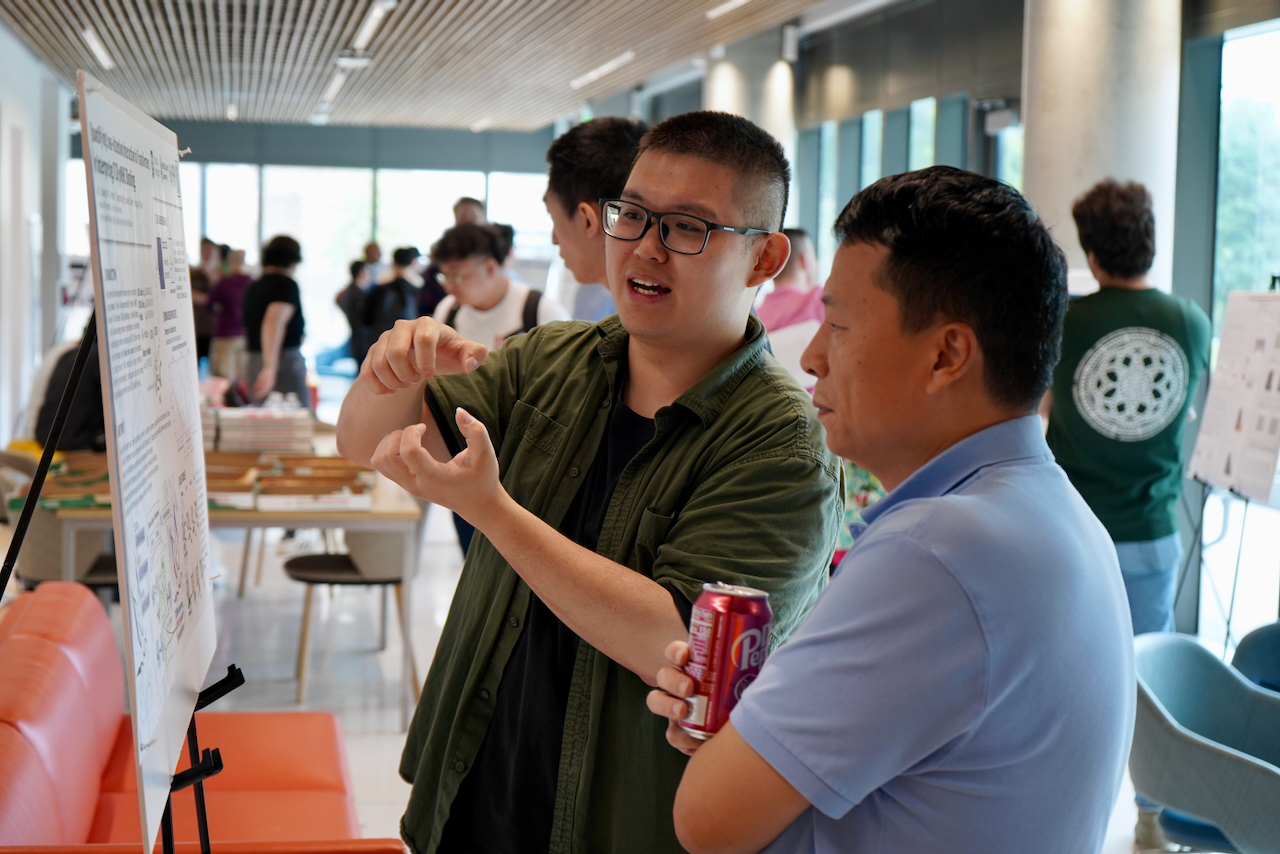
Learn more about the admissions process or apply now!
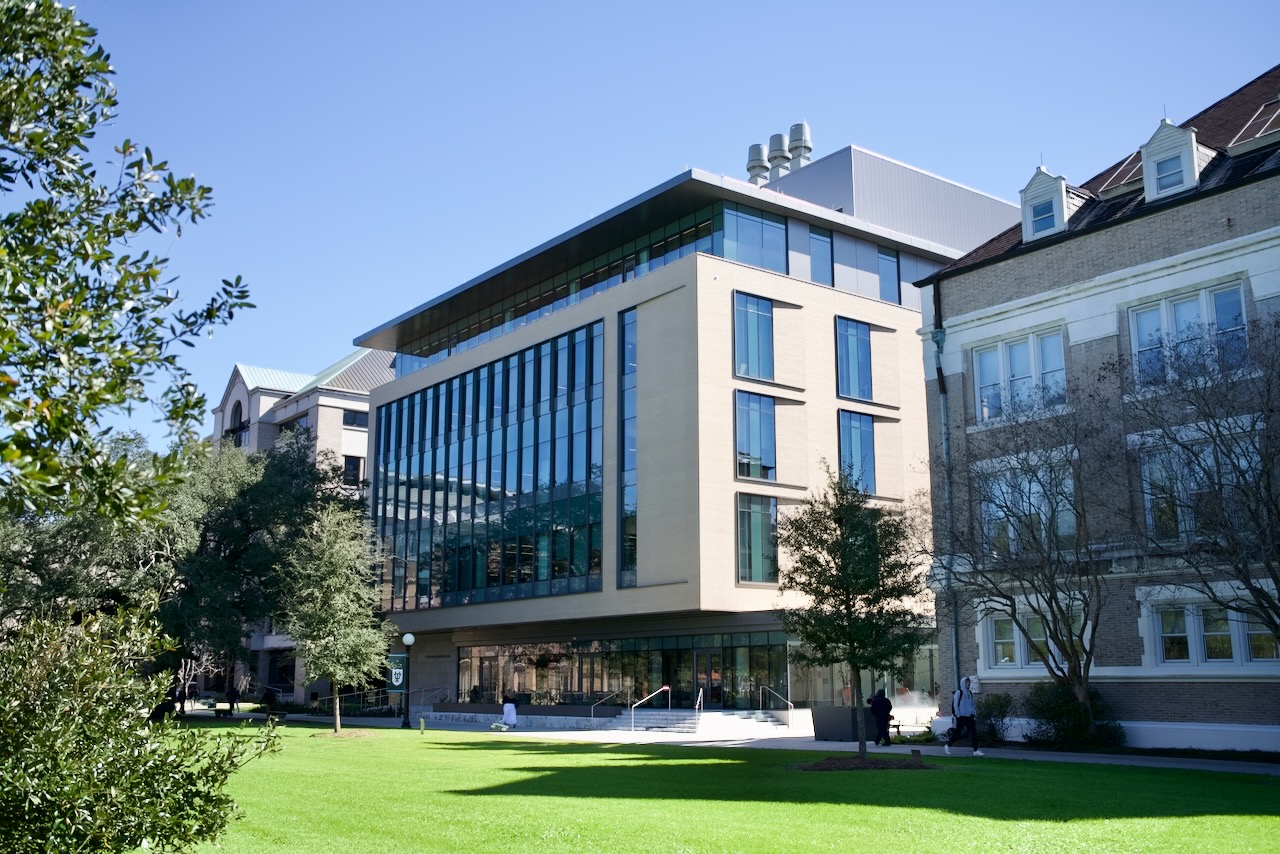
Find full tuition information and the financial aid process.
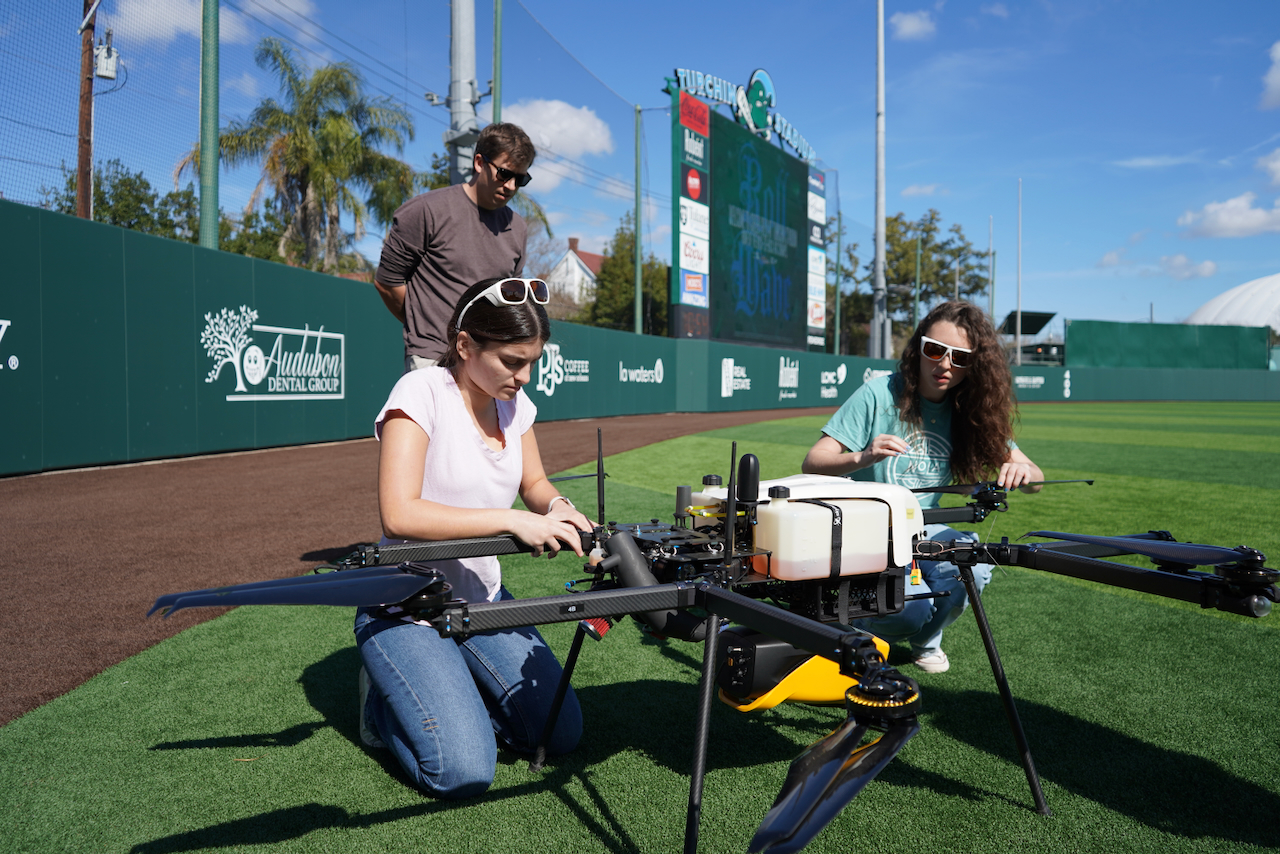
Get to know what makes this place a launchpad for the next generation of scientists and engineers.
FAQs
Computer science is the study of computation, information processing, and the design of computer systems, encompassing both theoretical foundations and practical applications. It involves developing algorithms, software, and systems to solve complex problems, analyze data, and create technologies that power everything from smartphones and websites to artificial intelligence and scientific discovery.
Students interested in applying should use the School of Science and Engineering Graduate Online Application Forms. When completing the "Application Information" section of the application forms, candidates should select the following options (in bold below) in the "Department/Program & Area of Specialization" subsection:
Department/Program: Computer Science
Area of Specialization: N/A
GRE and TOEFL scores are optional and not required to complete an application, but we encourage you to include them if available. If you are able to include these, score reports should be directed to Institutional Code 6173 when requested from the testing agency.
Applications to our programs begin in September each year, and review of applications begins in January and continues until open slots are filled. Upon application, interested students also are encouraged to contact the graduate faculty member whose research interests most closely resemble their own. Please see https://sse.tulane.edu/cs for more information about the department faculty. For general questions about graduate programs, please contact the graduate office director/manager at cs-grad@tulane.edu.
Artificial Intelligence and Data Science
Students with an interest in multi-agent systems, artificial intelligence, and/or data science with applications to group decision-making, recommender systems, and issues in AI, ethics, and society, are invited to contact Professor Nicholas Mattei. Possible areas for interdisciplinary collaboration include mathematics, economics, psychology, and law.
Accessible Computing and Human-Computer Interaction
Students with an interest in human-computer interaction, accessible computing, and computational social science are invited to contact Professor Saad Hassan. Professor Hassan conducts interdisciplinary research on technologies to facilitate inclusion, learning, and creative expression for individuals with disabilities, with a focus on Deaf and Hard of Hearing (DHH) users. Possible areas for collaboration include linguistics, psychology, neuroscience, sociology, art, and design. Students with disabilities are welcome and encouraged to apply.
Computational Biology and Bioinformatics
Students interested in research in computational biology and bioinformatics are invited to contact Professor Ramgopal Mettu. Professor Mettu currently conducts research in protein structure prediction, protein-protein interactions, compound screening, and computational immunology. This research is performed in collaboration with faculty from the Tulane Medical School.
Computational Geometry, Shape Matching, or Trajectory Analysis
Students with interest in computational geometry, shape matching, or trajectory analysis, possibly in combination with topology or statistics or with biomedical image analysis, are invited to contact Professor Carola Wenk. Possible areas for an interdisciplinary collaboration include mathematics, biomedical engineering, and biology.
Machine Learning
Students interested in working in the theory, algorithms and applications of machine learning are invited to contact Professor Jihun Hamm. Professor Hamm's current research topics include deep learning, adversarial machine learning, non-convex optimization, and machine learning applications in biomedical sciences.
Students interested in machine learning algorithms for natural language processing are invited to contact Professor Aron Culotta. Professor Culotta conducts interdisciplinary research on social media analysis with applications to public health, emergency management, and political science. His recent methodological focus includes domain adaptation, semi-supervised learning, and causal inference.
Students interested in working on the algorithms and applications of computer vision and machine learning are invited to contact Professor Zhengming (Allan) Ding. Professor Ding's current research focuses on developing advanced AI learning algorithms to generate accurate, reliable, and transparent decisions including topics such as deep learning, transfer learning, multi-view learning, and applies to AI-assisted interdisciplinary applications such as smart transportation, medical data analysis, WiFi-based robot localization, and material fracture detection.
Students interested in reinforcement learning and multi-agent learning are invited to contact Professor Zizhan Zheng. Professor Zheng's current research topics include (deep) reinforcement learning, federated learning, learning in games, machine learning security and safety, and their applications in robotics, healthcare, environmental science, and social sciences.
Networking and Security
Students interested in the theory and applications of networking and security are invited to contact Professor Zizhan Zheng. Professor Zheng develops optimization and learning-based solutions to improve the efficiency and security of wireless networks, cyber-physical systems, and cloud and edge computing systems. Possible areas for interdisciplinary collaboration include smart transportation, energy systems, and environmental science.
Scientific Visualization and Computer Graphics
Students with interest in data visualization, computer graphics, and/or image processing are invited to contact Professor Brian Summa. Possible areas for interdisciplinary collaboration include mathematics, biology, neuroscience, physics, earth and environmental sciences, and chemical and biochemical engineering.
Computer Systems and Architecture
Students with interest in computer systems and architecture are invited to contact Professor Lu Peng. Currently, his research topics include GPU/CPU performance, power, reliability, and security design; deep learning neural network accelerators and applications; blockchain acceleration and applications; and quantum processor architecture and compilers. Possible areas for an interdisciplinary collaboration include physics, healthcare, and biological sciences.
Contact Us
Ilianna H. Kwaske, Ph.D.
Associate Dean for MS Programs & Professional Education
ikwaske@tulane.edu
Sarah Berry
Director of MS and Certificate Programs
smccarty@tulane.edu
Rosie Chavez
Director of Graduate Programs
rchavez@tulane.edu
Interested students should contact the graduate office director/manager at cs-grad@tulane.edu