
About Us
About Us
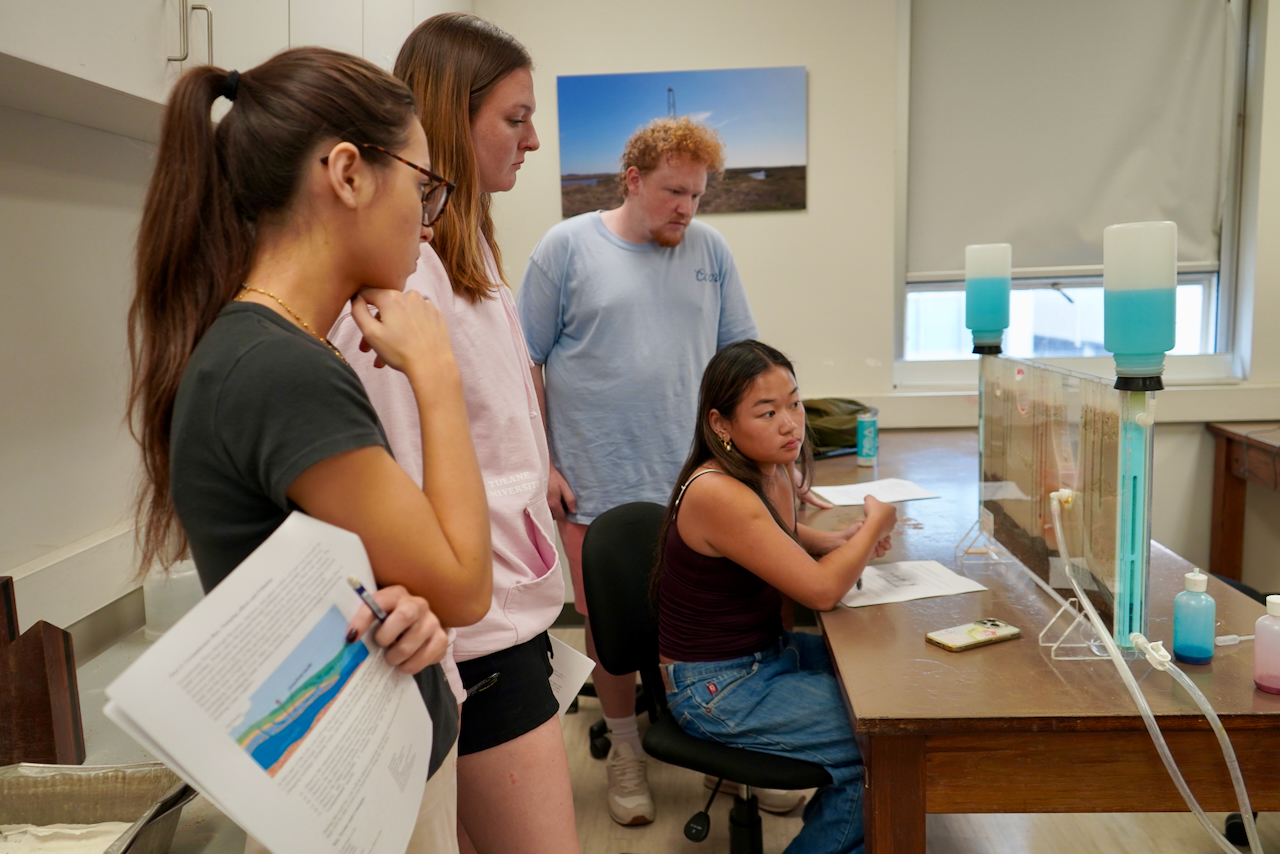
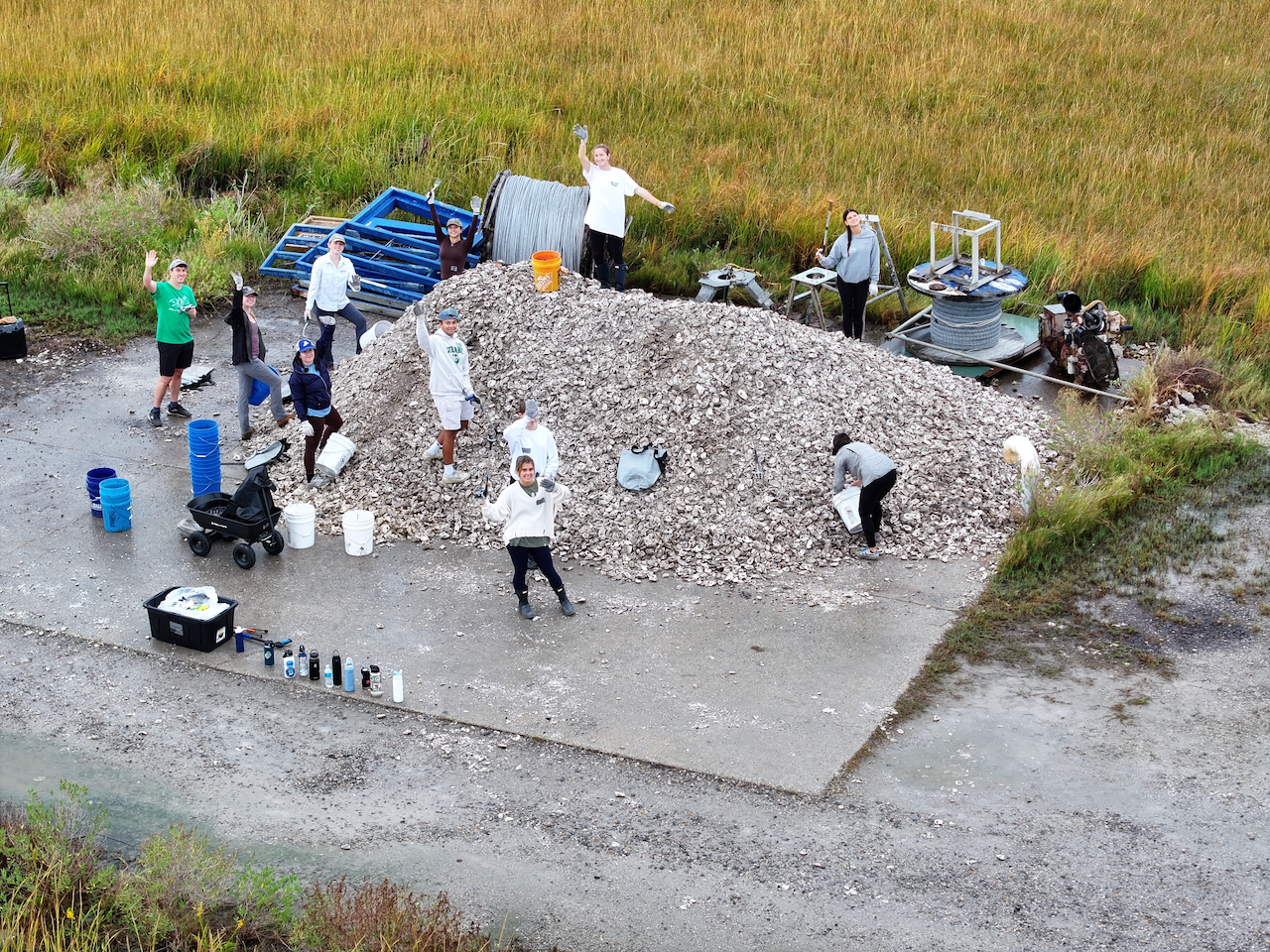
We are a diverse group of scholars committed to providing students with a high-quality classroom education and opportunities in undergraduate and graduate research. We aim to develop, apply, and disseminate scientific knowledge about the Earth and other planetary systems, and encourage lifelong learning and an appreciation of our natural environment.


Our Mission
The mission of the Department of Earth and Environmental Sciences is to develop, disseminate, and apply knowledge about the interconnected physical, chemical, and biological evolution of the Earth and other planetary bodies.
We aim to:
- Provide students with the knowledge and skills to become scientists, lifelong learners, and responsible citizens
- Develop Earth and environmental science knowledge through fundamental research
- Communicate and serve as a source of knowledge of the Earth and environmental sciences to Tulane University and beyond
- Apply new and existing knowledge to address challenges affecting human society and the environment, including stewardship of the natural world
Department History
The Department of Earth and Environmental Sciences at Tulane has existed under its current name since about 2003. Prior to that, the department was known as the Department of Geology. Geology was first studied at Tulane within the chemistry department. In 1926, Prof. Reinhard A. Steinmayer founded the Department of Geology, which grew during its early years along with the development of the oil and gas industry along the Gulf Coast.
For much of our department’s history, paleontology was a primary area of research. In the mid-1960s, a separate PhD program in paleontology was started along with graduate programs in geology. Those programs existed until the early 2000s. Since then, our PhD and MS degrees have carried the department name.
Tulane Studies in Geology and Paleontology (initially known as Tulane Studies in Geology) was first published in 1962. TSGP published more than 5000 pages of peer-reviewed research, in many cases by faculty members and graduate students of the Department of Geology. Even though the series was discontinued quite some time ago, the research published in TSGP has had a lasting impact. The department still houses a considerable collection of original issues of TSGP that are available upon request. In 2017, Howard Tilton Memorial Library Journal Publishing digitized TSGP and it is now freely available online.
Tulane Studies in Geology and Paleontology
The department houses extensive collections of minerals, rocks, and fossils. These include the Harold E. Vokes collection of micropaleontological samples. The University of Florida now curates >100,000 lots of the Emily & Harold Vokes Fossil Collection.
Emily & Harold Vokes Fossil Collection
In addition to the Vokes Collection in Florida, all of the Paleozoic and Mesozoic material, plus a very extensive collection of Paleogene and Neogene fossils from the Dominican Republic, are now located at the Paleontological Research Institution in Ithaca, NY. All of the non-US materials of that age are at the National Museum of Natural History, Smithsonian Institution (for detailed info, see TSGP, v. 30, no. 4, p. 156).
Paleontological Research Institution National Museum of Natural History, Smithsonian Institution
An important event in the department’s history was the establishment of the Kent McWilliams Endowment in the 1980s. McWilliams was one of three Tulane geology alumni who founded McMoRan Exploration Company. This endowment is very important to the department today in helping to support graduate students and funding our weekly McWilliams Seminar Series.
Broadening Participation Committee
Committee Mission Statement
The mission of our committee is to actively foster a culture within the department that enables and encourages broad participation by all groups in education and research related to Earth and Environmental Sciences. This is accomplished by taking concrete steps to (i) bring broadening participation to the forefront of discussions within the department, (ii) host events that welcome the participation of all, (iii) work within and beyond the university to advance these efforts, and (iv) develop strategies for the department to increase the range of voices contributing to its educational, research, and service outcomes.

Commitment to Broadening Participation
A community of scholars and students from a variety of disciplines, backgrounds and experiences is essential for the development of knowledge and skills that produce lifelong learners and responsible citizens who can address the myriad challenges affecting human society and the environment. As a discipline, Earth and Environmental Sciences have historically lacked participation across many dimensions, and we are dedicated to broadening participation for all.
The Department of Earth and Environmental Sciences (EES) is actively committed to building a culture and community that broadens participation in the Earth and Environmental Sciences, where everyone belongs and everyone thrives. This will ensure that there is retention of talent and perspectives in our department, our discipline, and our future workforce.
To achieve this, we strive to promote a healthy and welcoming departmental culture. We commit to learn from each other and through continued education and communication on how to create a welcoming community for all. We continuously review our departmental procedures to identify obstacles that may affect prospective or current students and staff. We will proactively engage with a range of partners, within and beyond the university, to achieve these goals. We will foster community through the promotion of shared values. We want members of our department to feel secure and supported, so they can continue to contribute to the highest standards in education, research, and service.
EES Alumni Council
Loren Setlow (BS 1970)
Environmental Protection Agency (retired)
Kevin McMichael (BS 1977)
Claymore Oil & Gas L.P.
Emeritus member, School of Science and Engineering’s Board of Advisors
Elizabeth Chinn McDade (BS 1980)
Chinn-McDade Associates, LLC
Davin Wallace (BS 2006)
Associate Professor
School of Ocean Science and Engineering
University of Southern Mississippi
Rodey Batiza (BS 1972)
NSF Marine Geology and Geophysics (retired)
Alyson Lighthart (PhD 2001)
Dean, Academic and Career Path, STEM, Portland Community College (retired)
Michael Hopkins (PhD 2016)
Early Career Member, Army Corps of Engineers New Orleans
Contact Us
Tulane University
101 Blessey Hall
New Orleans, LA 70118
Email: ees@tulane.edu
Phone: 504-247-1798
Fax: 504-865-5199