
Psychology Undergraduate Major
Psychology Undergraduate Major
The Bachelor of Science degree in Psychology introduces students to the major theoretical perspectives and primary empirical techniques of hypothesis testing in psychological science, as well as the application of psychological principles. The Department of Psychology also offers a minor, allowing students with an interest in psychology to take courses of interest.

What You'll Learn
The Psychology major introduces students to the major theoretical perspectives and primary empirical techniques of hypothesis testing in psychological science, as well as the application of psychological principles. Coursework spans biological and cognitive processes, developmental psychology, clinical applications and assessment, and cultural, personality, and social psychology — giving students both a broad view of the field and the research methods to back it up.
Career Outlook
As the largest major in the School of Science and Engineering and one of the biggest majors at Tulane, Psychology gives graduates a wide-open set of paths, from clinical and counseling work to research, education, and beyond. Students are encouraged to build career-ready experience early through Tulane's Center for Public Service and the NTC Career Center, which connect them to internships, summer programs, and other opportunities well before graduation.
Meet Our Faculty
With 22 full-time faculty guiding roughly 800 undergraduate majors, Psychology students get access to a department that's both large and deeply engaged. Faculty welcome undergraduates into research directly, including the option to pursue an honors thesis, giving students genuine hands-on experience with the empirical methods that define the field.
Curriculum Requirements
The Psychology major requires Introductory Psych, Univariate Statistics and Lab, and Experimental Psychology and Lab, plus one course each in Biological and Cognitive Processes, Developmental Psychology, Clinical Applications and Assessment, and Cultural, Personality, and Social Psychology, along with nine additional elective credits at the 3000-level or above. Students must also complete the math requirements for the B.S. degree and two SSE courses outside the psychology department, with at least 29 total credits at or above the 3000-level.
Students pursuing this bachelor’s degree must earn a minimum of 30 credit hours in the Newcomb-Tulane College core curriculum, 120 credit hours in their degree and a minimum cumulative grade point average of 2.000.
Research
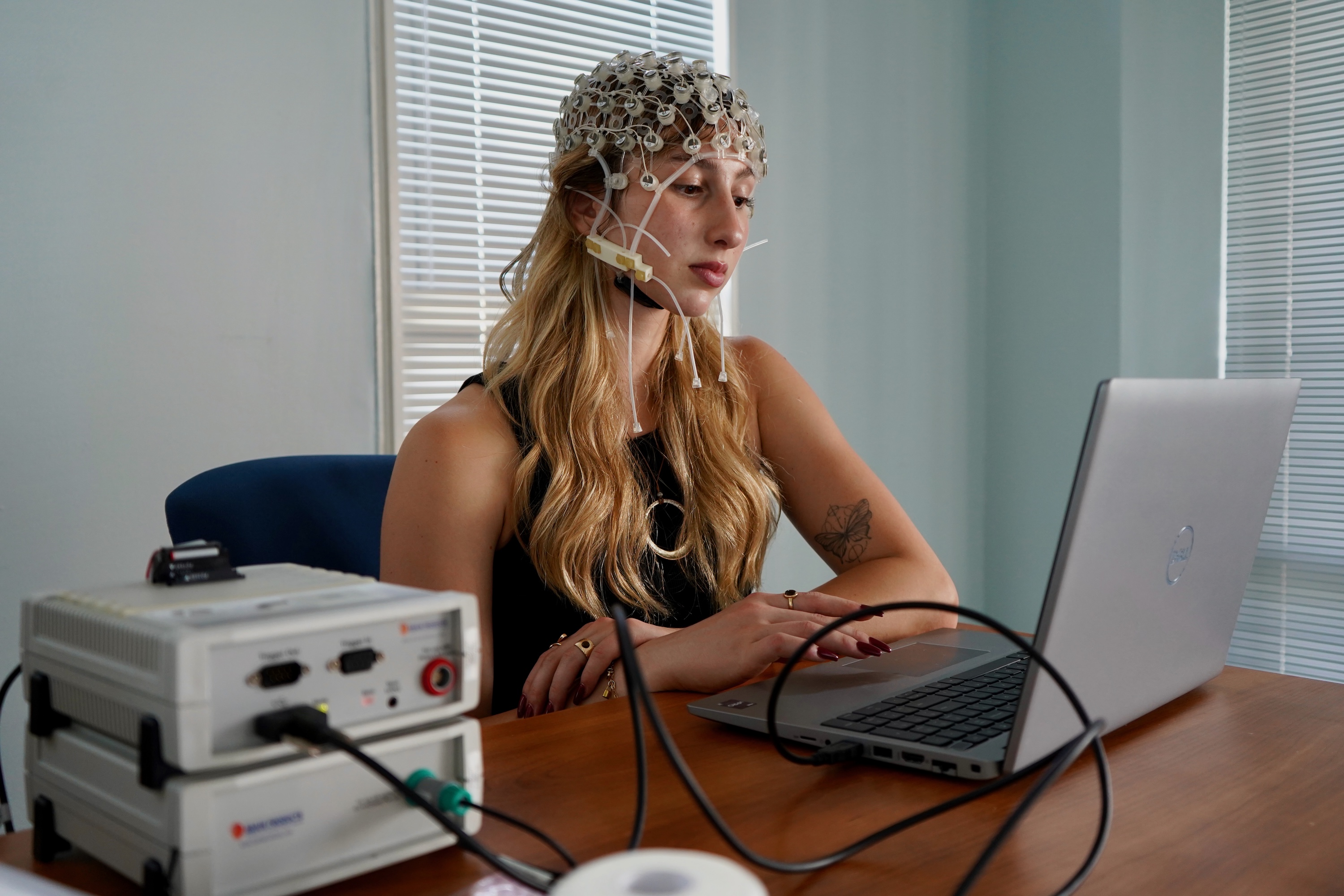
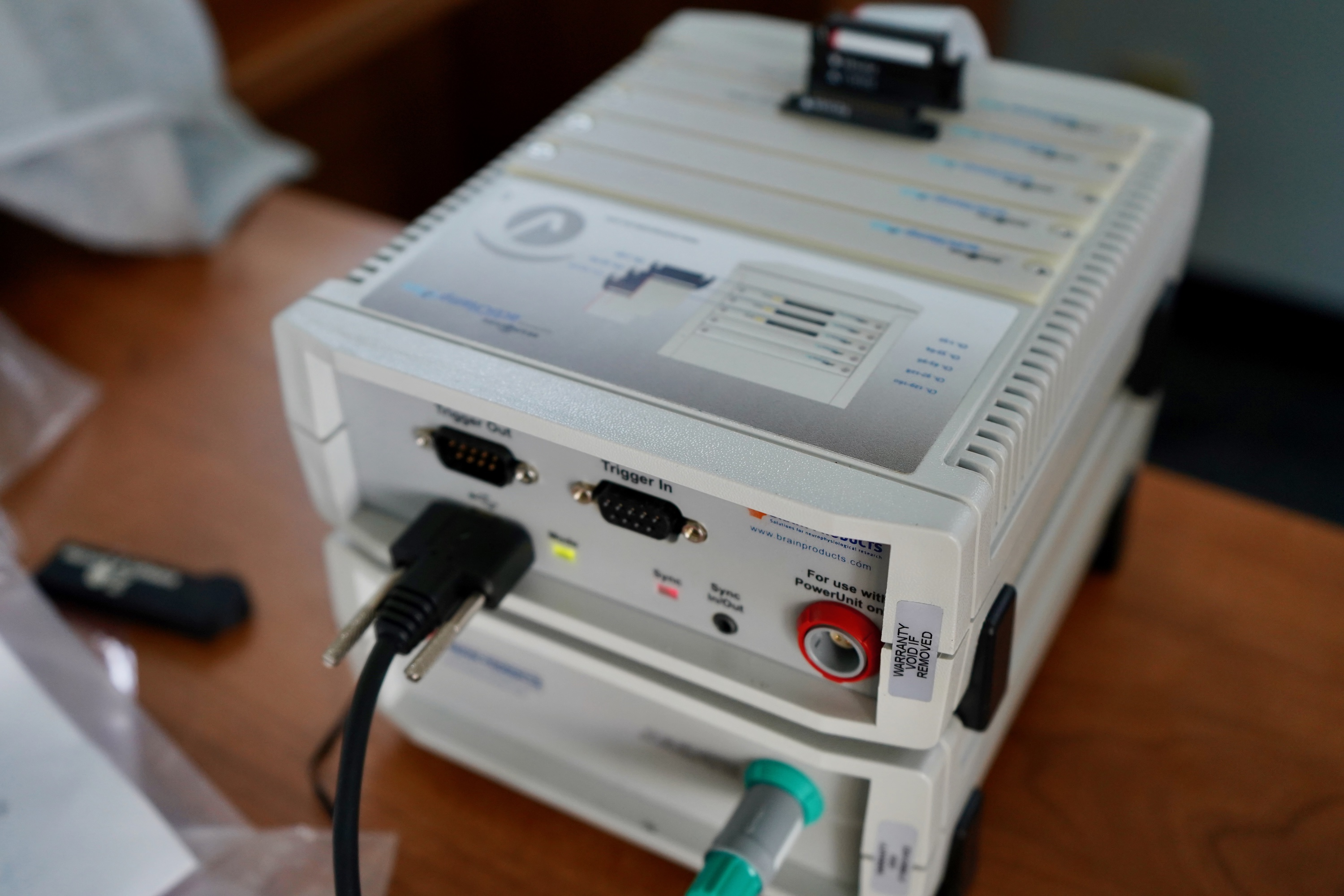
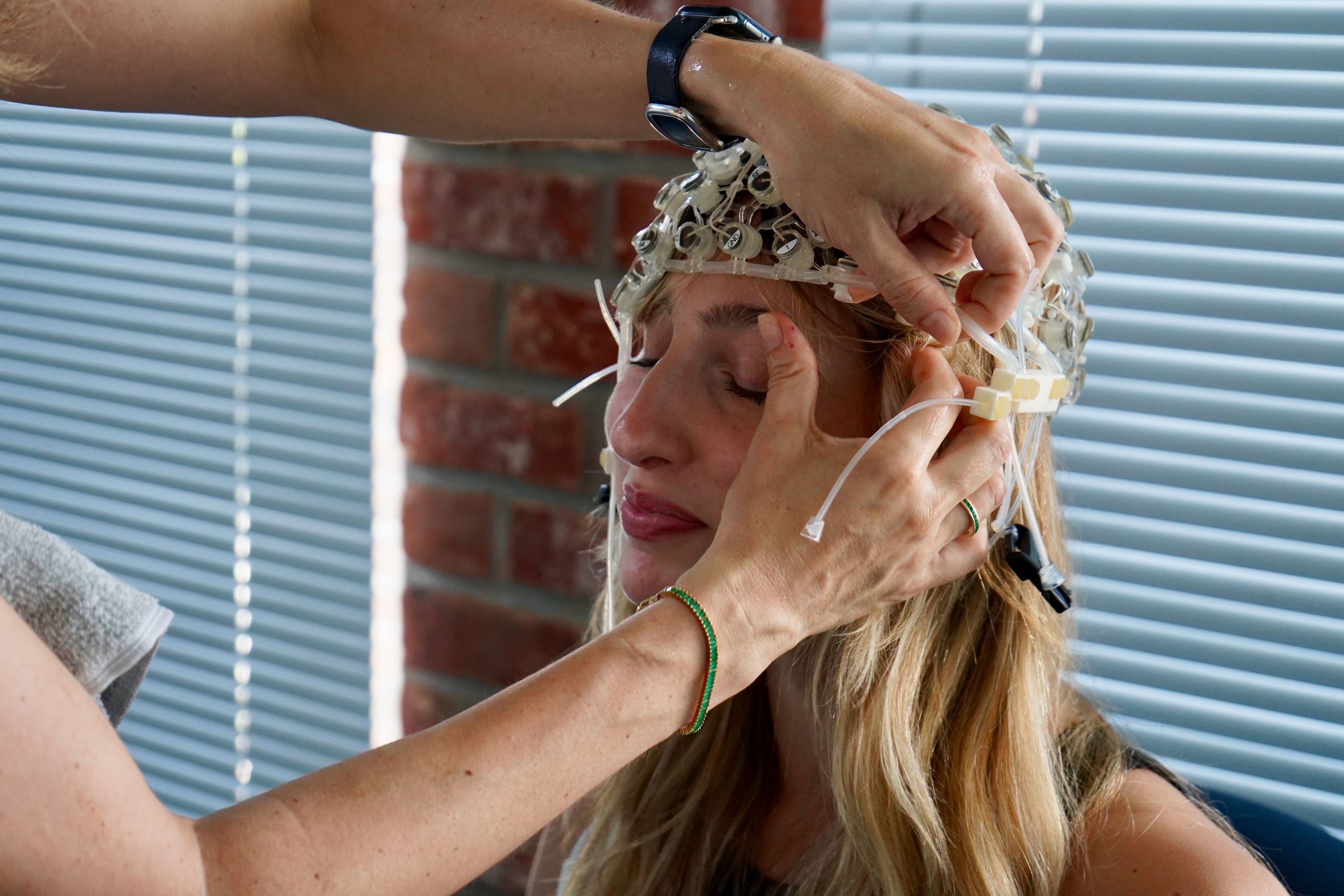
Undergraduates in Psychology have real opportunities to get involved in faculty research, including the option to complete an honors thesis under faculty supervision. With 22 full-time faculty across the department, students have access to a breadth of research areas and can find mentors well-matched to their specific interests within the field.

Learn more about the admissions process or apply now!
Find full tuition information and the financial aid process.
Get to know what makes this place a launchpad for the next generation of scientists and engineers.
FAQs
Psychology is the scientific study of the mind and behavior, using empirical research methods to test hypotheses about how people think, feel, and act. It's a broad field spanning biological and cognitive processes, human development, clinical and mental health applications, and social and cultural influences on behavior.
If you are ready to declare a major in Psychology, please fill out this form, and submit it to the Department of Psychology in-person (Stern Hall, Room 2011) or email it to psych@tulane.edu. The form will be returned to you, with the name of your PSYC advisor, and you can send it along to NTC Advising. Please note that it is your responsibility to send this form to your NTC advisor.
You will also receive an invitation to join the Canvas site for psychology majors that has much more detailed information relevant to the major.
You and your major advisor will be copied on an email to connect. If your major advisor does not reach out, you may want to contact them to introduce yourself or to set up a meeting. Advising styles differ among faculty members--some faculty like to meet with undergraduate advisees regularly, while some wait for the student to initiate contact. We recommend that you contact your advisor to set up a plan that works for you.
Permission to transfer credit from other baccalaureate degree-granting colleges and universities may be recommended on a course-by-course basis, depending on similarity to Psychology courses offered at Tulane.
Please note:
-The Department of Psychology does not grant transfer credit towards the psychology major for courses taken at community colleges.
-Students wanting to count an Advanced Placement (AP) course in Introductory Psychology must have earned at least a 4 on the AP Exam.
If you are interested in requesting approval for classes taken at other university, you should first meet with your NTC Academic Advisor to verify that a course is eligible to be considered for transfer credit. Your NTC Academic Advisor will give you a copy of a signed "Transfer Course Articulation Request". You should complete the form and send it, with a complete copy of the syllabus for the course you'd like to transfer, to psychtransfers@tulane.edu. Please allow at least three weeks to receive notice for any transfer requests. Please be advised that this process may take 2-4 weeks.
Use the checklist below to make sure the syllabus includes all necessary information. Missing or incomplete information might delay the process.
- Course Name and Number, University, and Instructor
- Course Format: Online (Synchronous or Asynchronous) or In-Person
- Course Meeting Times
- Course Description
- Reading Material (E.g. Textbook)
- Assessments for Grade (E.g. what assignments and/or exams are used to calculated the grade)
- Course Schedule (which includes topic content information)
Requests missing any of the above information will not be considered. You are encouraged to read about NTC Academic Advising's guidelines on transfer credit here.
In cases where transfer credit is not recommended, there may be special circumstances which would justify reconsideration upon petition to the Departmental Curriculum Committee. You may contact Dr. Carrie Wyland (wyland@tulane.edu) regarding such a petition.
In order to Study Abroad as a Psychology Major, students need to:
Declare their psychology major no later than the last day of class the semester prior to the application due date (for most this will be the last day of class in the Fall Semester of their sophomore year).
-Declaration means having a Major Declaration Form completed and submitted to Academic Advising
-The Major Declaration Form will be completed by Courtney Villemarette (cgroue@tulane.edu) and shared with the student and assigned major advisor
-The degree audit will indicate that a student is officially declared
-Contact their Psychology major advisor (as assigned on the form and found on the degree audit) to meet at least 2 weeks prior to the application deadline
-Students will meet with their major advisor to discuss psychology coursework, with a clear plan to finish coursework for graduation
-In most cases, students should have completed at least three 3000-level courses toward the major
-Students are strongly encouraged to take Univariate (3090) prior to studying abroad or have a plan to take it the semester they return
-Psychology majors may wish to discuss their course schedules abroad with their major advisors at this time. While courses will no longer be officially pre-approved prior to students going abroad, students can also show syllabi they have obtained from programs ahead of their time abroad and discuss course content with their major advisors.
-Once students have met with their Psychology Major advisor, they should submit the form for the advisor to complete the approval recommendation
-This will email a link to the advisor to complete
-After meeting with the advisor, allow up to a week for the form to be completed
In order to transfer Psychology courses AFTER returning from studying abroad:
Psychology majors and minors who want to study abroad should review the list of courses that have been reviewed and approved by our department. If you see the course you are taking (or took) on this list, you do not need a course equivalency form. If the course indicates it will fulfill a cluster requirement that you have already completed, it will instead count as an elective.
For courses that have not already been approved
-Students may opt to take courses that are not on this list and may seek approval AFTER they return to Tulane. If you do NOT see the course you are taking on the list, you should email the request with syllabus and course equivalency form to psychtransfersabroad@tulane.edu only upon your return to Tulane.
-IMPORTANT: The Psychology Department will NOT pre-approve courses; we will only approve them once students are already enrolled. In order to be approved, courses need to be in a psychology department/program, focused on psychological science content, include class readings (e.g. textbook, articles), and have assessments that would be in line with Tulane courses (e.g. exams, full length papers, homework, quizzes). If you are want academic advice, we encourage you to set up a meeting with your major advisor.
-A list of courses that already are approved at certain universities is maintained on the Center for Global Education website.
-Please note that up to three approved psychology courses taken abroad can count towards the major, and up to two approved courses can count towards the psychology minor.
-After taking the course(s) abroad, students need to complete paperwork to make sure the courses transfer back to Tulane correctly. Students should send an email to psychtransfersabroad@tulane.edu with:
- The syllabus (syllabi) of the course(s) taken abroad
- The course equivalency form
Our committee will process courses on a twice-monthly basis during the academic year. Failure to include the syllabi and form and sending to the correct address may result in delay of processing. Courses should appear on students’ degree audit within 3 weeks of sending the form and syllabi. Additional information can be obtained from the Office of Study Abroad.
-Courses taken as part of Tulane’s own summer study abroad programs do not need prior approval, because they are Tulane courses taught by Tulane faculty.
The information in this section was updated on March 23, 2026.
Students pursuing a double-major in psychology may have other course requirements. Please see below for information regarding requirements for double majors in Psychology and Neuroscience, Psychology and Public Health, and Psychology and Cognitive Studies. Although these are common double majors, they are certainly not the only options.
Double Major in Psychology & Neuroscience
Students can complete double majors in Psychology and Neuroscience by completing 18 non-overlapping courses from the curricula of the two majors. Courses listed in the Psychology curriculum of 3 or 4 credits can be included among the 18 non-overlapping courses. The following exceptions apply:
- Laboratories that are one-credit components of lecture courses cannot count as separate courses. Four-credit courses that include laboratories, 3-credit independent study courses, and seven-credit honors theses can count toward the 18 non-overlapping courses.
- Neuroscience co-requisite courses in chemistry, physics, and mathematics do not count towards the list of 18 non-overlapping courses.
A double major should broaden a student's knowledge in both areas of study; therefore, students are encouraged strongly to complete courses in their Psychology major that are outside the field of Neuroscience, such as courses in developmental, social, and quantitative psychology.
Students planning to double major in Neuroscience and Psychology must meet with Dr. Beth Wee (bwee@tulane.edu) to develop their double major curriculum plan.
Steps in Declaring a Double Major in Psychology and Neuroscience:
- Meet with Dr. Wee to design your major course plan.
- In consultation with Dr. Wee, complete the forms that identify your course requirements in each major.
- Turn in completed major declaration forms and the list of non-overlapping courses to the Psychology Office in Stern 2007 and the Neuroscience Office in Flower 200 to declare both of your
- Submit your completed declaration form to the NTC Advising Center.
Double Major in Psychology & Public Health
Any B.S.P.H. degree-seeking student whose primary major is in public health and secondary major is in psychology and who takes SPHU 2160 Biostatistics for the Public Health major may petition to substitute the SPHU 2160 course in lieu of MATH 1230 Statistics for Scientists to meet the additional math requirement of the psychology major. However, students who choose this option should be advised that:
- In addition to SPHU 2160, Public Health/Psychology double majors must take either Math 1210 OR Math 1150 and Math 1160 to fulfill the math requirement
- Students earning dual degrees in Public Health (B.S.P.H.) and Psychology (B.S.) are ineligible for the substitution and must meet all the math requirements of a S. degree in the School of Science and Engineering at Tulane.
- Any public health/psychology double major who drops the public health major and retains the Psychology major are ineligible for the substitution and must meet all the math requirements of the B.S. degree and psychology major degree in the School of Science and Engineering.
- Any psychology major/public health minor who takes SPHU 2160 is ineligible for the substitution and must meet all the math requirements of a S. degree and psychology major degree in the School of Science and Engineering at Tulane
- Students interested in this substitution petition should obtain a Degree Audit Substitution Request from their Newcomb-Tulane College Academic Advisor, bring that form to their psychology major advisor for a signature and return the form to their advisor for processing.
Double Major in Psychology & Cognitive Studies
Double majors in Psychology and Cognitive studies are required to complete 18 non-overlapping 3 or 4 credit courses from the curricula of the two majors. Courses listed in the Psychology curriculum of 3 or 4 credits can be included among the 18 non-overlapping courses. The following exceptions apply:
- Laboratories that are one-credit components of lecture courses cannot count as separate courses. Four-credit courses that include laboratories, 3-credit independent study courses, and seven-credit honors theses can count toward the 18 non-overlapping courses.
- Psychology co-requisite courses do not count towards the list of 18 non-overlapping courses.
There is a section on Degree Works that will show you the list of unique classes so you can verify you have 18 non-overlapping courses (it is at the bottom of the audit).
More information about the Cognitive Studies major is available at https://liberalarts.tulane.edu/programs/cognitive-studies.
Contact Us
Mailing Address
Department of Psychology
Tulane University
2007 Percival Stern Hall
New Orleans, LA 70118