
Ph.D. in Psychological Science
Ph.D. in Psychological Science
Tulane's Psychology PhD program prepares you for a meaningful career in understanding human behavior, cognition, and well-being. Our program offers flexibility to pursue your interests across diverse areas—whether you're drawn to brain and developmental science, social psychology, health psychology, or applied practice. With small class sizes, close mentorship from accomplished faculty, and a supportive community of graduate students, you'll develop both the scientific expertise and practical skills needed to make a real impact in psychology and related fields.
ApplyRequest InformationDepartment of PsychologyHealth Psychology Certificate


What You'll Learn
You'll develop advanced expertise in psychological science through coursework in research methodology, quantitative analysis, and specialized topics in your chosen area. Beyond the classroom, you'll gain practical research skills through active participation in faculty-led laboratories, learning to design studies, collect and analyze data, and contribute to peer-reviewed publications. You'll also develop competency in communicating psychological science to diverse audiences and understanding the ethical dimensions of psychological research.
Research
Psychological Science provides training in basic research areas of psychology. Current areas of research interest include brain, cognition, and developmental science, social psychology, and health psychology. Throughout their graduate career, students conduct research with any department faculty member, and often elect to conduct research with several faculty members to support interdisciplinary interests. We invite you to learn more about our programs and faculty by exploring our website.
Meet Our Faculty
Tulane's Psychology faculty are accomplished researchers and dedicated mentors who actively involve PhD students in their work. Our faculty span specializations in cognitive neuroscience, developmental psychology, social psychology, and health psychology, providing diverse research opportunities. Your faculty advisor will guide your research development, and you'll have opportunities to work with multiple faculty members to support interdisciplinary interests and broaden your expertise.
Curriculum Requirements
The PhD requires a minimum of 48 hours of graduate course credits, carefully structured to build expertise across psychology. You'll complete three area core courses in your chosen specialization (such as Developmental Psychology), providing foundational knowledge in your field of study. Three quantitative methods courses, including multivariate statistics and research design, equip you with the analytical skills essential for conducting rigorous psychological research. You'll also take the Professional Issues course, which addresses ethical and practical dimensions of psychology, along with 29 elective credits selected in consultation with your advisor to tailor your education to your specific interests and career goals.
Beyond coursework, you'll complete a master's thesis that includes at least one empirical study, demonstrating your ability to conduct original research. You'll then pass a comprehensive preliminary examination, develop and defend a dissertation proposal, conduct original dissertation research, and successfully defend your written dissertation through an oral examination. This progression ensures you develop both breadth across psychology and depth in your chosen area of specialization.

Career Benefits and Pathways
Tulane Psychology PhD graduates pursue careers in academia, research institutions, clinical practice, and applied settings. Your training in research design, quantitative methods, and psychological science positions you for faculty positions at universities, research roles at government and private institutions, clinical psychology practice, and leadership positions in organizations focused on mental health, education, and human behavior.
Learn more about the admissions process or apply now!
Find full tuition information and the financial aid process.
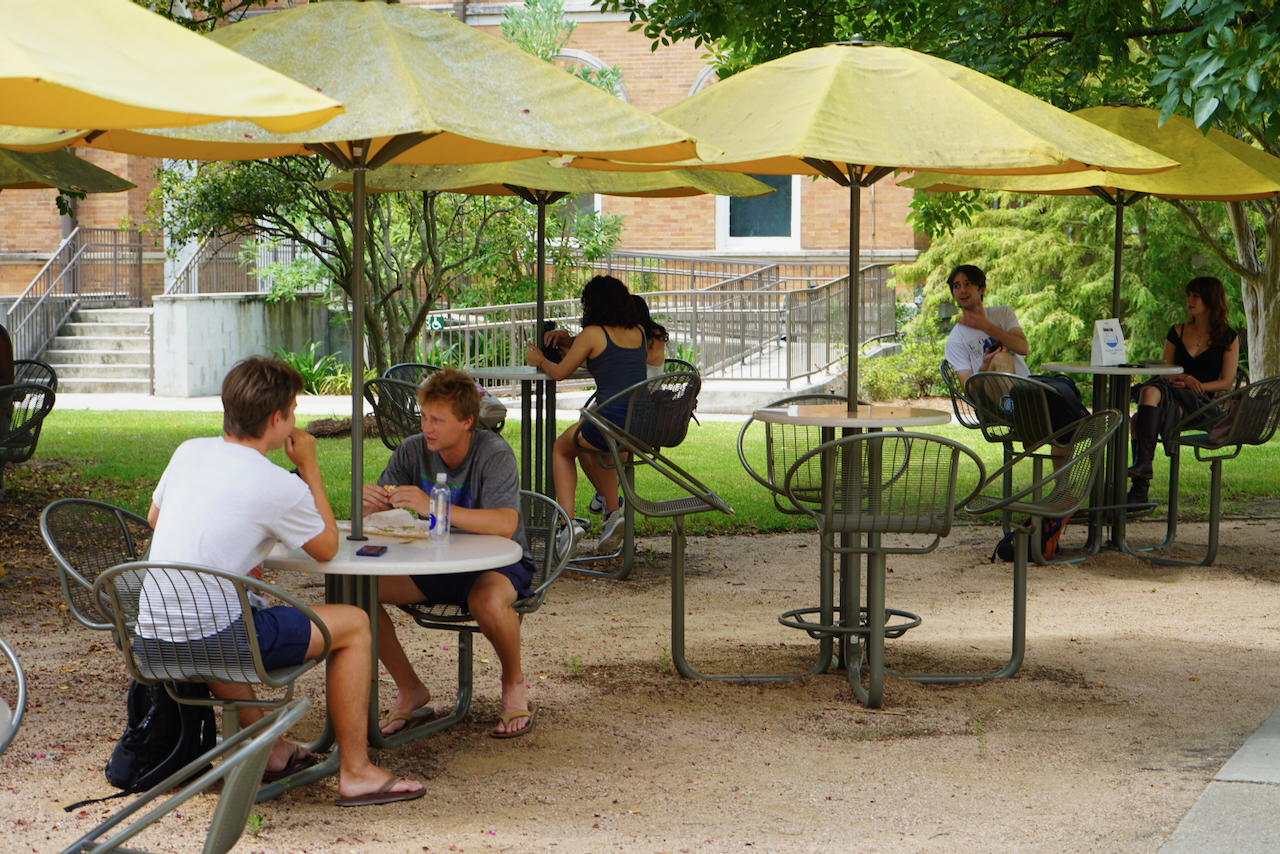
Get to know what makes this place a launchpad for the next generation of scientists and engineers.
FAQs
Psychological science is the empirical study of human and animal behavior and mental processes, using rigorous scientific methods to understand cognition, emotion, development, and social interaction. It bridges biological, cognitive, and social levels of analysis to explain behavior and develop evidence-based interventions for improving human well-being.
The Ph.D. is a research degree. Students therefore are expected to be active in research throughout their graduate careers, beyond their thesis and dissertation projects. Students should be contributing substantively to the research programs of the full-time department tenure-stream faculty, and carving out their own research niche.
Development of research skills and techniques, conference presentations, and co-authorship of publications are critical to the Ph.D. degree. Students are expected to begin their participation in research as soon as possible, usually in their first semester. By the end of the first year, students in the Psychological Science clusters (Cognitive Behavioral Neuroscience, Developmental Psychology, or Social Psychology) must deliver a short presentation of the research in which they have been involved that year.
Research for the beginning student is supervised closely by faculty members, often in conjunction with an advanced graduate student. A student's research involvement may be initiated by simply making an appointment with the faculty member whose research interests match most closely the student's interests. It is expected that the student will discuss research with a number of faculty members before committing him/herself to work with a specific faculty member. Of course, it is possible for the student to work with more than one faculty member, and in fact, students are encouraged not to restrict their research to that conducted in a single laboratory.
The Psychological Science PhD program offers two general areas of study that lead to the PhD in Psychology: Brain, Cognition, and Developmental Science (BCDS) and Social Psychology. The Department also offers a Health Psychology certificate for students in the Psychological Science PhD program.
The Department of Psychology at Tulane is home to a vibrant community of scholars who use cutting-edge behavioral and neural methods to understand mental processes. Our students and faculty work together to investigate how abilities like perception, attention, emotion, learning, memory, and social cognition develop and function. We adopt an integrated approach and conduct studies with human infants, children, adolescents, adults, as well as animal models.
The faculty in the Brain, Cognition, and Developmental Science area study a wide variety of topics from developmental psychology, neuroscience, and cognition.
Tulane Brain Institute
Many BCDS faculty are also affiliated with the Tulane Brain Institute. The Tulane Brain Institute, founded in 2016, builds upon the over 30 years of success of the Tulane Neuroscience Program. The University-wide Brain Institute was created as a transdisciplinary entity to coordinate and oversee neuroscience-related endeavors at Tulane and brings together faculty from across the University, including from the Main Campus, the Health Sciences Campus, and the Tulane National Primate Research Center.
Miguel Vasquez Velasquez, 2024
Brianna (Keenan) Hunter, 2022
Current position: Post-doctoral Scholar, Center for Mind & Brain, UC Davis
Jill King, 2021 (Neuroscience)
Current position: Managing Scientist, Moore Neuro-Fundraising Lab at TCM Creative, Tulsa OK
Jenna Winston, 2021
Current position: New Orleans College Prep
Blair Youmans, 2021
Current position: UX Researcher
Emily Lewis, 2020
Current position: Data analyst, New York University
Nina Baumgartner, 2019 (Neuroscience)
Current Position: Postdoctoral Fellow, Department of Psychiatry and Behavioral Neurobiology, University of Alabama at Birmingham
Jeffrey Darling, 2019 (Neuroscience)
Current Position: Medical Science Liaison, Eisai US
Nicholas Fears, 2019
Current position: Assistant Professor, Louisiana State University
Maxwell Anderson, 2018
Kevin Pollard, 2017 (Neuroscience)
Current Position: Research Assistant Professor, Department of Biomedical Engineering, Tulane University
Katelyn Black, 2017 (Neuroscience)
Current Position: Senior Professor of Practice, Neuroscience Program, Tulane University
Wendy Jung, 2015
Current position: Visiting Assistant Professor, Tulane Psychology
Daniel Bayless, 2014
Current Position: Assistant Professor, Salk Institute for Biological Studies
Britta Nelson, 2014 (Neuroscience)
Current Position: Medical Science Liaison, UCB
Students pursuing the Ph.D. degree in Psychological Science may specialize in social psychology. The graduate faculty in social psychology share common interests in stereotyping, social stigma, and intergroup relations.
Danica Kulibert, Ph.D. 2023
Assistant Professor, Kennesaw State University
Freya Woods, Ph.D. 2023
Private sector, Denver
James Moran, Ph.D. 2022
Post-doctoral Associate, University of Florida
Kamiya Stewart, Ph.D. 2022
Research Associate at Policy Research Associates
Nicholas Kerry, Ph.D. 2021
Post-doctoral fellow, University of Pennsylvania
Sally Merritt, Ph.D. 2021
Assistant Professor, Georgia Southwestern State University
Lauren Ruelens, Ph.D. 2019
Assistant Professor, Massachusetts College of Pharmacy and Health Sciences
Aaron Moss, Ph.D. 2018
Project Manager, Cloud Research
Emily Shaffer, Ph.D. 2018
Senior Associate, Research Team at Catalyst
Caroline Tipler, Ph.D. 2016
Social Scientist/Project Manager, American Bar Foundation, Chicago
Analyst, AmeriSpeak NORC at the University of Chicago
Tara Van Bommel, Ph.D. 2016
Senior Analyst, PSB Research, Colorado
Stefanie Simon, Ph.D., 2015
Post-doctoral Fellow, Carleton College
Assistant Professor, Sienna College
Patricia Gilbert, Ph.D. 2015
Data Analyst, ClassifiedAds.com, Bellevue WA
Cherry Crest Elementary School Gifted Program, Bellevue WA
David Doyle, Ph.D. 2014
Post-doctoral Fellow, Colombia University
Lecturer, Exeter University United Kingdom
Alison Blodorn, Ph.D. 2013
Post-doctoral fellow, University of California at Santa Barbara
Director of Research, College Transition Collaboration, Stanford University
Alyssa Boasso, Ph.D. 2012
Post-doctoral fellow, U.S. Veteran's Administration, Boston MA 2012-2013
Staff Scientist, THYNC, Boston MA 2014-2016
Researcher, Stealth Start-up, Boston MA
Devin Wallace Williams, Ph.D. 2007
Assistant Professor, Towson University, MD 2007-2013
Performance and Evaluation Manager, Washington Hospitality Public Charter High School
Private Sector Business Contractor Firm, Dallas TX
Eden Renee Pruitt, Ph.D. 2006
Post-doctoral Fellow, Pennsylvania State University, 2006-2008
Visiting Scholar, Pennsylvania State University, 2008-2009
Assistant Professor, Bard College at Simon's Rock, 2009-present
Alecia Santuzzi, Ph.D. 2004
Post-doctoral Fellow, University of Illinois at Urbana Champaign 2004-2006
Assistant Professor, Syracuse University, 2006-2009
Assistant to Associate Professor, Northern Illinois University, 2009-present
Kimberley O'Farrell, Ph.D. 2002
Assistant to Associate Professor, Minnesota State University 2002-present
2008-present O'Farrell Consulting, CA
Daniel Beal, Ph.D. 2000
Post-doctoral Fellow, Purdue University 2000-2003
Assistant Professor, Rice University 2003-2011
Assistant to Associate Professor, University of Texas at San Antonio, 2011-2014
Associate Professor, Virginia Tech, 2014-present
Elizabeth Cralley, Ph.D. 1999
Assistant Professor, University of South Carolina-Beaufort 1999-2001
Visiting Assistant Professor, American University, 2001-2013
Assistant Professor, Northcentral University, Arizona, 2013-present
Sherry Schnake, Ph.D. 1999
Assistant Professor to Professor, Saint Mary-of-the-Woods, 1999-present
Volkan Topalli, Ph.D., 1998
Assistant Professor to Professor, Department of Criminal Justice, Georgia State University
Laura Duval, Ph.D. 1997
Visiting Assistant Professor, George Washington University
Paul Frankel, Ph.D., 1997
Evaluator, Mental Health Center of Denver
Elliott Hammer, Ph.D. 1996
Assistant Professor, Tennessee State University 1996-2000
Assistant Professor to Professor, Xavier University of Louisiana 2000-present
Ligia Chavez, Ph.D. 1995
Assistant Research Scientist
Behavioral Sciences Research Institute, University of Puerto Rico
Elizabeth Hammer, Ph.D. 1994
Assistant to Associate Professor, Belmont University, 1994-2000
Assistant to Associate Professor, Loyola University-New Orleans, 2000-2007
Professor and Director of Center for Teaching Excellence, Xavier University of Louisiana, 2007-present
Kellina Craig-Henderson, Ph.D. 1993
Professor, Howard University
Program Director to Deputy Director of SES Division, National Science Foundation
A complete application means you have submitted:
A completed application form using the online system
Three (3) letters of recommendation.
Transcripts from all undergraduate institutions attended and of any previous graduate work completed [Note: Unofficial transcripts are accepted for admission consideration; enrollment at the University is contingent upon official transcripts]
The Graduate Record Examination is not required.
Test of English as a Foreign Language (TOEFL) scores, or the equivalent, for applicants whose native language is not English.
Statement of experiences and interests ("personal statement")
Students who completed an undergraduate major in psychology and who have satisfactorily completed courses in general psychology, statistics, and research methods are preferred. Applicants to the School Psychology Program should, in addition, have taken psychological testing. Exceptions may be made for outstanding students in other disciplines.
In most instances, minimum criteria for consideration for financial aid are an overall undergraduate GPA of 3.2, as well as a major GPA of 3.4; as indicated in the profile of our current students (see stats by scrolling down the page), most admitted candidates exceed these minimum qualifications. Evidence of research experience in psychology is highly desirable. The primary concern in selection is that the applicant show scientific and professional promise as well as evidence of successful graduate performance. Students are accepted only for full-time graduate study.
Tulane University is an Affirmative Action/Equal Opportunity institution, and consequently its policy of nondiscrimination includes recruitment, employment, retention, and promotion of the most qualified students, faculty, and staff, regardless of an individual's race, sex, color, religion, national/ethnic origin, age, citizenship, marital status, sexual orientation, handicap, or veteran status. Tulane University does not discriminate in its provision of services and benefits and in its treatment of students, patients, and employees. This commitment is made by the University as required by federal, state, and local laws and regulations, including the Civil Rights Act of 1964, Title IX of the Higher Education Act Amendments of 1972, and Section 504 of the Rehabilitation Act of 1973. Inquiries regarding this policy should be referred to the Affirmative Action Office.
Applicants may request consideration for financial support when they apply for admission. Doctoral-level students can be considered for any of the following mechanisms of annual financial support:
Full-time teaching assistantships
-Available to the majority of entering students for the first five years of study.
-A full teaching assistantship involves teaching duties of 12-15 hours per week, including instruction of laboratory sections or assisting in lecture courses.
-Such a position includes full tuition remission and a modest stipend.
-Stipends for 2025-2026 are $27,100 for 9 months. Stipend rates increase periodically in response to changes in cost of living.
-For students who adopt the university health insurance plan, the School or Department provides 100% support for the individual's own coverage.
Research Assistantships
-Selected students may be funded by research assistantships from internal or extramural grant sources.
-Research assistantships carry both a tuition waiver and stipend commensurate with the level of a teaching assistantship.
-Additional annual summer support is available in the form of research and teaching awards.
Research awards of $2500 are granted to all PhD students during their first four years in the program. These grants are intended to help students make progress on their research during the summer. These awards are made possible by our long-time benefactor, Mr. Robert E. Flowerree. Selected students may receive additional summer research stipends through extramural research grants. In addition, several teaching assistantships are available during the summer sessions that range from $1500 to $2800 each.
Information on tuition and fees can be found on the Tulane Student Accounts Receivable website; tuition for students supported on research or teaching assistantships or fellowships is waived during the first five years of study. All of our current full-time Ph.D. students in their first five years of study hold tuition waivers. Although PhD students studying full-time receive a tuition waiver, they are responsible for student fees.
The Department was founded in 1911 and awarded its first doctoral degree in 1949. Currently, the Department offers the PhD in School Psychology and Psychological Science. The PhD in Psychological Science offers specializations in two areas: Social Psychology and Brain, Cognition, and Developmental Science. Beginning in 2017, Psychological Science students may also choose to complete additional coursework to earn a certificate in Health Psychology. The PhD in School Psychology began in 1980 and has been fully accredited by the American Psychological Association since 1995. As a result of the last accreditation review in 2017, the Committee on Accreditation voted to reaffirm accreditation through 2027. Beginning in 2012, School Psychology students may choose to complete additional coursework to earn a certificate in Trauma-Focused School Psychology.
No GRE test is required. However, if you were not a psychology major or if you attended a university or college that is not well known, a high score on the psychology area subject test may help verify your preparation for the Ph.D. curriculum.
No. Students do not need a master's degree to be admitted to the Ph.D. program.
It depends. Faculty who teach similar courses will examine your syllabi and make a recommendation to our Graduate Training Committee. If you receive an offer of admission, you are welcome to ascertain what will transfer prior to making a decision about entering our programs.
No. You may wish to examine the APA publication Graduate Study in Psychology to find universities that offer these degree programs. Our School Psychology Program has a strong emphasis on developmental psychopathology (child and adolescent mental health), with a training and research focus on assessment and clinical intervention.
No. Students are admitted to the Ph.D. program and earn a master's degree en route.
Some courses, especially those with practica, are restricted to students in our programs. But many are open to students with the appropriate background. If you are interested in taking a graduate course, you probably should contact the instructor in advance to be sure that you have the background and that the course meets your needs.
Contact Us
Rosie Chavez
Director of Graduate Programs
rchavez@tulane.edu
Dan Shantz
Associate Dean for Research and Ph.D. Programs
dshantz@tulane.edu
Department of Psychology
2007 Percival Stern Hall
New Orleans, LA 70118
Telephone: (504) 865-5331
Fax: (504) 862-8744