
Engineering Physics Undergraduate Major
This interdisciplinary program provides students with a broad science and mathematics background similar to that of Tulane’s traditional physics major, combined with a strong grounding in engineering design and the application of physics principles to practical engineering problems. The curriculum is characterized by a strong emphasis on modern physics and its application to 21st century technology, including new materials, quantum electronics, nanofabrication, and devices. Focus areas in our department include: materials engineering, computational engineering, and nano devices. Our students will be well equipped to pursue research and development careers in new and emerging technologies that cut across traditional engineering and science disciplines, to pursue graduate studies in science or engineering, or to enter professional fields including law, management, and medicine. Graduates will have substantial experience with laboratory methods, data analysis, and computation. A centerpiece of the curriculum is the design sequence, consisting of a two-semester Introduction to Design sequence, a summer industry internship, and a two-semester capstone Team Design Project. As an intrinsic part of the curriculum, students develop strong oral and written communication skills, multidisciplinary teamwork skills, experience in public service, and knowledge about the high ethical standards of the engineering profession. The program builds on cross-cutting areas of research strength in the School of Science and Engineering, including: novel 21st century materials; materials for energy; biomolecular materials; macromolecules; "quantum mechanics to devices"; surfaces, interfaces, and nanostructures; and computation.


What You'll Learn
Students in the Engineering Physics program at Tulane University will develop the ability to identify, formulate, and solve complex engineering problems by applying principles of engineering, science, and mathematics, along with the ability to apply engineering design to produce solutions that meet specified needs while accounting for public health, safety, welfare, and global, cultural, social, environmental, and economic factors. They'll build strong communication skills for a range of audiences, alongside an ability to recognize ethical and professional responsibilities in engineering situations and make informed judgments that weigh the impact of engineering solutions in global, economic, environmental, and societal contexts. Students will also learn to function effectively on teams that share leadership, foster a collaborative and inclusive environment, and work together to set goals, plan tasks, and meet objectives. Finally, they'll develop the ability to design and conduct appropriate experiments, analyze and interpret data, and use sound engineering judgment to draw conclusions — all while building the skills to acquire and apply new knowledge as needed throughout their careers.
Career Outlook
Engineering Physics graduates are equipped for research and development careers in emerging technologies that cut across traditional engineering and science disciplines, graduate study in science or engineering, or professional fields including law, management, and medicine. A hands-on design sequence — including a two-semester intro to design, a summer industry internship, and a two-semester capstone Team Design Project — means students graduate with substantial experience in laboratory methods, data analysis, and computation that carries directly into the workforce.
Meet Our Faculty
Engineering Physics faculty bring deep expertise in the cross-cutting research strengths that define the department — from novel 21st-century materials and materials for energy to nanostructures, biomolecular materials, and computation. Their work spans the full range from quantum mechanics to devices, giving students direct exposure to the kind of interdisciplinary research shaping rapidly changing fields like nanomaterials, photonics, and semiconductors.
Curriculum Requirements
Engineering Physics is a field that provides broad training in physics and mathematics and basic training in engineering and design. The practitioner of engineering physics is involved in the development of new devices and products using sophisticated physical concepts. The engineering physics curriculum educates students to work in areas where technology is changing rapidly and where the boundaries of several traditional engineering disciplines overlap, such as nanomaterials/devices, lasers, plasmas, robotics, materials, medical imaging, superconductors, and semiconductors. The curriculum develops sufficient depth in both engineering and science to produce graduates who are able to relate basic knowledge to practical problems in engineering. The engineering physicist is a person with the training of both an applied physicist and an engineer, the inclination to attack novel as well as routine problems in engineering, and the flexibility to exploit basic knowledge in any branch of science and technology using analytical and experimental skills.
Students pursuing this bachelor’s degree must earn a minimum of 30 credit hours in the Newcomb-Tulane College core curriculum, 120 credit hours in their degree and a minimum cumulative grade point average of 2.000.


Research
Research in Engineering Physics centers on three core areas — materials engineering, computational engineering, and nano-devices — building on department-wide strengths in novel 21st-century materials, materials for energy, biomolecular materials, macromolecules, and the physics that bridges quantum mechanics and real-world devices. Students get hands-on exposure to this research through the program's design sequence, including a summer research or industry internship and a two-semester capstone Team Design Project, giving them substantial experience with laboratory methods, data analysis, and computation well before graduation.
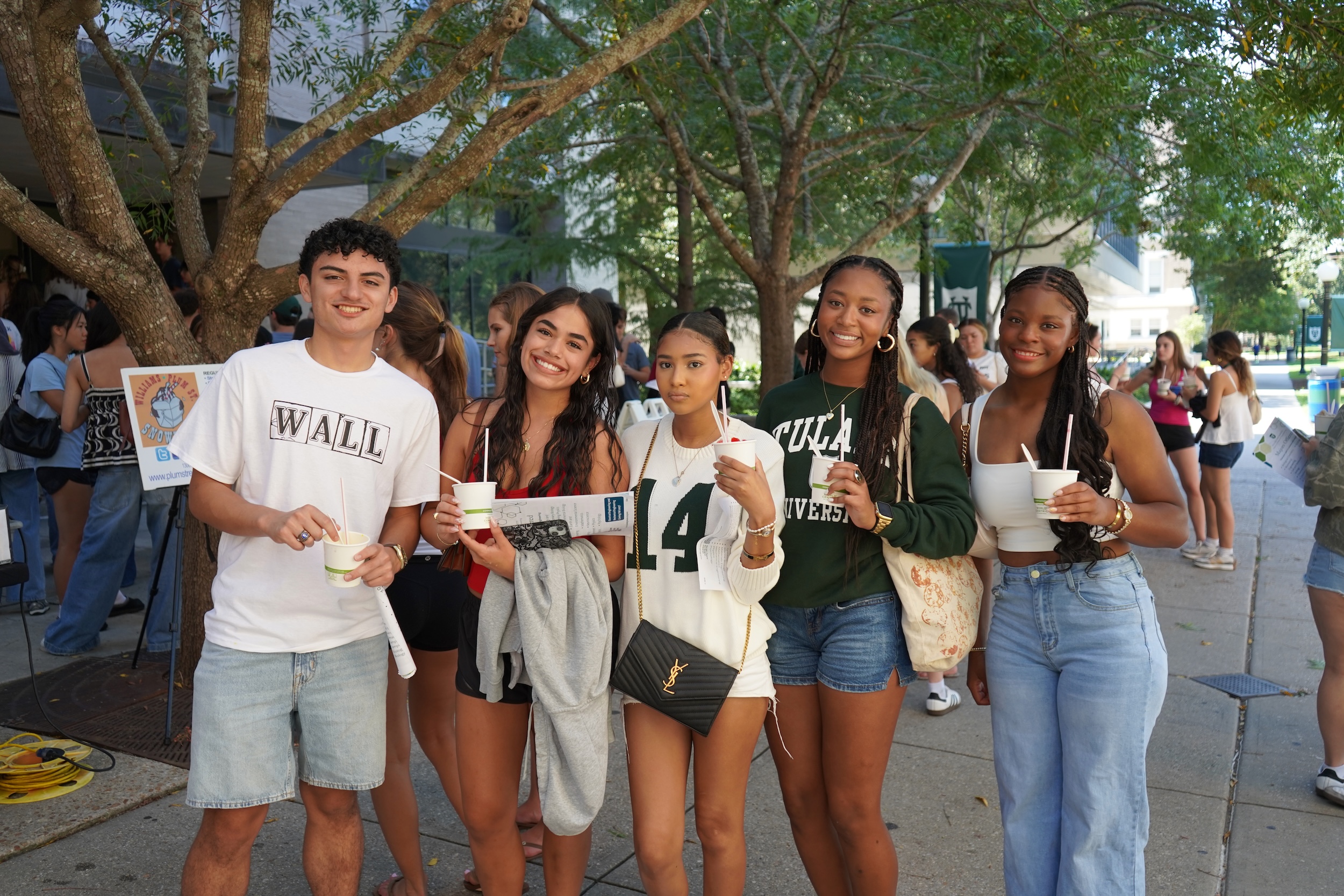
Learn more about the admissions process or apply now!
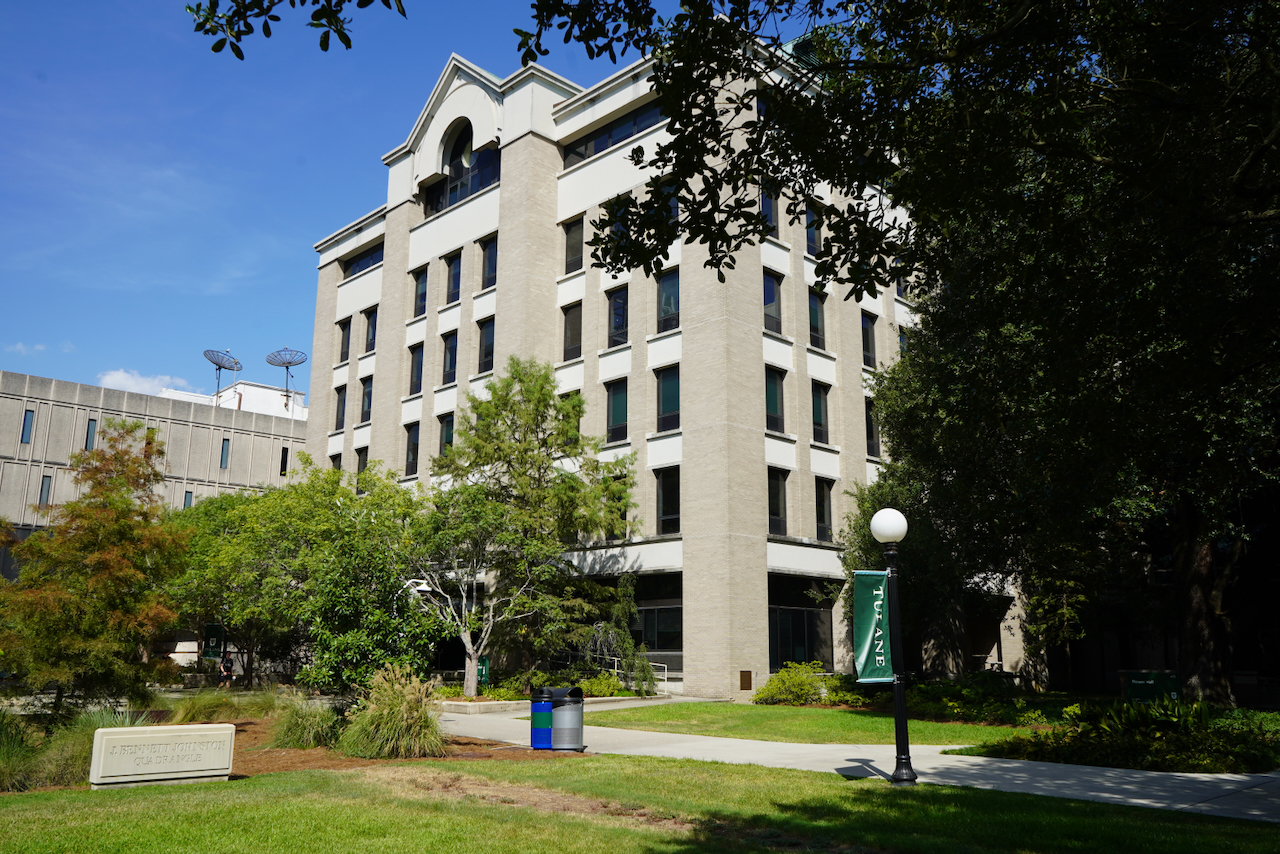
Find full tuition information and the financial aid process.
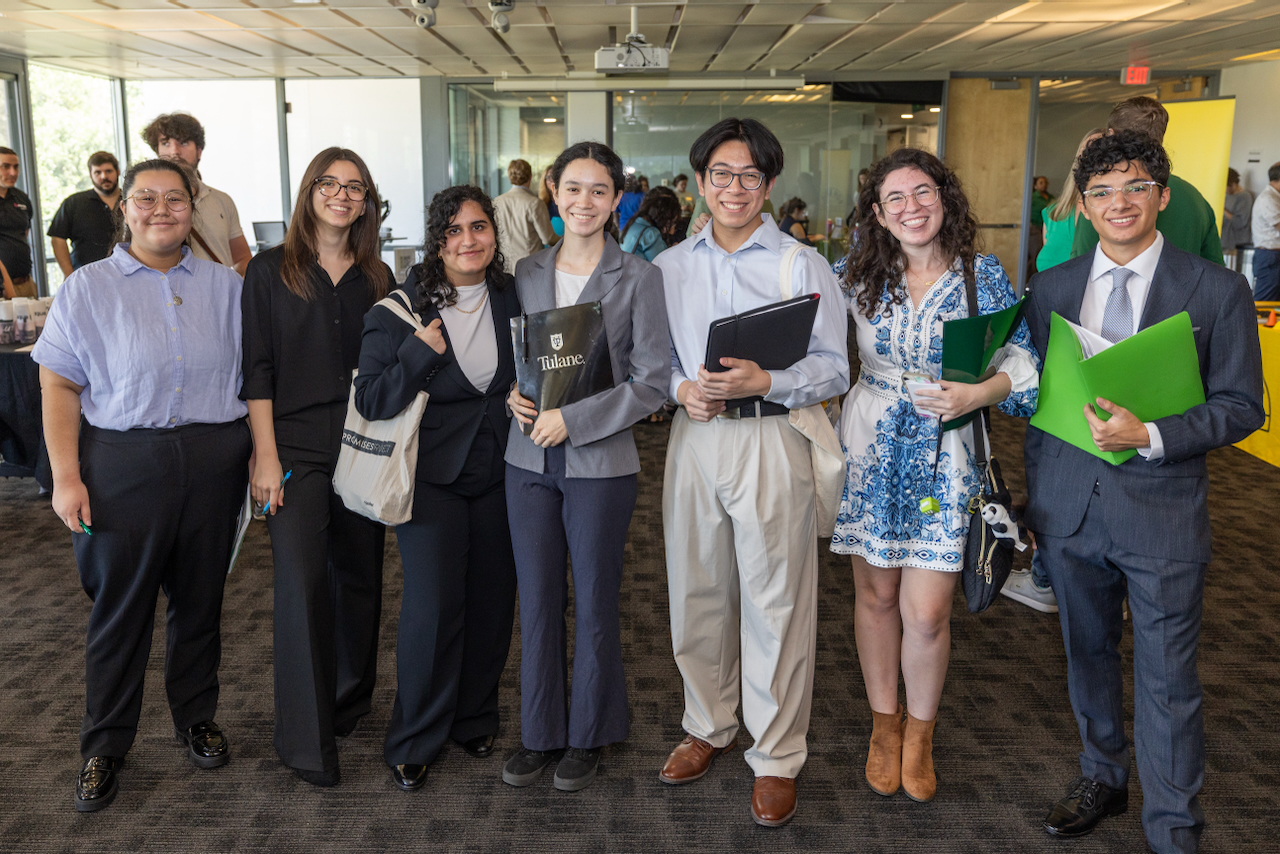
Get to know what makes this place a launchpad for the next generation of scientists and engineers.
FAQs
- Engineering Physics is the broadest and most basic of all engineering programs.
- It provides sensible preparation for other areas of engineering, including mechanical, electrical, civil, and materials engineering, and computer science.
- It provides a broad foundation in the basics of science and engineering.
- Our students will be well equipped to pursue research and development careers in new and emerging technologies that cut across traditional engineering and science disciplines, to pursue graduate studies in science or engineering, or to enter professional fields including law, business management, and medicine.
- Graduates will have substantial experience with laboratory methods, data analysis, and computation.
- As an intrinsic part of the design component of the curriculum, students will also develop strong oral and written communication skills, multidisciplinary teamwork skills, and knowledge about the high ethical standards of the engineering profession.
- The program has a strong emphasis on modern physics and its application to 21st century technology.
- Our program builds on the existing research and teaching strengths of the Department of Physics and Engineering Physics and of the School of Science and Engineering in cross-cutting areas such as novel 21st century materials, materials for energy, biomolecular materials, macromolecules, quantum mechanics to devices, nanostructures, and computation, and is flexible enough to grow together with the research base of our division.
- Engineering physics students will be well equipped to pursue research and development careers in new and emerging technologies such as properties of new materials, quantum electronics, nanofabrication and devices, quantum signal processing and quantum computing, related to emerging advances in civil, electrical, mechanical,materials, and computer engineering.
- Engineering physics students are encouraged to add depth in a specific field by combining the major with a minor in electrical, mechanical, materials, civil, or biomedical engineering or a certificate in computational engineering. This will provide students with in-depth training and preparation for further study or a career in these areas.
1. The student fills out the Major/Minor declaration form (linked below) and contacts the appropriate faculty advisor to arrange a meeting:
- Physics major or minor: Prof. Wayne Reed
- Engineering Physics major (without a minor/certificate or if undecided about optional minor/certificate): Prof. Anoop Rajappan
- Engineering Physics major with Electrical Engineering minor or certificate: Prof. Ryan Gelfand
- Engineering Physics major with Mechanical Engineering minor or certificate: Prof. Matt Barrios
- Engineering Physics major with Materials Engineering minor or certificate: Prof. Doug Chrisey
- Engineering Physics major with Computational Engineering certificate: Prof. Jianwei Sun
Notes for filling out the form: The degree pursued is BS for a Physics major or BSE for the Engineering Physics major. Students declaring a certificate should enter "ENGP + ___ Certificate" in the "primary major" field.
2. After meeting the student, the faculty advisor signs the form and forwards to Prof. Jerry Shakov, Associate Chair, for his signature.
3. Prof. Shakov forwards the form to the student's NTC advisor or returns to the student (in those cases where additional signatures from another department are needed).
Students who are interested in obtaining transfer credits should first obtain the transfer credit request form from their academic advisor. They should then attach a detailed course description and/or a syllabus to the form for departmental approval. Syllabi are preferred for most courses, and they are required for introductory physics courses (e.g. algebra-based or calculus-based Physics I and II).
The forms should be returned to April Sanchez in the Physics & Engineering Physics office in 2001 Percival Stern Hall. The office is open from 8:30 AM until 4:30 PM Monday through Friday, excluding all university holidays. Once forms are approved and signed by Dr. Jiang Wei, students will be contacted to retrieve their forms and return them to Academic Advising.
All forms must be submitted and receive approval prior to taking courses at another institution.
Special note for online coursework: A lecture course that was delivered online may be considered for transfer credit, but any laboratory component must be in-person to receive credit. For this purpose, a student may take the 1-credit lab section separately to complete the requirements for a laboratory science course that was taken elsewhere online.
Sample Schedules for Prospective Majors
Important Note: These sample schedules show one of many ways to fulfill all requirements for graduation with an Engineering Physics degree. See the course catalog or the department website for more information about the major, including a list of courses that may be used to satisfy the engineering electives requirement, the classical elective requirement, and the contemporary elective requirement. The sequence of courses taken will differ among students depending on interests, future goals, advanced placement status, desired minor in engineering or another field, and other factors.
You will need to consult regularly with your Engineering Physics faculty advisor to maintain a program that fits your needs. For students pursuing an ENGP certificate or a minor in Electrical, Mechanical, or Materials Engineering, your certificate or minor advisor is your primary ENGP advisor. Otherwise, please contact Prof. Lev Kaplan with any questions about the Engineering Physics program.
Newcom-Tulane Core Courses: The writing course, TIDES course, service learning courses, and distributional electives satisfy Newcomb-Tulane core requirements for graduation. Engineering Physics students are exempt from the NTC Foreign Language requirement. Please talk regularly with your Newcomb-Tulane College advisor to ensure that you are meeting the requirements of the core curriculum.
All Engineering Physics students are required to complete an internship prior to graduation. The summer internship requirement is not directly part of a course, but the Professional Development series (ENGP 3430/3440) is heavily focused on helping students to acquire an internship. In the first semester of the course, students are introduced to various fields of engineering, engineering roles, and how to locate open positions. Students develop their resume, write cover letters, practice interviewing, and learn the importance of networking. In the course, students are required to submit applications and attend career fairs and networking events. The professor meets individually with students to develop a plan to find an internship.
To confirm that they have met the internship requirement, students fill out a survey regarding their internship experience. We then reach out to the internship supervisor to obtain feedback on student performance. Completion of the intern and supervisor surveys is considered proof of internship. If the supervisor is unresponsive, students are required to submit pay stubs or similar documentation to confirm their employment.
Internship guidelines are as follows:
-Obtain an engineering-related internship or experience
-Example roles: any type of engineering, research, project management, technical sales, STEM education
-The position can be paid or unpaid
-The student should gain a minimum of 160 hours of experience (equivalent to 4 weeks of full-time work)
If the student has not found an internship by their senior year, we strongly encourage the student to find a position in a faculty research lab or local engineering firm during the school year.
Overview
Senior Design is the capstone course for Engineering Physics majors. Students use engineering principles learned over the course of their previous studies to solve a real world problem. This two-semester course allows teams of students to conceive of a design, analyze the design, build a prototype, and present their results to peers, industry partners, and faculty.
The senior design experience culminates in the Tulane Engineering Design Expo, where students demonstrate their final prototypes along with their colleagues from across all of Tulane’s engineering departments, as well as computer science.
Sources
Each capstone project is an opportunity for students to solve a real-world problem. The projects can stem from a variety of fields and sources. Some are sponsored by local industry partners, while others are proposed by Tulane faculty or the students themselves.
Types
The opportunity could involve aspects of a number of engineering fields: computational, electrical, materials, mechanical, or others. The scope of the project should be such that a working prototype can be expected in a nine month time frame, with adequate funding and ~40 hours of student work per week.
Proposals
If you are interested in proposing a project, please fill out a proposal form, or contact Professor Matt Barrios (matthew.barrios@tulane.edu) for further information.
Teams
Teams are generally made up of 3-4 students, who chose projects based on their interests and expertise. Students are tasked with determining their roles within the project. Interdisciplinary collaboration is encouraged, and multi-department teams are possible.
Sponsors
Sponsors may be faculty, local engineers or engineering firms, alumni, or others. The sponsor may provide funding, the proposal for the project, engineering support, or a combination of the three. Please contact Professor Matt Barrios (matthew.barrios@tulane.edu) if you are interested in sponsoring a project.
Advisors
In addition to the sponsor, students will identify advisors to help with the project. Advisors are generally technical experts in one or more of the fields associated with the project. Advisors are often faculty, but may be local engineers or other professionals.
Professor
Professor of Practice Matt Barrios is the instructor for the course. Professor Barrios works to connect Engineering Physics students with local industry through senior design projects, internship opportunities, site visits, etc. He started Tulane’s annual Engineering Capstone Design Expo in 2017. Professor Barrios’ has a PhD in mechanical engineering, and his former research interests centered on cryogenic engineering.
Process
| Task | Description |
|---|---|
| Identify an opportunity | Choose or propose a project. Define the scope of the problem with the help of the sponsor. |
| Perform market research | Identify potential customers and prior art. Obtain customer feedback. Find customer needs and specifications. |
| Generate and select a design concept | Brainstorm, implement TRIZ, or use other techniques to explore potential solutions. Use a structured approach to select the best idea. |
| Create and test a prototype | Use the Makerspace and other resources to produce a physical representation of the product. Perform tests to determine if it meets the specifications. |
| Evaluate and iterate | Examine the prototype's performance. Obtain feedback and go through the steps again, as necessary, to improve on the design. |
Project Management
Project management is one of the most important aspects of the course. Students will develop a project management plan to govern communication, budget, resource and labor planning, etc. Students are responsible for adhering to the plan and using it as a tool to ensure the satisfaction of all stakeholders.
Prototype
Students are expected to produce an initial prototype by the end of the first semester. This will be tested and modified during the second semester before being exhibited at the Capstone Design Expo and final presentations.
Undergraduate students own their intellectual property, and are thus free to continue development of the prototype after the course is completed. Alternatively, students are free to make agreements with sponsors to share or grant IP as appropriate.
Presentation
Communication is key to the success of the project. Teams will communicate their final designs as follows:
-Demonstrate the final prototype at the Engineering Capstone Design Expo
-Give a 15 minute presentation to peers, faculty, and sponsors
-Submit a closeout document to the sponsor and instructor
Alongside our longstanding Physics Program (science) established in 1895, we added an undergraduate Engineering Physics Program (engineering) in 2006. Our Engineering Physics Program is accredited by the Engineering Accreditation Commission of ABET, under the commission’s General Criteria with no applicable program criteria.