
Master's Degree in Physics
The Master of Science (MS) Program in Physics provides graduate-level training in physics that prepares graduates for advanced careers in research and industry, or PhD programs in physics or related fields. The Physics and Engineering Physics Department offers an accelerated terminal Master of Science degree, with both non-thesis (course-based) and thesis tracks.
Current Tulane undergraduates may earn an MS degree in physics by adding one year to the four years of study usually required for the BS degree. The MS degree provides a more complete preparation for a PhD program than the BS. The MS is usually preferred by industry and business. Normally, an MS degree requires at least two years of postgraduate study. In this program, the time is reduced to one year by taking some graduate-level courses as an undergraduate.
ApplyRequest InformationDepartment of Physics and Engineering Physics
4+1 Accelerated Master's Program
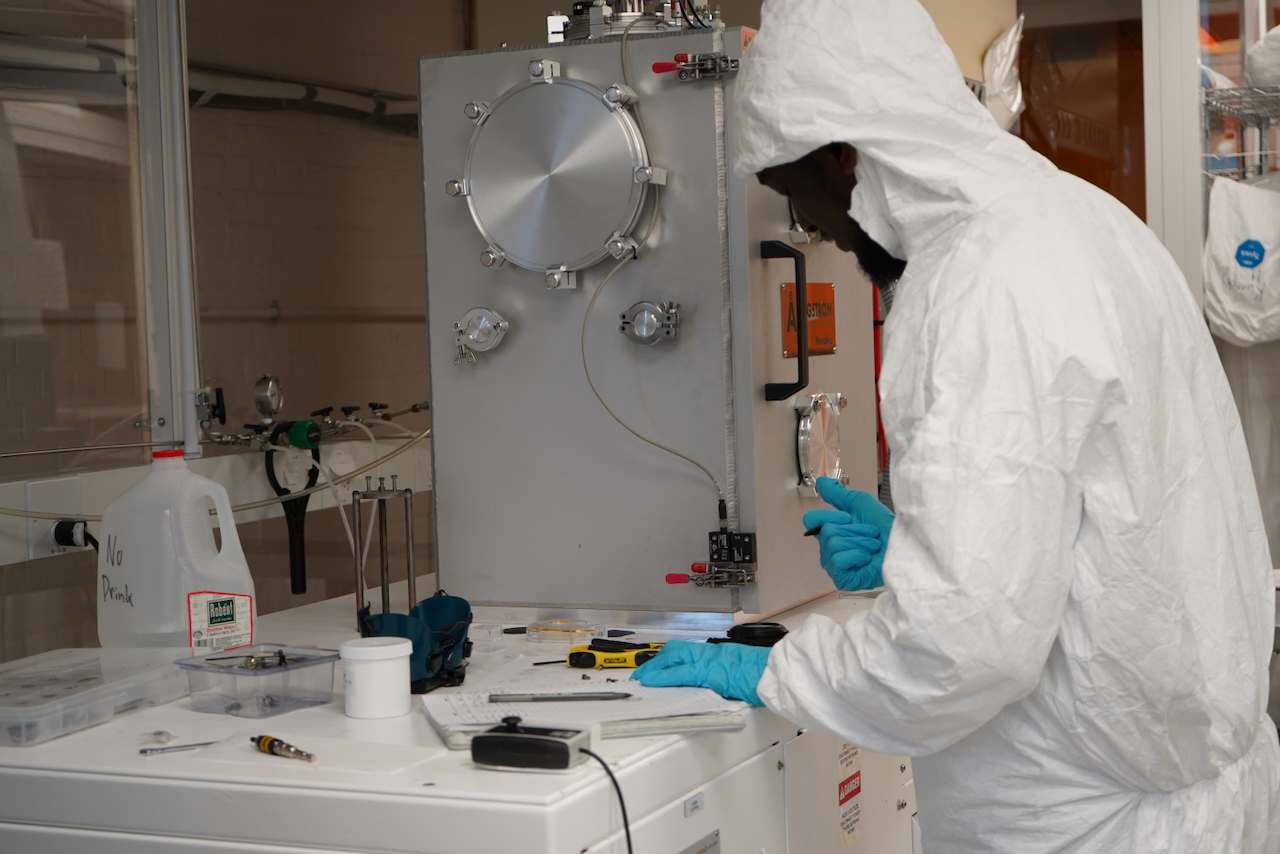
Current Tulane undergraduate students can earn this M.S. degree with just one additional year of study. This accelerated program allows you to count graduate-level courses toward both your B.S. and M.S. degrees, providing a fast track to an advanced credential.

What You'll Learn
In this accelerated program, you'll develop advanced expertise in physics through rigorous graduate-level coursework and research training. You'll deepen your understanding of fundamental physics principles and their applications across diverse fields, gaining both theoretical knowledge and practical problem-solving skills. The flexible curriculum allows you to tailor your studies to your interests, whether in classical physics, quantum mechanics, condensed matter physics, or other specialized areas. Whether pursuing the thesis or non-thesis track, you'll develop the analytical, experimental, and computational skills essential for advanced careers in research, industry, or doctoral study, while benefiting from an accelerated program structure that can be completed in as little as one year for Tulane undergraduates or 3-4 semesters for external students.
Research
Research opportunities in the Physics MS program allow you to engage in original investigations under faculty mentorship. Students pursuing the thesis track conduct empirical research in their chosen area of physics, working closely with faculty advisors to design and execute investigations that contribute new knowledge to the field. Faculty research spans diverse areas of physics, from fundamental investigations in quantum mechanics and condensed matter physics to applied research in photonics, materials science, and emerging technologies. Even students in the non-thesis track can engage in research through coursework and independent projects, gaining hands-on laboratory experience and developing investigative skills. Through thesis research or project-based learning, you'll develop the critical thinking, experimental design, and communication skills essential for advanced careers in physics research, industry, and related fields.
Meet Our Faculty
Our physics faculty are accomplished researchers and educators with expertise spanning classical and quantum physics, condensed matter physics, optics, materials science, and related disciplines. Faculty members are actively engaged in cutting-edge research investigating fundamental questions in physics and developing applications in emerging technologies. They are committed to mentoring graduate students through personalized course planning and research guidance, fostering both deep theoretical understanding and practical investigative skills. Whether through advanced coursework, laboratory work, or thesis research, our faculty create an environment where you'll develop as a physicist while contributing to meaningful research that advances the field.
Curriculum Requirements
The Physics MS program offers both non-thesis (course-based) and thesis tracks, allowing you to tailor your degree to your career goals. The accelerated program can be completed in 3-4 semesters of full-time enrollment, providing a more complete preparation for doctoral study or advanced industry positions than the BS degree alone. The non-thesis track emphasizes advanced coursework in physics, allowing you to develop broad expertise across multiple areas of the discipline. The thesis track combines advanced coursework with original research under faculty supervision, culminating in a defended thesis. The 4+1 option for Tulane undergraduates allows you to earn your MS degree in just one additional year by taking graduate-level courses during your undergraduate years, significantly reducing the time to degree completion while maintaining rigorous academic standards.


Career Benefits and Pathways
Graduates with a master's in physics are well-positioned for diverse careers in research, technology, and industry. Specific opportunities include research scientist, physicist, data scientist, software engineer, optical engineer, materials scientist, and technical specialist at national laboratories, technology companies, aerospace firms, semiconductor manufacturers, and research institutions. The program's emphasis on both theoretical understanding and practical problem-solving prepares graduates for positions in emerging fields like quantum computing, photonics, nanotechnology, and advanced materials. Many graduates pursue doctoral study in physics or related fields, while others enter industry positions where the MS degree is preferred over the BS for advancement and leadership roles. The combination of rigorous physics training and accelerated completion makes graduates competitive for positions requiring advanced technical expertise and independent problem-solving.
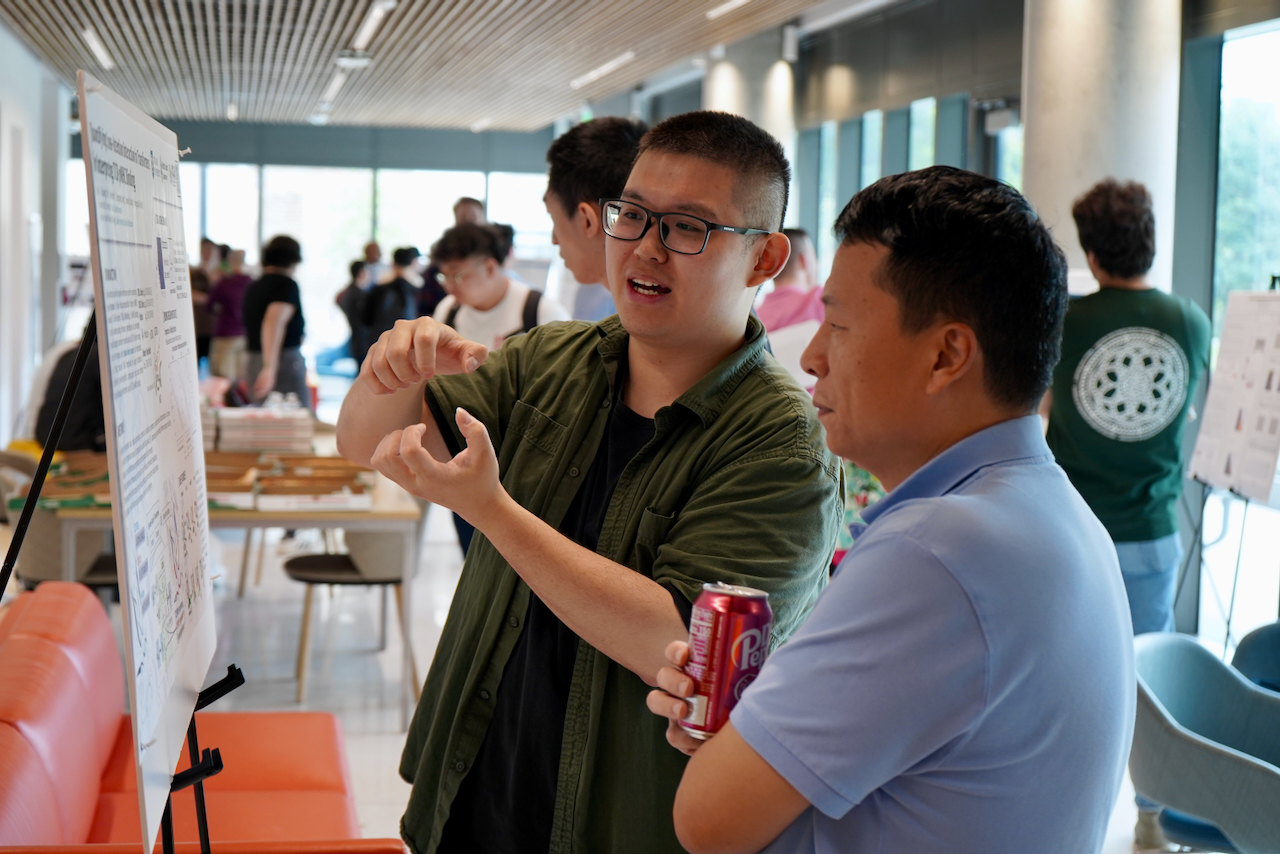
Learn more about the admissions process or apply now!
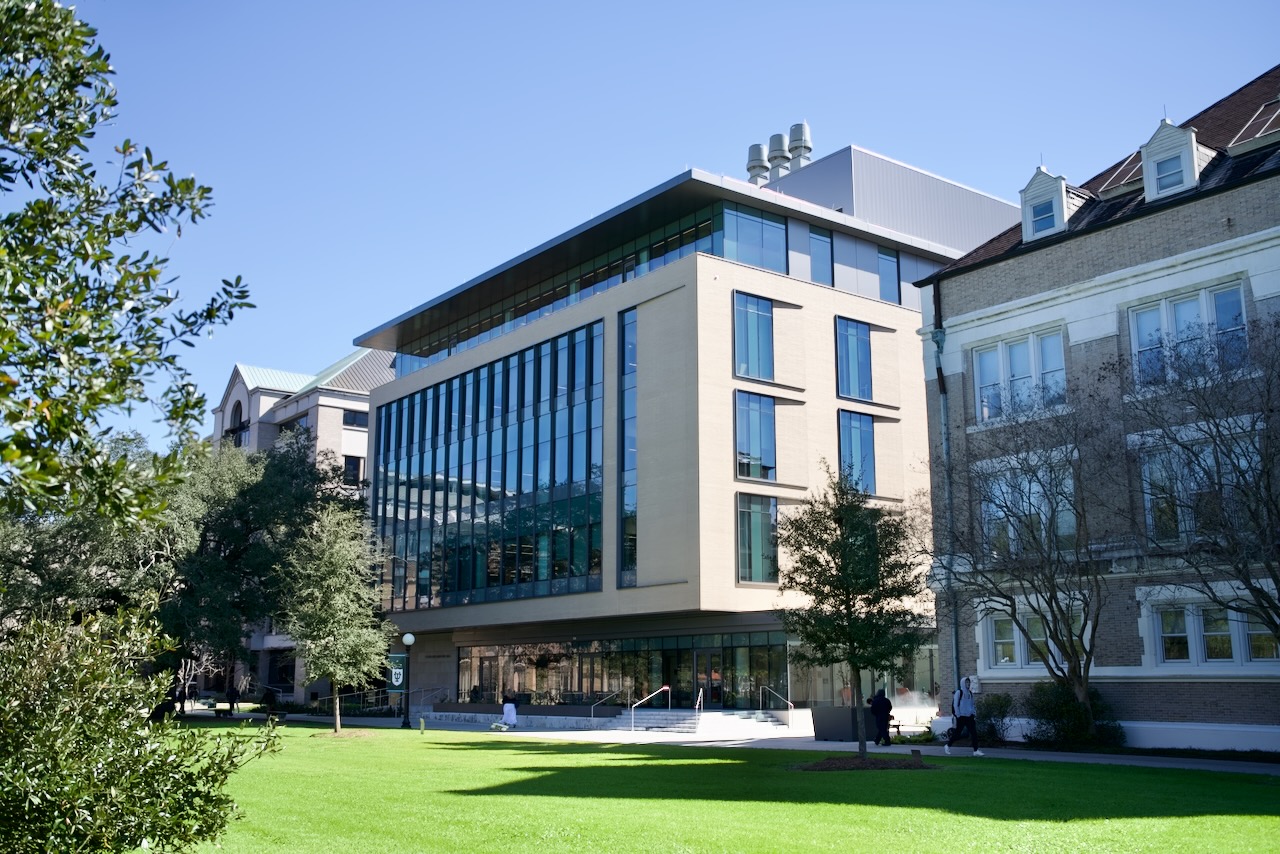
Find full tuition information and the financial aid process.
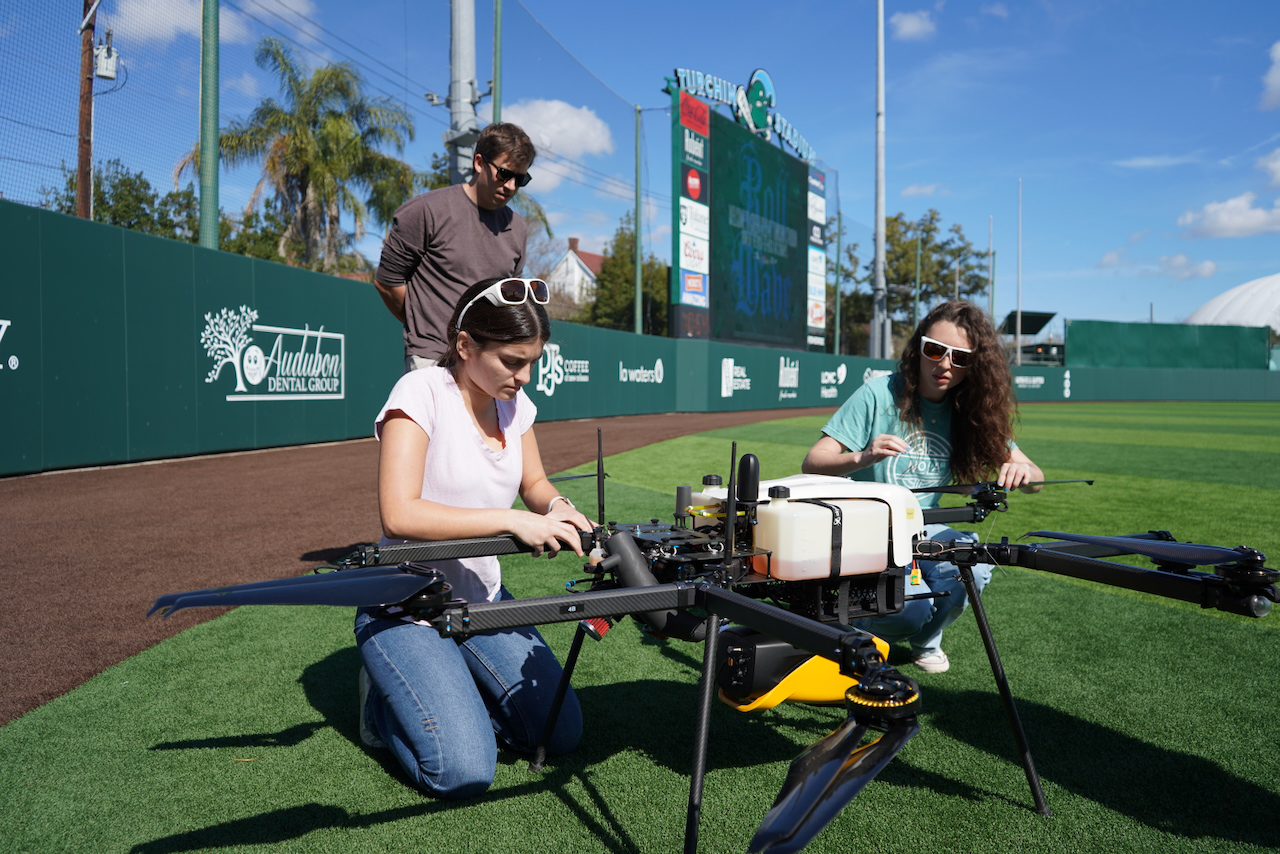
Get to know what makes this place a launchpad for the next generation of scientists and engineers.
FAQs
Physics is the fundamental natural science that seeks to understand how the universe works at all scales—from subatomic particles and quantum phenomena to galaxies and cosmology—using observation, experimentation, and mathematical reasoning. It provides the theoretical foundation for understanding matter, energy, forces, and motion, with applications ranging from everyday technologies to cutting-edge innovations in computing, energy, and materials science.
Admission to the graduate program normally requires a GPA of 3.0 or higher overall and in physics at the time of admission (normally at the beginning of the junior year). Application may be made using the standard form for graduate admission available through the SSE website (sse.tulane.edu) and payment of the $45 application fee. Only one letter of recommendation is required, and the GRE is not required for this 4+1 program. Application for the PhD program is separate from the 4+1 program.
We accept students from many foreign countries, including China and India.
The GRE General Exam is required for all applicants. The GRE Physics subject exam is strongly recommended, but not required, for applicants to the Physics Ph.D. Program. The TOEFL exam is required for all applicants who are non-native English speakers.
We have no minimum required GRE scores. We do have a minimum TOEFL score of 80. The test scores are used, along with other indicators such as GPA and recommendation letters, to make relative comparisons of applicants. We look for a complete picture in the application to find the students who we think will fit in best in our department. Test scores are just one part of that picture.
Every applicant is automatically considered for a TA, RA, or fellowship. Most admitted students are offered a TA position. Fellowships are available for exceptional applicants in the Physics program. RA positions may also be available in some research groups.
We usually receive over 100 qualified applications. Approximately 20% are offered admission.
Our staff is not able to provide individual advice or review your qualifications, other than through the admissions process. We encourage you to submit an application and assure you that every application will receive full consideration in due time.
We can accept unofficial TOEFL and GRE scores, such as photocopies of ETS score reports, at the time of your application. We will use the unofficial scores to make the admission decisions. However, if you are admitted and decide to enroll at Tulane, you will need to submit the official ETS scores.
All graduate students are required to carry health insurance, either through the Tulane plan or privately. In the Tulane plan, the student is responsible for paying a 50% portion of their health insurance, which is about $669 per semester. The School of Science and Engineering subsidizes the other 50% of the health insurance premium.
Please see the Research section of our website for a description of the research groups in our department.
Graduate students in the department receive financial assistance through teaching assistantships, research assistantships, tuition scholarships, University loans, and Louisiana Board of Regents Fellowships.
Research assistantships are provided by a student's faculty research advisor and are available at the advisor's discretion. Stipend amounts and durations are decided by the advisor, although the research assistantship is normally accompanied by a tuition waiver.
A small number of summer teaching assistantships are normally available, and are usually reserved for students with special circumstances.
Contact Us
Ilianna H. Kwaske, Ph.D.
Associate Dean for MS Programs & Professional Education
ikwaske@tulane.edu
Sarah Berry
Director of MS and Certificate Programs
smccarty@tulane.edu
Rosie Chavez
Director of Graduate Programs
rchavez@tulane.edu
Dr. Ryan Glasser
Graduate Admissions Director (Physics), rglasser@tulane.edu
Dr. Diyar Talbayev
Graduate Advisor (Physics), rglasser@tulane.edu