
Chemical Engineering Undergraduate Major
Chemical Engineering Undergraduate Major
Engineers are problem solvers, and chemical engineers over the last century have been instrumental in “development of smaller, faster computer chips...innovations in recycling, treating disease, cleaning water, and generating energy...the processes and products that chemical engineers have helped create touch every aspect of our lives.” ¹
We believe this role in everyday life contributes to the success of chemical engineers in general, who tend to excel in the private sector because of their solutions-based skills training for problems with uncertainty and limited knowledge.
At Tulane, we believe the individualized attention that our students receive as undergraduates results in a strong appreciation of the university and its role in their futures. Chemical and Biomolecular Engineering will remain a strong career in the future, as the program evolves to keep up with the demands of the chemical and biochemical industry.
Tulane's Chemical Engineering program is accredited by the Engineering Accreditation Commission of ABET, under the commission’s General Criteria and Program Criteria for Chemical, Biochemical, Biomolecular, and Similarly Named Engineering Programs.

What You'll Learn
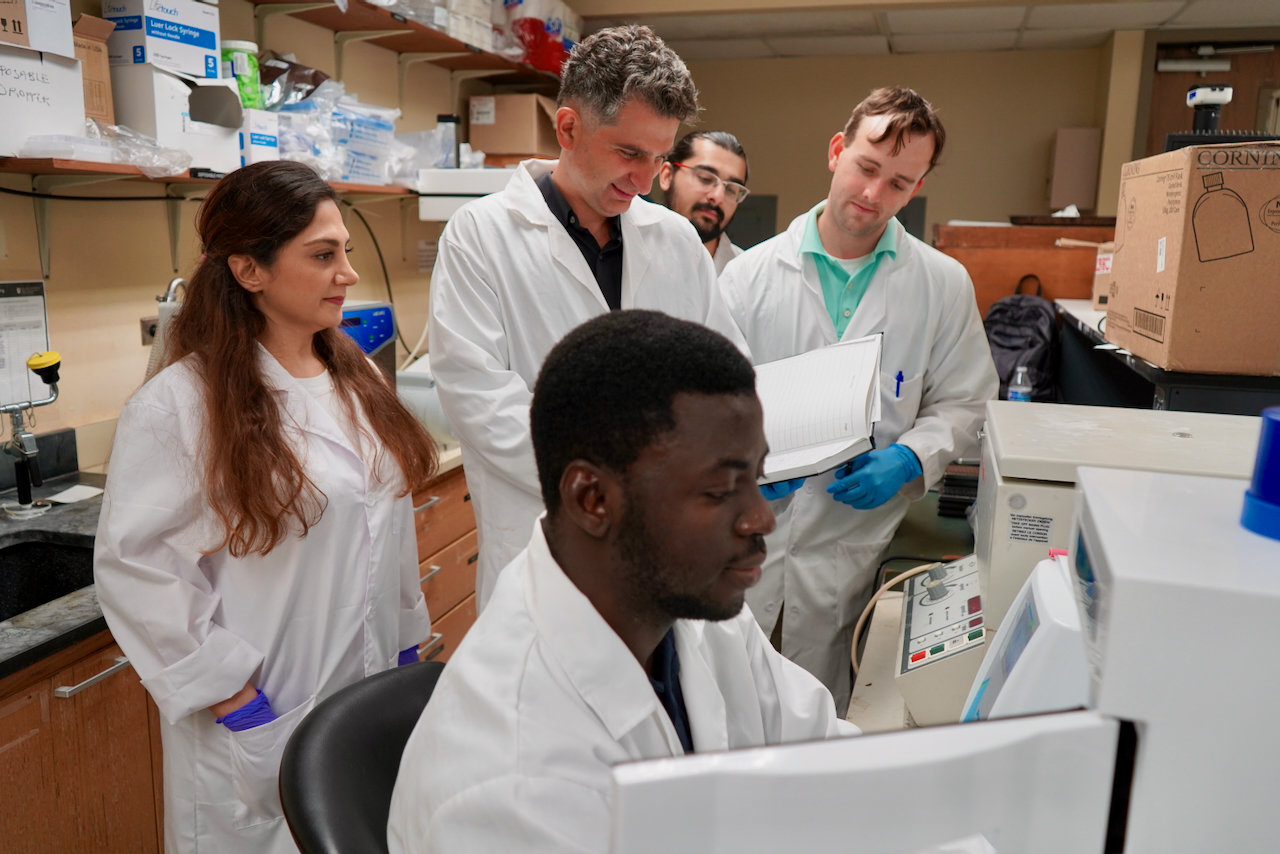
Chemical engineering combines principles of chemistry, physics, biology, and mathematics to design processes that economically and sustainably meet human needs for energy, food, healthcare, and technology. The Chemical Engineering curriculum includes basic coursework in math, physics, and chemistry, as well as advanced courses related to the design of industrial processes including fluid dynamics, thermodynamics, heat and mass transfer, computer methods, reactor design, and automatic process control. All students participate in an internship through the core curriculum. Students can readily tailor the major to their specific interests through choice of appropriate electives; synergistic focus areas include pre-medicine, biotechnology, materials science, energy, and environmental studies.
Career Outlook
Chemical engineering graduates step into a field with staying power, since chemical engineers over the last century have driven advances from smaller, faster computer chips to breakthroughs in recycling, disease treatment, water purification, and energy generation, meaning their work touches nearly every corner of modern life. Tulane's program is built with that trajectory in mind — the field is expected to remain a strong career path going forward, and the curriculum continues to evolve alongside the demands of the chemical and biochemical industry. With a required internship built into the core curriculum and the flexibility to focus electives toward pre-medicine, biotechnology, materials science, energy, or environmental studies, graduates leave well-positioned for a wide range of industries.
Meet Our Faculty
Chemical Engineering faculty combine deep technical expertise with a hands-on, mentorship-driven approach to teaching, guiding students through rigorous coursework and cutting-edge lab work alike. Their research spans everything from advanced materials and nanotechnology to biomolecular engineering and environmental technology, giving students direct exposure to the kind of interdisciplinary problem-solving that defines the field today.
Curriculum Requirements
The Chemical Engineering (CENG) program of study includes a solid foundation in math and science, major-specific core material in chemical and biomolecular engineering, plus exposure to the humanities and social sciences. In order to graduate with a B.S.E. degree in Chemical Engineering, students must fulfill the following requirements:
Major Specific: The engineering courses, including the core chemical engineering courses*, engineering electives, and the advanced specialization electives. *A minimum grade of C- must be earned in each CENG required core course in order to receive credit for the Bachelor’s degree.
Newcomb-Tulane College (NTC) Core Curriculum: Courses that ensure attainment of basic competencies in writing, scientific inquiry, cultural knowledge, and interdisciplinary scholarship.
Public Service: To meet this requirement for graduation, all students must complete two semesters of service. One of these semesters must be at the 2000 level or above. The first experience should be completed by the 2nd semester of the sophomore year. More information on the service learning requirements can be found here. The CBE department offers courses which satisfy both service learning requirements (CENG 1180/1891 and CENG 3240/3890).


Research
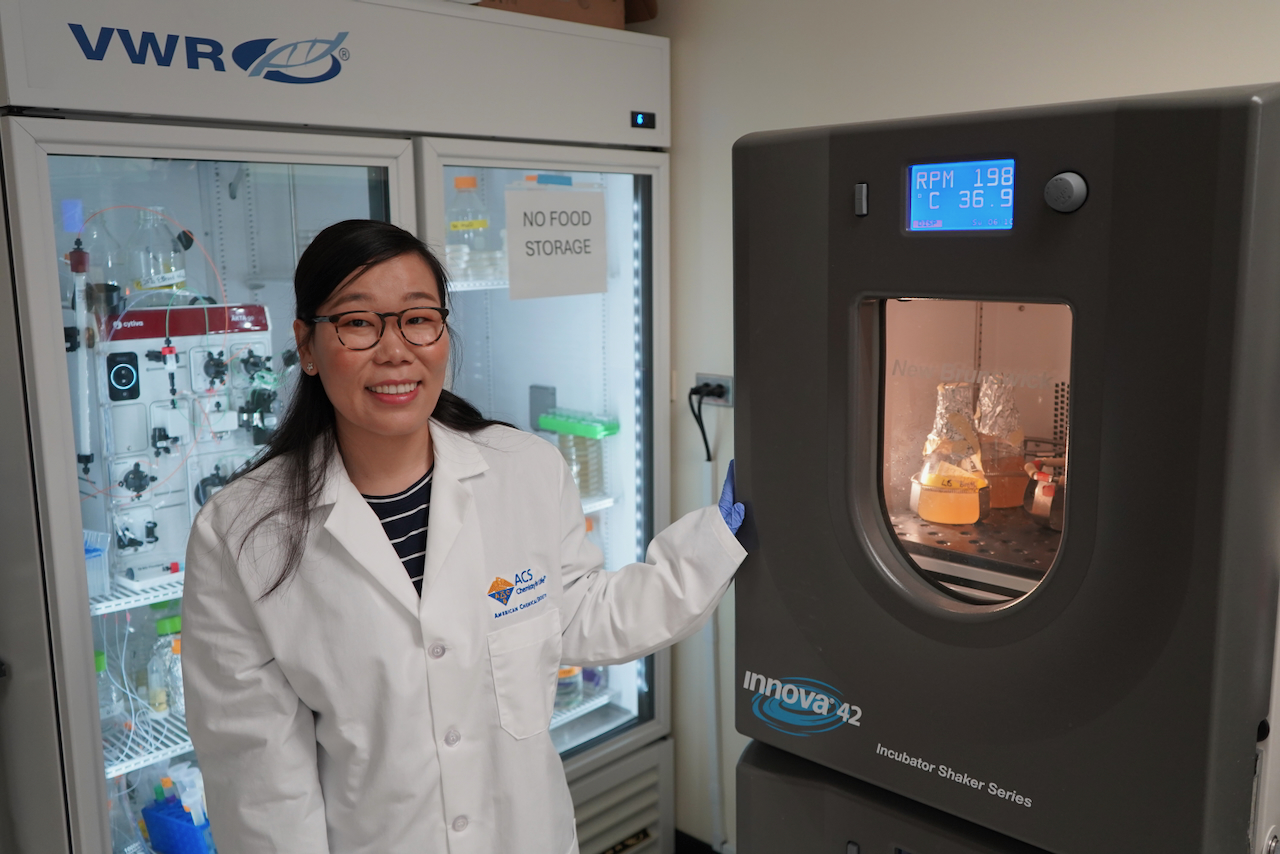
Research in Chemical Engineering at Tulane centers on three major themes: Advanced Materials, Biomolecular Engineering, and Novel Environmental Technologies. Within these areas, faculty and students explore everything from nanoscale materials and polymer engineering to gene delivery, tissue culture, and targeted drug delivery — work with direct applications in cancer therapeutics, drug delivery systems, and environmental remediation. This breadth gives students the chance to work at the intersection of chemistry, biology, and engineering on problems with real-world, often life-saving, impact.

Learn more about the admissions process or apply now!
Find full tuition information and the financial aid process.
Get to know what makes this place a launchpad for the next generation of scientists and engineers.
FAQs
Chemical engineering is the discipline of applying chemistry, physics, biology, and math to design processes that meet human needs — from energy and food to healthcare and technology — in ways that are efficient, economical, and sustainable. It's a field that shapes everyday life, powering industries from pharmaceuticals and biotechnology to renewable energy and environmental protection.
This is typically done in the Sophomore year. To declare the major, students must turn in a Major Declaration form and meet with an advisor. Completed forms should then be turned in to the Project Assistant in Boggs 300. The form will be signed and returned to you, and you can send it along to NTC Advising. Please note that it is your responsibility to send this form to your NTC advisor.
If your major advisor does not reach out, you may want to contact them to introduce yourself or to set up a meeting.
Placement prospects for Chemical Engineering graduates have historically been very good, and graduates from Tulane’s CBE department are not exceptions. From a very broad perspective, graduates with engineering degrees tend to have higher salaries during their prime earning years (Figure 1). Within the engineering disciplines, median salaries of bachelor’s degree graduates of Chemical Engineering programs have continued to make a strong showing during recent years, as has the average offer of starting salary.
| Broad Category | 2017 Average Salary |
|---|---|
| Engineering | $66,097 |
| Computer Science | $65,540 |
| Math & Sciences | $59,368 |
| Business | $54,803 |
| Agriculture & Natural Resources | $54,364 |
| Social Sciences | $53,459 |
| Communications | $51,925 |
| Humanities | $48,733 |
Source: Winter 2017 Salary Survey, National Association of Colleges and Employers
Figure 1 - Prime-age engineers earn above-average wages. Data shown are in 2017 US dollars. (source: National Association of Colleges and Employers, www.NACEweb.org).
Upon graduation from Tulane's Chemical and Biomolecular Engineering program, two-thirds of our students get jobs in industry, while one-third go on to continue their education.
Click here to see a list of where some of our grads have been hired.
YES!
The School of Science and Engineering strongly encourages you to explore study abroad options. Experiences gained while participating in study abroad programs are very important to you as an individual and serve to enhance your abilities as a member of the international scientific and engineering community.
Study abroad options for SSE majors are varied and include summer, semester, and year-long options all across the globe. You may complete course work for your major or pursue other interests. More information about the specific programs is available through the Office of Study Abroad.
We recommend that you express your interest in study abroad as early as possible. Meet with the Office of Study Abroad to obtain information regarding the various programs available. Be sure to discuss your study abroad plans with your academic and faculty advisors; they will be able to help you plan your coursework to include study abroad options.
If you haven't polished up your resume and gotten it into the HireTulane.com system, now's the time to do so. Work with Sheri Thompson, our department's contact at the Career Services Center, to make sure your resume looks the best it can.
- Hire Tulane Grads
- Internship, Industry, Post Doc, and Faculty Openings
- After College Job Resource Center
RISE is a summer internship program for undergraduate students from the United States, Canada and the UK in the fields of biology, chemistry, physics, earth sciences and engineering and offers unique opportunities for Bachelor students to work with research groups at universities and top research institutions across Germany for a period of 2 to 3 months during the summer.
NSF funds a large number of research opportunities for undergraduate students through its REU Sites program. A REU Site consists of a group of ten or so undergraduates who work in the research programs of the host institution. Each student is associated with a specific research project, where he/she works closely with the faculty and other researchers. Students are granted stipends and in many cases assistance with housing and travel.
If you are an undergraduate looking for multidisciplinary research opportunities that will open doors to a wealth of practical, hands on experience, browse through our available undergraduate support programs. By conducting real world research while also networking with researchers and fellow students, you will gain a better knowledge of your anticipated field of study and may even expand your expertise into a number of new areas.
The American Institute for Chemical Engineers has a strong student chapter at Tulane. Members of the department are also members of the Society for Women Engineers, as well as Theta Tau, a professional engineering fraternity, and the Society for Black Engineers.
Absolutely! Internships are opportunities for students to get first-hand experience with potential employers, to learn and sharpen skills that are particular to a given enterprise, and to grow as young professionals. These are paid positions that take place without the distractions of coursework. Students with internship experience have been much more successful in obtaining full-time employment, independent of GPA.
Because of the financial calendar for many companies, the interview process typically takes place in the fall. That means students should have their resumes ready to go at the beginning of the school year. A student is more likely to obtain an internship after the sophomore and junior years. Juniors in particular should be ready to apply by the beginning of September.
An alternative to an internship experience is a Research Experience for Undergraduates (REU). REUs provide opportunities for student to travel to another institution for ~10 weeks in the summer to work in a research laboratory. Students can find out about these opportunities at https://www.nsf.gov/crssprgm/reu/.
Securing a job is the responsibility of the individual. However, companies visit the campus throughout the Fall semester to recruit our seniors. In addition, our department may take groups of students to meet potential employers in other locations. The professional organizations mentioned earlier can also be avenues by which students can be directed to employers who are seeking graduating seniors in Chemical Engineering.
The department has a combined 4+1 BSE/MS program in which a student can complete their MS (non-thesis) in twelve months and both degrees are awarded simultaneously. While an MS in Chemical Engineering is not necessary to get a job, there are some students who due to logistical issues or other constraints might find this program to be a good fit with their personal/development needs.
Contact Us
By Mail
Department of Chemical and Biomolecular Engineering
Lindy Boggs Center for Energy and Biotechnology
Suite 300
6823 St. Charles Avenue
New Orleans, LA 70118