
Research in Mathematics
The Department of Mathematics at Tulane University is home to a vibrant community of researchers pushing the boundaries of mathematical science. Our faculty engage in dynamic, interdisciplinary work that spans fundamental theoretical advancements and high-impact applications, with world-class strengths in areas like Computational Mathematics & Biology, modern Algebra, Geometry & Number Theory, Analysis, and Probability & Statistics.
Our Research Clusters
To better reflect the diverse and interconnected research activities of our faculty, we have organized our strengths into four dynamic research clusters. Explore each cluster to learn more about the specific areas of focus and the faculty driving innovation. You can dive deeper into the specific research interests and publications of our dedicated faculty members by checking out the Faculty Directory.

Research Spotlights
Our department's research spans from foundational pure mathematics to work that directly engages with biology, physics, and data science. Several faculty lead Tulane's Center for Computational Science, hold appointments at the Tulane Cancer Center, and co-administer the M.S. in Data Science jointly with Computer Science. Others pursue deep questions in algebra, geometry, number theory, and analysis that define the core of the discipline.
Below are a few examples of the work happening in the department. For a full picture, explore our faculty profiles and weekly seminars.
Applied & Interdisciplinary
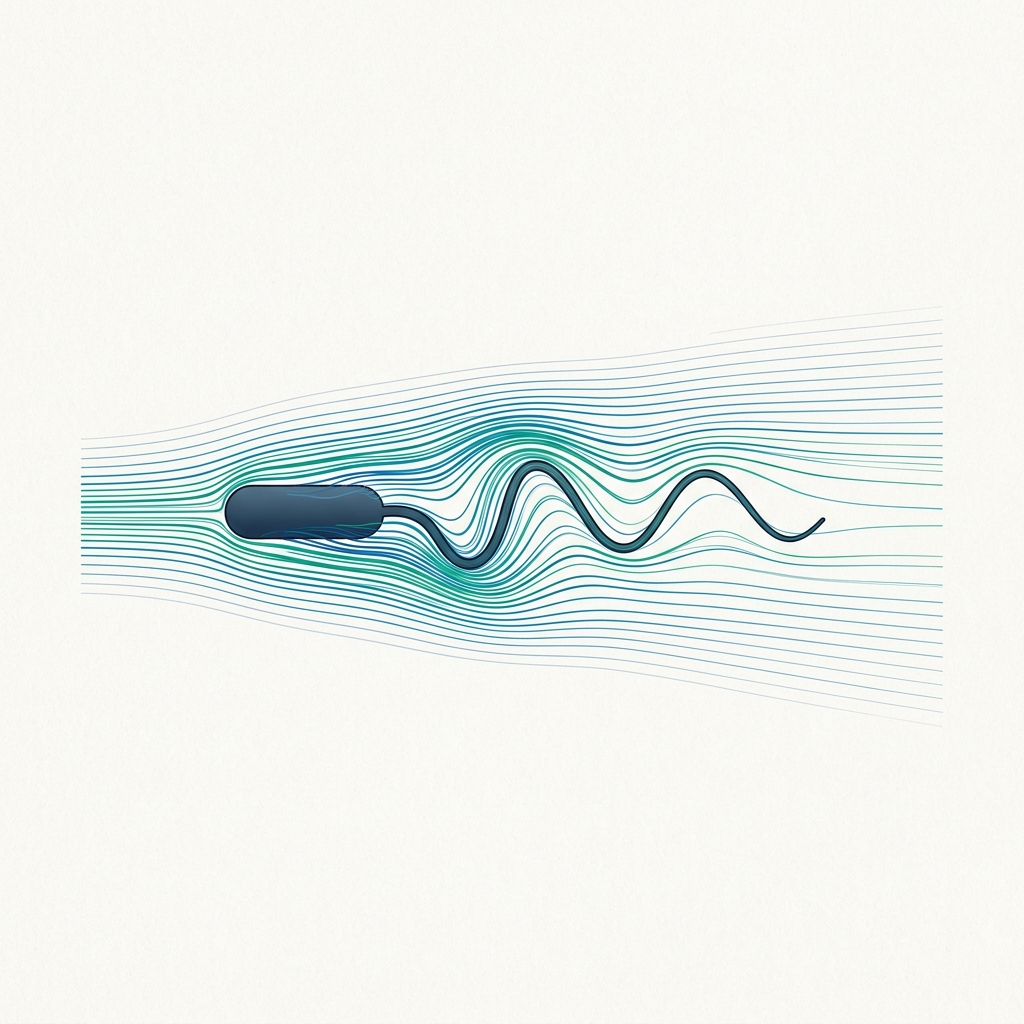
Biological Fluid Dynamics & the Method of Regularized Stokeslets
Ricardo Cortez and Lisa Fauci have built one of the country's leading programs in mathematical biology. Cortez invented the Method of Regularized Stokeslets, a computational framework now used worldwide for simulating how microscopic structures interact with viscous fluids — from bacterial locomotion and sperm navigating cervical mucus to lamprey swimming after spinal cord injury. Fauci, a member of the National Academy of Sciences and past president of SIAM, collaborates with neuroscientists and biomedical engineers to develop multi-scale models integrating neural circuits, muscle mechanics, and fluid dynamics. Cortez directs Tulane's Center for Computational Science, which Fauci founded.
Applied & Interdisciplinary
From Knot Theory to Drug Discovery
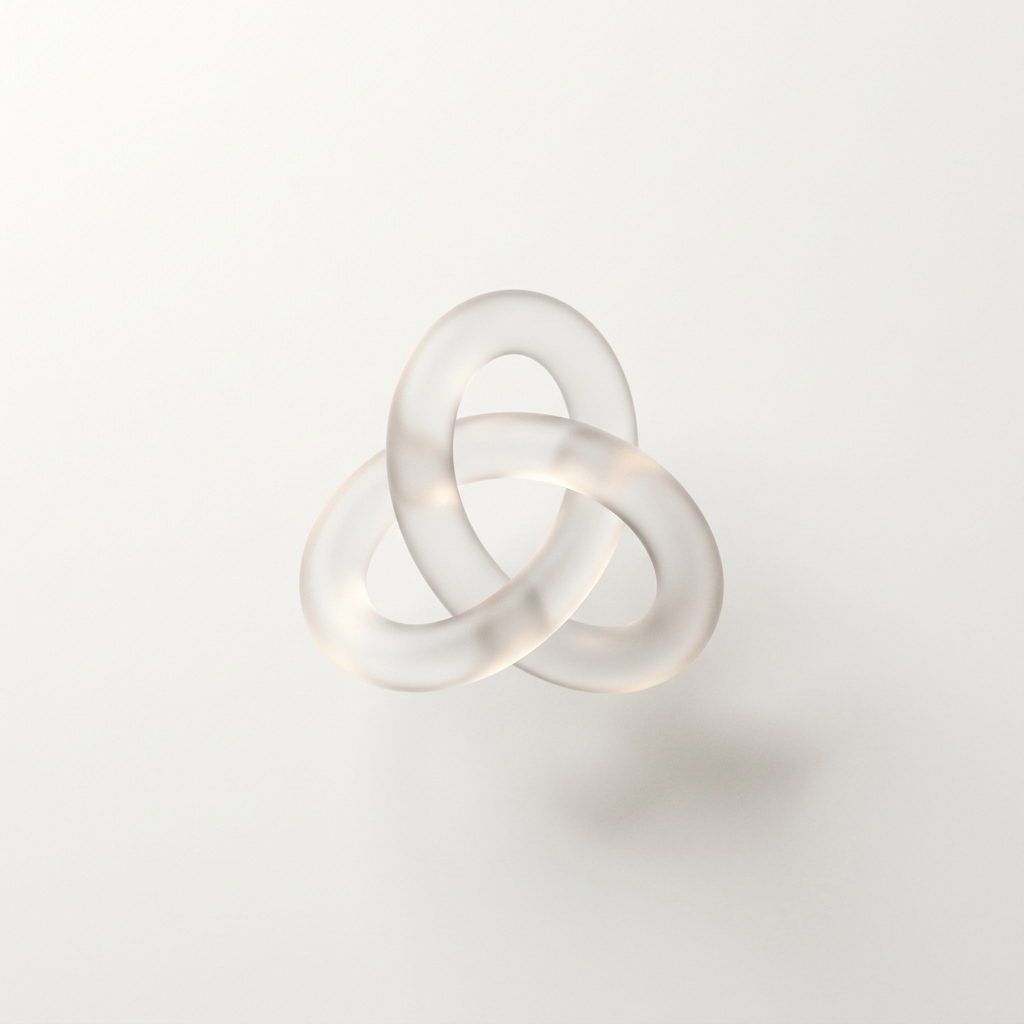
Rafał Komendarczyk has developed a research program that takes the pure mathematics of knot invariants and turns it into a quantitative tool for molecular science. His Multiscale Gauss Link Integral models protein chains as three-dimensional curves and extracts topological "fingerprints" that capture both their global shape and local geometry. These fingerprints feed into deep learning models for protein-ligand binding affinity scoring and drug toxicity screening — a pipeline from algebraic topology to pharmaceutical research, supported by the NIH (R01 GM126189).
Applied & Interdisciplinary
Stochastic Models for Drug Delivery & Intracellular Transport
Scott McKinley develops probabilistic methods to study motion in biological systems. His work on anomalous diffusion — the non-classical way nanoparticles move through airway mucus — informs the design of drug delivery systems (mucus-penetrating particles). He also builds mathematical models of how molecular motors (kinesin and dynein) transport cargo along microtubules inside neurons, a process whose failure is implicated in neurodegenerative diseases. His Bayesian changepoint algorithms are designed to extract biological signal from noisy experimental tracking data.
Pure Mathematics
Experimental Mathematics & the Integral Tables
Tewodros Amdeberhan and Victor Moll have maintained one of the department's longest-running research partnerships, spanning combinatorics, number theory, and special functions. Moll serves as co-editor of Gradshteyn and Ryzhik's Table of Integrals, Series, and Products, the definitive reference used across physics, engineering, and applied mathematics worldwide. Together they have systematically provided rigorous proofs for entries in these classical tables, combining symbolic computation with deep analytical methods in a style they call experimental mathematics.
Pure Mathematics
Number Theory & Modular Forms
Olivia Beckwith works in analytic number theory, studying modular forms and their generalizations — mock modular forms, Maass forms, and polyharmonic Maass forms. Her research connects the classical world of partition functions and Hurwitz class numbers to modern automorphic forms, extending ideas that trace back to Ramanujan and have become central objects in contemporary number theory. She develops modular frameworks for generalized class numbers and investigates the scarcity of partition congruences.
Pure Mathematics
Combinatorial Commutative Algebra
Professor Tài Huy Hà works in commutative algebra at its interface with combinatorics and algebraic geometry. His research on edge ideals of hypergraphs and the regularity of powers of ideals builds bridges between the structure of graphs and the algebraic invariants that describe them. He is the founding Editor-in-Chief of the new Diamond Open Access journal Combinatorial Commutative Algebra, reflecting Tulane's strength in this area.
Centers & Programs: Our interdisciplinary work is supported by the Center for Computational Science (directed by Cortez, founded by Fauci), the joint M.S. in Data Science with Computer Science, and Mahir Can's SPARC Laboratory for post-quantum cryptography. Faculty also hold affiliations with the Tulane Cancer Center and the Connolly Alexander Institute for Data Science.

Undergraduate Research Opportunities
Are you an undergraduate student interested in math research? Our department offers honors theses (supported by Newcomb-Tulane College research grants), directed reading courses, and information on competitive summer Research Experiences for Undergraduates (REUs).