
Computer Science Undergraduate Interdisciplinary Coordinate Major
Foundational for modern society, Computer Science is a field that is eminently applicable to other fields. Our Interdisciplinary Coordinate Major in Computer Science provides students with foundational computer science expertise that they can apply to other fields, whether in the sciences, business, liberal arts, or anything else. It is designed to provide students with the foundational expertise in CS needed for application while providing enough flexibility for students to fully explore primary majors.


What You'll Learn
The Computer Science Interdisciplinary Coordinate Major gives students foundational computer science expertise they can apply to other fields, whether in the sciences, business, liberal arts, or anything else — pairing core coursework in programming, discrete math, algorithms, and systems with a hands-on software studio project. Rather than teaching specific languages, the program builds durable computational thinking and problem-solving skills students can carry into virtually any discipline.
Career Outlook
This coordinate major is designed to make students more competitive in whatever field their primary major points toward, since computer science is eminently applicable to other fields — pairing deep expertise in a home discipline with the computational fluency employers increasingly expect. Because it's a coordinate major rather than a standalone degree, graduates enter the workforce or graduate study with a distinctive, dual-skilled profile rather than competing as generalist CS majors.
Meet Our Faculty
Computer Science faculty bring active research programs spanning artificial intelligence, computational biology, human-computer interaction, software systems, and theoretical computer science, and they welcome students — including those pursuing the coordinate major — into that work. Their expertise gives students a direct line from foundational coursework to real, cutting-edge applications of computing in other fields.
Curriculum Requirements
A coordinate major is an additional major designed to complement the primary one. To earn the interdisciplinary coordinate major in computer science, students must also complete a major in another discipline. Any undergraduate major at Tulane can serve as a primary major for the computer science interdisciplinary coordinate major. The undergraduate degree received by the student is determined by their primary major for students pursuing the Computer Science Interdisciplinary Coordinate Major.
Students pursuing this coordinate major must select a primary major in addition to this coordinate major. Additionally, they must earn a minimum of 30 credit hours in the Newcomb-Tulane College core curriculum and 120 credit hours in their degree with a minimum cumulative grade point average of 2.000.


Research
Faculty research spans a wide range of areas, from artificial intelligence and machine learning — including deep learning, natural language processing, and computer vision — to computational biology, human-computer interaction, software systems and security, and theoretical computer science. This work is backed by dedicated centers like the Center for Community-Engaged Artificial Intelligence and the Jurist Center for Artificial Intelligence, giving students across disciplines the chance to see how computational methods get applied to real, often interdisciplinary, problems.
Get Involved in ResearchCenter for Community-Engaged Artificial Intelligence

Learn more about the admissions process or apply now!
Find full tuition information and the financial aid process.
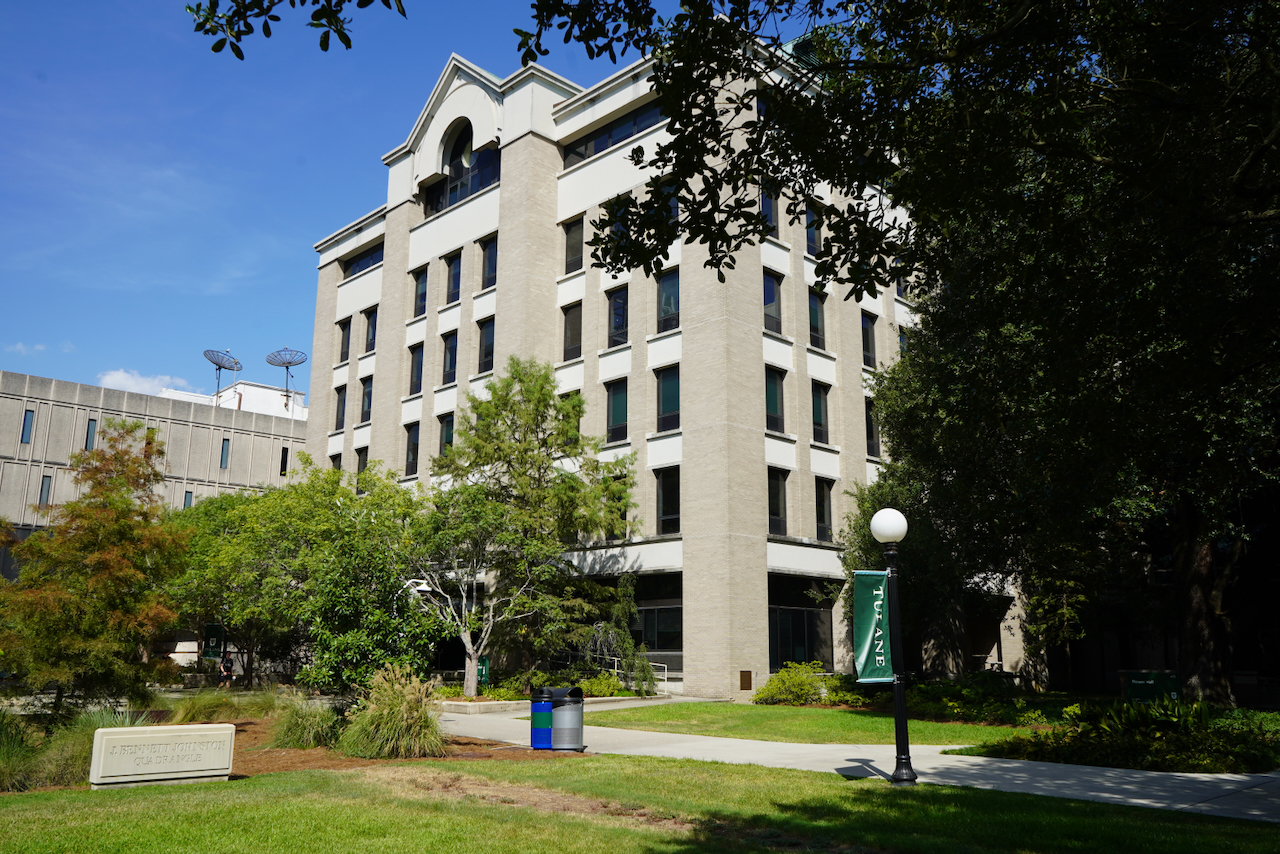
Get to know what makes this place a launchpad for the next generation of scientists and engineers.
FAQs
Computer science is the study of computational systems — spanning computational thinking and algorithms to computer systems and networks to machine learning and artificial intelligence. It's a foundational discipline whose tools and ways of thinking apply broadly across nearly every other field, from the sciences to business to the liberal arts.
To declare the coordinate major in computer science, please complete and sign the major declaration form and email it to Ms. Debbie Ramil (dramil1@tulane.edu), who will assign you a coordinate major advisor, obtain the corresponding advisor's and the departmental chairman's signatures for your form, and return the form to you. The completed form needs to be submitted to the Advising Office. When you declare your pursuit of the coordinate major, you should have already declared your primary major. When the major declaration form is processed, you will be added to the CS students mailing list. In order to enhance your CS education, you may also wish to join computing-focused student organizations, such as Cookies and Code, Women in Technology, and Girls Who Code. Their info is on WaveSync.
If your major advisor does not reach out, you may want to contact them to introduce yourself or to set up a meeting.
The program is open to all students willing to put time and work into becoming computing professionals. It doesn’t assume that students have any previous computer science background. Many of our graduates have never programmed a computer before joining their first computer science class. The department holds several help sessions most days of the week to provide help to students when they have questions while working on computer science homework.
Advanced Placement (AP) computer science courses taken by a student in high school usually transfer toward overall college credit. (This is decided by the Tulane University Office of Undergraduate Admissions.) These courses do not have much overlap with our introductory courses and hence don’t count toward the coordinate major.
If a student can demonstrate solid knowledge of the material covered in one of the required courses, after consultation with their faculty advisor, they can “skip” the required course and replace it with a CMPS elective of their choice instead. The minimum total number of completed CMPS courses should remain 10.
Transfer of college-level courses follows the standard Tulane credit transfer procedure. There is no special department-level limit on the number of courses that can transfer; we adhere to the limit established by Newcomb-Tulane College. In order for a course from another university to count for the coordinate major, it should match a corresponding Tulane course in content and/or complexity; mode of delivery (online, in-person, hybrid) doesn’t affect this evaluation. Computing courses on subjects not offered by Tulane might be transferable. Students should confirm with the Department of Computer Science whether the course would transfer as a coordinate major course before registering.
With advanced planning, it may be possible to study abroad and complete the coordinate major. Students should confirm with the Department of Computer Science whether and how the foreign courses would transfer before registering.
We often get asked what programming languages we teach. In fact, we teach principles, concepts, and problem-solving approaches rather than specific languages. In CMPS 1500 Intro to Computer Science I (4 c.h.), students learn Python. In CMPS 1600 Intro to Computer Science II (4 c.h.), students learn Java, C, and C++. The elective courses use a language that’s necessary to achieve the tasks of the course (e.g. OCaml, Scala, Ruby). Our successful students become adept at learning and using new languages and are able to study the basics of any computer language on their own.
It is helpful and convenient to have a laptop. We don’t have a computer lab, and students work on their own laptops to complete most programming assignments. Model and make don’t matter; any modern laptop with Wi-Fi and a battery works.
Contact Us
Mailing Address
6823 St. Charles Ave.
Tulane University
Department of Computer Science
303 Stanley Thomas Hall
New Orleans, LA 70118