Computer Science
Welcome to the Department of Computer Science
In the Department of Computer Science at Tulane we emphasize both core computer science and its applications to related areas in the sciences and engineering, the health and social sciences, and the humanities. Our goal is for our faculty and students to be recognized nationally and internationally for their interdisciplinary research, and we want to train the next generation of computer scientists who work at the interface of computer science and other disciplines.
Students who have completed our undergraduate coordinate major have found jobs in computer science and related areas, and several are pursuing PhD degrees at leading departments. Our students and alumni have won awards including best paper awards and Tulane's Peery Medal, as well as fellowships including Facebook and Google PhD Fellowships and a postdoctoral CI Fellowship from the Computing Research Association.
Our faculty conduct cutting edge research in a variety of disciplines including algorithms, artificial intelligence, computational biology, computer science education, computational geometry and topology, computer vision, data science and large data processing, domain theory and semantics of programming languages, game theory, image processing, machine learning, natural language processing, networking, cloud computing optimization, privacy and security, and scientific visualization. Our research is nationally and internationally recognized, and is funded from agencies such as NSF, NIH, DARPA, and DoD.
Our department continues to grow and we anticipate hiring several faculty members over the coming years. Please check our open positions page frequently for updates.
We welcome inquiries - please email me at lpeng3@tulane.edu with your questions and comments.
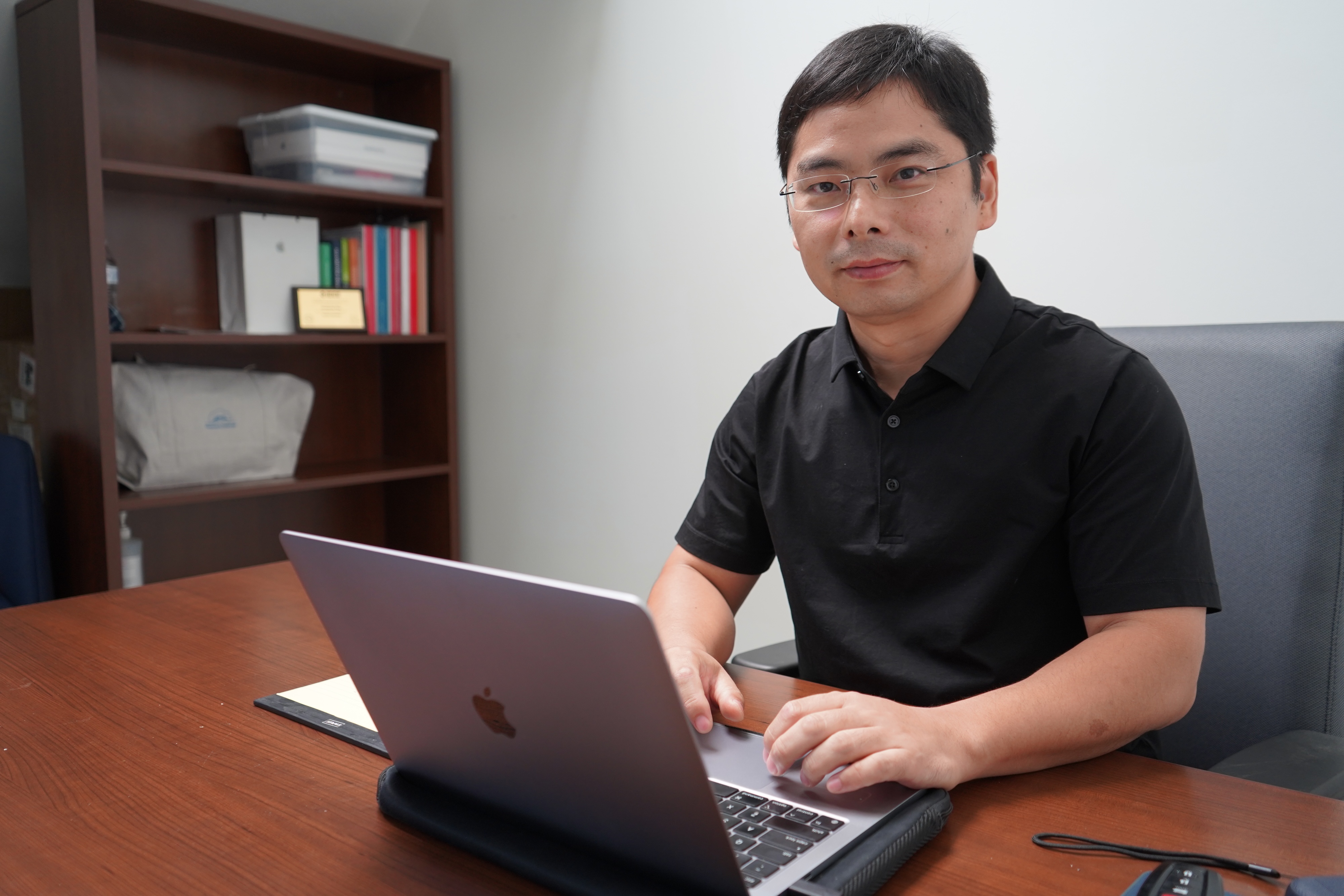
Lu Peng, Interim Chair


Global wildfire mercury emissions lower than previously estimated, Tulane study finds
A new study co-authored by Tulane University researchers finds that global mercury emissions from wildfires are about three times lower than earlier estimates, suggesting wildfires have not yet driven a major increase in mercury pollution worldwide.


Learning the River: Tulane Landscape + Engineering Students Explore Louisiana’s Living Coast
Hands-on field research and interdisciplinary collaboration come together in Barataria Bay, where students study coastal change, restoration, and resilience.

Cell to the 12th Power
Cell MS students took a break from MCAT prep studies to pose with alums. This semester, the Department of Cell & Molecular Biology has an unprecedented all-woman cohort of 12 brilliant students.
Front: Roselene Louis, Jailyn Jones, Montana Billings, Aval Dudhat, Gaby Moyano, Iris Chau, and Chelsea Le with Shivani Patel (MS ’24) and Belarsi Ouattara (MS ’25, PhD first year)
Back: Haiden Citron (BS ’22, MS ’25) with Kyla Johnson and Semaj James
(Not Pictured - Kaila Johnson, Christina Suarez, Yiying Zhu)


Tulane connects students with faculty and industry mentors in new research initiative
This summer, a new undergraduate opportunity is available to students across the United States through the U.S. National Science Foundation’s Research Experiences for Undergraduates (NSF-REU) program at Tulane University. The program reflects NSF's recognition that the nation needs scientists who possess technical depth and the ability to translate research into solutions.

Tulane Researcher Helps Advance Global Study of “Forever Chemicals” in Marine Fish
A Tulane University researcher contributes to an international study examining how “forever chemicals” move through marine ecosystems and into seafood consumed by people around the world. The research offers new insight into environmental contamination, human exposure, and the future of chemical regulation.

Uncovering How Faults and Mobile Shale Control Methane Seepage in the Gulf of Mexico
New research from Tulane University is reshaping scientific understanding of how methane escapes from the seafloor in the Gulf of Mexico. A master’s thesis by Walee Yeboah, a recent graduate of the Department of Earth and Environmental Science, reveals that active faults and mobile shale structures beneath the seafloor play a critical role in directing methane and fluid migration; challenging long-standing assumptions that salt tectonics alone dominate seepage patterns in the region.