
Global wildfire mercury emissions lower than previously estimated, Tulane study finds
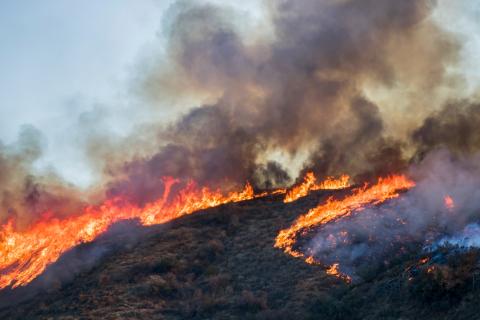
A new study co-authored by Tulane University researchers finds that global mercury emissions from wildfires are about three times lower than earlier estimates, suggesting wildfires have not yet driven a major increase in mercury pollution worldwide.
The research, published in the journal One Earth, was led by Yanxu Zhang, corresponding author on the study, with contributions from Tengfei Yuan, a postdoctoral researcher in the Tulane University School of Science and Engineering.
Using an advanced atmosphere–land–vegetation coupled model, the study provides a more detailed assessment of how mercury stored in ecosystems is released during wildfires.
“Although global wildfire mercury emissions are lower than previously thought, individual fires can still cause sharp, short-term spikes in mercury concentrations, particularly near the fire source,” Yuan said. “These episodic increases can temporarily degrade air quality and pose risks for sensitive populations, even if global totals remain modest.”
The study found that mercury release during fires is primarily constrained by how much mercury is stored in vegetation and soils, rather than the amount of biomass burned. While wildfire emissions account for about 10% of global anthropogenic mercury emissions, researchers found that fire-driven vegetation loss can disrupt natural mercury uptake for months to years, leading to longer-term changes in land–atmosphere mercury exchange.
“Our results show that mercury risks from wildfires are unevenly distributed, with short-term and regional exposure increases driven by episodic fire events rather than steady global background levels,” Zhang said. “As climate change leads to longer fire seasons and more intense wildfires, these dynamics could make wildfires a more important source of mercury exposure in the future.”
The findings help refine estimates of global mercury cycling and support more accurate evaluations of environmental and public health risks in a warming, fire-prone world.