
Dr. GeAndra Imoudu: Building Pathways for Future Scientists Through STEM Education
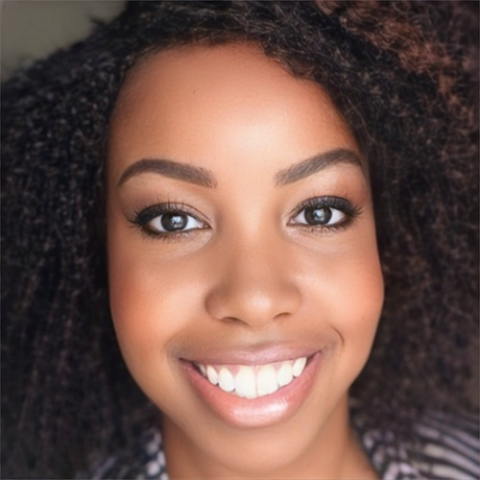
When Hurricane Katrina swept through New Orleans, Dr. GeAndra Imoudu’s life and career
shifted course in ways she couldn’t have imagined. Then a graduate student at Tulane University,
she found herself balancing chemical engineering classes, a full-time job, and the daunting work
of rebuilding her family’s home. “It was a hectic period,” she said. “But I look back on it like—if
I could do that, what can’t I do?”
That determination has defined her ever since. Today, Dr. Imoudu is the founder and executive
director of STEM Skool, Inc., a North Carolina–based nonprofit dedicated to ensuring that every
child has access to high-quality STEM education. What began as a few nature classes for
preschoolers in a Charlotte park has grown into a dynamic organization serving more than 500
students each year through a flagship micro school, online programs, and community
partnerships.
At its core, STEM Skool blends innovative instructional design with hands-on science, inspiring
curiosity, confidence, and achievement in students from pre-kindergarten through 12th grade.
“We started small,” she recalled, “but the need kept growing. There were so many kids who
weren’t getting high-quality science programming in their schools. So we met them where they
were—libraries, churches, community centers—and built from there.”
A native of New Orleans, Dr. Imoudu’s roots in science run deep. She earned her B.S. in
Science, Technology, and Society with a concentration in Chemistry from Stanford University
and her M.S. in Chemical Engineering from Tulane University, followed by a graduate
certificate in Design Thinking from MIT and a Doctorate in Education from Vanderbilt
University. Her career has taken her through the worlds of engineering, environmental recovery,
and now education—fields she connects through a single throughline: empowerment.
“My kids are stair-stepped—just 20 months apart—so when I stepped away from engineering to
focus on family, I felt some guilt,” she admitted. “But a friend suggested I try teaching science
outdoors, and I realized there was so much untapped potential in connecting kids to STEM early.
Especially kids who didn’t see themselves reflected in the field.”
What began as a side project became a calling. When the organization she worked with didn’t
support her outreach vision, she started her own nonprofit. Nine years later, STEM Skool now
reaches hundreds of students annually, fostering not only STEM skills but also a sense of
belonging and purpose.
Dr. Imoudu’s programs emphasize both academic rigor and personal connection. “STEM
became a buzzword,” she explained. “But students still have to pass those math and science
classes—and that’s where they struggle. We focus on motivation, self-efficacy, and support. It’s
about helping them see that they belong here.”
Her approach reflects lessons learned from her hometown. “New Orleans does community so
well,” she said. “That sense of belonging matters a lot, especially in STEM, where kids might
think they’re not ‘science people.’ In New Orleans, community comes first—you’re a New
Orleans person—and that helps you get into science without all the baggage.”
That philosophy carries into everything she builds. With a newly acquired one-acre campus and
a $1.2 million Science Center under construction, STEM Skool is becoming a permanent hub for
science learning in East Charlotte. “We’ve been nomadic for years,” she said. “Now we’ll finally
have a home base—a space that represents what’s possible when a community invests in its
kids.”
Even as her impact expands nationally, Dr. Imoudu’s connection to Tulane remains strong.
“Tulane was part of my story,” she said. “I was there during a pivotal moment—right in the
middle of Katrina—and everything I’ve done since has been shaped by that experience. It taught
me resilience, problem-solving, and the importance of community.”
She continues to return to New Orleans often to visit family—her father, a musician with the
Dirty Dozen Brass Band, and her sisters who still call the city home. “We try to keep my kids
plugged into the culture,” she said with a smile. “My son plays violin—he’s going to be a
musician whether he likes it or not!”
After nearly a decade in education, she’s watched her earliest students grow from toddlers to
teens. “Some of them were in pull-ups when we started,” she laughed. “Now they’re taller than I
am. But what’s beautiful is that they’re still curious, still confident, and still seeing themselves as
scientists.”
For Dr. Imoudu, that’s what it’s all about—helping young people see what’s possible. “We’re
not just teaching science,” she said. “We’re showing kids how to see themselves as scientists,
innovators, and problem-solvers. That’s the work I was meant to do.