
Master's Degree in Landscape Architecture and Engineering
Tulane’s Landscape Architecture and Engineering program aims to cultivate the next generation of professionals, activists, and researchers with broad expertise and the unique ability to work across design, science, and engineering disciplines.
Our mission is to advance innovative design-research through interdisciplinary collaboration, prepare students from diverse backgrounds, and engage the Gulf Coast Region as a global model for alternative ways of living in a changing climate.
ApplyRequest InformationDepartment of River-Coastal Science and EngineeringLearn more about the program


What You'll Learn
The mission of the dual Master of Landscape Architecture and Master of Science in River-Coastal Science and Engineering program is to (a) advance innovative design-research through interdisciplinary collaboration across landscape architecture, sciences, engineering, and other fields; (b) prepare students from a wide range of backgrounds to understand complex landscape and engineering-based challenges and design strategies addressing urban-rural and ecological systems; and (c) engage the Gulf Coast Region as a global model for alternative ways of living that will support equative and just access to resources and address environmental injustice in a changing climate.
Research
With the Gulf Coast region at the forefront of climate change challenges, the program offers both an immersive learning environment and a global perspective on contemporary issues. Through studio projects, lab courses, fieldwork, and collaborative research initiatives, students will engage with faculty who are exploring new approaches to the field while actively shaping the future of adaptive landscapes worldwide.
Meet Our Faculty
The Landscape Architecture and Engineering dual-degree program pairs landscape architecture expertise with river-coastal engineering leadership to guide students through the program's interdisciplinary curriculum. Supported by a broad faculty spanning landscape architecture, river-coastal science, and ecology, the program's instructors bring hands-on research and real-world practice into the classroom, focused on climate adaptation, environmental justice, and resilient design across the Gulf Coast region.
Curriculum Requirements
The curriculum spans three and a half years. The summer course serves as an Introduction to Design and is structured for students from all academic backgrounds, including those without prior design experience. It offers an immersive, multidisciplinary approach that operates across scales and systems, blurring the boundaries among the design disciplines of the built environment (landscape architecture, architecture, engineering, planning, etc.).
The first year, the “green year,” focuses on living vegetative systems within the complex context of the Anthropocene. The second year, the “blue year,” centers on water systems—rivers, coasts, estuaries, and wetlands—within urbanized territories. Students complete one MLAN elective (3 credits) and three RCSE electives (9 credits), which can be selected from a variety of intensive math/physics or non-intensive math/physics options. The third year is dedicated to individual design-research under the guidance of a selected faculty thesis director. Thesis projects typically engage real-world challenges at the intersection of built-environment disciplines.


Career Benefits and Pathways
Tulane’s Landscape Architecture and Engineering program offers a pioneering educational experience and research agenda that dissolves disciplinary boundaries to explore innovative approaches to climate change, environmental justice, and responsive infrastructure. The program aims to cultivate the next generation of professionals, activists, and researchers with broad expertise and the unique ability to work across disciplines.
The program offers courses in three critical areas of knowledge: landscape architecture, river and coastal science and engineering, and ecology and evolutionary biology sciences. This approach incorporates a range of specialized disciplines while maintaining the strengths of a comprehensive design education. The program culminates in dual degrees, a Master of Landscape Architecture and a Master of Science in River-Coastal Science and Engineering, preparing graduates for a wide range of opportunities for future work.

Learn more about the admissions process or apply now!
Find full tuition information and the financial aid process.
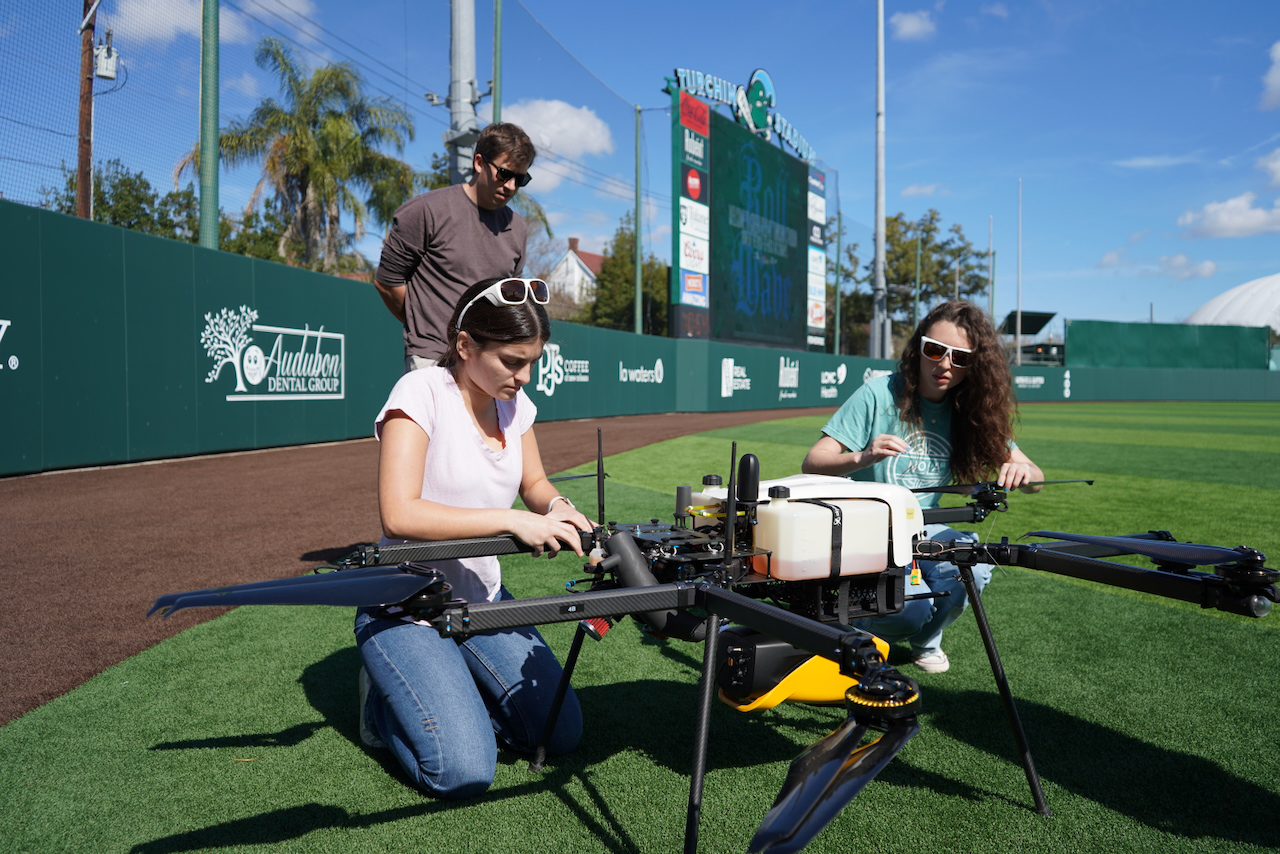
Get to know what makes this place a launchpad for the next generation of scientists and engineers.
FAQs
Landscape architecture and engineering is an interdisciplinary field that combines the design of outdoor spaces — parks, waterfronts, urban landscapes, ecological systems — with the technical, structural, and environmental engineering needed to make those spaces functional and resilient. It blends creative site planning and ecological design with applied sciences like hydrology, soils, and infrastructure engineering to address challenges such as flooding, erosion, and climate adaptation.
The program typically takes 3 years (7 semesters) to complete, but there are options for Advanced Standing for candidates with a background in similar fields that have a shorter timeframe.
Its interdisciplinary approach combines landscape architecture with river-coastal science and engineering, focusing on climate change and environmental challenges.
No, the program is designed for students from diverse backgrounds. An undergraduate degree from an accredited institution is the only requirement.
Yes, you’ll learn to use advanced digital tools, GIS mapping, and visualization techniques for environmental analysis, design, and representation.
Yes, the program culminates in a thesis project where you’ll address real-world environmental challenges.
The dual program aims to educate professionals who will serve three primary principles in the planning, design, and stewardship of natural and built environments: 1) to protect the health, safety, and well-being of people and communities, including future generations; 2) to safeguard the health and resilience of natural systems, ecosystems, and non-human inhabitants; 3) to identify the ‘root causes’ of environmental degradation and disturbance of social well-being as a first step to be effective in its transformation.
The core values listed above are embedded into the curriculum, policies, community, processes, and activities of this professional program. These core values are also identified when engaging in contemporary issues. The core values are aligned with the LAAB directives listed below:
Core value 1: Environmental Health, Sustainability, Resilience, and Stewardship
Core value 2: Opportunity and Representation
Core value 3: Human and Community Health and Safety:
Core value 4: Professional Ethics and Responsibility
Core value 5: Leadership and Innovation
Core Value 6: Application of the Sciences to the Design of Natural and Built Landscapes
For more information about the Landscape Architecture and Engineering application and materials needed to apply, download the Guide to Apply!
Application Deadlines:
September 1 – Graduate Application Opens.
January 15 – Application Deadline for All Applicants.
April 15 – Enrollment Decision Deadline.
You can view the total costs of attendance for the program here:
Landscape Architecture and Engineering
All applicants are automatically considered for the following opportunities:
Merit Scholarships
Most applicants receive these awards, which are based on academic achievement and experience, and range from 30% to 80% of tuition.
Endowed Scholarships
These awards are in addition to merit scholarships and are provided by generous gifts from alumni and friends of the School of Architecture and Built Environment. Learn more about these opportunities here.
Other Opportunities
Financial Aid
U.S. applicants should submit the Free Application for Federal Student Aid (FAFSA). In step 6 of the form, include Tulane University’s code: 002029. For more information, visit the Office of Financial Aid website or contact your financial aid counselor. International applicants can find more information about aid opportunities here.
Scholarship360
Tulane partners with Scholarships360.org, a platform where prospective, admitted, and current Tulane students can search for and apply for outside scholarships to help cover their cost of attendance. Scholarships360 enables students to not only search for outside scholarships but also create a profile and more efficiently apply for outside scholarships.
Assistantships
Enrolled students in Architecture and Landscape Architecture and Engineering are eligible to apply for teaching or research assistantships at the beginning of each semester. Assistants typically work 10-15 hours per week and can earn up to $3,000 per semester.
Travel Fellowships
Each year, the School of Architecture and Built Environment awards $50,000 total to support multiple graduate and undergraduate students through various travel fellowships. This research travel typically takes place during the summer break and allows students to expand their education by funding location-based independent research projects. Recent fellowship recipients have traveled to cities such as Singapore, Sao Paulo, Rwanda, Amsterdam, Tokyo, Paris, and more. Visit the TuSABE’s webpage for Travel Opportunities for more information.
Contact Us
Ilianna H. Kwaske, Ph.D.
Associate Dean for MS Programs & Professional Education
ikwaske@tulane.edu
Sarah Berry
Director of MS and Certificate Programs
smccarty@tulane.edu
Rosie Chavez
Director of Graduate Programs
rchavez@tulane.edu
Sönke Dangendorf
Graduate Coordinator, Department of River-Coastal Science and Engineering
sdangendorf1@tulane.edu