
Students Launch FUSE Internship Program Connecting Tulane STEM Talent with Startups
Amy Nguyen expected her summer internship to be close to home.
When the FUSE internship program was introduced to students in Tulane’s School of Science and Engineering, the opportunity was framed as a way to connect undergraduates with startup companies through partnerships in New Orleans. Nguyen, a biomedical engineering student from New Orleans, applied partly because the idea of staying in the city sounded convenient.
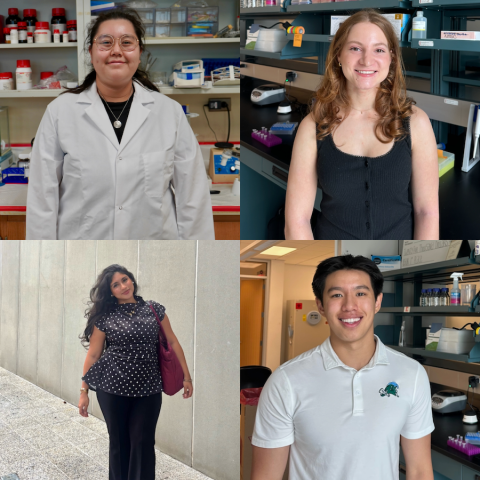
Instead, she found herself spending the summer in San Diego working at Beken Bio, a biotechnology startup developing liquid biopsy technologies designed to detect cancer at its earliest stages.
“What Beken Bio is focused on is creating this liquid biopsy for early stage cancer detection,” Nguyen said. “I was helping them find a biomarker to detect extracellular vesicles, which are key to actually detecting the cancer.”
Inside the four person startup team, Nguyen quickly realized the experience would push her far beyond anything she had encountered in a classroom.
“It was rigorous in a way that I hadn’t ever experienced before,” she said. “Because the team was so small and everyone had a PhD, it sometimes felt like every decision I made was like preparing to defend my thesis.”
Nguyen’s internship was part of the first cohort of FUSE, short for Fellowships for Undergraduate STEM Experiences, a student created program in the School of Science and Engineering designed to help Tulane students gain real world experience in startups and innovation organizations.
The company she worked for also carried a Tulane connection. Beken Bio was founded by Tulane School of Science and Engineering alumnus Christopher Millan, whose work focuses on advancing early cancer detection through innovative diagnostic technologies.
The idea behind FUSE began when students in the School of Science and Engineering Student Government started hearing the same concern from classmates again and again.
Finding internships had become increasingly difficult.
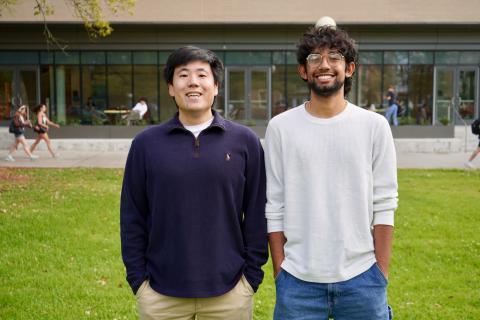
“The market is so saturated and competitive,” said biomedical engineering student Ryan Lee, who helped launch the program alongside fellow student Rahul Madhavan. “It’s not necessarily about grades. It’s just really hard to find something that fits someone’s expertise.”
Lee and Madhavan set out to create a program that would connect students directly with companies while also helping startups find motivated talent.
“We wanted to create a program that bridged the gap between interns and companies,” Lee said. “Companies struggle to find interns that match what they’re looking for, and students struggle to find opportunities.”
Through outreach to the New Orleans BioInnovation Center, the student organizers gained access to a network of biotechnology and engineering startups. The program’s first pilot cohort placed four Tulane students across several organizations.
Even though applications opened late in the spring semester, sixteen students applied.
The program was structured to make internships more accessible. Each student receives a stipend supported jointly by Tulane funding and participating companies.
“It’s a four thousand dollar stipend,” Lee said. “We contribute fifty percent and the companies contribute fifty percent.”
Lee believes Tulane’s collaborative environment prepares students well for the fast moving nature of startups.
“Being a smaller school has a lot of benefits,” he said. “You’re used to working closely with people and collaborating. Professors know you and you work together in teams.”
Biomedical engineering senior Emelia Cooperberg experienced that environment firsthand during her internship with Cleaved Diagnostics, a startup focused on developing diagnostic technologies using CRISPR.
Her role involved helping design a portable diagnostic device.
“I was working on creating a point of care device,” Cooperberg said. “That required CAD modeling, 3D printing, coding and a lot of troubleshooting.”
The experience offered a close look at how early stage medical technologies move from concept to product.
“Working in a startup is exciting because everything is novel,” she said. “You’re building things that are being done for the first time.”
Working in a small team also meant collaborating across scientific disciplines.
“I have more of the engineering background and others had more of the biology background,” Cooperberg said. “We had to explain our concepts in ways that were translatable to each other.”
Cooperberg continues to work with the company during the academic year, expanding her experience into regulatory and business considerations alongside engineering work.
Another student in the first cohort, Noah Phillips, also worked at Cleaved Diagnostics on diagnostic technologies designed to detect cytomegalovirus, a virus that can cause serious health complications for newborns.
“The two most revolutionary technologies of our generation are AI and CRISPR,” Phillips said. “So, it was really exciting to be able to work with CRISPR technology in a diagnostic setting.”
Phillips first discovered the program while searching for internship opportunities online.
“I was applying to things on LinkedIn and just trying to cast a wide net,” he said. “With LinkedIn you’re basically sending your resume into the void.”
The student led nature of the FUSE program made the process feel more approachable.
“With the student driven program they actually looked at us as students and people,” Phillips said. “That made it feel more personal.”
Mariana Pirela, another member of the cohort, worked at the New Orleans BioInnovation Center itself helping organize BioChallenge, an international pitch competition focused on biotech startups addressing neurological diseases.
Her role exposed her to the investment and strategy side of biotechnology.
“I got to chat with founders and CEOs and CTOs about their technologies,” Pirela said. “And as the only engineer on the team I got to help validate a lot of their research and methods.”
For Pirela, the experience offered insight into how scientific innovation becomes viable businesses.
“You don’t really get to see the business side of biomedical engineering in your classes,” she said. “It was really interesting to see how startups position themselves to be investable.”
For Nguyen, the internship also represented an opportunity that might not otherwise have been possible.
“I grew up low income and I’m a first generation college student,” she said. “So getting an internship early was really important.”
The financial support built into the FUSE program removed a major barrier. “The fact that it was fully funded was a huge relief for my family and me,” Nguyen said. She also appreciated that the program was coordinated by fellow students. “Talking to another student was less overwhelming,” she said. “It felt more approachable than dealing with a big program where you don’t know who’s reviewing your application.”
As the FUSE program prepares for its second summer, organizers plan to expand the number of companies and internship opportunities.
Phillips believes the success of the first cohort provides a strong foundation. “Now that there’s a successful first group, you can use that to reach out to more companies,” he said.
Applications for the next cohort of FUSE internships are open now and close March 20.
For Nguyen, the experience confirmed the value of stepping into the unknown.
“It gave me the chance to work in a real startup environment and see how research can turn into something that actually helps people,” she said. “That’s the kind of work I want to keep doing.”
Deadline to apply is March 20th.
Apply now: https://bit.ly/sseFUSE
Supported by the Mussafer Internship Initiative at Tulane. And special thanks to the New Orleans BioInnovation Center for connecting our students to internships.