
Tulane physicist predicts new particle, implications for universe expansion
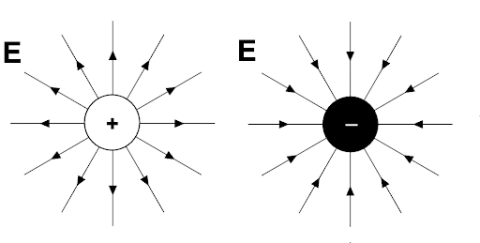
For centuries, magnets have challenged the brightest minds. The classical model of physics defines a magnetic field as a dipole, with a north and south pole. Scientists have searched for a monopole, a magnetic particle with only a north or south pole, not both. The discovery of this new particle would unify electromagnetic theory and have far-reaching impacts.
Nicholas Sparks, a professor of practice in the Tulane School of Science and Engineering, has discovered a theoretical mass where monopoles can be created and observed. By using fundamental constants, Sparks determined that a mass of 22 trillion electron volts could create a monopole and its antiparticle in a process called pair production. Electron volts are a measure of the energy of a particle when it is accelerated.