
School of Science and Engineering
News
From groundbreaking research and major funding wins to new leadership and student milestones, the Tulane School of Science and Engineering community is driving discovery at every level. Explore the latest news highlighting the faculty, students, and researchers shaping the future of science and engineering — in the lab, in the classroom, and across the Gulf Coast and beyond.

Tulane researchers to help Louisiana schools launch proactive violence prevention programs
Over 80 percent of school-aged youth in New Orleans report witnessing community violence, including assaults, shootings and murders, sometimes on a weekly or even daily basis, according to the New Orleans Health Department.
Violence is also a common occurrence in New Orleans area schools, with over 900 incidents reported in mostly Orleans and Jefferson parishes in the 2018-19 school year, according to the Louisiana Department of Education.

Renowned neuroscientist will lead Tulane Brain Institute as new Presidential Chair
Award-winning neuroscientist Matthew Dalva, PhD, whose research focuses on how the connections of the brain form and are changed by experience, has been appointed as director of the Tulane Brain Institute and the university’s newest Presidential Chair.


Tulane chemists to create clean hydrogen fuel using water, sunlight
Hydrogen is an indispensable chemical for important processes such as ammonia production. But producing industrial hydrogen is often energy intensive, environmentally unfriendly and unsustainable, according to scientists at Tulane University.
“Hydrogen will only truly be ‘clean’ when it is produced from water using renewable energy, as opposed to the current predominant method, which uses methane gas and produces large volumes of carbon dioxide,” said James Donahue, PhD, a chemistry professor in the Tulane School of Science and Engineering.

Tulane awarded $5 million to find out if recycled glass can help save Louisiana wetlands
For the past 12 months, Tulane University scientists and engineers have been working almost non-stop to prove that sand made from recycled glass can help prevent coastal land loss. They’ve shown that the material can grow native marsh grasses and willow trees, is non-toxic to marine life and can resist erosion better than silt.

Bombed labs, war won’t stop collaboration between Tulane and Ukrainian scientists
The ongoing war in Ukraine hasn’t stopped a Ukrainian university from collaborating with Tulane University scientists and engineers, even after its research labs were reduced to rubble in the conflict.
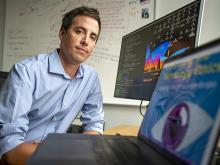
AI is smart — can we make it ethical, too?
EPISODE 39 - Artificial intelligence is everywhere, and it’s getting smarter. It’s driving cars, screening resumes, monitoring surveillance networks and even helping doctors make medical diagnoses. How do we make sure such a powerful tool doesn’t become a threat? Tulane computer scientist Nicholas Mattei is a co-author of Computing and Technology Ethics: Engaging through Science Fiction, a book coming out this fall about the growing field of AI ethics.

Having children makes parents more conservative, study finds
Does becoming a parent make people more likely to become conservative?
Yes, according to a new Tulane University study, which detected the association across different countries and cultures and found that it became even stronger the more children people had.

Tulane working on test to predict COVID-19 complications
Could some of those who died from COVID-19 and other infectious diseases have been saved by a diagnosis that predicts how severe their cases will be and provides timelier treatment?
An interdisciplinary team of engineers and doctors at Tulane University hopes to answer that question with the development of new technology designed to detect severe COVID complications such as thrombosis, a condition in which blood clots block veins and arteries.
Tulane physicist awarded $8.2 million to precisely measure lifetime of the free neutron
Tulane University physics professor Fred Wietfeldt has been awarded an $8.2 million grant from the National Science Foundation (NSF) to build a new apparatus aimed at solving “one of the most important problems in physics today” — precisely measuring the lifetime of a free neutron.