Center for K-12 STEM Education
Learning beyond the classroom. Giving back to the community.
At SSE, outreach is our bridge between campus innovation and community impact. Through programs like the Tulane Science Scholars Program, Girls in STEM at Tulane (GiST), and Boys At Tulane in STEM (BATS), we invite elementary through high-school students to design, build, and create—hands-on and mind-on. We engage teachers too, with professional-development workshops exploring local infrastructure, robotics, coding, and real-world challenges like coastal resilience. Whether it’s volunteering at a robot-build competition, mentoring a science fair team, or helping run a classroom STEM activity, the opportunities are endless. In addition to K–12 STEM Education Outreach, our efforts extend through Public Service, Start-Ups, and Industry Collaboration—bringing the full power of science and engineering into New Orleans and beyond.
Donate to Our Outreach Programs

Outreach Programs
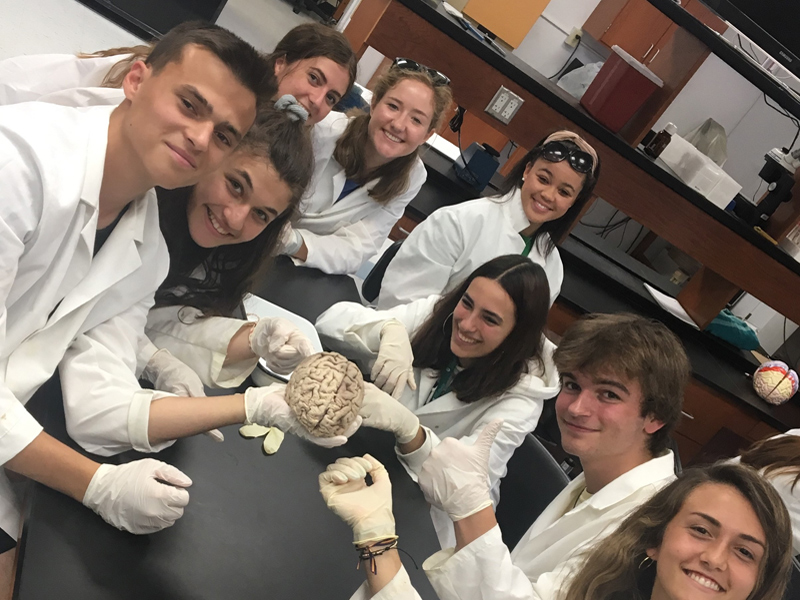
The Tulane Science Scholars Program (TSSP) gives high school students the opportunity to take college-credit courses in the summer in science and engineering at Tulane before high school graduation. TSSP is a selective program for rising 10th through 12th grade students who have exceptional talent in the sciences, engineering, and mathematics. Residential options are available.
Limited tuition scholarships are available for Louisiana residents, and financial aid is awarded based on need. In order to be considered for our scholarship opportunities, you must submit your scholarship application by the financial aid application deadline. If you need assistance completing your application or have questions about scholarships, email summer@tulane.edu for more information.

Tulane University’s GiST Program provides fifth through seventh grade girls with the opportunity to meet and work with women role models in science, technology, engineering, and mathematics (STEM) fields. Workshops developed and offered by faculty and student teams will encourage and empower girls to inquire, investigate, and discover in a positive environment. Our goal is to open the doors wide and welcome young students to careers in STEM fields by encouraging creative thinking, promoting self-esteem, and increasing awareness of the opportunities that await them. Our next event is scheduled for April 18, 2020. Registration information will be available in February

Tulane University’s BATS Program provides fifth through seventh grade boys with the opportunity to meet and work with both male and female role models in science, technology, engineering, and mathematics (STEM) fields. Workshops developed and offered by faculty and student teams will encourage boys to inquire, investigate, and discover in a science and engineering environment. Our goal is to open the doors wide and welcome young students to careers in STEM fields by encouraging creative thinking, promoting self-esteem, and increasing awareness of the opportunities that await them. Our next event is scheduled for March 14, 2020. Registration information will be available in February!
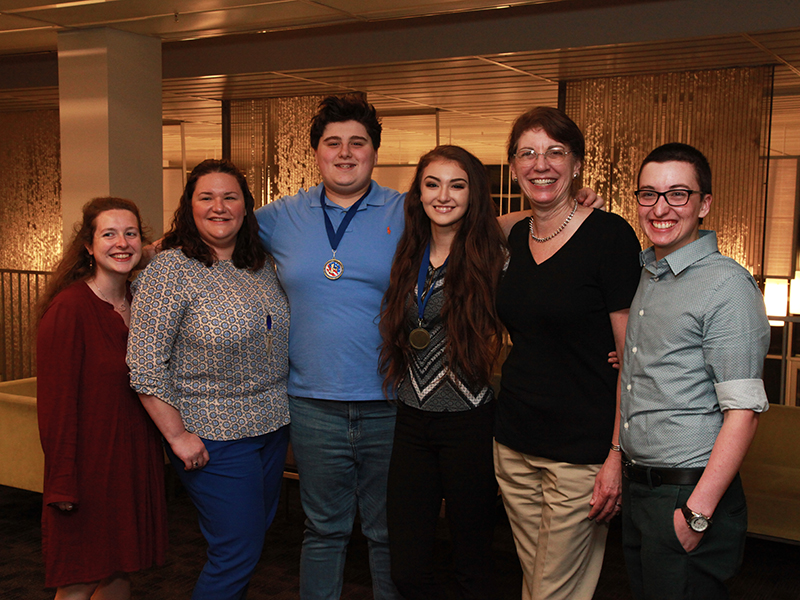
Greater New Orleans Science and Engineering Fair (GNOSEF), held annually in February, is affiliated with the Intel International Science and Engineering Fair and is open to 6th–12th grade students attending middle or high school (including home school) in the Greater New Orleans four-parish-area of Jefferson, Orleans, Plaquemines, and St. Bernard Parishes. Tulane supports this program by providing board members, tournament organizers, judges, and volunteers.
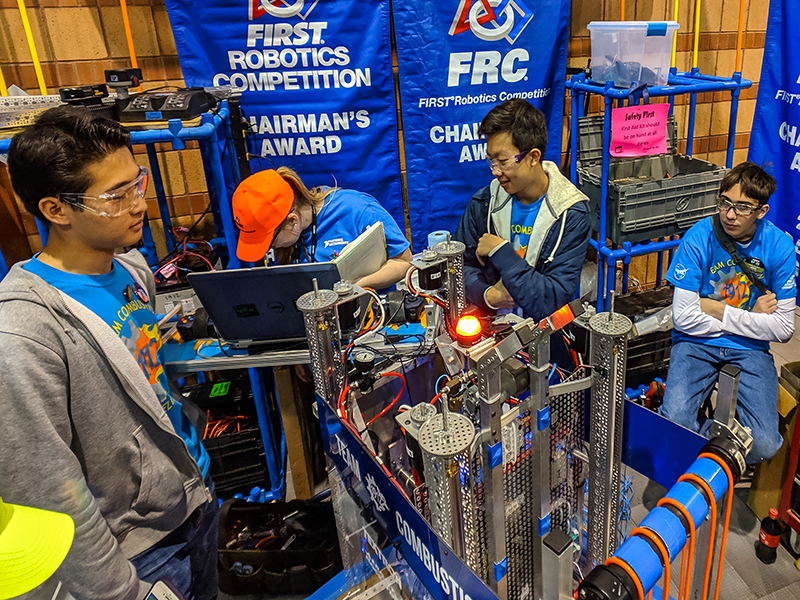
FIRST LEGO League introduces elementary and middle school aged children (9-14 yrs. old) to real-world engineering challenges by building LEGO-based robots to complete tasks on a thematic playing surface. The Louisiana State Tournament is held annually in January.
FIRST Robotics is labeled "The varsity Sport for the Mind," and combines the excitement of sport with the rigors of science and technology. Louisiana and Mississippi collaborate to offer the FIRST Robotics Bayou Regional held annually in March or April.
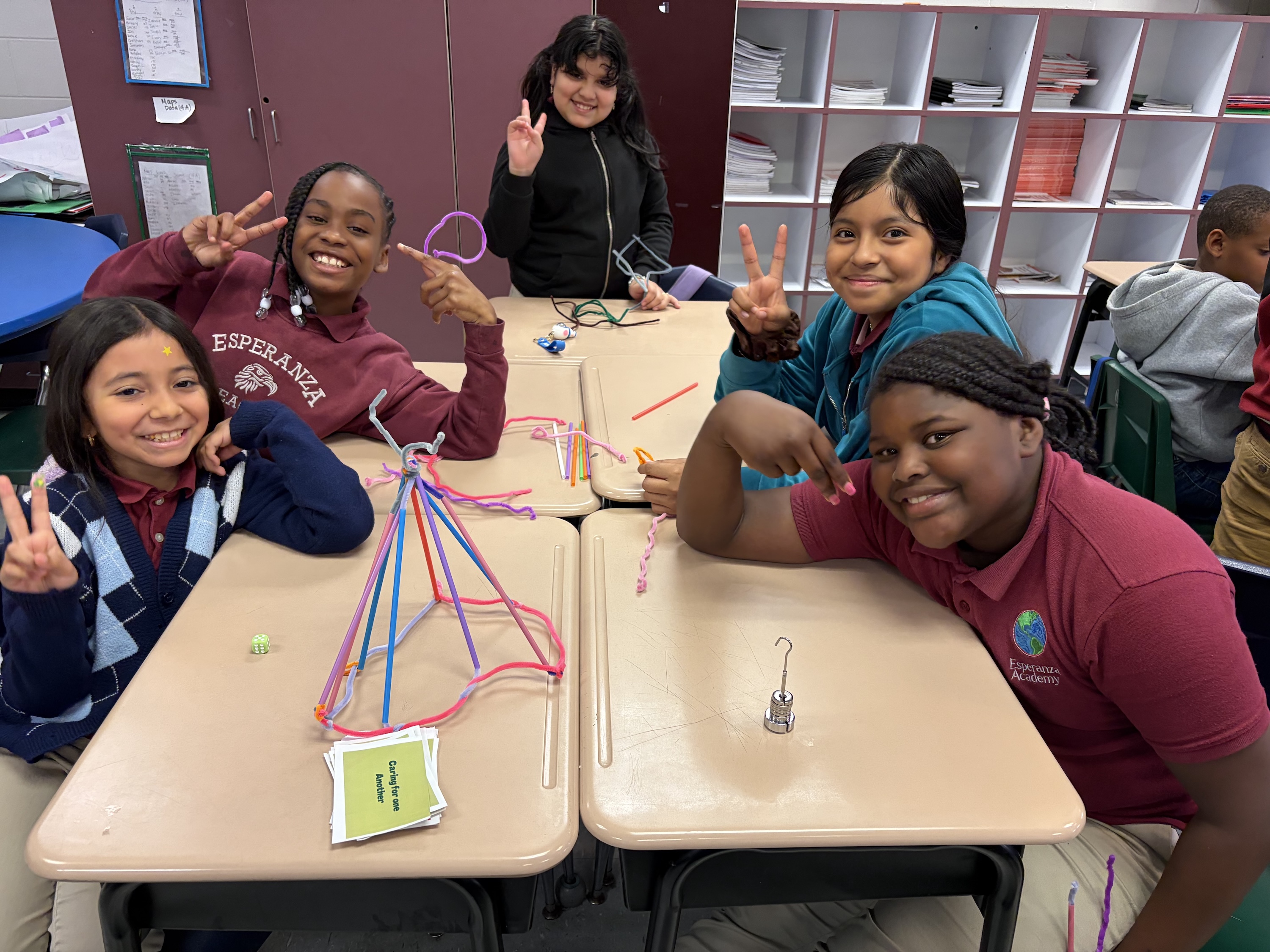
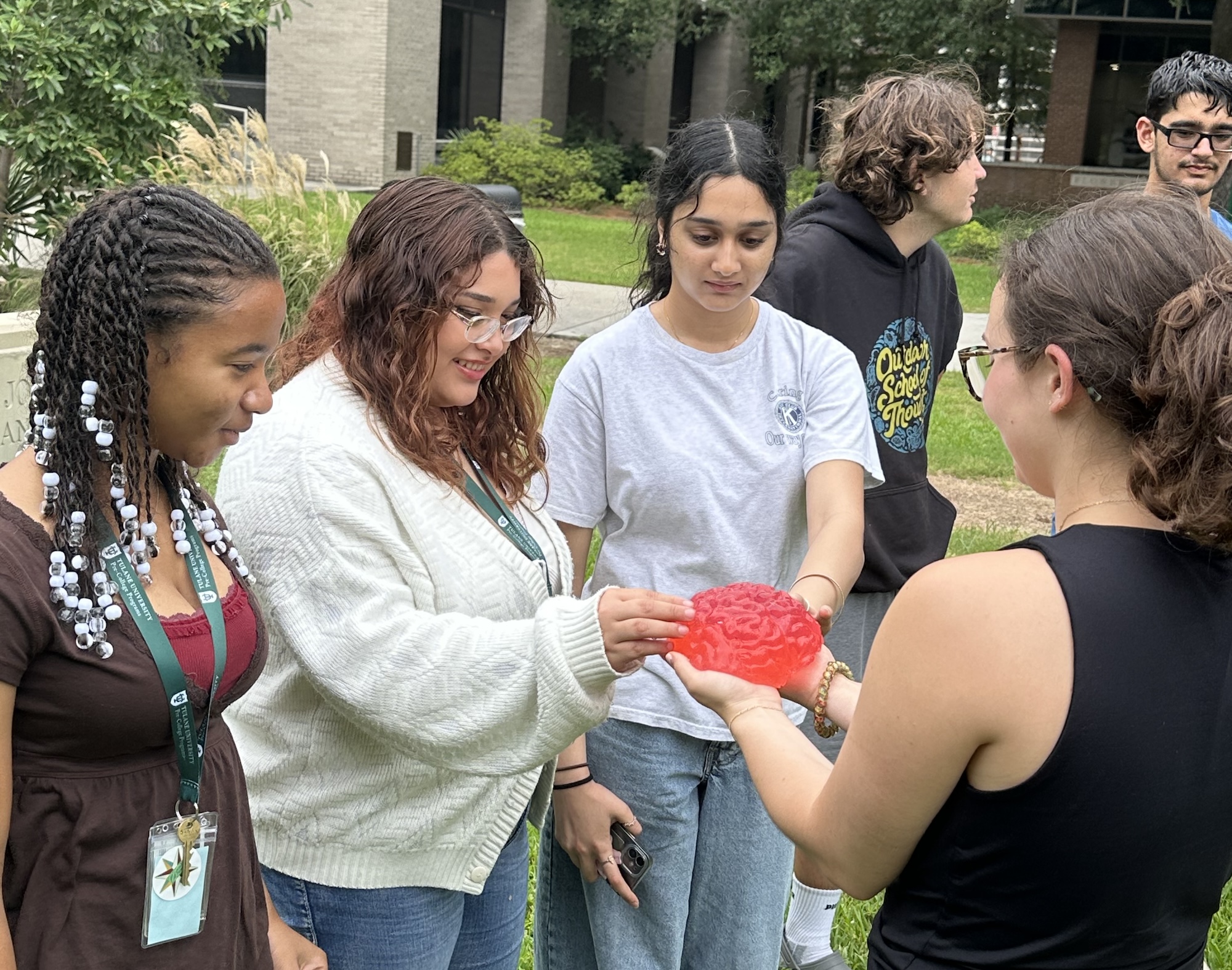
The Center visits partner schools in the Greater New Orleans Area, bringing fun, hands-on STEM activities developed primarily by our Graduate Student Leaders. Graduate students are assisted by Tulane Service Learning undergraduate student interns. Our Grad Student Leaders study a variety of topics, including chemistry, mathematics, biology, engineering, physics, neuroscience, and more!
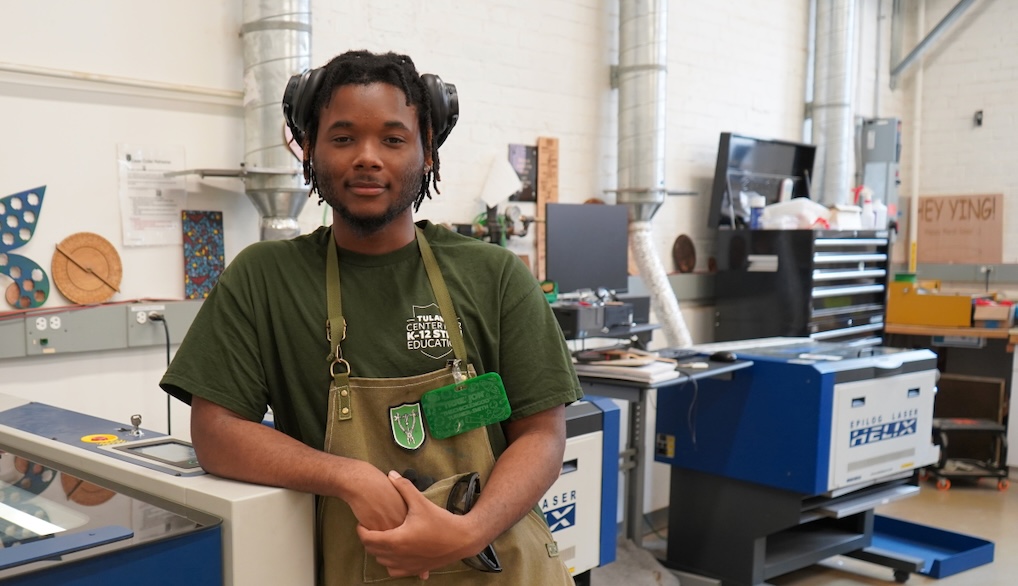
I used to go to BATS when I was a kid. I also attended Tulane's Pre-College program, where I got to take college courses while I was still in high school. Now I'm part of those same programs. I get to be a camp counselor and group leader, and it's really fun to watch these kids' journeys as I think about my own.
Public Service
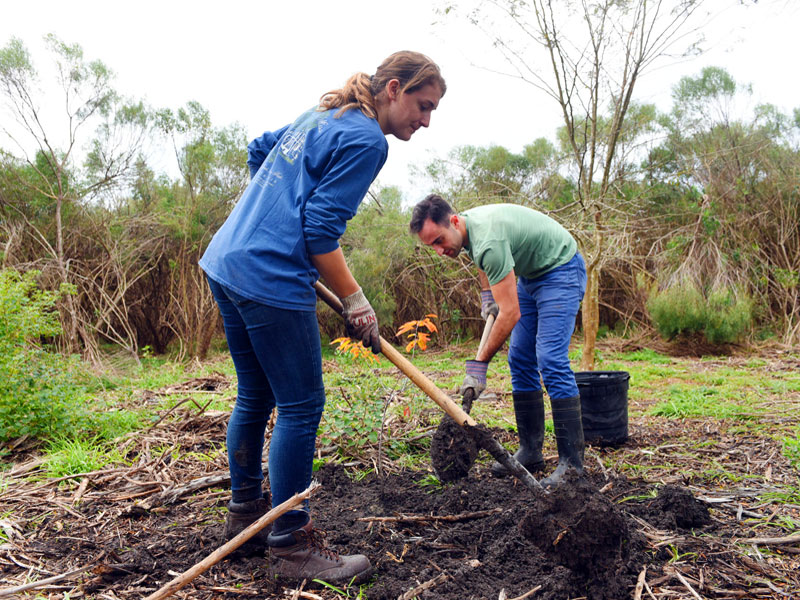
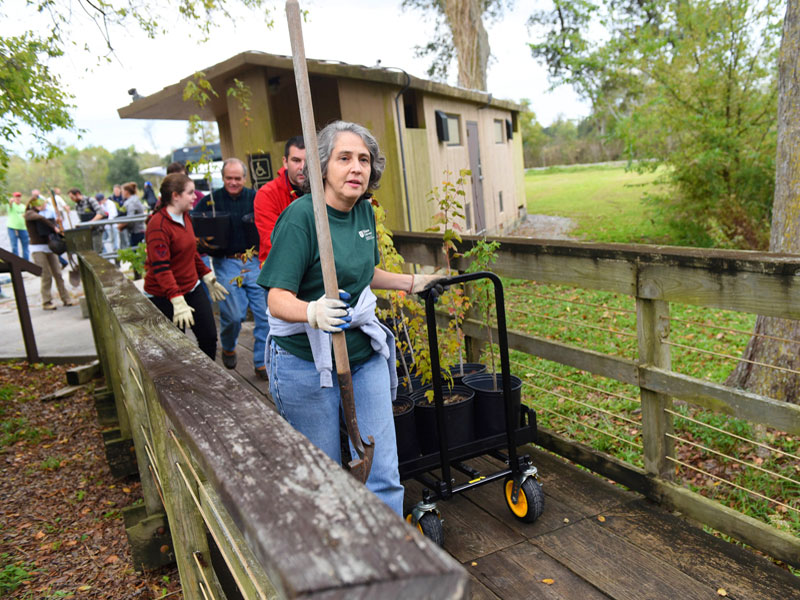
Public service is a cornerstone of your Tulane education. The School of Science and Engineering supports a number of community initiatives and collaborates with other university departments to actively engage and serve the Greater New Orleans community. The Center for Public Service recognizes that public service builds strong, healthy communities and responsible citizens. By merging academic inquiry with sustained community engagement, we strive to help you learn and thrive in New Orleans.
Student Involvement
We offer exciting Service Learning opportunities in K-12 STEM Education. Work with us to engage with local K-12 students and help inspire them for a future filled with STEM opportunities!
- First-tier service learning course involves completing 40 hours of service and attending a 1-credit seminar once a week.
- Second-tier service learning internship involves completing 70 hours of service and attending a 3-credit seminar once a week.
Through this service learning course, undergraduate students get to work closely with graduate students from a variety of disciplines and schools at Tulane. You would assist graduate students during our STEM Enrichment In-Schools program to help run their activity for elementary or middle school students (mostly grades 4-8). The course also includes the opportunity to develop and lead your own hands-on STEM activity!
If you are part of a student organization that would like to run a workshop or volunteer outside of the service learning course, please contact us!
We work with graduate students from a variety of disciplines and majors to develop fun, hands-on STEM activities for middle school students with our In-Schools Program. We currently travel to six schools, ranging from 3-8th grade, across the Greater New Orleans Area to bring STEM to their classrooms! Undergraduate Service-Learning students work with our graduate students at partner schools and provide assistance to facilitate the activity.
Thanks to the generosity of our sponsors, we are able to provide a stipend for our Graduate Student Leaders - around $3000 for two semesters of work. Groups of graduate students are welcome to work together to develop an activity as well. Stipend amounts will be adjusted depending on the number of students and the time commitment of each.
If you are interested in leading an activity but do not have a workshop developed please still apply! We are happy to work with you to create a fun and engaging activity or refine an existing activity/idea. Graduate Student Leaders also participate in trainings once or twice a semester provided by the Center's Academic Director, Dr. Erica Smith. These trainings allow you to learn new ways to keep young students engaged during activities and offer ideas and feedback to improve your current workshop.
Apply now below to become a Graduate Student Leader and inspire students' interests in STEM!
| Workshop Title | Description |
|---|---|
| Brain Architecture | What can we do to keep ours brains functioning healthily throughout our lifetime? Create a model brain with pipe cleaners. Pull cards with good habits that help support your brain with straws, or pull cards with bad habits and weigh your brain's structure down. Students will model how habits, such as a good nights sleep, can lead to healthy brain development.
|
| Monkeyflower Mayhem | In this workshop we will first cover an introduction to how plant adapt to their environment via leaf shape and floral color and shape/pollination and genetics/crossing. In groups, the students then examine two different species of monkeyflowers and take measure traits on these "parental" species. Students will then take the same simple measurements, with rules, on second generation hybrid plants. Data will be collected across the class and we will plot the data in excel or R. While we are plotting the data the student practice crossing the plants via pollination. At the end, student talk about the difference in the data for each plant and come up with hypotheses about what may cause these differences.
|
| Mathematical Magic Flowers | We will look at mathematical "flowers" using a simple deck of playing cards. Students will explore when mathematical flowers become magic, using foundational mathematical skills, like addition, developed in their class. A flower becomes magic when each group of numbers on a line has the same sum.
|
| Pandemic Masterminds! | This workshop will present to the students to how pandemics are created through an animal species, a proper route of transmission, and what a possible cure could look like. Once we have discussed the necessary terms and concepts to understand pandemics, the students will get a few options to create their own pandemic in small groups. After they are finished, they will present their pandemic schematic. Lastly, the workshop will cover the current topics of COVID-19 and make sure the students comprehend its implication on the Nola population.
|
| Synthetic Geometry in GeoGebra | Using the online software GeoGebra as an interactive medium, the workshop leader will propose synthetic geometry problems. The workshop will provide the students with basic knowledge of geometry facts and utilize the students' creativity in solving problems and creating geometric designs using math.
|
| Doctor for a Day: Exploring the Heart | This workshop allows students to emulate the training medical students receive on their path to becoming a physician. Background information is provided on the role doctors play in everyday health and the many fields doctors work in. The students then create a stethoscope using provided materials and learn some basic clinical skills, specifically learning about heart health physiology including blood pressure, heart rate, and heart sounds. Students will understand the importance of keeping the heart happy by staying healthy.
|
| The Digestive System | In this workshop, students will build off their prior knowledge of the digestive system and work in groups to further understand the importance and mechanics of the digestive tract. The students will learn the path food takes as well as an overview of macromolecules, different methods the body uses to digest food, and how nutrients are absorbed. To enhance learning and test their knowledge, the students then work in teams to complete an interactive online quiz game, with winners announced at the end.
|
| Birds of a Feather: Oil Spill Clean-up Experiment | Students will learn about the Deepwater Horizon oil spill and the impacts oil spills have on the environment and wildlife, especially the different species of water birds that are affected. Throughout the workshop, students will follow scientific lab procedure to complete an experiment which tests the best methods for cleaning bird feathers affected with oil. At the end of the workshop, students will review and learn real-life methods used to clean up oil spills.
|
| Adaptation Architects | Students are introduced to the concepts of survival and adaptability for animals in their environments. Real world examples of habitats and animal traits are presented for students to observe, examine, and discuss which characteristics would make certain animals successful in a given habitat. Students then create their own animal to survive in a habitat given a list of parameters.
|
| Un-Be-Leaf-able! | Real leaves a distributed to the students to observe and think about plant form and function. Leaf traits, such as shape, color, and texture, are observed, and the functions of leaves are discussed. Students then use their creativity to do a leaf rubbing and design. Students' knowledge is tested at the end with a fun and interactive quiz.
|
| Insect Discovery! Exploring Ecology and Evolutionary Biology Through Insects | This activity focuses on increasing the exposure of students to live insects while teaching them ecological and evolutionary concepts such as: adaptation, natural selection, the classification of arthropods, and food chains.
|
| There's DNA in my food?! | DNA is found in all living things and determines the function of every living cell. But what does DNA look like? What does it feel like? In this workshop, students will isolate DNA from strawberries using common household items (soap, salt and rubbing alcohol), while learning about the properties of DNA.
|
| Yeast & Cellular Respiration | The activity will be looking at how much carbon dioxide is produced based on how much sugar or yeast is used. The basic idea is to create a solution of warm water, yeast, and sugar to a bottle and attach a balloon to the top of the bottle. As the yeast consumes the sugar, it releases carbon dioxide, causing the balloon to inflate!
|
| New Life in Buried Bones | Bioarchaeology the scientific study of the human skeleton from archaeological contexts. For bioarchaeologists, the skeleton is oftentimes the only record of what life was like thousands of years ago. In the New Life in Buried Bones workshop, students learn how the human skeleton the like a "boney diary" that record all sorts of information about a person: their health, the food they ate, and even injuries! Using real human skeletal remains, this workshop will show students how this specialized knowledge of the human skeletal is useful for solving archaeological mysteries and exploring what life was like in the past. Let's bring human bones to life!
|
| Emerging Viruses of West Africa | This workshop will introduce the students to West African viruses, Ebola and Lassa. We will begin with an age-related description of each virus, mechanisms of the immune system to fight the viruses, and what symptoms/outcomes and populations are seen during epidemics. The lecture portion will also highlight the recent outbreaks of Ebola and Lassa in parts of West Africa to keep the information time-sensitive and relevant. After the lecture, the students will make Lassa virus models through arts and crafts for them to take home their personal viral models.
|
| Grumpy Tummy (Pill Coating Activity) | Students will understand the breakdown and absorption of medicine in the body. Students will be challenged to develop their own pill coating, using household materials, that will aid in the safe and timed release of their "drug".
|
| Wave Machine Demonstration | Students will be making a wave machine with the help of duct tape, wooden sticks and jelly babies with the guidance of instructor. After completing the model, instructor will show some phenomena and asks questions related to speed, energy, interference and wave. It is an engaging activity which will help them to understand the basic of the wave portion in Physics.
|
| Mirrors and Periscopes | Students will mainly work with mirrors and periscope kits to know about the behave of light and how it can be used in our daily life by simple rules.
|
| Earthquakes and Structures | What are earthquakes? Where and how often do they occur? In this activity, students learn about basic earthquake concepts, including different kinds of seismic waves via physical demonstration (slinky) and video animations. We explore how buildings respond to ground shaking brought about by these seismic waves in a hands-on activity on resonance frequency using manila folder cut-ups and paper clips. The session then culminates with a group activity (4-5 students each) where students use pasta and marshmallows to build a structure that could withstand ground shaking, to highlight devices such as diagonal braces that make our buildings safer.
|
| Me, You and the Flu | What is a virus? How do they make us sick? And more importantly, how can we stop them? Discuss virology (define virus and the spread of viruses) and ways to prevent/reduce catching viral infection, such as the common cold and flu. The class activity uses GloGerm and UV light to illustrate the importance of hand-washing technique.
|
Teacher Professional Development
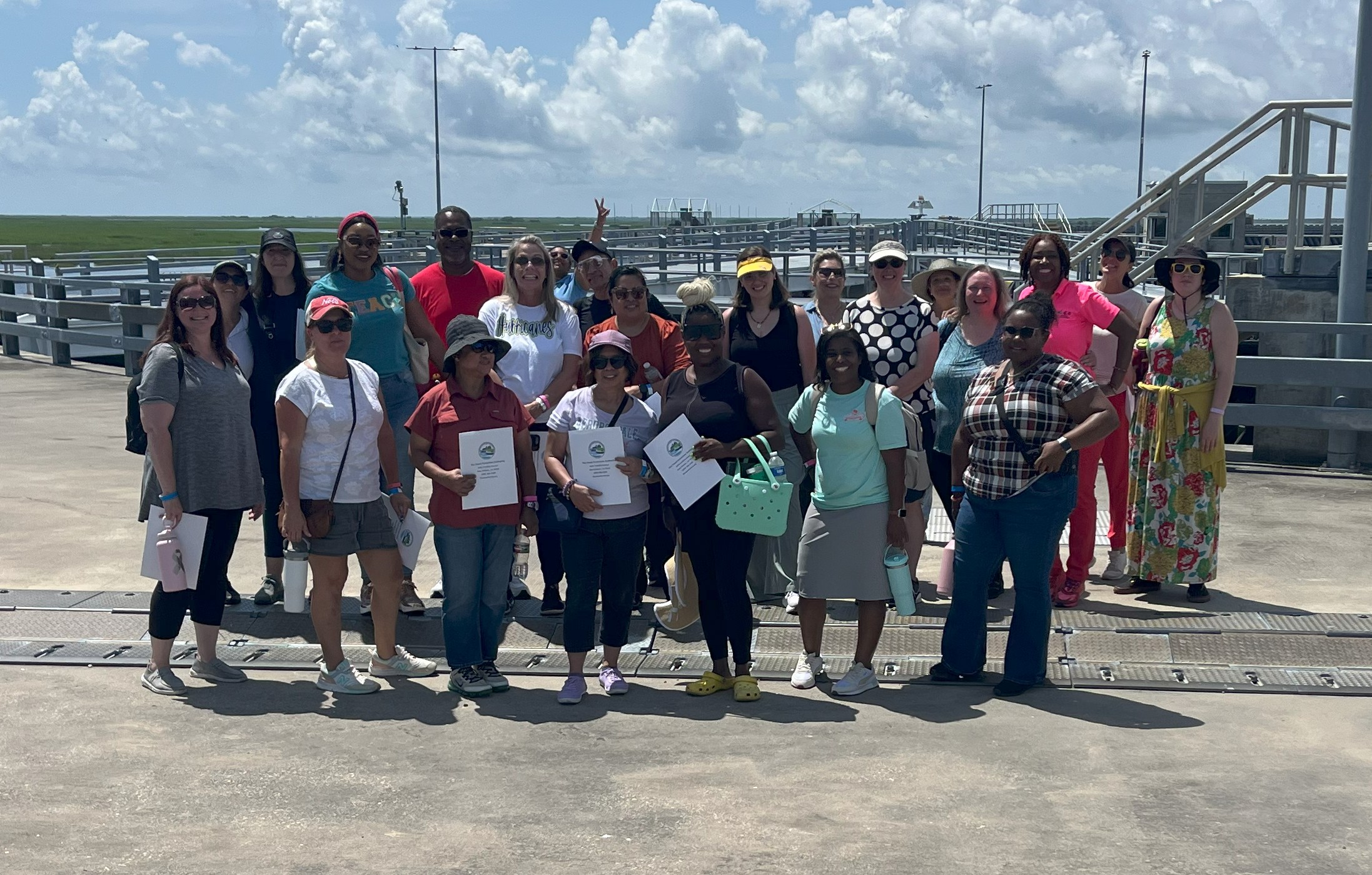
STEM teachers are invited to participate in Tulane's teacher professional development workshops this summer! Thanks to the generosity of Shell and The Joe W. and Dorothy Dorsett Brown Foundation, we are offering two 2-day on-campus workshops. We are also offering one 3-day in-person workshop thanks to the National Academies' Gulf Research Program.
June 17-18, 2026: Exploring Coding and Robotics with LEGO Spike Prime - Grades 4-8! (In-Person)
Join the Center for K-12 STEM Education team as we learn and play with the LEGO Spike Prime robots! Expand your coding skills as you learn to use the Spike Prime app and program the Spike Prime robots. You will also learn about the free LEGO curriculum available and how to start a FIRST LEGO League team at your school.
- We are offering a two-day in-person professional development workshop totaling 9-12 hours. The 12-hour PD will be for rookie coaches who want to learn more about the FIRST LEGO League Challenge, whereas the 9-hour PD is for teachers who want to learn how to use Spike Prime but have coached a FIRST LEGO League Challenge team before.
- Participating teachers will receive a $225 (9 hours) or $300 (12 hours) stipend upon completion of the PD. A $20 refundable deposit will be refunded to teachers upon completion of the PD.
June 23rd-25th, 2026: MissDelta - Exploring the 1927 Flood
Join the Center for K-12 STEM Education for a three-day dynamic professional development session marking the 100-year anniversary of the 1927 Mississippi River Flood. This PD will explore the environmental and climatic causes of the disaster, examine human decisions that contributed to its impact, and provide historical context on life along the Mississippi River in the early 20th century. Teachers will also gain insight into how the flood transformed U.S. flood control policy and infrastructure.
- Participating teachers will receive a $450 stipend upon completion of the PD and aligned curricula to bring back to their classrooms. A $20 refundable deposit will be refunded to teachers upon completion of the PD.
June 30th-July 1st, 2026: Teaching the Future: Computer Science Foundations and AI Awareness
This two-day professional development introduces educators to computer science standards, with a focus on algorithms, coding, and computational thinking aligned to the Louisiana student standards for computer science. On the second day, teachers will explore artificial intelligence concepts and practical classroom applications.
- Participating teachers will receive a $300 stipend upon completion of the PD and aligned curricula to bring back to their classrooms. A $20 refundable deposit will be refunded to teachers upon completion of the PD.
Teachers of 3rd through 8th grade students can also participate at BATS and GiST!
Thanks to the generosity of Shell and The Joe W. and Dorothy Dorsett Brown Foundation, we are pleased to be able to offer teachers the chance to participate in 3 unique workshops at each event that align with the Louisiana Science Standards for FREE! Participating teachers will get to experience the workshop hands on and discuss how to implement the activities and aligned standards into their classrooms.
Teachers will also receive a $150 stipend, aligned curricula ideas, AND supplies to bring the activities back to their school!
Teachers must be registered to attend.
Learn more about BATS Learn more about GiST
Want to Bring a Group of students to BATS or GiST?
Fill out the group registration form and someone from our team will reach out with more information.
We have some policies regarding group registration:
Groups can bring no more than 15 students.
In order to secure your spots, you must reserve your spots prior to the event.
Groups MUST use registration spreadsheet provided through email.
Signed forms for each student must be provided on the morning of the event. If we do not have forms for a student, that student MAY NOT participate that day.
Please understand that we are trying to make the registration process easier for everyone. We believe that these policies regarding groups will benefit everyone and enable us to maximize the number of students that we reach.
Community Partners
FIRST Lego League (FLL) Competition offers an opportunity for middle school students to design, build and compete with a robot constructed of Legos and to create and deliver a 5 minute research presentation on the annual competition theme. Tulane supports this program by providing board members, tournament organizers, mentors and volunteers.
FIRST Robotics Competition (FRC) is referred to as “the varsity sport for the mind,” which combines the excitement of sport with the rigors of science and technology. Teams of at least 25 students raise funds, design team “brands”, hone teamwork skills, and build/program robots to perform prescribed tasks against competitors. Tulane supports this program by providing board members, tournament organizers, mentors and volunteers.
Greater New Orleans Science and Engineering Fair (GNOSEF), held annually in February, is affiliated with the Intel International Science and Engineering Fair and is open to 6th–12th grade students attending middle or high school (including home school) in the Greater New Orleans four-parish-area of Jefferson, Orleans, Plaquemines, and St. Bernard Parishes. Tulane supports this program by providing board members, tournament organizers, judges, and volunteers.

Girl Scouts prepares girls for a lifetime of leadership, success, and adventure in a safe, no-limits place designed for and by girls!
In 2017, the Girl Scouts held the Juliette Gordon Low Leadership Luncheon at the Audubon Tea Room in New Orleans. Over 160 Girl Scouts and supporters gathered for this event, where five outstanding individuals and entities were recognized for exemplifying the legacy of Girl Scouts of USA founder, Juliette Low. Our director, Dr. Michelle Sanchez, and SSE Faculty member Dr. Donata Henry received the Outstanding Business/Educators Award for our Girls in STEM at Tulane (GiST) program!
Girl Scouts are always welcome to participate at Girls in STEM at Tulane (GiST) happening twice a year! Find more information about being a Girl in STEM at Tulane participant or leader here.

Electric Girls was founded in Spring 2015 by Flor Serna as a response to her experience as the only female recording engineer at Vital Sounds Recording out of Loyola University. Quickly joined by Maya Ramos, the pair founded Electric Girls to develop leadership skills in young girls through their learning of electronics and computer programming skills. Electric Girls first summer camp consisted of just 6 girls - Electric Girls now has served hundreds of girls in the greater New Orleans area through summer camps, after school partnerships, weekend programs, in-school programs, and one-day workshops, and has expanded to multiple New Orleans schools and age ranges (5-14).
GNOSTEM prepares teachers to use curriculum and equipment that allow them to provide their students with minds-on learning opportunities that build a foundation for excellence in STEM fields. The program is organized to impact as many as 56,000 K-12 students throughout the New Orleans region and is comprised of a dynamic group of highly committed and passionate individuals. Tulane supports this program by providing board members, workshop organizers, and volunteers.
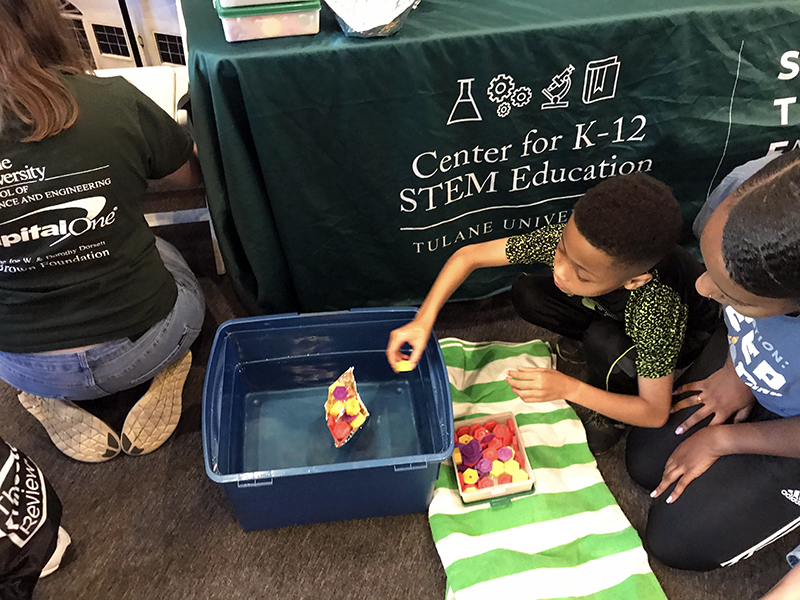
Louisiana Children’s Museum (LCM) contributes to the region’s future prosperity by engaging children’s potential and making that potential visible. Through play, shared explorations, and in dialogue with adults, LCM connects children to each other, adults, their environments and communities. LCM envisions a world where communities value children, strengthen and support families, and improve life outcomes by ensuring access to safe, innovative, learning, and play experiences. We partner with the Louisiana Children's Museum to bring hands-on STEM activities to different events, such as Science Saturday's, throughout the year.
Resources
BUILD.org
BUILD is an entrepreneurship program for underserved high school students that teaches them how to build their own business while becoming the CEO of their own lives. Learn more about this program here. If you are interested in connecting with this organization to bring their program to your school or organization, fill out their School and Community Partnership Interest Form.
Science World - Canada
Based in British Columbia, Science World has several resources, activities, and workshops available for teachers on their website.
Louisiana Art & Science Museum
Louisiana Art & Science Museum has launched Art & Science at Home, an online resource for educators, schoolchildren, and parents that includes art and science activities, videos, and more, organized by grade level! The hope is this resource can help educate and entertain you with at home art and science activities during this time and beyond.
Louisiana Science Teachers Association (LSTA) and National Science Teachers Association (NSTA) Resources:
The Science Matters Network from NSTA is working to spread information to STEM teachers and their partners to become aware of professional development opportunities, science resource materials, and funding programs for their region.
These classroom resources are vetted by NSTA teacher curators, who recommend ways they can be adapted to more closely reflect the vision of Next Generation Science Standards (NGSS):
- Grades K-2: Robots Everywhere
- Grades 3-5: Taking "Mystery" Out of Argumentation
- Grades 6-8: The Day the Mesozoic Died
- Grades 9-12: Global Energy Flows
Shell - Energize your Future
Energize Your Future with Shell is committed to inspire and prepare today’s students for potential STEM related careers. With investments in strategic programs and online resources for teachers and students, Shell believes that these 21st century learning opportunities can build the technical talent pipeline for tomorrow’s workforce.
Shell wants to help students prepare for real opportunities in tomorrow’s workforce by educating them about career options and inspiring them to study science, math and technology. Most importantly, Shell supports teachers with resources to enhance student learning.
Louisiana Art & Science Museum
Louisiana Art & Science Museum has launched Art & Science at Home, an online resource for educators, schoolchildren, and parents that includes art and science activities, videos, and more, organized by grade level! The hope is this resource can help educate and entertain you with at home art and science activities during this time and beyond. Also check out LASM 360 to tour and discover the museum virtually!
Barefoot Computational Thinking
Computational thinking is about learning to solve problems, whether with or without a computer. This resource has several creative activities to inspire computational thinking and guide students through computing curriculum fundamentals without having tons of screen time.
Keep Louisiana Beautiful - Environmental Education Resources
Keep Louisiana Beautiful has created K-5 environmental education lesson plans and activities that focus on litter, pollution, recycling, and environmental stewardship to protect our watershed and the Gulf. These resources are available for download, complete with lesson plans, activity sheets, and student standards for both formal and non-formal educators (parents, troop leaders, etc.).
Kinetic City
Kinetic City: Mission to Vearth is the after-school standards-based science program in which kids complete activities in conjunction with a dynamic website. The Kinetic City Super Crew needs your kids' help to save their virtual world of Vearth from the science-distorting computer virus, Deep Delete. The more kids play, the more standards-based science content they learn!
NASA Principles of Flight: Kite Building
Scrappy Circuits
An innovative, affordable, and "scrappy" way to learn about electrical circuits!
WeatherBlur
A weather-focused science and math platform where teachers can develop research and scientific investigation of the weather and climate.
Sign up to our email list to be the first to hear about our upcoming events and registration openings!
Instructions to sign up are below:
- Compose an email to LISTSERV@listserv.tulane.edu
- Leave the subject BLANK
- The body of the message must contain only the following line:
SUBSCRIBE K12STEM-L FIRSTNAME LASTNAME (note the single space between each word)
For example: SUBSCRIBE K12STEM-L JOE SMITH
*Do not include your signature file or any additional text
4. Click to send the email