
Seminars, News, and Events
Seminars, News, and Events
Here you’ll find the latest updates on groundbreaking research, student and faculty achievements, upcoming seminars, community partnerships, and major events shaping the future of river and coastal systems. From innovative resilience strategies along the Gulf Coast to global collaborations addressing climate and water challenges, our program is at the forefront of science and engineering solutions for dynamic environments. Explore how our students, researchers, and partners are advancing knowledge and building a more sustainable and resilient future.

Seminars
The RCSE Departmental seminar series will resume this semester. Seminars will take place on Thursdays from 12:00 PM to 1:00 PM in Boggs 600.
All seminars will be held in person - subject to change at the University's discretion. For those unable to attend in person, a Zoom link to watch remotely will be made available. For Zoom link information, please contact msmith77@tulane.edu.
Date | SPEAKER | TITLE OF PRESENTATION | HOSTING FACULTY |
|---|---|---|---|
January 22, 2026 | Wade Foster | Environmental Engineering: what undergraduate engineering students need to lean | Department /Ehab |
January 29, 2026 | Annalisa Molini | TBD |
|
February 5, 2026 | Tom Decarlo (EES) | TBD | Soenke Dangendorf |
February 12, 2026 | Reepal Shah (ByWater) | TBD | Matt/ John Sabo |
February 19, 2026 | MARDI GRAS WEEK, NO SEMINAR | ||
February 26, 2026 | Enrica Viparelli, Università degli Studi di Napoli Federico II, University of South Carolina | TBD | Matt Czapiga |
March 5, 2026 | Leigh-Anne Sharp (CPRA) | TBD | Annalisa Molini |
March 12, 2026 | Kemal Cambazoglu, University of Southern Mississippi | Near-Coastal Ocean Modeling with Applications for Coastal and Estuarine Hydrodynamics and Water Quality in Mississippi Sound and Bight | Ibrahim Demir |
March 19, 2026 | Matt Hiatt (LSU) | TBD | Mead Allison |
March 26, 2026 | SPRING BREAK WEEK, NO SEMINAR | ||
April 2, 2026 | Leah Kahler, TU Architecture and Built Environment | TBD | Barb Kleiss |
April 9, 2026 | Chantal Block | TBD | Ehab Meselhe |
April 16, 2026 |
| TBD | Grad Students |
April 23, 2026 | Noah Hendricks/TBD | TBD | Grad Student seminars |
News

From New Hampshire to the Mississippi Delta, Water Professionals Graduate from Tulane’s River-Coastal Masters Program
Across the United States, engineers and scientists are working every day to understand and manage the rivers that shape communities, economies, and ecosystems.
A harbor dredging expert in New Hampshire. An infrastructure engineer in Arkansas. A hydrologist studying the Mississippi River in New Orleans. A river stabilization leader designing bank protection along one of the largest river systems in the world.
Each of them works in a different place, tackling different water challenges. Yet they all share one classroom at Tulane University.

Engineering Trust: How Tulane Students Are Building Sustainable Solutions in Ghana Through Engineers Without Borders
When Tulane students in Engineers Without Borders arrived in Sokode Ando, Ghana, they were not stepping into a simulation or a classroom exercise. They were entering a community with real sanitation challenges, real public health concerns, and real reasons to be cautious about outside help. What followed was not only an engineering project, but also an education in trust, adaptability, and the kind of responsibility that helps turn students into professionals.

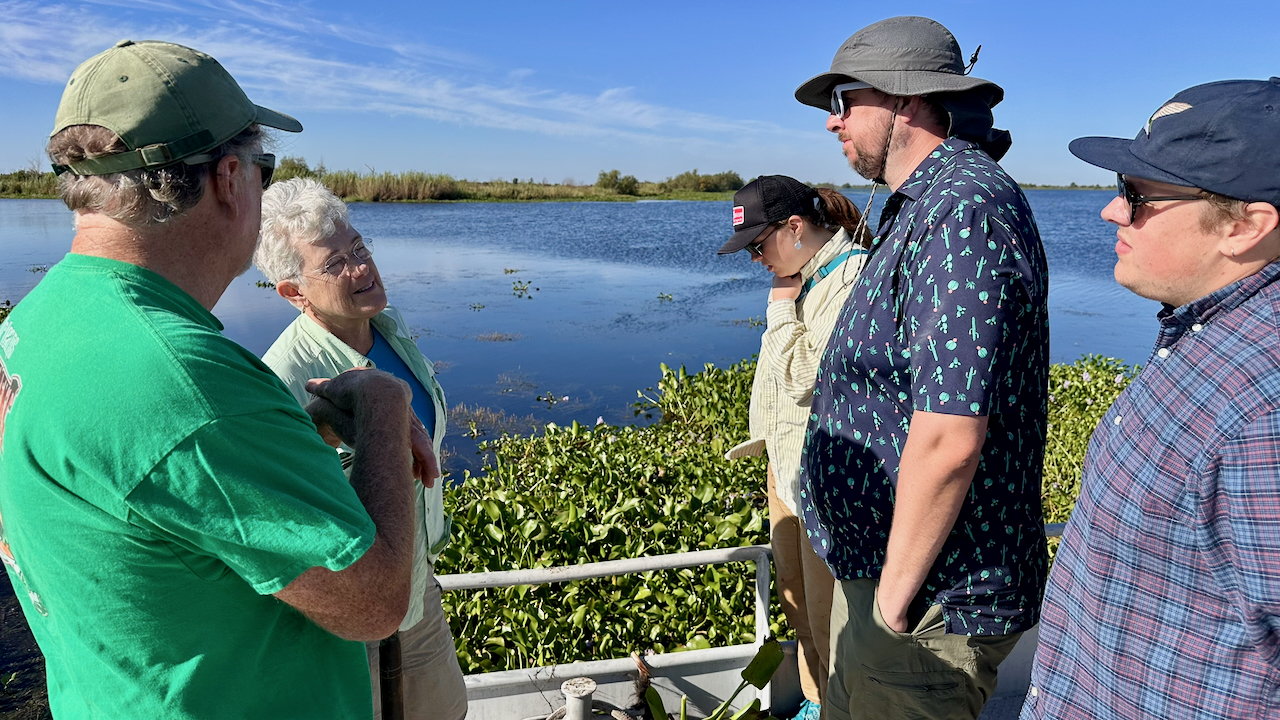
Learning the River: Tulane Landscape + Engineering Students Explore Louisiana’s Living Coast
Hands-on field research and interdisciplinary collaboration come together in Barataria Bay, where students study coastal change, restoration, and resilience.

Uncovering How Faults and Mobile Shale Control Methane Seepage in the Gulf of Mexico
New research from Tulane University is reshaping scientific understanding of how methane escapes from the seafloor in the Gulf of Mexico. A master’s thesis by Walee Yeboah, a recent graduate of the Department of Earth and Environmental Science, reveals that active faults and mobile shale structures beneath the seafloor play a critical role in directing methane and fluid migration; challenging long-standing assumptions that salt tectonics alone dominate seepage patterns in the region.

Lower Mississippi River Science Symposium
The Lower Mississippi River Science Symposium seeks to establish a recurring forum to connect academic, government, and NGO scientists and managers in the region to share their research, ideas, and needs with the goal of building synergy. The theme for this recurring forum is threefold: optimizing the data collection network, strategizing the next generation of models, and outlining key applications of the data and models for management decisions.
Flowerree Symposium
The Flowerree Symposia provide a recurring forum to showcase Tulane University’s role in addressing climate change and its acute impacts in coastal regions such as southern Louisiana. The symposia highlight the local dimensions of a global crisis while focusing Tulane faculty, students, and community stakeholders on how the university can contribute to an evidence-based conversation about solutions. The goal is to bring together ideas and approaches that span the scientific and engineering dimensions of the climate crisis, as well as its human impacts, political challenges, and policy innovations.
