Computer Science
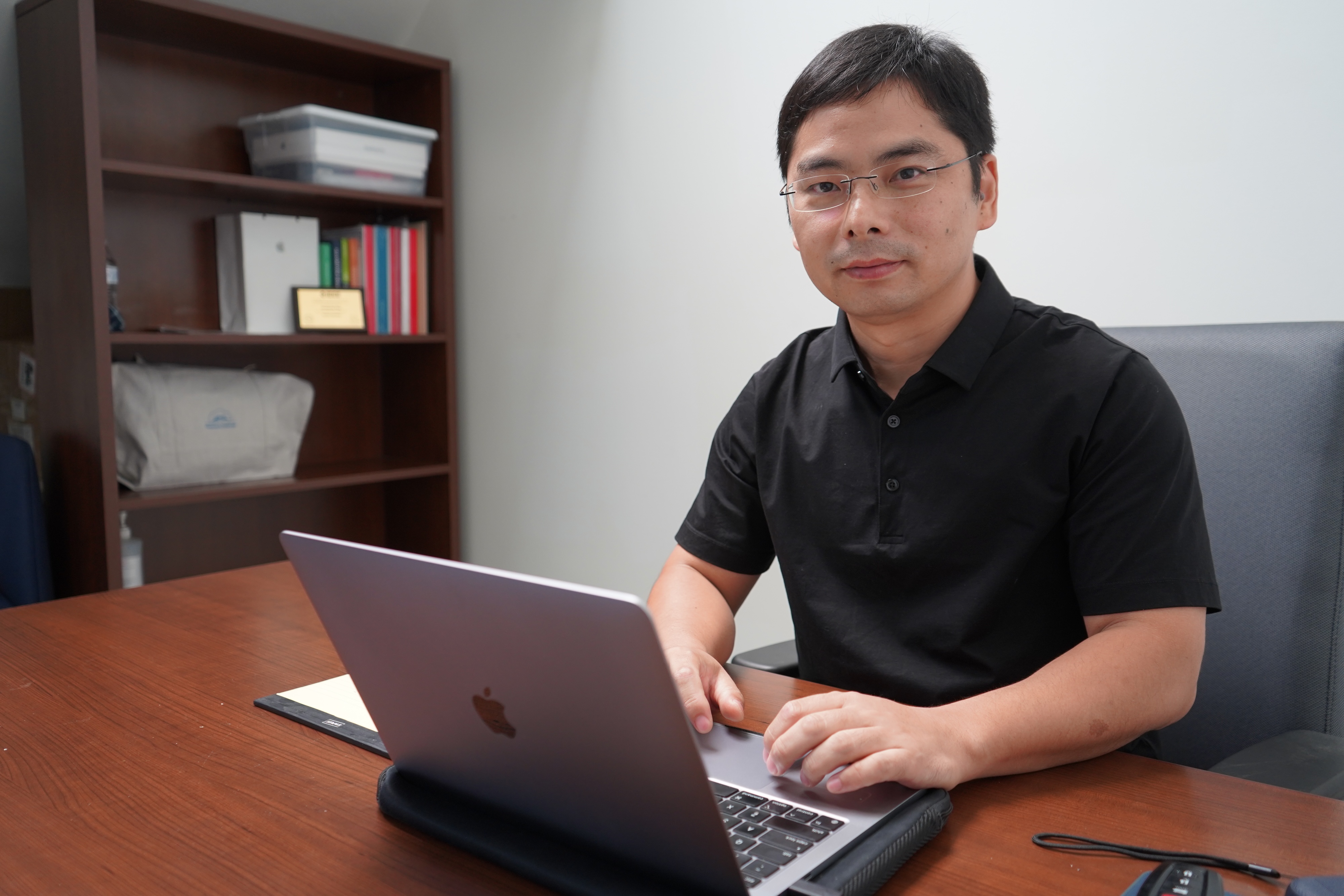
Welcome to the Department of Computer Science
In the Department of Computer Science at Tulane we emphasize both core computer science and its applications to related areas in the sciences and engineering, the health and social sciences, and the humanities. Our goal is for our faculty and students to be recognized nationally and internationally for their interdisciplinary research, and we want to train the next generation of computer scientists who work at the interface of computer science and other disciplines.
Students who have completed our undergraduate coordinate major have found jobs in computer science and related areas, and several are pursuing PhD degrees at leading departments. Our students and alumni have won awards including best paper awards and Tulane's Peery Medal, as well as fellowships including Facebook and Google PhD Fellowships and a postdoctoral CI Fellowship from the Computing Research Association.
Our faculty conduct cutting edge research in a variety of disciplines including algorithms, artificial intelligence, computational biology, computer science education, computational geometry and topology, computer vision, data science and large data processing, domain theory and semantics of programming languages, game theory, image processing, machine learning, natural language processing, networking, cloud computing optimization, privacy and security, and scientific visualization. Our research is nationally and internationally recognized, and is funded from agencies such as NSF, NIH, DARPA, and DoD.
Our department continues to grow and we anticipate hiring several faculty members over the coming years. Please check our open positions page frequently for updates.
We welcome inquiries - please email me at lpeng3@tulane.edu with your questions and comments.
Lu Peng, Interim Chair


Tulane physicist predicts new particle, implications for universe expansion
For centuries, magnets have challenged the brightest minds. The classical model of physics defines a magnetic field as a dipole, with a north and south pole. Scientists have searched for a monopole, a magnetic particle with only a north or south pole, not both. The discovery of this new particle would unify electromagnetic theory and have far-reaching impacts.


Above the Cleanroom: The Infrastructure Behind Tulane’s Latest Micro/Nanofabrication Facility
How infrastructure, systems, and design turn a building into a scientific instrument
Tulane School of Science and Engineering’s new cleanroom and micronano-fabrication facility in Paul Hall is taking shape on the ground level, a deliberate decision for a space where stability matters. But what many people won’t see is that a cleanroom doesn’t begin and end at its walls.

From Classroom to Lab Bench: Tulane Senior Bridges Physics and Medicine Through Biopharmaceutical Research
For Tulane University senior Will Hotaling, physics isn’t confined to equations on a chalkboard. It’s a hands-on, interdisciplinary experience that he’s using to help solve real-world challenges in medicine.

When Art Meets Anatomy: Tulane Students Learn to Draw What They Study
Inside Tulane’s Center for Anatomical and Movement Sciences (CAMS), the room is designed for precision and focus. But on this particular day, something unexpected took hold: a long, shared silence. Students leaned over sketchbooks, eyes moving carefully, hands working slowly—learning not just anatomy, but how to see it.

Tulane Innovation Institute Announces Winners of 2026 Open Season Pitch Competition
“Participating in Tul